When Is OBD2 Freeze Frame Captured? Explained
Quick Answer
An OBD2 freeze frame is captured at the moment an emissions-related fault is confirmed and its diagnostic trouble code is stored, normally when the malfunction indicator lamp is commanded on. It is not recorded continuously, and plugging in a scanner does not create a new one.
A freeze frame is a still photograph, not a video. The car does not save engine data every second in case something later goes wrong. Instead, the powertrain computer waits until a monitor reaches its failure decision, stores the code, and saves the operating conditions present at that decision point.
What actually triggers a freeze frame?
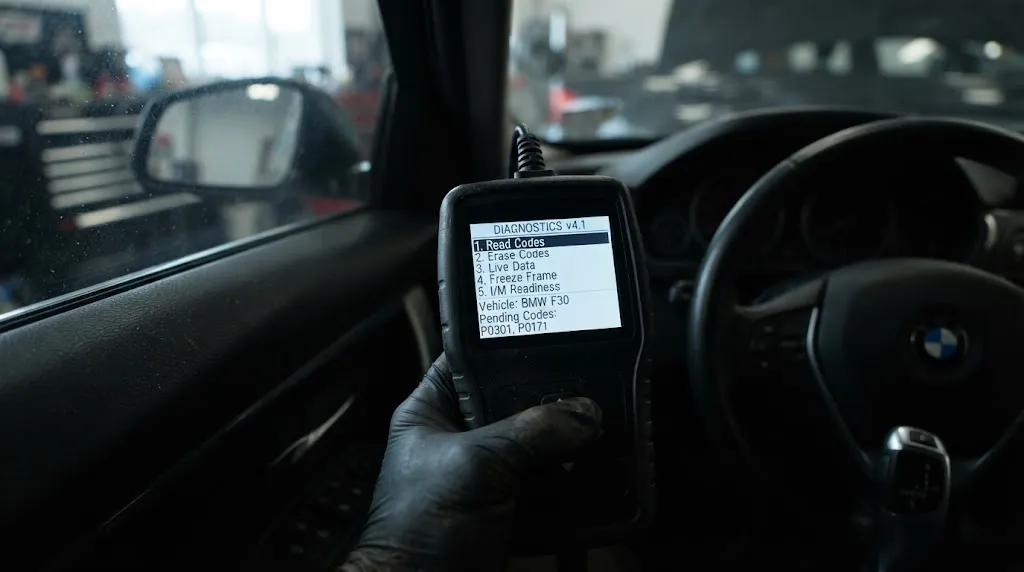
The trigger is a stored, emissions-related diagnostic trouble code, or DTC. When a monitor detects a failure that meets the rules for storing a code and turning on the malfunction indicator lamp, commonly called the check engine light, the computer saves a snapshot of selected values at the same time. In generic OBD2 terms, that snapshot is retrieved through Mode $02, while current values come from Mode $01.
No scanner needs to be connected for capture to happen. A scanner only reads what the computer has already stored. Turning the ignition on, starting the engine, or driving normally does not create a frame. There must first be a qualifying fault decision.
Emissions-related powertrain faults are the main subject of the generic freeze frame rule. Some manufacturer-specific, body, or chassis snapshots may be stored separately by enhanced systems, but they are not necessarily the standard Mode $02 frame shown by a basic OBD2 scanner.
One-trip faults versus two-trip faults
The most important timing split is between one-trip and two-trip faults. A one-trip fault, sometimes called a Type A fault, can command the lamp on the first time it is detected. Its freeze frame is captured on that first detection.
A two-trip fault, often called a Type B fault, is more cautious. The first failing trip usually stores a pending code rather than turning on the lamp. If the same monitor fails again on a later trip, the code becomes confirmed, the lamp is commanded on, and the generic freeze frame is linked to that confirmed code.
| Fault type | First failing trip | Second failing trip |
|---|---|---|
| One-trip fault | Code stored, lamp on, freeze frame captured | No new generic frame unless a higher-priority fault replaces it |
| Two-trip fault | Pending code; lamp normally stays off | Code confirmed, lamp on, freeze frame linked to the confirmed code |
There is a nuance that causes real confusion. Some manufacturers also store a pending freeze frame during the first trip of a two-trip fault, and it may be visible in enhanced menus. A basic generic scan, however, may show no Mode $02 frame until the code is confirmed. A missing generic frame therefore does not always mean the car recorded nothing; it may mean the pending snapshot is not exposed through the generic mode your tool uses.
Why the capture moment can lag the real problem
A monitor does not judge a component the way a person watches a gauge. It runs a test, compares the result with a threshold, and may need specific enabling conditions before the test can start. That is why the freeze frame can look surprising.
Take misfire as an example. The system may evaluate misfire over a defined engine-speed interval rather than reacting to one rough combustion event. By the time the failure decision is made, engine speed, load, and throttle position may have changed from the values present during the first rough running. The frame remains accurate for the decision moment, but it is not a record of the first symptom.
Catalyst, oxygen sensor, and evaporative emissions monitors can show a similar lag. They may need warm-up, steady cruising, a particular load range, or several drive cycles before they can complete a test. The freeze frame therefore answers a narrower question than many drivers expect: not “when did this part start to fail?” but “what were conditions when the computer confirmed the failure?”
Key Insight
A freeze frame is evidence of the confirmation moment, not a timestamp for the start of the mechanical fault. Use it to reproduce the test conditions, not to assume the part failed at exactly that second.
Only one generic frame, with a priority exception
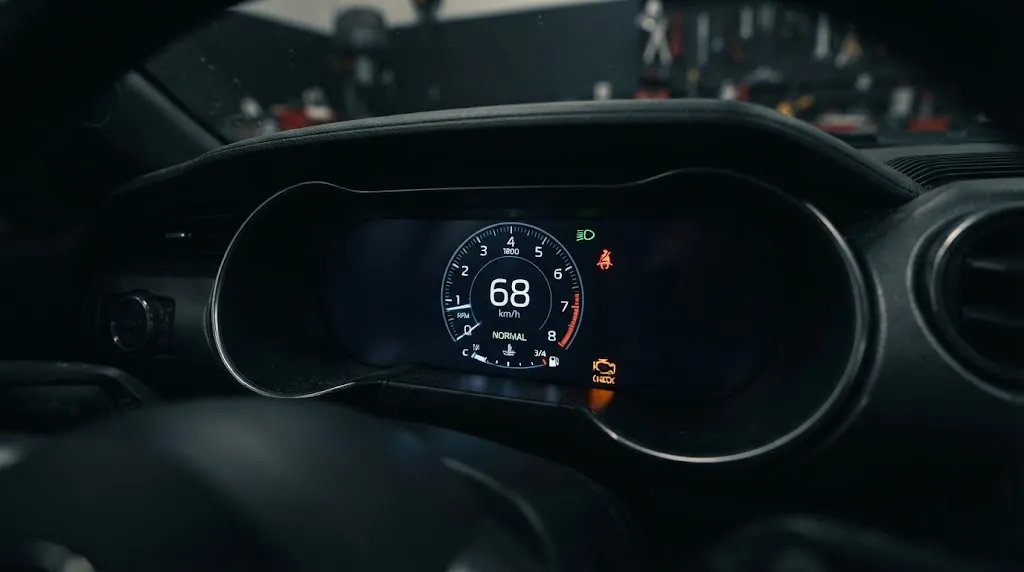
Generic OBD2 normally keeps one freeze frame, not one frame for every code. That frame is linked to the DTC that commanded the lamp on. If several codes are stored afterwards, later codes do not automatically push a fresh generic frame into that slot.
There is a well-known exception. A misfire fault or a fuel trim fault can overwrite an existing freeze frame because those faults are given higher priority under OBD2 rules. A misfire can damage a catalyst quickly, and a major fuel trim error can point to a broad fuelling problem, so their snapshot replaces the earlier one.
This is also why what is actually stored in a freeze frame matters as much as when it was stored. Engine speed, calculated load, coolant temperature, vehicle speed, fuel system status, fuel trims, throttle position, and manifold pressure are commonly included, but the exact list varies by vehicle and fault. The values should be the actual stored readings, not substitute values used after a sensor failed.
What the snapshot does not prove on its own
A freeze frame gives context, not a diagnosis by itself. A high load value does not prove harsh driving. A cold coolant temperature does not prove a thermostat failed. A lean fuel trim at the capture moment does not prove the same lean condition was present at idle five minutes earlier.
The frame also does not show what happened before or after capture. It does not record a trend or a second snapshot a few seconds later. That is the job of live data, which changes continuously while the engine runs. The best approach is to pair the two: use the freeze frame to identify the conditions to reproduce, then use live data to watch the suspect system under those conditions.
When a new freeze frame is created
A new generic frame is most likely after the old code and frame have been cleared and a qualifying fault is confirmed again. The usual sequence is repair or clear, monitors run again, a monitor fails and meets the rules for a stored code, the lamp is commanded on, and a fresh snapshot is stored.
A new frame is not created merely because the same fault is still present, because the lamp flickers, or because you reconnect a scanner. If the code remains stored and no higher-priority misfire or fuel trim fault has replaced the frame, the original snapshot normally stays in place.
When freeze frame data disappears
Clearing codes with a scan tool normally clears the associated freeze frame at the same time. Snap-on’s OBD-II training notes that Mode 4 also clears pending codes and readiness monitors. That is one reason clearing a code does not repair the underlying fault: it also removes the best record of the conditions that produced it. Disconnecting the battery can have a similar effect on many vehicles, although exact behaviour varies.
Freeze frame data can also be erased automatically. For many systems, the code and frame are removed after about 40 warm-up cycles without the fault recurring, after the lamp has already gone out. Treat that count as a common pattern rather than a universal guarantee, since manufacturer rules vary.
For newer vehicles, note a separate record: a permanent code may remain visible after a normal code clear until the relevant monitor runs and passes. That does not mean the old freeze frame is still there. Clearing the stored code can remove the frame even while a permanent code remains as a separate record.
Warning
Save or photograph the code and freeze frame before clearing anything. Once cleared, the snapshot cannot be recovered by reconnecting the same scanner, and diagnosis often has to wait for the fault to recur.
How to use the capture timing in a real diagnosis
Start with the code in the freeze frame header, not just the list of stored codes. If the frame belongs to a different code than expected, either the first lamp-commanding fault was different, or a higher-priority misfire or fuel trim fault replaced the original frame.
Next, read the conditions as a test recipe. Was the engine cold or fully warm? Was the vehicle stopped, idling, cruising, or accelerating? Was the fuel system in open loop or closed loop? Was load high or low? A fault captured at cold start points in a different direction from the same code captured at steady highway load.
Then compare the frozen values with current live data under similar conditions. If frozen fuel trim was strongly positive but live trim is normal at idle, try the load and speed range shown in the frame. If the fault only appears when cold, do not expect a warm-engine test to reproduce it.
Finally, keep what a DTC is in perspective. A code is the result of a failed test, not a direct measurement of a part. The freeze frame helps you recreate the test, but repair still needs inspection, targeted testing, and confirmation that the monitor passes afterwards.
Related Product
OBD2 Scanner With Freeze Frame Support
A scanner that can open Mode $02 freeze frame data makes it easier to save the code and snapshot before clearing.
As an Amazon Associate, we earn from qualifying purchases.
Frequently Asked Questions
Does a pending code capture a freeze frame?
Sometimes, but not always in generic form. Some manufacturers store a pending freeze frame in enhanced data on the first failing trip, while a basic Mode $02 reading may show nothing until the code is confirmed and the lamp is commanded on.
Is the freeze frame captured when the light comes on or when the fault starts?
It is captured when the monitor confirms the fault and stores the code, which is normally when the lamp is commanded on. A monitor may need time or specific conditions to complete its test, so the capture can lag the first symptom.
Does every trouble code get its own freeze frame?
No. Generic OBD2 normally keeps one frame linked to the code that commanded the lamp on. Later codes do not automatically replace it, although a higher-priority misfire or fuel trim fault can overwrite it.
Does the check engine light going out erase the freeze frame?
No. The lamp can go out after several trips without a failure, while the stored code and frame remain for a time. They are normally removed by a code clear or automatically after about 40 warm-up cycles without recurrence.
Why is there a code but no freeze frame?
The most common reasons are that the codes were already cleared, the code is still pending, the snapshot is only in manufacturer-enhanced data, or the scanner is not showing the freeze frame menu. A non-emissions code may also have no generic frame.
Does plugging in a scanner create a new freeze frame?
No. A scanner only reads the snapshot already stored by the vehicle computer. Connecting it does not refresh the data, and clearing codes through the scanner will normally delete the existing frame.
Conclusion
An OBD2 freeze frame is captured when a qualifying fault is confirmed, its code is stored, and the malfunction indicator lamp is normally commanded on. It records the conditions at that decision moment, not a continuous log and not necessarily the first sign of trouble. Save that snapshot before clearing codes, check which code it belongs to, and use its conditions to reproduce the fault with live data.

I’m Alex Rahman, a car enthusiast and automotive writer focused on practical solutions, car tools, and real-world driving advice. I share simple and honest content to help everyday drivers make better decisions.
