What Information Is Stored in Freeze Frame Data? OBD2 Guide
Quick Answer
Freeze frame data is a digital snapshot of your vehicle’s engine metrics, sensor readings, and operating conditions captured by the OBD2 system at the exact moment a fault code (DTC) is triggered. It typically includes engine speed (RPM), vehicle speed, coolant temperature, fuel trim values, and engine load, providing critical context for accurate automotive troubleshooting.
What Is Freeze Frame Data and How Does It Work?
When a vehicle’s On-Board Diagnostics (OBD2) system detects an emissions-related or performance fault, it does more than just illuminate the check engine light. It captures a permanent operating snapshot known as freeze frame data. Think of this feature as an aircraft flight data recorder for your car engine.
The powertrain control module (PCM) or engine control module (ECM) continuously monitors hundreds of live data parameters. When a fault condition crosses a manufacturer-defined threshold and gets logged as a Diagnostic Trouble Code (DTC), the computer locks in the exact sensor values present at that millisecond. This allows technicians or DIY car owners to view what the engine was experiencing when the failure occurred rather than guessing based on how it runs in the shop bay.
Core Metrics Stored in a Freeze Frame Snapshot
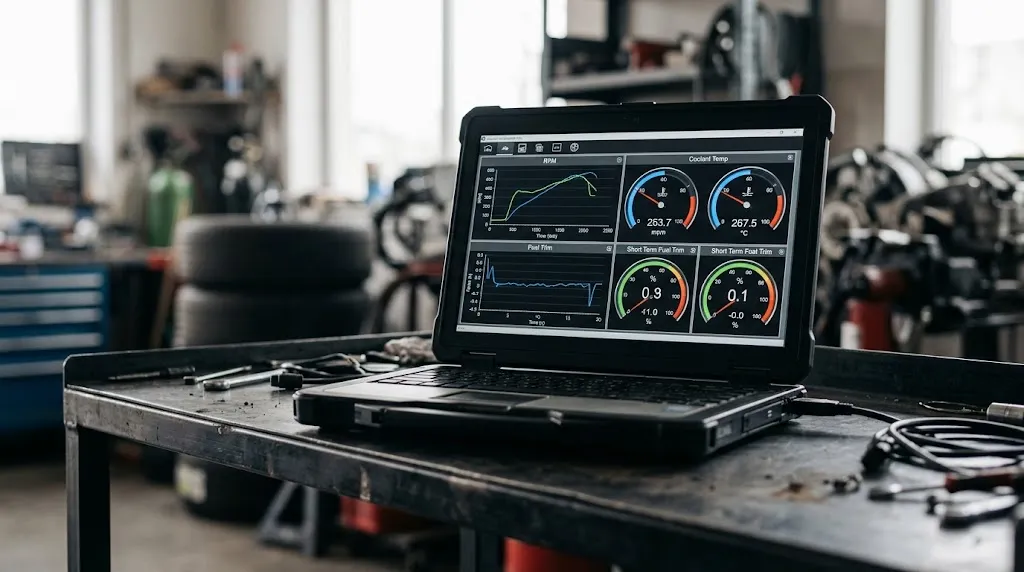
The exact parameters stored in a freeze frame vary depending on the vehicle manufacturer, the specific trouble code, and the sophistication of the engine computer. However, standard OBD2 protocols mandate several vital metrics that appear across almost all modern makes and models.
Understanding these individual metrics helps decode the environment surrounding the fault:
- Engine RPM: Shows how fast the crankshaft was rotating when the fault triggered. This helps distinguish between idle issues and high-speed performance glitches.
- Vehicle Speed: Records whether the car was stationary, accelerating, or cruising on the highway.
- Engine Coolant Temperature: Tracks how warm the engine was, which is essential for diagnosing thermostat failures, overheating issues, or open-loop vs. closed-loop transition problems.
- Calculated Engine Load: Measures the percentage of total engine capacity being utilized, showing if the motor was working under heavy strain.
- Short-Term and Long-Term Fuel Trims: Indicates how much the computer has to alter fuel delivery to maintain the ideal air-fuel mixture. Extreme trims point directly to vacuum leaks, failing fuel pumps, or clogged injectors.
- Throttle Position: Displays the exact angle of the throttle plate, helping isolate throttle body sensor or pedal communication faults.
- Intake Air Temperature and Manifold Pressure: Provides data on incoming air density and pressure inside the intake manifold.
Primary Parameters vs. Enhanced Data Fields
Generic OBD2 scanners pull baseline mandated emissions parameters, but advanced diagnostic tools can access manufacturer-specific enhanced data fields. These expanded snapshots may include transmission gear selection, ABS engagement status, turbocharger boost pressure, or hybrid battery state of charge.
It is important to note that a freeze frame captures only one specific frame per code by default. If a new, higher-priority code occurs, some vehicle computers overwrite the existing freeze frame data to store the most recent event. Preserving or recording this information before clearing codes is essential for proper diagnosis.
Key Insight
Freeze frame data is static historical evidence of a past event, whereas live data shows ongoing sensor readings in real time. Never attempt to rev the engine or drive the car while expecting the stored freeze frame values to update automatically.
How to Access and Interpret Freeze Frame Data
Retrieving a freeze frame requires an OBD2 diagnostic code reader or a comprehensive scan tool. The retrieval process follows a straightforward diagnostic sequence:
- Locate the vehicle’s OBD2 port, typically positioned underneath the dashboard near the steering column.
- Plug in your diagnostic scanner and switch the vehicle ignition to the “On” position without turning over the engine.
- Navigate the tool menu to read diagnostic trouble codes (DTCs).
- Select the specific fault code and choose the submenu option labeled “Freeze Frame” to view the captured parameters.
Interpreting these values requires looking at how metrics interact. For example, high engine load paired with very low RPM values often points toward transmission drag or a torque converter issue rather than a pure engine fault. Similarly, an oxygen sensor code accompanied by freezing temperatures and rich fuel trims indicates whether the issue occurs primarily during warm-up cycles.
Common Diagnostic Scenarios Using Freeze Frames
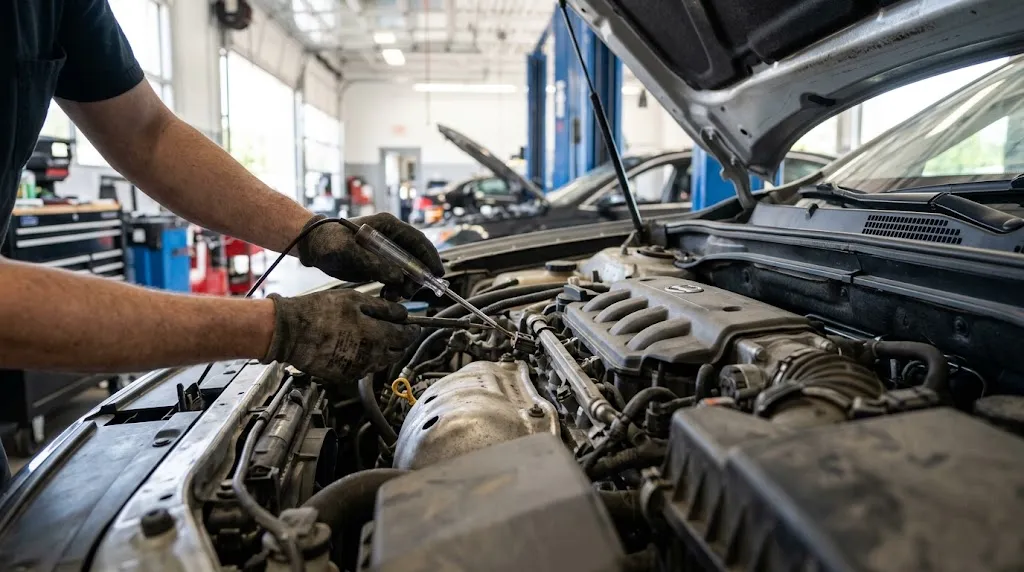
Freeze frame data helps eliminate guesswork across multiple common automotive repair scenarios:
- Engine Misfires: When a cylinder misfire code registers, the freeze frame reveals the exact RPM and vehicle load under which the misfire happened. Misfires occurring exclusively at idle point toward vacuum leaks or dirty injectors, while highway-speed misfires often indicate ignition coil or spark plug breakdown.
- Intermittent Lean or Rich Conditions: Fuel trim metrics within the snapshot show whether the air-fuel imbalance was constant or tied to specific throttle inputs.
- Cooling System Evaluation: Overheating codes logged with high coolant temps and zero vehicle speed isolate problems to electric cooling fans or radiator airflow restrictions rather than internal engine failures.
Related Product
OBD2 Diagnostic Code Readers
An automotive diagnostic scan tool with freeze frame viewing capabilities helps you read fault codes and check engine operating conditions in real time.
As an Amazon Associate, we earn from qualifying purchases.
Frequently Asked Questions
Does clearing fault codes erase freeze frame data?
Yes. Whenever you clear diagnostic trouble codes using an OBD2 scanner, the associated freeze frame data is wiped from the computer’s memory. Always record or screenshot the snapshot data before resetting the check engine light.
Is freeze frame data available for every stored code?
Not always. While major emissions and powertrain codes reliably generate freeze frame snapshots, minor or pending codes may not trigger a permanent data capture until the fault repeats across multiple drive cycles.
Can freeze frame data tell me exactly what part to replace?
No. Freeze frame data provides the operating context and environmental conditions during a failure, but it does not act as a replacement part calculator. It guides you toward the correct diagnostic testing path rather than pointing to a single defective component.
Why does my freeze frame show unexpected driving speeds?
A fault can be triggered by a sensor glitch or environmental trigger milliseconds after an event starts, or the computer may log the data when internal diagnostic self-tests run rather than when the driver first notices a symptom.
Are manufacturer-specific codes included in standard freeze frames?
Generic OBD2 tools display standard powertrain parameters. To view enhanced manufacturer-specific freeze frame data for brands like Ford, Toyota, or BMW, you typically need an advanced bidirectional diagnostic tablet or OEM software.
How many freeze frames can a car computer store?
Most standard vehicles store only one primary freeze frame tied to the highest-priority emissions code, though newer vehicles with enhanced network architecture can sometimes retain multiple snapshots for distinct modules.
Conclusion
Freeze frame data bridges the gap between a confusing check engine light and an effective vehicle repair strategy. By preserving critical engine operating metrics at the exact millisecond a fault occurs, this built-in diagnostic feature eliminates guesswork and cuts down troubleshooting time. Reviewing these parameters carefully before clearing codes or replacing parts ensures you target the root cause of vehicle performance issues correctly.

I’m Alex Rahman, a car enthusiast and automotive writer focused on practical solutions, car tools, and real-world driving advice. I share simple and honest content to help everyday drivers make better decisions.
