Can You Scan a Car With the Check Engine Light Off? Yes, Here’s Why
Quick Answer
Yes, you can scan a car even if the check engine light is off. A scanner will reveal pending codes that haven’t triggered the light yet, historic codes from past issues, live sensor data, and emission readiness monitor status. Scanning a vehicle without a light is highly recommended when inspecting a used car.
Most drivers treat the OBD2 port under their dashboard as a dedicated port for the check engine light. If the dash is clear, the diagnostic port is completely ignored.
However, a vehicle’s engine control module (ECM) is constantly running self-tests, monitoring sensors, and making micro-adjustments long before a dashboard warning illuminates. Plugging in a scan tool when the dashboard is dark is one of the most effective ways to catch developing mechanical problems early, verify emissions readiness, and protect yourself against fraud when buying a used vehicle.
What a Scanner Reveals When the Light is Off
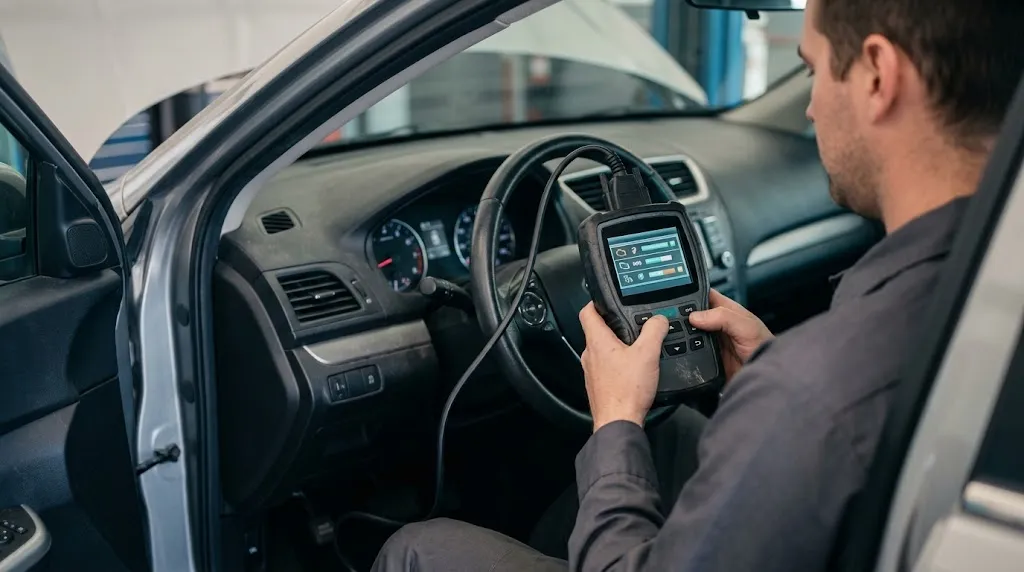
Even without an illuminated Malfunction Indicator Lamp (MIL), your car’s computer stores a wealth of diagnostic information. Modern vehicle diagnostic systems operate on a “two-trip logic” for most emissions-related faults, meaning a component must usually fail a test twice before the dashboard light turns on.
Pending Codes
When a sensor detects an anomaly for the first time, the ECM records it as a “pending” code. The car is taking note of the irregularity but waiting to see if it happens again on the next drive cycle. If you scan the vehicle during this window, you will see the pending code. This allows you to address a failing part—like an aging ignition coil causing intermittent misfires—before it completely fails and leaves you stranded.
Permanent and Historic Codes
Since 2010, emissions regulations have required vehicles to store Permanent Diagnostic Trouble Codes. If a seller tries to mask a problem by using a cheap code reader to clear the check engine light, the permanent code remains lodged deep in the ECM’s memory. It cannot be erased by a scan tool; it only clears itself after the vehicle completes a rigorous series of self-tests to prove the mechanical issue is genuinely fixed. Scanning for these hidden historic codes is the ultimate defense against dishonest sellers.
Emissions Readiness Monitors
Readiness monitors are continuous and non-continuous self-tests the car performs on its emissions systems, such as the catalytic converter and EVAP system. If a battery was recently disconnected or codes were cleared manually, these monitors reset to “Incomplete.” Scanning the car tells you exactly which systems are ready for an emissions test and which ones are not.
Why Scan a Car Without a Check Engine Light?
Beyond simple curiosity, there are several practical, money-saving reasons to plug into the OBD2 port when the dashboard is completely clear.
Inspecting a Used Car Before Purchase
This is the single most important time to scan a car with the light off. A dishonest seller can clear a check engine light in seconds. The dashboard will look perfectly fine during a short test drive, only for the light to return 50 miles down the road. A scanner will immediately expose this trick by showing “Incomplete” readiness monitors or displaying permanent codes that the seller couldn’t erase.
Tip
When test-driving a used car, plug in your scanner and check the “I/M Readiness” status. If more than one monitor reads “Incomplete,” the seller likely cleared the codes right before you arrived. Walk away, or demand a much longer test drive until the monitors set.
Preparing for an Emissions Test
If you live in a jurisdiction that requires mandatory OBD2 emissions testing, showing up with a clear dashboard is not enough to pass. The Environmental Protection Agency guidelines stipulate that testing facilities must reject a vehicle if its readiness monitors are incomplete. Scanning at home allows you to verify the car is mathematically ready to pass before you waste a trip to the inspection station.
Diagnosing “Ghost” Drivability Issues
Sometimes a car just feels wrong. It might suffer from a rough idle, hesitation, or a sudden drop in fuel economy. The ECM may not consider the erratic behavior severe enough to trigger an emissions fault and illuminate the light, but the sensors are still registering the bad data. A scanner allows you to see what the computer sees to diagnose the root cause.
The Diagnostic Power of Live Data
Basic code readers only show you alphanumeric codes. Advanced scan tools provide “live data,” which allows you to watch the sensors react in real-time while the engine is running. This is exactly how professional mechanics diagnose drivability issues without relying on a check engine light.
Fuel Trims: Fuel trim is the percentage of fuel the computer is adding or subtracting to maintain a perfect air-fuel ratio. If your Long Term Fuel Trim is sitting at +15%, the computer is desperately adding fuel to compensate for a massive vacuum leak or a weak fuel pump. The check engine light might not turn on until it hits +25%, meaning live data lets you spot a vacuum leak weeks before the dashboard warns you.
Oxygen Sensor Voltage: An aging oxygen sensor can become “lazy,” meaning it reacts slowly to changes in the exhaust. This destroys your fuel economy, but a lazy sensor rarely triggers a light until it completely dies. By graphing the live data on a scanner, you can watch the voltage sweep. If the wave is sluggish, you know exactly why your gas mileage has plummeted.
Can a Scanner Detect a Disconnected Check Engine Light?
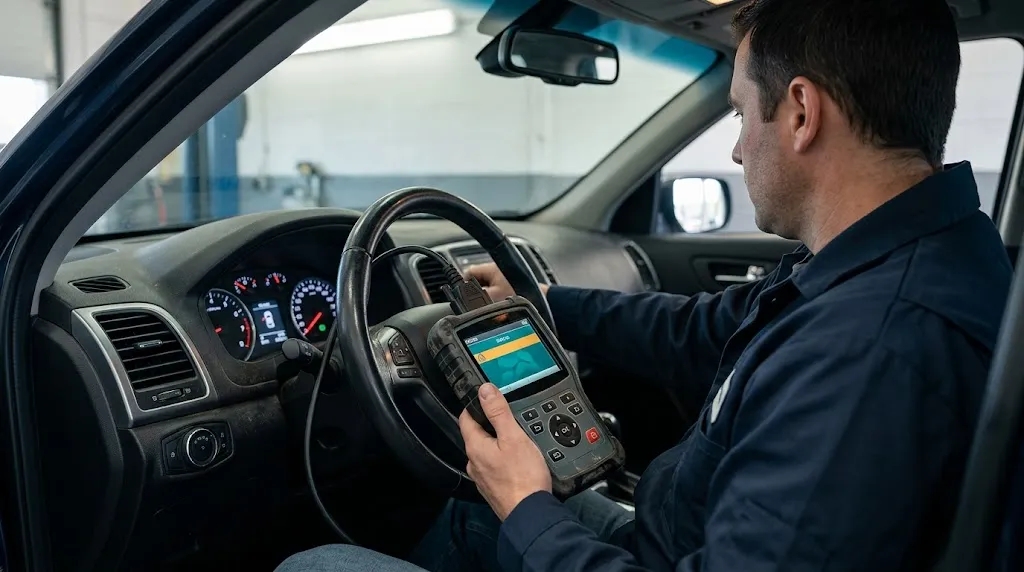
Occasionally, unscrupulous sellers will physically remove the check engine light bulb from the instrument cluster or place black electrical tape behind the gauge face to hide a persistent, expensive fault.
When you turn the ignition key to the “ON” position without starting the engine, every warning light on the dashboard should illuminate for a few seconds. This is a standard bulb check. If the check engine light does not illuminate during this check, the bulb is missing, burnt out, or physically blocked.
Even if the physical light is disabled, the ECM continues to operate normally. A scan tool will easily communicate with the computer and pull every active code that the missing bulb is trying to hide. Many scanners also feature an “MIL Status” data line. If the scanner says “MIL Status: ON” but your dashboard is completely dark, you immediately know the instrument cluster has been tampered with.
Warning
Never purchase a vehicle if the check engine light fails to illuminate during the initial key-on bulb check. This is almost always a sign of intentional tampering to hide an expensive engine failure.
Choosing the Right Tool: Code Readers vs. Scan Tools
Not all OBD2 devices are created equal. If you are scanning a vehicle with a dark dashboard, the type of tool you use dictates how much invisible data you can uncover.
| Feature | Basic Code Reader ($15 – $30) | Advanced Scan Tool ($70+) |
|---|---|---|
| Reads Active Codes | Yes | Yes |
| Reads Pending Codes | Usually | Yes |
| Emissions Readiness Status | Yes | Yes |
| Live Sensor Data | No | Yes |
| Historic / Permanent Codes | Rarely | Yes |
If you only want to know why a light is currently illuminated, a basic code reader is perfectly sufficient. However, if you want to perform preventative maintenance, diagnose rough running conditions without a warning light, or aggressively inspect used cars, a tool capable of streaming live data is required.
Understanding Drive Cycles
If you scan your vehicle and discover that the I/M Readiness monitors are marked as “Incomplete,” the vehicle’s computer has not yet gathered enough data to confirm the emissions systems are working properly.
To change these monitors from “Incomplete” to “Ready,” the vehicle must complete a specific drive cycle. A drive cycle is not a simple five-minute trip around the block. It requires the vehicle to experience a variety of specific operating conditions, including a completely cold start, extended idling, smooth highway cruising at 55 miles per hour, and deceleration without using the brakes.
Key Insight
You cannot rush a drive cycle. Some monitors, particularly the Evaporative Emission Control System (EVAP), require the vehicle to sit completely untouched for over 8 hours before they will attempt to run their internal tests.
Related Product
OBD2 Scanner with Live Data
To diagnose rough idles or deeply inspect a used car when the check engine light is off, a scanner capable of displaying live sensor data and permanent codes is essential.
As an Amazon Associate, we earn from qualifying purchases.
Frequently Asked Questions
Does clearing codes with a scanner fix the car’s problem?
No. Clearing a code simply erases the error record from the engine control module’s short-term memory and turns off the dashboard light. It does not repair the faulty sensor, vacuum leak, or mechanical issue. Once the computer runs its self-tests again, it will detect the exact same failure, and the check engine light will illuminate again.
How long does it take for a pending code to turn on the check engine light?
Most emissions-related components use a two-trip logic system. The first time the computer detects a fault, it registers a pending code without illuminating the light. If the exact same fault occurs during the very next drive cycle, the pending code is upgraded to an active code, and the check engine light turns on immediately.
Can a scanner read ABS or airbag codes if the check engine light is off?
The check engine light is exclusively tied to the engine and emissions systems. The Anti-lock Braking System (ABS) and Supplemental Restraint System (airbags) have their own dedicated warning lights and separate computer modules. While advanced scan tools can access these systems, a basic engine code reader will not pull ABS or airbag data, regardless of whether the dashboard lights are on or off.
Will an auto parts store scan my car if the light isn’t on?
Yes, most major auto parts stores will still plug their code reader into your OBD2 port for free even if the light is off. However, because store employees typically use very basic code readers, they will usually only be able to tell you if there are pending codes or if the emissions monitors are incomplete. They cannot perform deep live-data diagnostics.
What does it mean if the scanner says “No Link” or fails to connect?
If your scanner powers on but cannot communicate with the vehicle, the most common culprit is a blown fuse. The OBD2 diagnostic port shares a power circuit with the vehicle’s cigarette lighter or 12-volt auxiliary power outlet in many cars. If you blew the accessory fuse, the diagnostic port loses power or communication capability.
Can an OBD2 scanner drain my car battery if left plugged in?
Yes. The OBD2 port provides constant 12-volt power directly from the car’s battery, even when the ignition is turned off and the keys are removed. While small Bluetooth scanner dongles draw very little power, leaving any scanner plugged in for days or weeks while the car sits unused will eventually drain the battery completely.
Conclusion
Scanning a car with the check engine light off is not only possible—it is a critical diagnostic habit. Whether you are hunting down a mysterious drop in fuel economy, preparing for an upcoming state emissions inspection, or protecting yourself from a dishonest seller during a used car purchase, the OBD2 port holds the truth. By utilizing a scanner capable of reading pending codes, permanent historic data, and live sensor streams, you bypass the dashboard entirely and see exactly what the engine computer sees before a minor issue becomes an expensive breakdown.

I’m Alex Rahman, a car enthusiast and automotive writer focused on practical solutions, car tools, and real-world driving advice. I share simple and honest content to help everyday drivers make better decisions.
