Check Engine Light On With No Code? Causes and Fixes
Quick Answer
A steady check engine light with “no codes” usually means the fault is hidden from your scanner, not that the car found nothing wrong. Common reasons are a pending fault, a manufacturer-specific code, a wrong scan menu, or a communication problem. Rescan for pending, permanent, and manufacturer codes, and treat a flashing light as urgent.
That result is confusing because the dashboard and scanner seem to disagree. Usually, they do not. The dashboard reports what the powertrain computer has judged to be a fault, while a basic scan shows only one narrow slice of what that computer has stored.
Check one detail first. When you turn the key to “on” without starting the engine, the light should come on for a bulb check. That is normal. The fault worth diagnosing is a light that stays on after the engine is running.
What “No Code” Usually Means
“No code” is a scanner result, not a diagnosis. It normally means the tool found no confirmed generic powertrain code in the place it looked. It does not prove every module is clear, that no fault is developing, or that the light is false.
Cars store several kinds of diagnostic information. A code can be pending, confirmed, permanent, historical, manufacturer-specific, or stored in a module other than the engine computer. A basic reader may show only confirmed generic codes, so the other categories can remain invisible.
Why the Light Can Stay On When a Basic Scan Finds Nothing
A pending fault has not yet become a confirmed code
Many emissions faults use two-trip logic. The computer detects a fault once and stores it as pending. If it detects the same fault again on a later drive cycle, it promotes it to confirmed status and turns on the malfunction indicator lamp.
A pending code alone does not normally command the light. So if the light is already on, a pending fault may be part of the story, but there is often also a confirmed code the scanner missed, a one-trip fault that lights the lamp immediately, or a fault in another system. Pending codes still identify a system that has already failed once.
The code is manufacturer-specific or in another module
Generic OBD-II codes are standardized across brands. Manufacturer-specific codes often require brand-specific software or a more capable scan tool. Some faults also live in the transmission, body, chassis, or network modules rather than the main engine code list.
That is why a basic reader can report “no codes” while a professional all-system scan finds a fault. The first tool was not necessarily broken. It may simply lack access to the module or code family where the fault was stored. If another warning appears, or the car has transmission symptoms, ask specifically for an all-system scan. The guide to what scanners can read ABS codes explains why coverage varies between tools.
The fault is intermittent or borderline
Some faults appear only when the engine is cold, hot, under load, or after a particular driving sequence. A loose fuel cap can cause a small evaporative emissions leak. A borderline oxygen sensor can drift outside its expected range briefly and then recover. A single misfire may not meet the threshold for a confirmed code.
Intermittent faults are common with EVAP leaks, voltage dips, loose connectors, and ageing sensors, and a later scan can miss the original event unless history or freeze-frame data remains.
The scanner, adapter, or scan procedure missed it
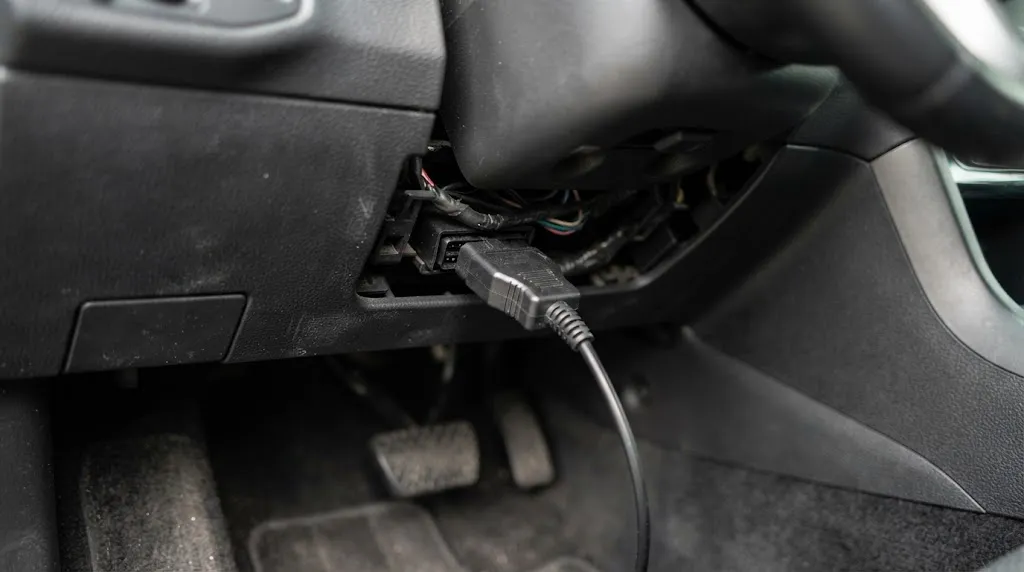
Scanner problems are more common than many drivers expect. The ignition may not have been fully on, the adapter may not have finished linking, or the app may have shown only the first screen. Some tools first show a module identifier, such as 7E8, rather than a fault code. That identifier is not a trouble code: select the module, then choose “read codes” or “stored codes.”
A dirty port, blown port fuse, low battery voltage, or outdated app can also block communication. “Cannot link” differs from “linked, no codes found.”
Pending, Confirmed, Permanent, and History Codes
A code’s status tells you how certain the computer is, whether the lamp should be on, and whether clearing it will remove it.
| Status | Meaning | Why a basic scan may miss it |
|---|---|---|
| Pending | Detected once, not yet confirmed on a second trip. | Some readers show confirmed codes only. |
| Confirmed | Detected again and treated as persistent. | May be manufacturer-specific, not generic. |
| Permanent | Remains after clearing until the monitor passes. | Needs a dedicated permanent-code check. |
| History | A past fault that is no longer active. | May be stored separately from current codes. |
Permanent codes deserve special attention: on many modern vehicles, disconnecting the battery or using a basic clear command will not erase one. The monitor must run and pass first, which prevents hiding a fault before an emissions test.
How to Rescan Correctly Before Assuming There Is No Fault
Follow this order. It separates a scanner problem from a vehicle problem and gives a professional useful information if you still need help.
- Confirm the light behaviour. Note whether it is steady or flashing, and whether other warnings or symptoms appear.
- Check the simple items. Tighten the fuel cap until it clicks, inspect its seal, and check loose battery terminals.
- Repeat the scan with the ignition fully on. Plug the scanner in firmly, wait for it to link, and read stored, pending, permanent, and history codes separately.
- Record readiness and freeze-frame data. Before clearing anything, note incomplete monitors and save any freeze-frame snapshot.
- Try a second tool or an all-system scan. Another reader or shop-level scan can reveal manufacturer-specific and non-powertrain codes.
- Drive normally and rescan if the light returns. Note cold starts, highway speed, heavy acceleration, refuelling, or bumps. That pattern often matters more than one scan result.
The most common mistake is stopping at the first “no codes” screen without checking the other code categories.
Tip
Write down the exact scanner wording: “no codes,” “link error,” “no communication,” or a module identifier. Those results point to different next steps, and a shop can save time if you bring the exact message.
Simple Checks That Do Not Need a Code
- Fuel cap and EVAP clues: A cap that does not click, or has a cracked seal, can trigger an EVAP fault. Tighten it and allow several drive cycles.
- Battery and voltage: A weak battery, corroded terminal, or starting voltage drop can disturb modules. Mention any recent jump-start or battery replacement.
- Diagnostic port and fuse: Check the connector is clean, fully seated, and undamaged. A powered scanner that cannot communicate may point to a port fuse or protocol mismatch.
- Recent work: A fault that began right after service deserves a recheck of that area, especially if a sensor or wiring was disturbed.
- Driving symptoms: Rough idle, hesitation, reduced power, poor economy, or hard starting matter more than the absence of a generic code.
After a code has recently been cleared, recently cleared codes and readiness monitors can explain the gap. Clearing a code resets readiness monitors, so the vehicle may need several drive cycles before its self-tests run again.
When “No Code” Is More Urgent
Warning
If the light is flashing, the engine is shaking or misfiring badly, power has dropped sharply, or you smell strong fuel or burning, stop as soon as it is safe and arrange a tow. A flashing light can indicate an active misfire that may overheat and damage the catalytic converter. Do not keep driving to see whether a code eventually appears.
Seek prompt diagnosis if the light stays on and the car runs roughly, stalls, overheats, or loses power. A steady light with normal driving is less urgent, but still deserves diagnosis soon.
Mistakes That Make “No Code” Harder to Diagnose
- Clearing the code immediately: Clearing erases freeze-frame data and resets monitors that often help find an intermittent fault.
- Disconnecting the battery as a shortcut: This erases learned settings and readiness data without fixing the cause, and can delay an emissions test.
- Replacing a part based on a guess: Without a code, live data, or a test result, part replacement is often an expensive guess.
If your scanner powers on but cannot talk to the car, the problem may be separate from the engine fault. The guide to a scanner that has power but no communication covers the port, protocol, and compatibility checks.
What a Professional Scan Can Add
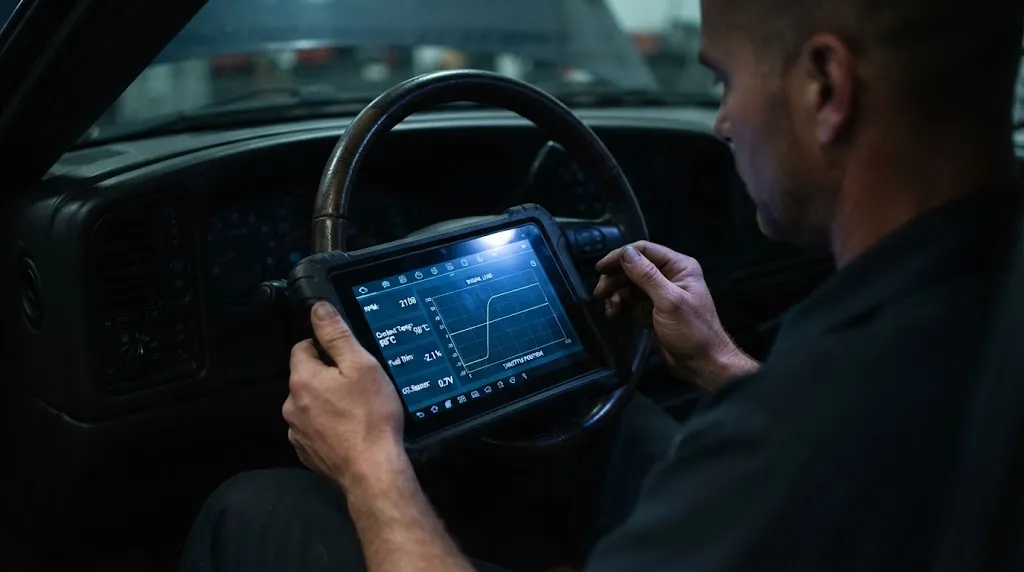
A professional scan can add manufacturer-specific codes, all-system coverage, live data, freeze-frame records, and monitor test results, including Mode $06 results that can show a borderline test trending toward failure.
Bring the exact scanner message, light behaviour, first appearance, symptoms, and recent repairs or battery work. The International Council on Clean Transportation’s OBD white paper describes pending and confirmed codes, while the Tomorrow’s Technician guide to readiness monitors explains those modes in workshop terms.
Related Product
OBD-II Scanner With Pending and Permanent Code Reading
A scanner that shows pending, confirmed, and permanent codes, plus freeze-frame and readiness data, is more useful for this problem than a reader that shows confirmed codes only.
As an Amazon Associate, we earn from qualifying purchases.
Frequently Asked Questions
Can the check engine light be on with genuinely no fault stored anywhere?
It is uncommon, but possible after a brief electrical disturbance, a cluster or communication fault, or confusion with another lamp. Usually, a better scan finds a pending, manufacturer-specific, permanent, history, or non-powertrain record.
Is it safe to drive if the light is on but my scanner shows no codes?
A steady light with normal driving is usually safe for short, cautious driving to a diagnosis, but do not ignore it. Stop promptly if it flashes, the engine runs roughly, power drops, it overheats, or you smell strong fuel or burning.
Why does my scanner show a module name instead of a code?
Some tools first list responding modules before showing fault codes. Select the engine module, then choose stored or read codes, and check pending, permanent, and history menus.
Will disconnecting the battery fix a check engine light with no code?
It may turn the light off temporarily, but it does not repair the fault and it resets readiness monitors and learned data. Permanent codes can remain until the monitor passes.
How long should I wait after tightening a loose fuel cap?
Allow several normal drive cycles, not just one short trip. The EVAP monitor needs suitable conditions to run and pass, and tightening the cap will not help if the seal is damaged or the leak is elsewhere.
Does “no code” mean I will pass an emissions test?
No. It can still fail for incomplete readiness monitors, a permanent code, or an unconfirmed fault. Check readiness first, especially after clearing a code or disconnecting the battery.
Conclusion
A check engine light with no code is usually a visibility problem, not proof that the car is fine. Check whether the light stays on after starting, rescan for pending, permanent, history, and manufacturer-specific codes, and record the exact scanner message and driving conditions. A steady light with normal driving calls for prompt diagnosis, while a flashing light or serious symptom calls for stopping as soon as it is safe. The goal is not to clear the lamp quickly, but to find the record or test result that explains why it came on.

I’m Alex Rahman, a car enthusiast and automotive writer focused on practical solutions, car tools, and real-world driving advice. I share simple and honest content to help everyday drivers make better decisions.
