Can an OBD2 Scanner Detect a Recently Cleared Code? What to Know
Quick Answer
No, a standard OBD2 scanner cannot detect a specific trouble code once it has been recently cleared from the vehicle’s computer memory. However, clearing codes resets the car’s internal emission monitors, leaving behind “not ready” status flags that immediately signal to a diagnostic tool—or an emissions inspector—that the memory was recently wiped.
What Happens When You Clear an OBD2 Code?
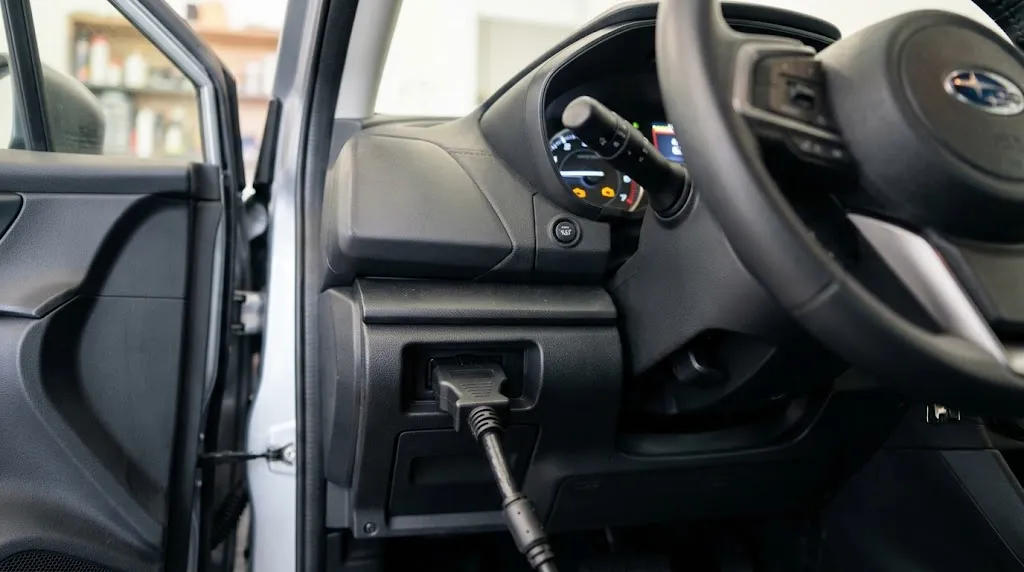
When you plug an OBD2 scanner into a vehicle and select the command to clear or erase diagnostic trouble codes (DTCs), the car’s Powertrain Control Module (PCM) or Engine Control Module (ECM) immediately wipes several pieces of data from its volatile memory.
This process turns off the Check Engine Light and erases the specific fault codes that triggered the warning. For anyone trying to hide a temporary mechanical glitch or bypass an intermittent sensor warning, clearing the code makes the active fault disappear from the scanner’s live fault memory.
However, wiping the computer memory does much more than just delete a stored number. It also resets the vehicle’s internal diagnostic self-tests, known as readiness monitors.
The Role of OBD2 Readiness Monitors
Modern vehicles continuously run self-tests on various emissions and engine components while you drive, including the oxygen sensors, catalytic converter, EVAP system, and EGR valve. These checks ensure that all pollution-control devices are working correctly under real-world conditions.
When you clear codes with an OBD2 scanner, all of these internal readiness monitors are instantly reset to “incomplete” or “not ready.”
While a basic scanner will show no stored codes right after a reset, it will display the status of these monitors. This creates a distinct digital footprint that reveals the computer memory was recently cleared.
Continuous vs. Non-Continuous Monitors
OBD2 monitors are split into two categories:
- Continuous monitors: These run constantly while the engine is running, checking items like misfires, fuel trim, and comprehensive components. They usually re-enable within seconds of starting the vehicle.
- Non-continuous monitors: These require specific driving conditions—such as a certain speed, engine temperature, and throttle position—to run and complete their checks. Examples include the catalytic converter, oxygen sensor heater, and EVAP system monitors.
If a vehicle has had its codes cleared recently, the non-continuous monitors will remain in a “not ready” state until the car is driven through a specific drive cycle.
Key Insight
Clearing codes does not permanently fix a mechanical problem. If the underlying issue still exists, the fault code will return, and the Check Engine Light will illuminate again once the relevant monitor runs and fails its test.
Can Emissions Testers Detect a Cleared Code?
Yes. State emissions testing facilities and smog check stations specifically look at readiness monitor status during an OBD2 inspection.
If you clear your trouble codes right before driving into an emissions testing station, the test equipment will detect multiple “not ready” monitors. Most jurisdictions will automatically fail the vehicle for an incomplete test, instructing you to drive the car more until the monitors finish running naturally.
Trying to game an emissions test by clearing a persistent fault code moments before arrival rarely works because the underlying sensor failure will cause the monitor to fail its test as soon as driving conditions are met.
What Advanced Diagnostic Tools Can See
While a basic code reader only shows current fault codes and monitor status, advanced diagnostic tools used by professional technicians have access to additional data layers within the vehicle computer.
Freeze Frame Data
Freeze frame data captures a snapshot of engine conditions—such as RPM, coolant temperature, vehicle speed, and load—at the exact moment a fault code was first triggered. When codes are cleared, the active freeze frame data is also wiped.
Pending Codes and History Codes
Some advanced scanners can view pending codes, which are temporary faults that have occurred during the current or previous driving cycle but haven’t happened frequently enough to illuminate the dashboard light yet. However, a full memory clear usually wipes pending codes as well.
Warning
Disconnecting the car battery or pulling the ECU fuse clears trouble codes and readiness monitors in the exact same way as using an OBD2 scanner. It does not erase permanent fault codes on newer vehicles equipped with strict emissions management systems.
Permanent Codes on Modern Vehicles
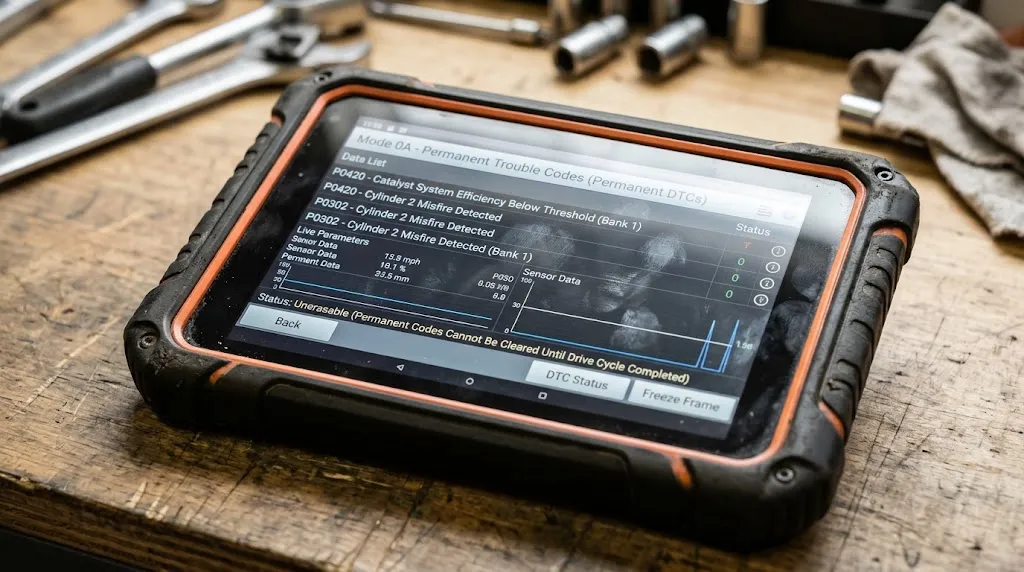
Since 2019, many newer vehicles include a category called permanent diagnostic trouble codes (sometimes designated as Mode $0A codes). These codes are specifically designed by manufacturers and regulatory bodies to prevent drivers from simply clearing codes to pass emissions tests.
Unlike standard codes, permanent codes:
- Cannot be erased using a standard OBD2 scanner delete command.
- Cannot be cleared by disconnecting the battery.
- Can only be erased automatically by the car’s computer after the vehicle successfully runs its diagnostic self-tests multiple times and confirms the underlying repair was successful.
If a car has a permanent code stored, an advanced OBD2 scanner or professional emissions testing tool will see it even if the dashboard check engine light is currently turned off.
Related Product
OBD2 Diagnostic Scan Tool
Check live sensor data, view readiness monitor status, and read trouble codes before heading to an inspection station.
As an Amazon Associate, we earn from qualifying purchases.
Frequently Asked Questions
Can a mechanic tell if you cleared a code?
Yes. A mechanic can easily see that codes were recently cleared by checking the vehicle’s readiness monitor status. If multiple monitors show as “not ready” or “incomplete,” it indicates the computer memory was recently wiped.
How long does it take for monitors to reset after clearing a code?
Resetting monitors requires driving the vehicle through a specific manufacturer-defined drive cycle. This can take anywhere from a few miles of mixed city and highway driving to several days of normal commuting, depending on the car’s make and model.
Will disconnecting the battery hide a check engine light permanently?
No. Disconnecting the battery turns off the light and clears temporary codes, but it also resets emission monitors. If the mechanical problem causing the warning has not been repaired, the check engine light will return as soon as the relevant diagnostic test runs again.
What is a permanent diagnostic trouble code?
A permanent code is a special type of fault code stored in modern vehicle computers that cannot be erased with a standard scanner or by disconnecting the battery. It remains visible to professional diagnostic tools until the car’s computer verifies that the underlying issue has been fixed through multiple successful drive cycles.
Can you pass an emissions test with cleared codes?
No. Most emissions testing centers will reject or fail a vehicle immediately if its onboard computer reports that readiness monitors are not ready or incomplete, as this shows testing conditions have been interrupted.
Does clearing codes fix the underlying car problem?
No. Clearing codes only resets the computer interface and turns off the warning light. It does not repair faulty sensors, worn parts, or mechanical issues, meaning the underlying problem remains active.
Conclusion
While an OBD2 scanner successfully hides specific trouble codes and turns off the check engine light when cleared, it leaves clear digital traces behind. Resetting codes turns emission readiness monitors to an incomplete state and fails to erase permanent codes on newer vehicles. Understanding how vehicle computer memory works helps car owners recognize that temporary resets cannot substitute for actual mechanical repairs.

I’m Alex Rahman, a car enthusiast and automotive writer focused on practical solutions, car tools, and real-world driving advice. I share simple and honest content to help everyday drivers make better decisions.
