What Is OBD2 Mode 03? Diagnostic Trouble Codes Explained
Quick Answer
OBD2 Mode 03 is a standardized diagnostic command used by scan tools to request and retrieve confirmed Diagnostic Trouble Codes (DTCs) stored in a vehicle’s Powertrain Control Module (PCM). When a check engine light illuminates, Mode 03 is the specific communication protocol that pulls the active fault codes responsible for triggering the warning.
What Is OBD2 Mode 03 and How Does It Work?
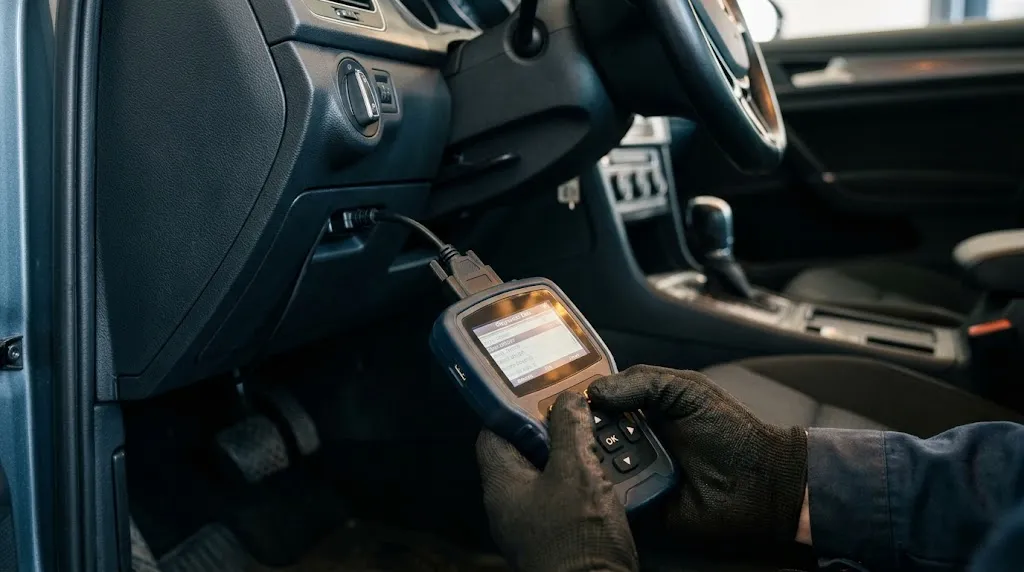
Modern vehicles rely on complex networks of computers and sensors to monitor engine performance, emissions systems, and overall drivability. When a sensor detects a reading outside normal operating parameters, the vehicle’s computer registers a fault. To retrieve this information during diagnostics, scan tools communicate with the onboard computer using standardized request modes established by the Society of Automotive Engineers (SAE) and the International Organization for Standardization (ISO).
Mode 03 specifically targets stored, confirmed emission-related diagnostic trouble codes. Unlike real-time sensor data or temporary pending faults, a Mode 03 request tells the Powertrain Control Module to dump its permanent error codes into the scan tool interface. These alphanumeric codes point technicians and vehicle owners toward specific mechanical or electrical subsystems that require inspection.
Understanding this mode helps demystify what happens behind the scenes when a diagnostic scanner connects to an OBD2 port under the dashboard. Instead of guessing why a dashboard warning light is glowing, the scan tool uses Mode 03 to ask the vehicle computer directly what fault flags have been permanently tripped.
The Role of Mode 03 in Emissions and Diagnostics
The On-Board Diagnostics generation two (OBD2) standard was originally mandated primarily for environmental and emissions compliance. Government regulatory agencies required a universal way to monitor components that affect vehicle emissions, such as catalytic converters, oxygen sensors, and evaporative emission control systems.
Mode 03 plays a central role in this regulatory framework. Because emission-related faults must be reliably tracked and verified before a vehicle passes an inspection, Mode 03 is restricted to retrieving confirmed trouble codes rather than random temporary glitches. A fault usually has to occur across multiple drive cycles before the computer locks it in as a confirmed code accessible via Mode 03.
This distinction prevents temporary sensor blips from causing unnecessary diagnostic failures. When an OBD2 scanner runs a standard code retrieval routine, it automatically executes Mode 03 communication behind the scenes to fetch these verified emission faults.
How Confirmed Codes Differ From Pending Codes
To understand the output of a Mode 03 request, it helps to know how vehicle computers categorize faults:
- Pending Codes (Mode 07): These represent a detected anomaly that happened during the current or recent drive cycle, but has not yet repeated often enough to turn on the check engine light or become permanent.
- Confirmed Codes (Mode 03): These are verified faults that have matured past the pending stage, triggered the malfunction indicator lamp (MIL), and are permanently stored in the computer’s memory.
When you plug in an OBD2 reader, the device queries Mode 03 to display those hardened, confirmed codes that require hands-on troubleshooting or repair.
Structure of OBD2 Diagnostic Trouble Codes
The codes retrieved through Mode 03 follow a strict five-character standardized format. Each character position carries specific meaning, helping technicians instantly narrow down the affected system.
For example, a typical trouble code looks like P0300. Each section represents a different tier of vehicle architecture:
- First Character (System): Identifies the general vehicle system. P stands for Powertrain, B for Body, C for Chassis, and U for Network/Communication.
- Second Character (Type): Distinguishes between generic SAE-standardized codes (0) and manufacturer-specific codes (1).
- Third Character (Subsystem): Points to the exact subsystem within the broader category, such as fuel metering, ignition systems, or emissions controls.
- Fourth and Fifth Characters (Specific Fault): Provide the exact identification number for the specific component failure or circuit malfunction.
When Mode 03 requests data from the computer, it pulls a list of these exact codes if any are present in non-volatile memory.
Key Insight
Mode 03 specifically retrieves emission and powertrain faults. If a vehicle has a body control issue like a broken power window or a chassis issue like an ABS sensor failure, those codes usually require specialized diagnostic modes or manufacturer-specific scan tools.
Common Scenarios When Using Mode 03
Vehicle owners and professional mechanics interact with Mode 03 during several routine diagnostic workflows:
The most common scenario occurs when the check engine light illuminates on the dashboard. Plugging an affordable handheld OBD2 scanner into the under-dash port initiates a diagnostic session. The scanner sends a Mode 03 request string across the vehicle communication bus, and the engine control module responds with any stored fault codes.
Another common situation involves pre-inspection emission testing. State and local inspection stations check whether readiness monitors are set and whether any stored Mode 03 trouble codes are present. Even if the check engine bulb was recently burned out or temporarily cleared, an active fault stored in the computer memory will surface immediately during a Mode 03 query, causing an inspection failure.
Finally, technicians use Mode 03 after completing physical repairs. Once a faulty oxygen sensor or ignition coil is replaced, the diagnostic tool clears the stored codes. Running another Mode 03 check confirms that the computer’s memory has been successfully wiped clean of the previous fault history.
Limitations of Relying Solely on Mode 03
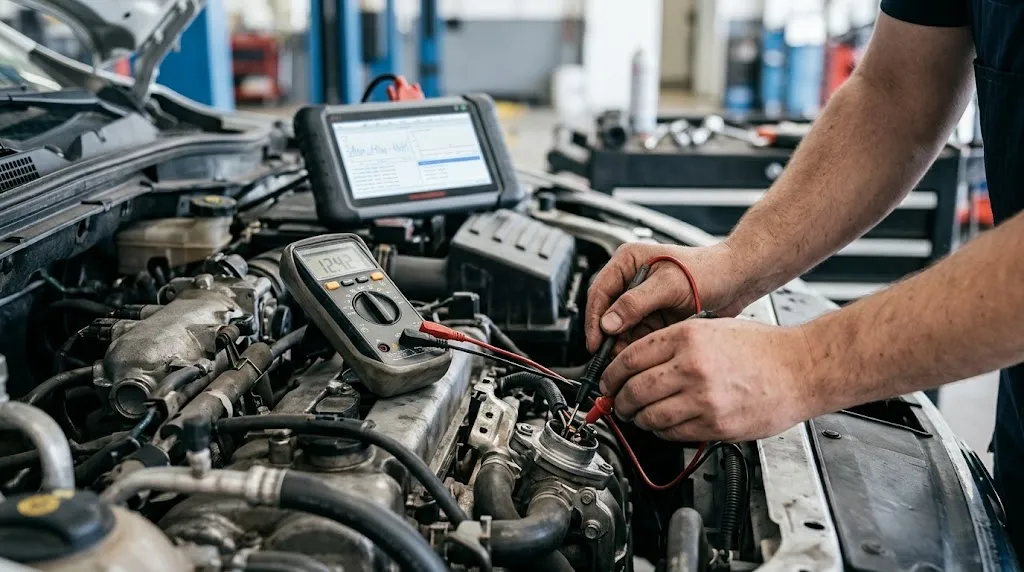
While Mode 03 is an essential foundational tool for automotive diagnostics, it does not provide a complete repair answer by itself. Understanding its limitations prevents misdiagnosis and wasted time.
A trouble code retrieved via Mode 03 tells you which circuit or component is reporting abnormal readings, but it does not automatically prove that the named component is broken. For example, an oxygen sensor code might indicate a rich fuel mixture, but the root cause could actually be a leaking fuel injector, a faulty mass airflow sensor, or an ignition misfire.
Furthermore, intermittent issues can cause temporary anomalies that do not immediately lock into permanent Mode 03 status. Mechanics often combine Mode 03 code retrieval with Mode 01 live data streaming, freeze frame analysis, and physical multimeter testing to verify the actual health of the vehicle’s hardware before replacing expensive parts.
Relevant Product
OBD2 Diagnostic Code Scanner
A reliable handheld code reader lets you quickly pull active Mode 03 trouble codes and check emission monitor status right from your garage.
As an Amazon Associate, we earn from qualifying purchases.
Frequently Asked Questions
What does OBD2 Mode 03 stand for?
Mode 03 is a standardized numerical identifier defined by SAE/ISO protocols for diagnostic communication. In plain terms, it instructs the vehicle computer to report all stored, confirmed emission-related trouble codes.
Does Mode 03 clear codes from the car computer?
No. Mode 03 only requests and reads stored codes. Clearing or erasing trouble codes from the computer memory requires a separate command, which is designated as OBD2 Mode 04.
Can Mode 03 find transmission problems?
Yes, because powertrain codes include both engine and automatic transmission faults. Transmission control issues that trigger emission or driveability flags will often appear under standard Mode 03 queries.
Why are some codes present in my car but not showing in Mode 03?
If a fault is intermittent or has just recently started, it may be stored as a pending fault under Mode 07 rather than a confirmed fault. It will not appear in Mode 03 until it occurs frequently enough to lock into permanent computer memory.
Do all car scanners support Mode 03?
Yes. Any generic OBD2 compliant scan tool sold for consumer or professional use must support Mode 03, as it is a mandatory universal standard for all vehicles manufactured from 1996 onward in the United States and many global markets.
Does a Mode 03 code tell me exactly what part to replace?
No. A trouble code identifies the specific circuit or system experiencing abnormal behavior, but proper diagnosis requires testing the wiring, sensors, and mechanical components before purchasing replacement parts.
Conclusion
OBD2 Mode 03 serves as the primary communication bridge between your vehicle’s onboard computer and diagnostic scan tools when tracking down check engine lights. By requesting confirmed powertrain and emission fault codes, it gives vehicle owners and technicians an immediate starting point for troubleshooting. While a trouble code alone does not replace hands-on mechanical testing, understanding how Mode 03 extracts stored data makes the entire vehicle repair process faster, more transparent, and significantly more efficient.

I’m Alex Rahman, a car enthusiast and automotive writer focused on practical solutions, car tools, and real-world driving advice. I share simple and honest content to help everyday drivers make better decisions.
