
What Can an OBD2 Scanner Not Do? Key Limits to Know51 characters
Quick Answer
What can an OBD2 scanner not do? An OBD2 scanner cannot name the exact failed part, inspect worn metal, fix a fault, or reach every module in a car. It reads what the computer detected and measured, and it leaves hands-on testing, mechanical checks, and many service functions to other tools and checks.
- A code points to a system, not a part.
- Wear, leaks, noise, and damage often leave no code.
- Basic readers miss ABS, airbag, and many transmission faults.
- Clearing a code does not repair the fault.
You plug in a scanner, read a code, and expect a clear answer, yet the tool gives a clue and leaves the rest to testing. This guide explains what an OBD2 scanner cannot do, so you can avoid a wrong part swap and a missed fault. It covers mechanical blind spots, module limits, clearing codes, used-car checks, and electric cars, and it links to what an OBD2 scanner does for the other side of the story.
In this article
- Why a code is a clue, not a diagnosis
- What can an OBD2 scanner not do with mechanical faults?
- Why a basic scanner misses ABS, airbag, and transmission faults?
- Can clearing a code fix the fault?
- What problems leave no code at all?
- Can a scanner check a used car on its own?
- What can an OBD2 scanner not do on electric and hybrid cars?
- When do you need a mechanic, a test, or a dealer tool?
Why a code is a clue, not a diagnosis
A diagnostic trouble code names the system or circuit that reported a fault, not the part that caused it. A lean mixture code such as P0171 can come from a vacuum leak, a dirty airflow sensor, low fuel pressure, or an exhaust leak. The scanner shows the area to test, and testing shows the cause.
Live data adds context, but it does not prove a part is bad. A sensor reading can look wrong because of wiring, a connector, low voltage, or a leak upstream of the sensor. A reading can also look normal at idle and fail under load, so one still snapshot can mislead you.
That gap explains why two cars can show the same code and need different repairs. The code is the start of a test plan, not the end of one. For a clear statement of this limit, see what no scanner can tell you.
What can an OBD2 scanner not do with mechanical faults?
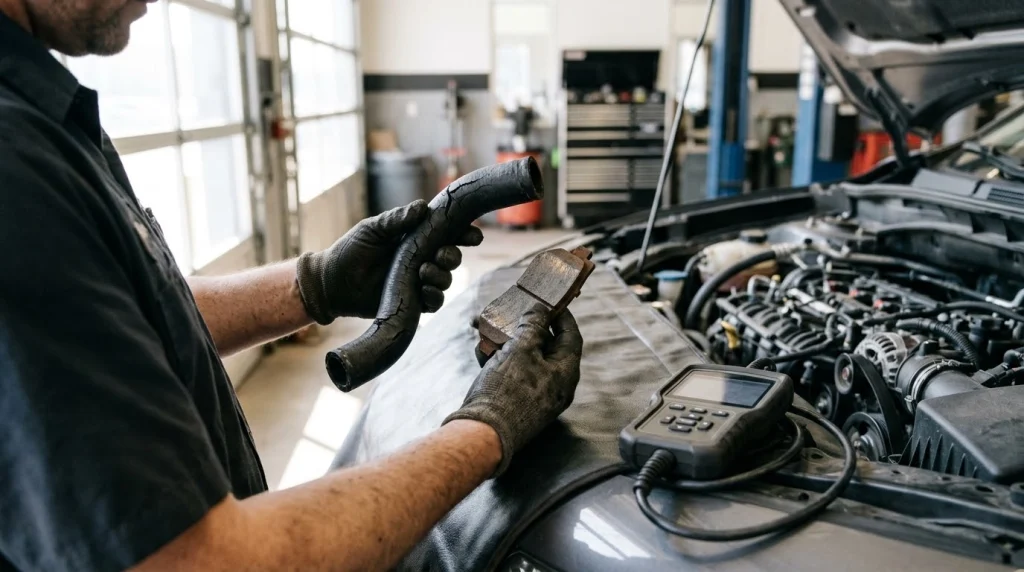
An OBD2 scanner cannot see worn metal, low compression, a cracked hose, or a tired clutch. It reads sensor signals and computer reports, and many mechanical faults change no signal until the damage grows large. A visual check and a hands-on test fill that gap.
Low compression is a plain example. The engine can crank, run rough, and lose power, yet no sensor may report low pressure in a cylinder. A compression test or a leak-down test measures that fault direct, while a scan can only point to a misfire or a lean run.
The same limit applies to belts, chains, bearings, and suspension parts. A worn belt can crack, a bearing can hum, and a bush can split, all with no code. The scanner cannot measure pad thickness, tire wear, belt cracks, or play in a joint.
Use the scan to narrow the system, then test the hardware in that system. A code for a misfire calls for spark, fuel, air, and compression checks in order. A code for low airflow calls for an intake leak check and a sensor check, not a blind part swap.
Why a basic scanner misses ABS, airbag, and transmission faults?
A basic scanner cannot reach every module in a car, because generic OBD2 coverage centers on engine and emissions data. ABS, airbag, body control, and many transmission faults live in other modules, and a basic reader may show no codes while a warning light stays on. That result means the tool lacks access, not that the system is sound.
Manufacturer-specific codes add a second gap. A generic code has the same meaning on most cars, while a maker code can vary by brand and model. A basic reader may read the generic code and miss the maker code that points to the fault.
Service functions sit behind the same wall. ABS bleeding, steering angle calibration, battery registration, and some transmission relearns need a tool with wider module access and the right commands. A basic reader can read and clear engine codes, and it stops there.
The table below compares the three broad tool types, so you can see where each one stops.
| Scanner type | What it can read | What it often misses |
|---|---|---|
| Basic code reader | Engine and emissions codes | ABS, airbag, transmission, and body modules |
| Enhanced scan tool | Engine codes plus some ABS, airbag, and transmission codes | Maker-specific data on some makes |
| Professional tool | Wider module access plus service functions | Some secure functions on gated makes |
The takeaway is simple: a clean scan from a basic reader does not clear the whole car. If an ABS or airbag light is on, check whether the tool can talk to that module. Our guide on a scanner that reads engine codes only explains why that split happens.
Can clearing a code fix the fault?
Clearing a code cannot fix a fault, because it only erases the stored report and turns off the light. The sensor, wire, leak, or worn part that caused the fault stays in place. The code will return when the computer sees the same fault again.
Clearing also resets readiness monitors, which are self-tests for emissions systems. A car can fail an emissions check with monitors not ready, even with no light on. A drive cycle lets the tests run again, and the fault can return during that drive.
Clearing has one fair use: it clears the record after a repair, so you can see if the fix held. Write down the code, the freeze-frame data, and the symptom before you clear it. That record lets you compare the scan before and after the repair.
Warning
Do not clear an airbag or brake code to hide a safety fault, because the fault stays and the light can return. Fix the fault first, then clear the code and check the system again.
If the code returns after clearing, treat that return as proof the fault is still present. A code that stays gone after a repair and a full drive cycle is a better sign than a code cleared just before a test.
What problems leave no code at all?
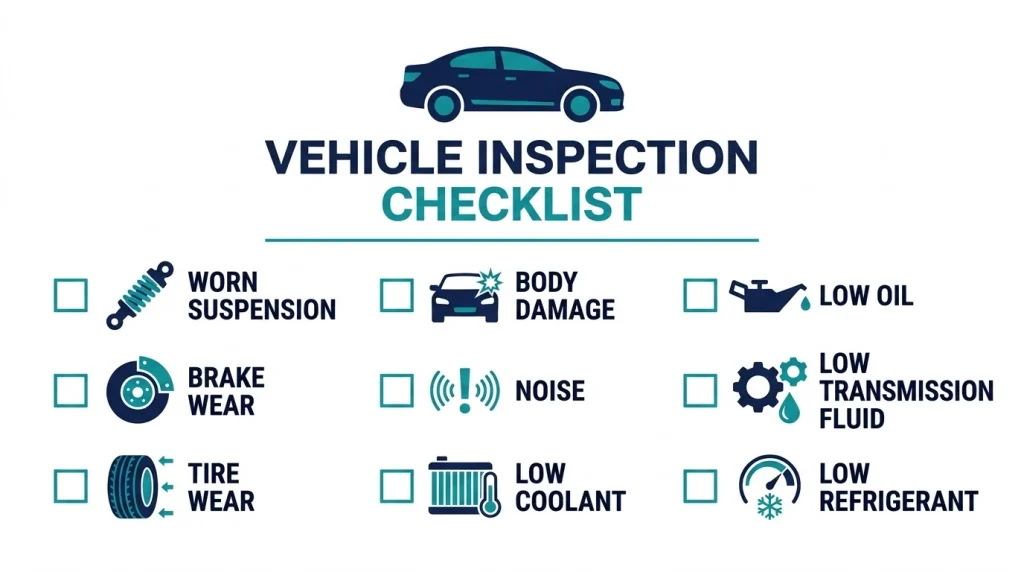
Many problems leave no code at all, because no sensor watches the part or the fault stays below the trigger point. Worn suspension, brake wear, tire wear, body damage, and many noises fall in this group. A scan cannot replace a walk-around check and a road test.
Fluid problems are a clear case. Low coolant, low oil, low transmission fluid, and low refrigerant can cause damage with no code, or with a code that arrives late. A dipstick, a sight glass, a pressure gauge, and a visual leak check give the facts a scan cannot give.
Intermittent faults add a third gap. A fault that appears only when hot, only under load, or only on a rough road may not set a code during a short scan. Freeze-frame data can help, but it shows one moment, not the full drive. For a full view, see what a scanner can and cannot diagnose.
Do
- Write down the code and the symptom before you clear it.
- Check live data under load, not only at idle.
- Test the part the code points to before you replace it.
Avoid
- Replacing a part on a code alone.
- Treating no codes as proof the car is sound.
- Clearing a safety code to hide a fault.
Use the scan as one check among several. A clean scan plus a clean visual check, a fluid check, and a road test gives a far stronger picture than a scan alone.
Can a scanner check a used car on its own?
A scanner cannot check a used car on its own, because it cannot see accident damage, rust, worn tires, a slipping clutch, or a tired gearbox. It can show stored codes, pending codes, and readiness status, and those facts are useful. They are not a full inspection.
Readiness status deserves care. Monitors not ready can mean codes were cleared or the battery was disconnected, and a seller can clear codes in seconds. A clean scan after a clear does not prove the car is sound. It proves the scan found no supported codes at that moment.
Check the scan with a physical inspection and a test drive. Look at tires, brakes, fluids, belts, and the body. Listen for noise, feel for slip or pull, and watch for smoke or leaks. A scan that matches the drive gives more trust than either check alone.
Tip
Ask the seller not to clear codes before your visit, then check readiness monitors first and note any monitor that shows not ready.
A scanner can also miss faults that need a deeper tool. If the car has an ABS, airbag, or transmission light, ask for a scan that reaches those modules. A guide on how to detect intermittent faults in a used car explains how to run that check.
What can an OBD2 scanner not do on electric and hybrid cars?
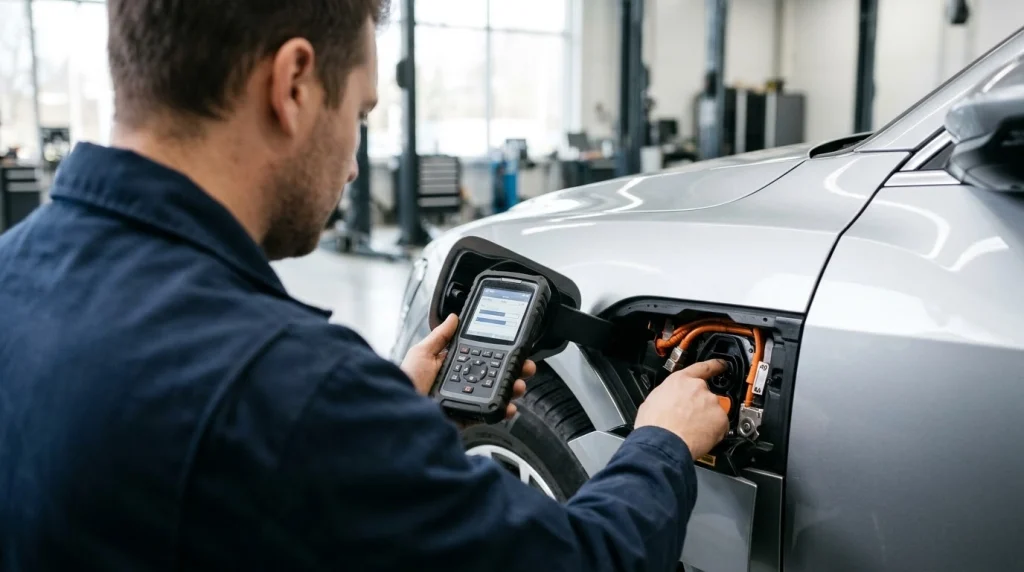
An OBD2 scanner cannot give a full picture of an electric car with generic data alone, because an electric car has no exhaust emissions to monitor in the same way. Generic data can be thin, and battery health, high-voltage faults, and drive unit data often need a tool with electric vehicle coverage. A basic reader may show little or nothing useful.
Hybrid cars sit between the two cases. A generic scan can read many engine codes, yet hybrid battery, inverter, and electric motor faults may sit in modules a basic reader cannot reach. A tool with hybrid coverage and the right maker support reads far more.
Do not judge battery health from a generic scan alone. High-voltage battery checks need cell data, state of health data, and a test plan that a generic reader does not give. If the car shows a hybrid or battery warning, get a scan from a tool that lists that make and model.
When do you need a mechanic, a test, or a dealer tool?
You need a mechanic, a test, or a dealer tool when the scan points to a system but cannot name the cause. A misfire, a lean code, or a transmission slip needs hands-on checks, and a scan alone cannot finish that work. A mechanic can run pressure tests, scope tests, and wiring tests that a scanner cannot run.
Secure functions are a second case. Some makes gate key coding, module coding, and some service resets behind dealer access or a registered tool. A generic scanner cannot code a key, program a module, or unlock a gated function, even if it can read the code.
Safety systems are a third case. Airbag, brake, and steering faults need care, and a wrong reset can hide a fault or leave a system untested. Get help when a safety light stays on, when the car loses power, or when you smell fuel or see smoke.
If you
See a check engine light only, with no other warning
Choose a basic reader, because it can read the engine code and readiness status.
If you
See an ABS, airbag, or transmission light
Choose an enhanced tool, because it can reach those modules on many cars.
If you
Need a service reset, a relearn, or a gated function
Choose a professional or dealer tool, because a basic reader cannot run those commands.
Use the scan to decide the next step, not to skip it. A clear code plus a clear test plan saves time and money. A code plus a guess costs both.
OBD2 Scanner
A scanner with wider module coverage helps you see faults a basic reader misses.
Frequently Asked Questions
Can an OBD2 scanner tell me which part to replace?
An OBD2 scanner cannot tell you which part to replace, because a code points to a system or circuit, not a single cause. A misfire code can come from a plug, a coil, an injector, a vacuum leak, or low compression. Test the parts in that system before you buy one.
Can a basic scanner read airbag and ABS codes?
A basic scanner cannot read airbag and ABS codes on most cars, because those faults live in modules outside generic engine coverage. Some enhanced tools can read them, but only with the right maker support for that car. Check module coverage before you buy or borrow a tool.
Does clearing a code fix the car?
Clearing a code does not fix the car, because it only erases the stored report and turns off the light. The fault stays in place, and the code can return after a drive. Clear codes only after a repair, then check if the code stays gone.
Can an OBD2 scanner find a mechanical fault?
An OBD2 scanner cannot find most mechanical faults on its own, because wear, low compression, and leaks often change no sensor signal. A scan can point to a misfire or a lean run, but a compression test, a visual check, or a pressure test finds the fault. Use both checks together.
Can an OBD2 scanner check a used car fully?
An OBD2 scanner cannot check a used car fully, because it cannot see rust, accident damage, tire wear, clutch slip, or gearbox wear. It can show codes and readiness status, and those facts help. Add a physical inspection, a fluid check, and a test drive.
Can an OBD2 scanner program a key or module?
An OBD2 scanner cannot program a key or module in most cases, because coding and programming need dealer access or a registered tool on many makes. A generic reader can read codes, but it cannot write new keys or change module settings. Get a dealer or a shop with the right tool.
Conclusion
What can an OBD2 scanner not do? It cannot name the failed part, see wear, fix a fault, or reach every module. If a code points to a system, test that system before you replace a part.

I’m Alex Rahman, a car enthusiast and automotive writer focused on practical solutions, car tools, and real-world driving advice. I share simple and honest content to help everyday drivers make better decisions.
