How Many OBD2 Monitors Can Be Incomplete? Explained
Quick Answer
For most emissions tests, a 2001 or newer gasoline vehicle can pass with 1 incomplete non-continuous monitor, while a 1996-2000 vehicle can usually pass with 2 incomplete non-continuous monitors. Continuous monitors must be ready, and your state may be stricter.
That short answer covers most drivers, but it is not the whole story. The limit depends on model year, fuel type, and state rules. It also depends on which monitors are incomplete. An incomplete catalyst monitor and an incomplete EVAP monitor do not always carry the same weight, especially in states with their own rules.
Before an emissions test, the safest step is to check your model year, count only the monitors that count toward the limit, and check your state rule if you are close to the limit.
How Many Incomplete Monitors Are Allowed?
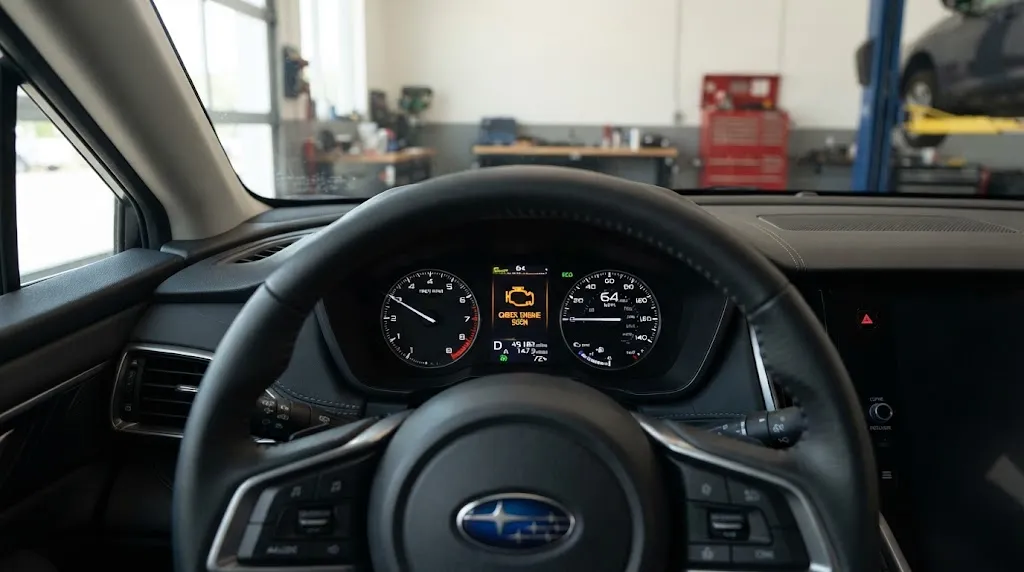
The widely used federal guidance sets a different allowance for older and newer OBD2 vehicles. Most states follow this pattern, although a state program can set a stricter rule.
| Vehicle | Incomplete non-continuous monitors usually allowed |
|---|---|
| 1996-2000 gasoline vehicles | Up to 2 |
| 2001 and newer gasoline vehicles | Up to 1 |
This means a 2018 car with two incomplete monitors would normally fail the readiness part of the test, even if the check engine light is off. A 1998 car with the same two incomplete monitors could still pass, provided the other test conditions are met.
The count is not a general allowance for every monitor on the car. It applies to non-continuous monitors. That distinction is where many drivers get confused.
Which Monitors Count Toward the Limit?
OBD2 monitors fall into two broad groups. Continuous monitors run whenever the engine is running. Non-continuous monitors run only when specific driving conditions are met, so they are the ones most likely to show as incomplete after a repair, battery disconnect, or code clear.
Continuous monitors generally include:
- Misfire monitor
- Fuel system monitor
- Comprehensive component monitor
These should be ready during normal driving. If a continuous monitor is not ready, that usually points to a deeper problem or a very recent reset, not a normal allowance.
Non-continuous monitors can include:
- Catalyst monitor
- Oxygen sensor monitor
- Oxygen sensor heater monitor
- EVAP system monitor
- EGR system monitor
- Secondary air system monitor
Not every vehicle has every monitor. A car without an EGR system, for example, will show that monitor as not applicable rather than incomplete. Only monitors supported by your vehicle should be counted. Learning how OBD2 readiness monitors work makes it easier to tell the difference between “not ready,” “ready,” and “not supported.”
Why Is There a Limit at All?
An emissions test is not only checking whether the check engine light is on. It is checking whether the car’s computer has actually run its own emissions self-tests since the last reset. If too many tests have not run, the test station cannot confirm that the emissions controls are working.
The allowance exists because some monitors are hard to complete. EVAP testing, in particular, often needs a cold start, a fuel level in a certain range, and a specific mix of driving. A small allowance prevents a driver from failing simply because one stubborn monitor has not had the right conditions yet.
At the same time, the limit prevents a simple workaround. Clearing codes also clears monitor status. Without a limit, a driver could clear a fault just before a test and present a car that had not been checked at all.
When the Answer Changes by State or Vehicle Type
The federal pattern is a starting point, not a guarantee for every inspection program. Always check the rule for the state and county where the test will be done, especially if you have exactly one incomplete monitor on a newer car.
California is the clearest example of a stricter program. The California Bureau of Automotive Repair allows the EVAP monitor to be the incomplete monitor on 2000 and newer gasoline vehicles, while other incomplete monitors can cause a failure. For 1996-1999 gasoline vehicles in California, the table allows any one incomplete monitor, which is stricter than the general two-monitor allowance used in many other states.
Other variations to watch for include:
- Diesel vehicles: Diesel readiness rules can differ sharply from gasoline rules and may allow zero incomplete monitors for some model years.
- 1996 vehicles: Some early OBD2 systems reset readiness at key-off, so a state program may handle them differently.
- Exemptions and waivers: Some programs have age, mileage, or repair-cost provisions, but those do not change the monitor count itself.
- Different test types: A safety-only inspection is not the same as an OBD emissions inspection.
If your state follows the general federal pattern, the model-year rule above is usually enough. If you live in California or a state with a stricter program, do not assume the general rule will save a test with one incomplete catalyst or oxygen sensor monitor.
Key Insight
“Incomplete” does not mean “failed.” It means the self-test has not finished yet. A failed monitor usually sets a code and turns on the check engine light, while an incomplete monitor simply has no result yet.
How to Check Your Monitors Before the Test
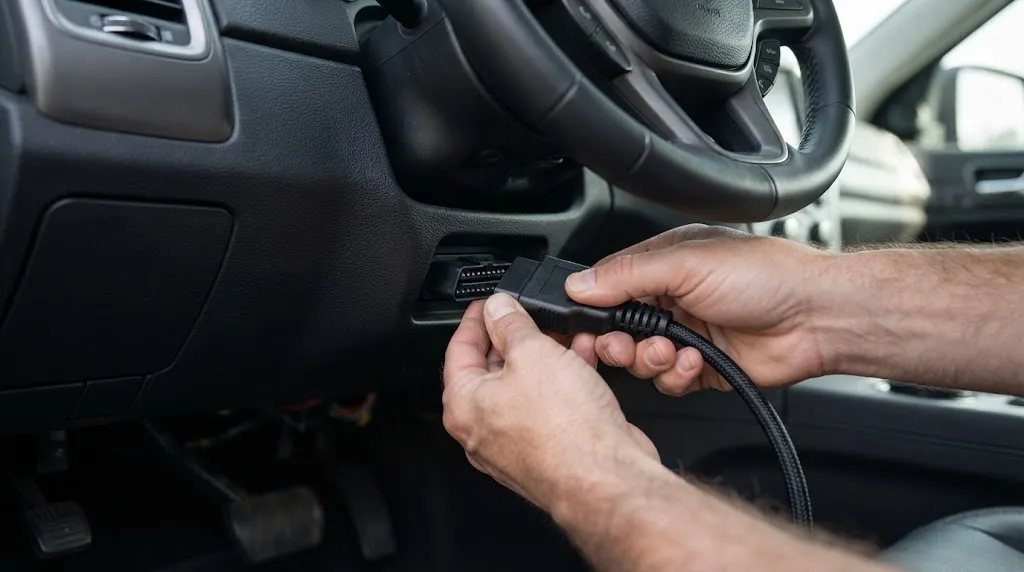
A basic OBD2 scan tool with a readiness or I/M readiness screen is enough for this check. You do not need to interpret live data to answer the main question: how many supported non-continuous monitors are still incomplete?
- Plug the scanner into the OBD2 port with the ignition on, following the tool’s instructions.
- Open the readiness, I/M readiness, or monitor status screen.
- Count only monitors marked “Not Ready” or “Incomplete.” Ignore monitors marked “Not Supported” or “N/A.”
- Compare that count with the limit for your model year and state.
- If the count is over the limit, drive the car through normal mixed driving or the manufacturer’s drive cycle, then recheck.
For a fuller walkthrough of the tool itself, see the guide to how to use an OBD2 scanner. If the same monitor stays incomplete after several normal drives, that is a clue worth investigating rather than a reason to keep driving indefinitely.
What to Do If You Have Too Many Incomplete Monitors
First, confirm that the problem is really readiness and not an active fault. If the check engine light is on, readiness alone will not fix the test. The fault needs diagnosis and repair first.
If the light is off but too many monitors are incomplete, work through these causes in order:
- Recent reset: A cleared code, dead battery, or battery disconnect resets monitors. Normal driving over several days often completes most of them.
- Missing drive conditions: EVAP and catalyst monitors often need warm-up, steady cruising, and deceleration. Short trips alone may not be enough.
- Fuel level: Some EVAP tests will not run with a nearly full or nearly empty tank. A level around one-quarter to three-quarters is commonly required.
- Underlying fault: A faulty oxygen sensor, thermostat, or EVAP component can prevent its own monitor, or a related monitor, from running.
- Pending code: A fault that has not yet turned on the light can still block a monitor from completing.
A manufacturer-specific drive cycle can help, but it is not a magic reset. It is a sequence of cold start, idle, steady cruise, and deceleration designed to give each monitor the conditions it needs. Follow it only where it is safe and legal to do so, and recheck readiness afterward.
Warning
Do not clear codes on the way to the test station. Clearing codes resets readiness monitors, so a car that might have passed with one incomplete monitor can suddenly show several incomplete monitors and fail.
Clearing Codes Does Not Create Extra Allowance
Clearing a code does not repair the underlying fault, and it does not give you a larger monitor allowance. It resets the readiness history and forces the car to run its self-tests again from the beginning. That is why a freshly cleared car often fails even though the dashboard light is off.
The same logic applies after a battery replacement. The car is not broken simply because monitors are incomplete, but it is not ready for an emissions test until enough monitors have completed. If you need to understand that distinction in more detail, see why clearing OBD2 codes does not fix the problem itself.
The practical rule is simple: fix first, drive second, test third. Clearing last is the order that causes the most failed visits.
Incomplete, Failed, and Not Applicable Are Different Results
These three scanner results are often confused, and the difference matters for the test outcome.
- Incomplete / Not Ready: The monitor has not finished its test. This counts toward the allowance above.
- Failed: The monitor ran and found a problem. This usually produces a trouble code and may turn on the check engine light.
- Not Applicable / Not Supported: Your vehicle does not have that monitor. It should not count toward the incomplete total.
If your scanner shows a monitor as failed, do not focus only on the incomplete count. The failed system needs attention first, because passing readiness will not override an active emissions fault. For the broader meaning of the status itself, see what incomplete readiness means.
Related Product
OBD2 Scanner With Readiness Check
A scanner with a clear readiness screen lets you count incomplete monitors at home before paying for a test visit.
As an Amazon Associate, we earn from qualifying purchases.
Frequently Asked Questions
Can a 2001 or newer car pass with 2 incomplete monitors?
Usually no, under the general federal pattern. The limit for 2001 and newer gasoline vehicles is normally 1 incomplete non-continuous monitor. Check your state rule before testing, because a stricter state will not allow 2 either.
Does an incomplete EVAP monitor always cause a failure?
Not always. If EVAP is the only incomplete non-continuous monitor on a 2001 or newer car, it can often still pass in states following the general rule. In California, EVAP is specifically the monitor allowed to be incomplete on 2000 and newer gasoline vehicles, so the same result can pass there while another incomplete monitor might not.
Can I pass if the check engine light is off but monitors are incomplete?
Yes, if the incomplete count is within your model-year and state limit and no other failure condition applies. If the count is over the limit, the test can fail for readiness even with the light off.
How long does it take for monitors to become ready?
It varies. Some monitors complete during normal driving over a few days, while EVAP and catalyst monitors may need specific warm-up and cruising conditions. A manufacturer drive cycle can shorten the process, but a monitor blocked by a fault will not complete until that fault is repaired.
Do diesel vehicles follow the same 1-monitor rule?
No, not necessarily. Diesel readiness rules differ by model year and program, and some diesel model years allow zero incomplete monitors. Check the diesel rule for your state rather than applying the gasoline rule.
Should I drive more if only one monitor stays incomplete?
First, confirm whether that one monitor is within your allowance. If it is, you may not need to wait. If it is over the limit, or the same monitor never completes after varied driving, have the related system checked instead of repeating the same short trips.
Conclusion
Count only supported non-continuous monitors, then apply the rule for your car: usually 2 for 1996-2000 and 1 for 2001 and newer. Check your state rule when you are at the limit, especially in California or with a diesel vehicle. If you are over the limit, drive under varied conditions, recheck with a scanner, and investigate a monitor that never completes. That sequence gives you the best chance of arriving for the test ready, rather than hoping an incomplete result will be overlooked.

I’m Alex Rahman, a car enthusiast and automotive writer focused on practical solutions, car tools, and real-world driving advice. I share simple and honest content to help everyday drivers make better decisions.
