What Does an OBD2 Port Look Like? Shape, Pins & Where to Find It
Quick Answer
An OBD2 port is a standardized 16-pin female electrical connector characterized by an asymmetrical trapezoidal shape, two parallel rows of 8 pin slots, and durable black or dark gray plastic housing. It is universally located inside the passenger cabin within arm’s reach of the driver, almost always mounted directly beneath the steering column or lower dashboard fascia.
When you encounter a glowing check engine light, unusual vehicle hesitation, or an annual emissions inspection, connecting a handheld diagnostic tool or telemetry adapter is your first operational step. However, for drivers and DIY mechanics who have never looked under their vehicle’s interior trim, identifying the diagnostic interface can be surprisingly difficult in low-light footwells.
Every gasoline vehicle sold in the United States since 1996 (and in Europe since 2001 for petrol and 2004 for diesel) includes this standardized diagnostic connector. Knowing its physical characteristics, exact pin configuration, mounting styles, and standard vehicle cabin locations makes connecting your scanner fast, safe, and effortless.
Exact Physical Dimensions and Key Visual Features
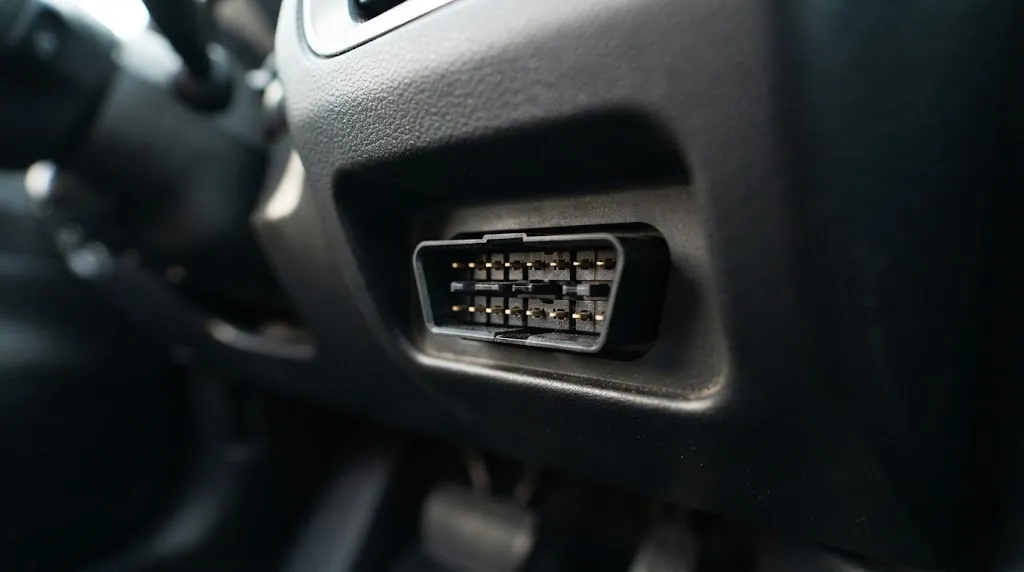
The standard onboard diagnostics port is formally designated as the SAE J1962 connector under international automotive engineering standards. While manufacturers have freedom regarding trim panel integration, the physical shape and dimensions of the interface itself never vary on consumer light vehicles.
When looking directly at the face of an OBD2 port, you can identify it by several distinct visual markers:
- Asymmetrical Trapezoidal Shell: The outer plastic perimeter features a wider top edge that angles inward toward a narrower bottom edge. This tapered, wedge-like silhouette acts as a physical keyway, ensuring diagnostic scan tools can only be inserted in the correct orientation.
- Dual 8-Pin Horizontal Rows: Inside the outer housing, the connector face displays 16 rectangular contact apertures divided cleanly into two parallel tiers: pins 1 through 8 span the wider top row, while pins 9 through 16 span the narrower bottom row.
- Muted Color Schemes: In roughly 90% of vehicles, the port’s plastic body is molded in neutral black, charcoal, or dark gray. However, select manufacturers use contrasting white, off-white, yellow, or bright violet bezels to help technicians locate the interface quickly in deep footwells.
- Beveled Outer Shroud: The outer lip extends slightly past the internal metal contacts, serving as a protective collar that shields delicate pins from dust, static discharge, and bent alignments during blind insertion attempts.
Standard OBD2 Port Locations Across Vehicle Makes
Under EPA regulations and SAE J1962 guidelines, vehicle manufacturers are required to locate the primary diagnostic connector within the interior passenger cabin, positioned within reaching distance of the driver’s seat. Technicians must be able to hook up test equipment without using hand tools or removing permanent vehicle fixtures.
The connector typically resides in one of several predictable interior positions:
- Directly Under the Steering Column (Most Common): On roughly 70% of passenger cars, SUVs, and pickup trucks, the connector points downward or angled slightly toward the pedals directly below the lower steering column housing, positioned right above where your knees rest while driving.
- Lower Left Dashboard Trim: Positioned near the vehicle’s hood release lever or emergency parking brake pedal, often mounted flush against the plastic kick panel or lower dashboard trim.
- Behind a Flip-Down Compartment or Coin Tray: In many Asian and European vehicles (such as Honda, Subaru, and Volkswagen), the port is concealed behind a removable change drawer or a small plastic access door embossed with a subtle “OBD” or engine diagnostic icon.
- Center Console and Ashtray Compartments: In select platforms (including various older BMW, Audi, and GM models), the port is tucked beneath a removable rubber mat in the central console cubby or directly underneath the front ashtray insert.
- Passenger-Side Footwell Exceptions: While exceedingly rare on modern production lines, a handful of light commercial vans and specialized utility platforms position the connector on the passenger-side console kick plate.
Warning
Never force a diagnostic scanner or wireless dongle into the port if you encounter heavy resistance. Because the female connector is made of lightweight polymer, misaligned insertion can push terminal pins out through the rear harness or crack the mounting bracket.
16-Pin Terminal Configuration: What Each Pin Slot Does
While the port contains 16 terminal receptacles, you will rarely see all 16 slots populated with metal contacts when inspecting your specific vehicle. Automakers configure only the dedicated circuits required by their chosen vehicle communication bus and electrical topology.
Understanding which pins provide power versus communication clarifies how your scanner functions:
| Pin Number | Standard Designation | Primary Circuit Function |
|---|---|---|
| Pin 4 | Chassis Ground | Ground reference connected directly to the vehicle chassis frame |
| Pin 5 | Signal Ground | Clean low-noise reference ground for sensitive electronic communication |
| Pin 6 | CAN High (ISO 15765-4) | Primary high-speed Controller Area Network differential data line |
| Pin 14 | CAN Low (ISO 15765-4) | Primary low-speed complementary differential data line |
| Pin 16 | Permanent Battery Power (+12V) | Supplies continuous +12V unswitched battery voltage to power diagnostic scan tools |
Pins 1, 3, 8, 9, 11, 12, and 13 are intentionally left open by federal standards for manufacturer-specific discrete channels, including enhanced body control modules, airbag systems, and proprietary multimedia networks.
Type A vs. Type B OBD2 Connectors
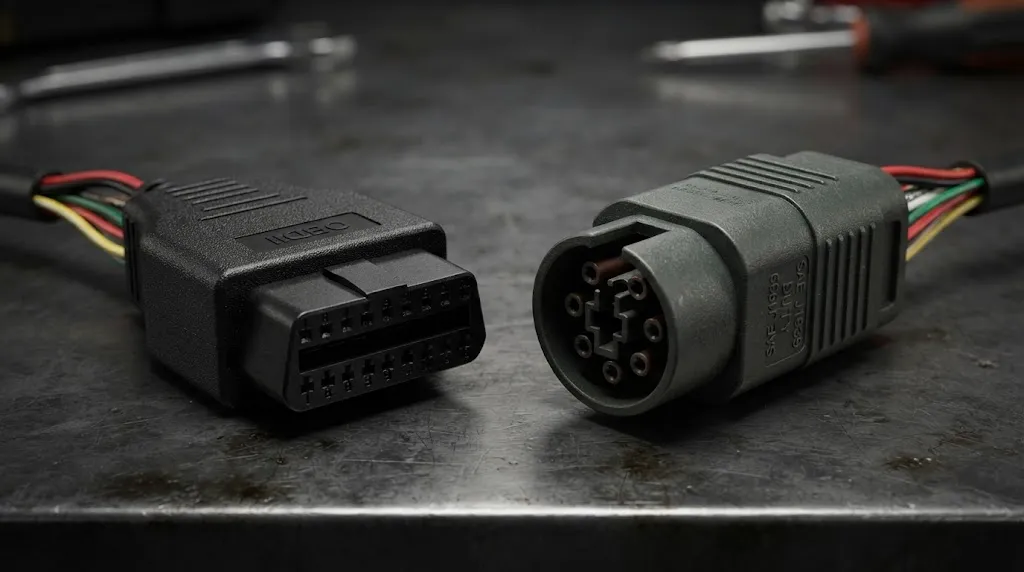
When dealing with light passenger cars versus commercial transport equipment, you may hear automotive technicians differentiate between Type A and Type B SAE J1962 connectors.
The differences are subtle but mechanically critical:
- Type A (12-Volt Passenger Vehicles): Designed strictly for standard 12-volt vehicle architectures. The center dividing bar between the upper and lower pin rows is unbroken, accepting standard consumer diagnostic tools and accessories.
- Type B (24-Volt Commercial Vehicles): Primarily engineered for heavy-duty commercial vehicles and large chassis cabs using 24-volt electrical systems. The center alignment tab contains an interrupted central notch or specific keyway. This mechanical interruption prevents standard 12V automotive scanners from being plugged into higher-voltage 24V circuits, safeguarding consumer equipment from electrical damage.
Tip
If you are struggling to spot the port under a shadowed dashboard, do not strain your neck. Switch on your smartphone’s video flash, slide the camera lens face-up under the dashboard, and sweep across the lower panels. The distinct trapezoidal geometry and metal pin reflections will appear clearly on your screen.
Troubleshooting a Missing, Loose, or Unpowered Port
In rare situations, inspecting the expected dashboard zones yields no visible connector. If your vehicle was manufactured after 1996, the port exists, but environmental or mechanical factors may be obscuring it.
Here is how to resolve common port access problems:
- Detached Plastic Brackets: In older vehicles or cars where aggressive scanner cables were yanked free, the plastic snap clips securing the port to the metal dash frame may break. In this case, the connector often falls backward into the cavity behind the lower dash panel. Reach up behind the lower trim and feel along the wiring harness to pull the loose port forward.
- Blown Accessory Power Fuses: Pin 16 receives constant battery power directly through a fused circuit. Automakers frequently share this specific fuse with the 12-volt auxiliary power outlet (cigarette lighter). If your scan tool remains dark when plugged in, inspect your interior cabin fuse box for a blown 15A or 20A auxiliary fuse.
- Aftermarket Tracker or Anti-Theft Blocks: Some used car dealerships, fleet companies, and tracking service providers install OBD “pass-through” Y-splitters or lockable metal caps over the factory port to prevent unauthorized tampering or bypass diagnostics.
Related Product
OBD2 Diagnostic Code Reader Scanners
A dependable handheld diagnostic scanner connects directly into your vehicle’s trapezoidal port to read active diagnostic trouble codes, display live data streams, and clear engine fault indicators.
As an Amazon Associate, we earn from qualifying purchases.
Frequently Asked Questions
Are all OBD2 ports the exact same shape?
Yes. Passenger vehicles worldwide conform to the standardized SAE J1962 trapezoidal specification with 16 dedicated pin slots. This physical standardization guarantees that any generic consumer code reader or telemetry device can connect to any post-1996 passenger automobile regardless of brand or manufacturing origin.
Do I need specialized tools to access the OBD2 port?
No. Under standard regulatory requirements, the diagnostic connector must be accessible without hand tools or mechanical disassembly. If your port is hidden behind a cover or tray, the panel will unclip or swing open using light finger pressure.
Can plugging a scanner into the port damage my vehicle’s electronics?
Connecting a certified, commercially manufactured OBD2 scanner will not harm your vehicle. The port is built with standard reverse-polarity protection, dedicated ground lines, and regulated data protocols. However, forcing the connector upside down or using counterfeit devices with shorted wiring can potentially damage delicate communication pins.
Does the vehicle engine need to be running for the port to work?
No. Pin 16 delivers continuous 12-volt battery power at all times, which instantly powers up your scanner screen upon physical connection. To read live sensor values and clear error codes, simply turn the vehicle ignition key or push-button to the “ON” (accessory run) position without actually firing the engine.
Why are some pin slots inside my vehicle’s port empty?
Empty pin slots are completely normal and standard across the automotive industry. Automakers only solder metal connector terminals into the specific pin locations required for the particular communication protocols (such as ISO 15765-4 CAN, SAE J1850, or ISO 9141-2) used by that vehicle model.
Can an OBD2 port drain my car battery if a device is left plugged in?
Yes. Because pin 16 supplies unswitched battery voltage even when the ignition is turned off and the vehicle is locked, leaving active Bluetooth adapters, insurance telemetry trackers, or GPS units connected for weeks on an parked vehicle can gradually deplete the 12V starting battery.
Conclusion
Identifying what an OBD2 port looks like is an essential basic skill for vehicle diagnostics and maintenance. With its unmistakable 16-pin trapezoidal profile, recessed mounting, and accessible location beneath the driver’s steering column, this interface provides a safe, standardized gateway into your vehicle’s engine control computers. Whether reading fault codes or tracking performance metrics, understanding the physical layout ensures a smooth, worry-free connection every time.

I’m Alex Rahman, a car enthusiast and automotive writer focused on practical solutions, car tools, and real-world driving advice. I share simple and honest content to help everyday drivers make better decisions.
