How Long Does a Cleared Code Stay Gone?
Quick Answer
A cleared code stays gone permanently only if the fault is actually fixed. If the problem is still present, it can return within minutes, after a few drive cycles, or after days of driving, depending on which system is being tested.
Clearing a code does not start a timer. It erases the stored fault from the active list and switches off the check engine light, but the car immediately starts testing itself again. The real question is not how long the erasure lasts, but how quickly the car can prove the fault is still there.
What Clearing a Code Actually Does
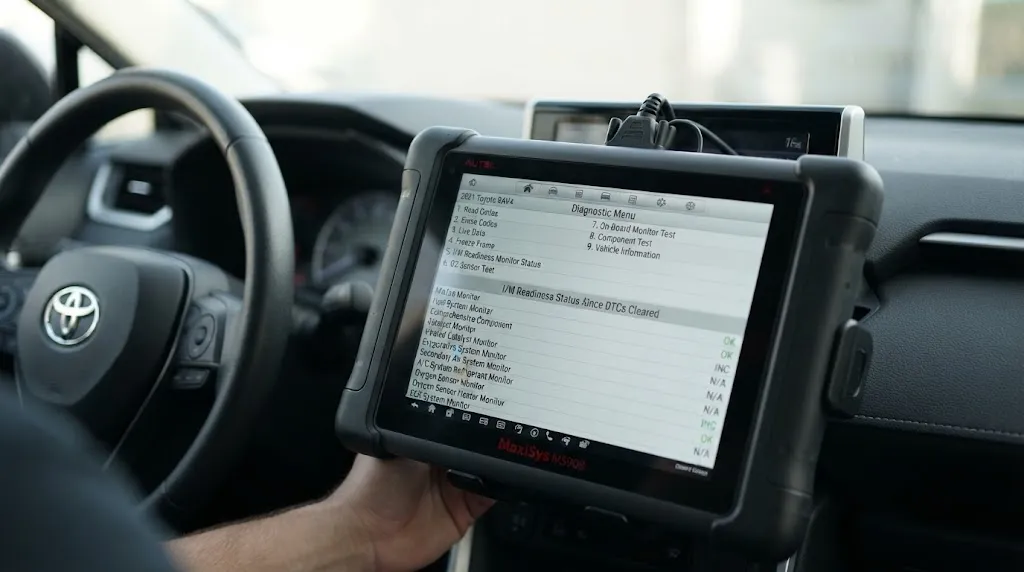
When a scan tool sends a clear command, or the battery is disconnected, the powertrain computer removes confirmed and pending diagnostic trouble codes from its active memory. It also clears freeze-frame data, which is the snapshot of engine conditions recorded when the fault occurred.
Just as important, clearing resets the emissions readiness monitors to “not ready.” Those monitors are the car’s self-tests for systems such as the oxygen sensors, catalytic converter, and evaporative emissions system. Until each monitor runs and passes, the computer cannot honestly say that system is healthy.
That is why clearing a code does not repair a fault. It removes the warning, not the cause.
If the Fault Is Fixed, the Code Should Stay Gone
After a genuine repair, the code should not return. The computer will run the relevant monitor, see readings back inside their normal range, and leave the light off. The code is not waiting to reappear on a schedule.
There is still a waiting period, though. The system needs the right driving conditions before it can complete its checks, so a light that stays off for one short trip is encouraging but not yet proof. Proof comes when the relevant monitor changes to “ready” and no pending code appears.
If the Fault Is Not Fixed, How Fast Will It Return?
There is no single answer, because monitors do not all run at the same time or under the same conditions. Continuous monitors run whenever the engine is running. Non-continuous monitors wait for specific speeds, temperatures, fuel levels, and driving patterns.
| Type of fault | Typical return time if unfixed | Why |
|---|---|---|
| Active misfire | Minutes, often on the same drive | Misfire monitoring is continuous |
| Oxygen sensor or fuel trim fault | One to a few drive cycles | Sensor tests run regularly once warm |
| Catalyst efficiency fault | A few drives, sometimes longer | The catalyst test needs steady driving and valid oxygen sensor data first |
| Evaporative emissions leak | Days, or after a cold soak | EVAP tests have strict fuel-level and temperature conditions |
These are patterns, not guarantees. A hard fault, such as a disconnected sensor or a dead coil, is likely to be found almost immediately. An intermittent fault may need the exact condition that triggered it originally, such as a cold morning, a long highway run, or a full tank.
A code also usually needs more than one failure before the light returns. The first failure may only create a pending code. If the fault repeats on a later drive cycle, the computer confirms it and switches the light back on.
Why a Drive Cycle Matters More Than Miles or Days
Drivers often ask for a number of miles, but miles alone do not complete a monitor. A drive cycle is a sequence of conditions: a cold start, warm-up, city driving, steady cruising, and sometimes deceleration, all within limits the manufacturer sets for that model.
That explains why 50 to 100 miles of mixed driving is a common rule of thumb, yet not a promise. Fifty highway miles may not include the cold soak or fuel level an EVAP test needs. Conversely, a well-matched drive cycle can set several monitors in far fewer miles.
Short trips are the usual reason monitors stay incomplete. If the engine never fully warms up, or the car never reaches the speed and load range a test requires, the monitor simply waits. The code is not necessarily hiding; the test has not run yet.
For a clearer picture of this process, it helps to understand how readiness monitors work and what conditions each one is waiting for.
Key Insight
A light that stays off does not mean the car has passed its tests. It may only mean the tests have not run yet.
The Permanent Code Exception
On many 2010 and newer vehicles, an emissions-related fault can also create a permanent diagnostic trouble code. A permanent code is stored separately and cannot be erased by a scan tool or by disconnecting the battery.
It clears only when the computer runs the relevant monitor after a repair and confirms the fault is no longer present. In other words, the ordinary code may be gone from the active list while the permanent record remains visible to inspection equipment.
The California Bureau of Automotive Repair explains that permanent codes cannot be erased by clearing codes or disconnecting the battery, and can only be cleared by the onboard system once it verifies the defect is gone. That distinction matters if an inspection is coming up: a dark dashboard is not the same as a clean permanent-code record.
What This Means for an Emissions Test
Clearing a code right before an inspection usually creates a new problem. The light may be off, but the monitors are now incomplete, and most inspection programs allow only a small number of incomplete monitors. As a general EPA-based guideline, 1996 to 2000 vehicles may be allowed up to two incomplete non-continuous monitors, while 2001 and newer vehicles are typically allowed only one. State rules vary, so check the local rule before relying on that allowance.
The practical timeline is therefore twofold. First, allow enough varied driving for the monitors to complete. Second, allow enough time for a still-present fault to reveal itself. Rushing the first step can produce a “not ready” rejection, while skipping the second can produce a false sense of success.
If monitors remain incomplete after a week or more of normal mixed driving, that is useful information in itself. It can point to a monitor that cannot run because another fault is blocking it, driving conditions that never match the test requirements, or a system that is failing quietly without yet setting a confirmed code. That is what incomplete readiness usually means in practice.
How to Tell Whether It Is Really Gone
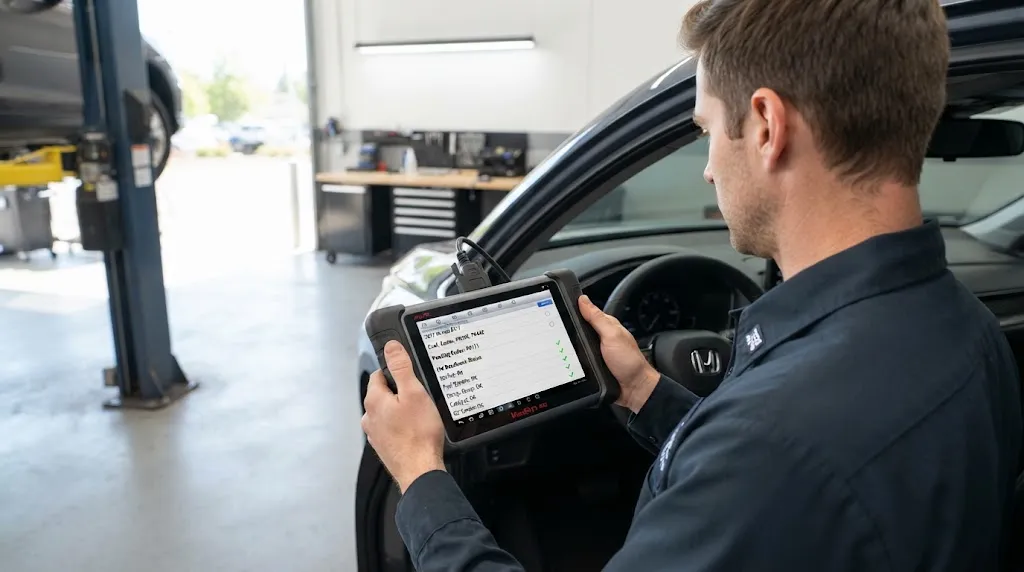
Use a scan, not just the dashboard, after the car has had varied driving. Look for three things together: no confirmed codes, no pending codes for the same system, and the relevant readiness monitor showing “ready.”
- Confirmed codes: none for the original fault.
- Pending codes: none, because a pending code can be an early warning that the fault is returning.
- Readiness: the monitor for that system has completed, not merely stayed silent.
- Symptoms: no return of the original symptom, such as rough idle, hesitation, fuel smell, or poor fuel economy.
Also note that a recent clear can still be detected. Monitors sitting at “not ready,” a lack of freeze-frame data, and distance or warm-up counters that reset after clearing can all signal that codes were erased recently. That is why a scanner can still detect a recently cleared code in practical terms, even when no active code is present.
What to Do After You Clear a Code
- Write down the original code and any freeze-frame details before clearing, so you can compare later.
- Make the repair first, when one is needed, rather than clearing repeatedly to see what happens.
- Drive a mix of city and highway routes, including a cold start, instead of only idling or making short trips.
- Rescan after that driving and check confirmed codes, pending codes, and readiness together.
- If the same code returns, treat the return as diagnostic information, not as a reason to clear it again immediately.
Warning
Do not keep driving with a flashing check engine light. A flashing light usually signals an active misfire that can damage the catalytic converter, and that risk is more urgent than whether a code stays cleared.
Mistakes That Make a Cleared Code Misleading
Clearing before diagnosis throws away freeze-frame data and makes intermittent faults harder to trace. Clearing repeatedly can also reset the monitor clock each time, delaying both a real diagnosis and an emissions test.
Another common mistake is assuming a battery disconnect is different from a scan-tool clear. For ordinary codes, both erase active memory and reset readiness monitors. Neither repairs the fault, and neither erases a permanent code.
Finally, do not judge success by the dashboard alone on the first drive. The most honest test is varied driving followed by a scan that shows the relevant monitor complete and no pending code waiting in the background.
Related Product
OBD2 Scanner
A basic OBD2 scanner lets you recheck confirmed codes, pending codes, and readiness monitors after driving, instead of guessing from the dashboard light alone.
As an Amazon Associate, we earn from qualifying purchases.
Frequently Asked Questions
How many miles should I drive after clearing a code before an emissions test?
There is no mileage that guarantees readiness. Many cars need 50 to 100 miles of mixed city and highway driving, including a cold start, but the exact requirement depends on the model and which monitors still need to run. Scan for readiness before booking the test.
Will disconnecting the battery keep a code gone longer than a scan tool?
No. Both methods erase ordinary active codes and reset readiness monitors. A battery disconnect does not repair the fault, does not complete the monitors faster, and does not erase a permanent code.
Can a mechanic or buyer tell that I recently cleared a code?
Often, yes. Incomplete readiness monitors and reset distance or warm-up counters can indicate a recent clear, even when no active code is present. A permanent code, where supported, is an even stronger record.
Why did my code stay off for a week and then return?
The monitor for that system may not have run until the right conditions occurred, or the fault may be intermittent. A marginal part can pass in mild conditions and fail under load, cold starts, or specific temperatures, so a week of silence is not proof of a repair.
Does a permanent code mean my car can never pass inspection?
No. A permanent code clears itself once the underlying fault is fixed and the relevant monitor runs successfully without finding the problem. Until that verification happens, however, inspection equipment may still fail the vehicle even with the light off.
If the light is off but monitors are not ready, is the problem fixed?
Not yet proven. The light being off only means no confirmed fault is currently active. Until the relevant monitor completes and passes, the system has not finished checking itself, so the answer remains unconfirmed.
Conclusion
A cleared code stays gone when the fault is fixed and the car’s own tests confirm it. If the fault remains, the return time depends on the system involved: continuous faults can reappear almost immediately, while EVAP and catalyst faults may take several drives or days. Judge the result by a rescan showing no confirmed or pending codes and the relevant monitor ready, not by a dark dashboard alone.

I’m Alex Rahman, a car enthusiast and automotive writer focused on practical solutions, car tools, and real-world driving advice. I share simple and honest content to help everyday drivers make better decisions.
