
10 Best Hidden Dash Cam for 2026: Discreet Cameras That Stay Out of Sight
A dash cam is useful until its bulky screen, suction mount, and dangling cable make your windshield feel cluttered. Hidden and low-profile models solve that problem, but the cleanest-looking camera is not automatically the one that records the most useful footage. For this guide, we compared OEM-style integrated cameras with compact screen-free models, checking current recording specifications, mounting approach, parking-mode requirements, connectivity, and fit limitations. The result is a shortlist that helps you choose between a genuinely factory-style installation, a tiny universal camera, and a more capable premium system that can still disappear behind the mirror.
Quick Comparison: All 10 Hidden Dash Cams Ranked
| # | Product | Best For | Rating | Badge | |
|---|---|---|---|---|---|
| 1 | FITCAMX 4K OEM-Style | Factory-style installation | 4.8/5 | Best Overall | Buy → |
| 2 | VIOFO VS1 Mini 2K HDR | Compact video quality | 4.7/5 | Best Compact | Buy → |
| 3 | Garmin Dash Cam Mini 3 | Simple discreet setup | 4.6/5 | Best Easy Pick | Buy → |
| 4 | MANGOAL 4K OEM-Style Dash Cam | Vehicle-specific fit | 4.5/5 | Best OEM Alternative | Buy → |
| 5 | 70mai M310 Plus 2K | Budget discreet setup | 4.4/5 | Best Budget | Buy → |
| 6 | Garmin Dash Cam Mini 2 | Tiny proven design | 4.3/5 | Best Small Classic | Buy → |
| 7 | Nexar Beam GPS Dash Cam | App-focused drivers | 4.2/5 | Best App Experience | Buy → |
| 8 | Nexar Beam2 Mini | Remote parking alerts | 4.2/5 | Best Connected Mini | Buy → |
| 9 | BlackVue DR970X-2CH Plus | Premium dual-channel use | 4.1/5 | Best Premium Dual | Buy → |
| 10 | Thinkware U3000 | Advanced parking mode | 4.1/5 | Best Parking Tech | Buy → |
How We Chose These Hidden Dash Cams
What we reviewed
We compared 10 current discreet dash cams and cross-checked manufacturer-listed resolution, field of view, recording modes, storage, power requirements, connectivity, and physical mounting approach. This update is research-based; we do not claim hands-on testing that was not performed.
Our 3 scoring criteria
Concealment and installation count most because this guide targets hidden dash cams. Video clarity comes next, followed by daily usability including Wi-Fi, parking features, storage support, and app access.
Expert consulted
No outside expert was interviewed for this revision. Technical claims were checked against current manufacturer product pages, manuals, and installation documentation rather than inventing an expert endorsement.
What we cut — and why
We excluded large screen-first models that remain conspicuous on the windshield. We also avoided treating every 4K camera as automatically superior because mounting visibility, night exposure, power setup, and rear coverage can matter more than resolution alone.
What to Look for When Buying a Hidden Dash Cam
Hidden dash cams create a trade-off that ordinary dash-cam comparisons often miss: the cleaner the installation, the more carefully you must verify fitment and power. These five factors help you avoid buying a camera that looks discreet online but becomes awkward once installed.
1. Decide Whether You Need OEM Integration or Just a Small Camera
An OEM-style unit such as FITCAMX or MANGOAL replaces or integrates with trim around the rearview mirror, making it far less obvious than a normal windshield camera. The trade-off is vehicle compatibility: model year, sensor housing, mirror electronics, and trim shape can change what fits. A universal mini camera is easier to move to another vehicle but remains technically visible if someone looks closely. For more placement detail, see our guide to the best dash cam mounting position.
2. Prioritize Useful Video Detail, Not Just the Resolution Label
A 4K label sounds decisive, but sensor generation, HDR processing, lens aperture, bitrate, windshield reflections, and night exposure all affect whether a plate remains readable. A compact 2K camera with a modern STARVIS 2 sensor can be more useful in difficult lighting than an older implementation that merely outputs a larger file. Wide viewing angles capture more road, but excessively wide lenses can make distant details smaller. Treat resolution as one part of evidence quality, not the entire answer.
3. Plan the Power Source Before You Buy
A hidden camera stops feeling hidden when a power lead hangs across the glass. Mirror-tap systems can minimize visible wiring in compatible cars, while universal cameras usually look cleanest with the cable routed into the headliner and down the A-pillar. Parking monitoring normally needs constant power through a hardwire kit, OBD adapter, or another supported source. Our guide to hiding dash cam wires cleanly explains the main routing options.
4. Check What “Parking Mode” Actually Requires
Some cameras advertise parking mode even though the feature remains unavailable with the standard ignition-switched power lead. Others support impact-triggered recording, time-lapse, motion detection, buffered recording, or low-power radar modes, and those functions are not interchangeable. Before buying, confirm the required power accessory and whether low-voltage protection is built into the camera or power kit. Our parking-mode dash cam guide explains how the power side works.
5. Think About Storage and Footage Retrieval
Screen-free cameras rely heavily on their app, Wi-Fi connection, removable memory, or cloud service when you actually need a clip. A high-capacity microSD option helps when long recording retention matters, while built-in storage can simplify the hardware but may lock you into the capacity selected at purchase. Also check how quickly you can export a collision clip without sitting in the car for several minutes. A discreet design is only useful if retrieving evidence remains straightforward.

FITCAMX 4K OEM-Style Dash Cam — Closest to a Factory Install
If your priority is making the camera look like part of the car rather than an accessory, this is the strongest match. Current FITCAMX configurations offer up to 2160p/30fps front recording, 160° front coverage on supported variants, Wi-Fi, loop recording, collision sensing, and optional dual-camera configurations. Its biggest advantage is not a single recording specification but the model-specific housing that integrates around the rearview-mirror area. The downside is equally specific: fitment must be checked carefully before ordering.
- Up to 4K 2160p/30fps front recording on current configurations
- Vehicle-specific housing minimizes visible hardware and windshield clutter
- Wi-Fi, loop recording, collision sensing, and parking-mode support
- Compatibility varies by vehicle, mirror electronics, trim, model year, and selected kit
| Front video | Up to 4K/30fps |
| Front FOV | Up to 160° |
| Wi-Fi | 2.4 GHz |
| Storage | Up to 256GB on listed variants |
9.8/10
8.7/10
9.1/10
VIOFO VS1 Mini 2K HDR — Tiny Body, Stronger Sensor
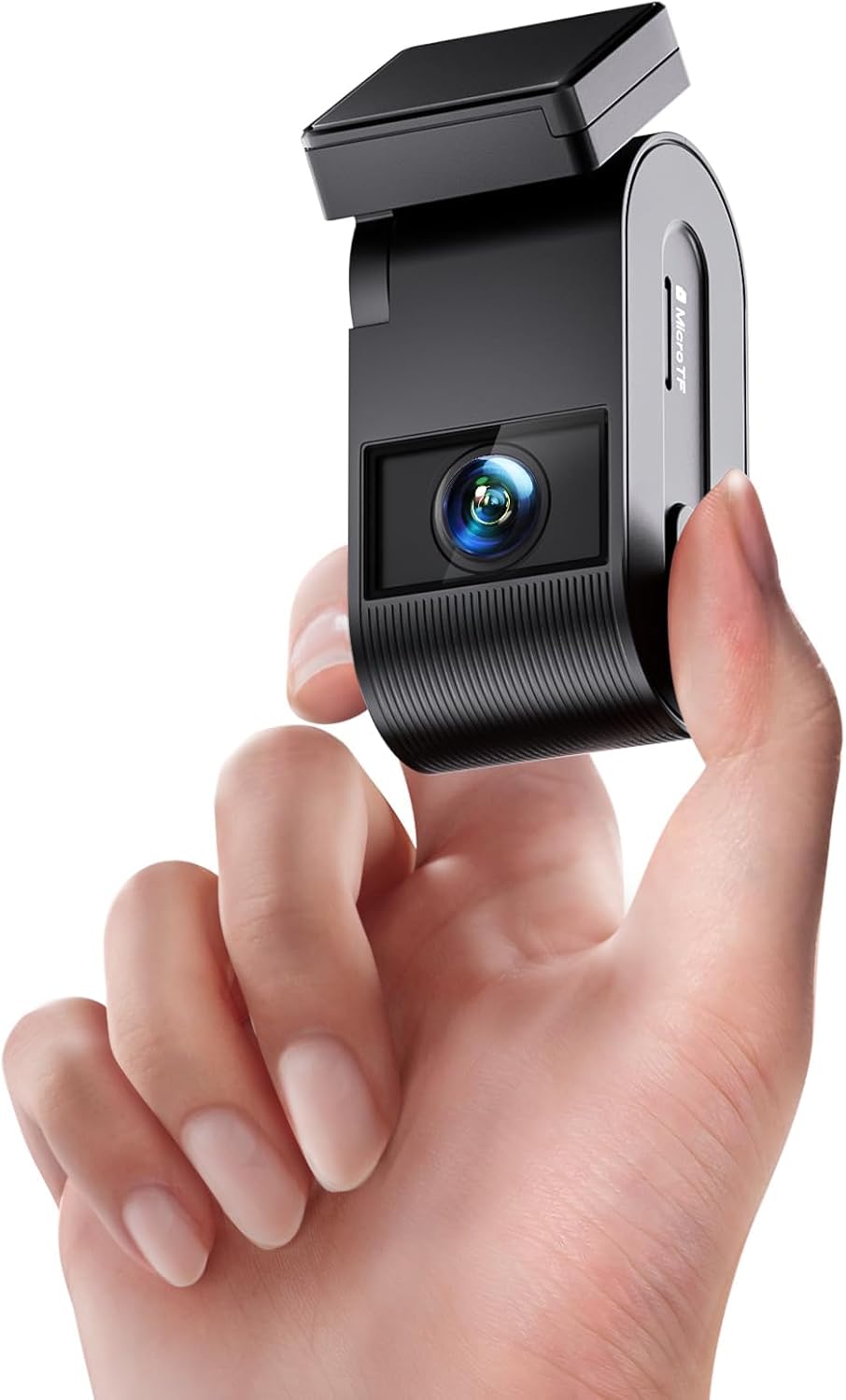
Drivers who want a camera small enough to sit behind the mirror without giving up newer imaging hardware should put the VS1 near the top of the list. It records 2560×1440 at 30fps using Sony’s STARVIS 2 IMX675 sensor, pairs that with HDR and an f/1.6 lens, and keeps the body to roughly 1.31 × 1.23 × 3.03 inches. Built-in GPS, dual-band Wi-Fi, voice control, and buffered parking support add functionality without a screen. The main limitation is that it is a single-channel design rather than an expandable front-and-rear system.
- Sony STARVIS 2 IMX675 sensor with 2K HDR recording
- Small screen-free body is easier to conceal behind a mirror
- Built-in GPS, 5GHz/2.4GHz Wi-Fi, voice control, and buffered parking mode
- No rear-camera expansion; parking modes require the optional hardwire kit
| Resolution | 2K/30fps |
| Sensor | STARVIS 2 IMX675 |
| FOV | 140° |
| Storage | Up to 512GB |
9.4/10
9.2/10
8.6/10

Garmin Dash Cam Mini 3 — Easy to Hide and Forget
If you want a universal camera that can disappear behind the mirror without researching vehicle-specific housings, Garmin’s Mini 3 is the safer choice. It records 1080p through a 140° field of view and adds a built-in Clarity polarizer designed to reduce windshield glare. The low-profile screen-free format is the reason to buy it; you control and review footage through Garmin’s ecosystem rather than staring at another display. The trade-off is resolution: buyers focused on maximum plate detail may prefer a 2K or 4K alternative.
- Ultra-compact screen-free design
- Built-in polarizer reduces windshield glare without a separate lens accessory
- 140° field of view gives useful road coverage without an extremely wide look
- 1080p resolution trails the 2K and 4K cameras in this list
| Resolution | 1080p |
| FOV | 140° |
| Polarizer | Built in |
| Parking power | Compatible constant-power accessory |
9.6/10
7.9/10
9.2/10

MANGOAL 4K OEM-Style Dash Cam — Clean Vehicle-Specific Fit
Buyers attracted to FITCAMX’s factory-style idea but shopping another vehicle-specific ecosystem should compare MANGOAL carefully. Current 4K versions use a 2160p/30fps front recording format, and documented models combine built-in Wi-Fi, GPS, G-sensor functions, loop recording, and parking modes with a housing designed around particular mirror and sensor assemblies. That can produce an extremely clean cabin once the correct version is installed. The weakness is the same one that affects every integrated design: a nearly identical-looking product page can still represent the wrong connector or housing for your car.
- 4K 3840×2160/30fps on documented current versions
- Vehicle-specific design keeps the installation close to an OEM appearance
- Wi-Fi, GPS, G-sensor, loop recording, and parking functions available
- Fitment and available power adapters vary significantly between vehicles
| Front video | 4K/30fps |
| Sensor | Sony IMX335 on documented versions |
| Lens | Approx. 150° |
| Parking mode | Requires compatible power setup |
9.7/10
8.6/10
8.4/10

70mai M310 Plus 2K — Strong Value Without a Screen
You do not need an integrated mirror housing to keep a dash cam visually quiet. The M310 Plus 2K uses a compact screen-free layout while stepping up to 2560×1440 recording, a 143° field of view, an f/1.55 aperture, Wi-Fi app control, and voice commands. It also supports parking surveillance and time-lapse recording when paired with the required power hardware. It lacks the factory-molded appearance of the top OEM-style options, but it is easier to recommend when cost matters and you still want more resolution than basic 1080p mini cameras.
- 2560×1440 recording at 30fps
- Compact screen-free form is easier to mount discreetly
- Wi-Fi app, voice control, parking surveillance, and time-lapse support
- Parking features require separate compatible hardwire equipment
| Resolution | 2560×1440 |
| FOV | 143° |
| Aperture | f/1.55 |
| Storage | Up to 256GB |
8.8/10
8.5/10
9.0/10

Garmin Dash Cam Mini 2 — Proven Car-Key-Sized Design
Drivers who find the Mini 3 attractive but come across the earlier Mini 2 may still like how little windshield space it consumes. Garmin lists the body at about 3.13 × 5.33 × 2.91 cm and 32.1 g, with 1080p recording, a 140° field of view, HDR, voice control, app playback, and support for microSD cards up to 512GB. It is easy to place high behind a mirror and forget about. The reason it ranks below the Mini 3 is simple: the newer model adds the integrated glare-reducing polarizer while keeping the same basic discreet philosophy.
- Only about 32.1 g with a very small body
- 1080p HDR recording with 140° field of view
- Supports microSD capacities up to 512GB
- Older 1080p model and lacks the Mini 3’s built-in polarizer
| Resolution | 1080p/30fps |
| FOV | 140° |
| Weight | 32.1 g |
| Storage | Up to 512GB |
9.5/10
7.6/10
9.1/10

Nexar Beam GPS Dash Cam — Discreet With Cloud-Friendly Workflow
If your definition of “hidden” means a compact camera tucked behind the mirror rather than a molded OEM housing, the Nexar Beam deserves a look. Nexar describes it as its smallest classic dash cam, with 1080p recording, a roughly 135° view, built-in GPS, impact detection, and app-based clip handling. Its appeal is the workflow: clips can be transferred, backed up, and shared without treating the camera like a tiny computer with menus. The compromise is obvious next to modern 2K and 4K rivals — the road-facing recording remains 1080p.
- Compact form is intended to sit behind the rearview mirror
- Built-in GPS stamps useful trip information with footage
- App workflow makes saving and sharing incident clips straightforward
- 1080p recording provides less image detail than many newer compact rivals
| Resolution | 1080p |
| FOV | Approx. 135° |
| GPS | Built in |
| App | Nexar Classic |
9.0/10
7.4/10
8.8/10

Nexar Beam2 Mini — Small Camera With Remote Features
A tiny camera is more useful to some drivers when it can tell them what is happening around the parked car rather than simply saving footage to a card. Nexar positions the Beam2 Mini as its compact connected option, with a wide 160° road view and support for real-time parking alerts and remote streaming in its connected ecosystem. It is designed to sit behind the rearview mirror and keep the cabin visually clean. Buyers should understand the trade-off before choosing it: connected services and fixed internal-storage configurations make it a different ownership model from a simple microSD-based camera.
- Designed specifically as a compact behind-the-mirror camera
- 160° road view captures a broad area ahead
- Connected features can provide parking alerts and remote viewing
- Storage and connected-service choices need to be understood before purchase
| Resolution | 1080p |
| FOV | 160° |
| Parking alerts | Supported |
| Storage | Internal options |
9.1/10
7.3/10
8.6/10
BlackVue DR970X-2CH Plus — Premium Low-Profile Dual Coverage
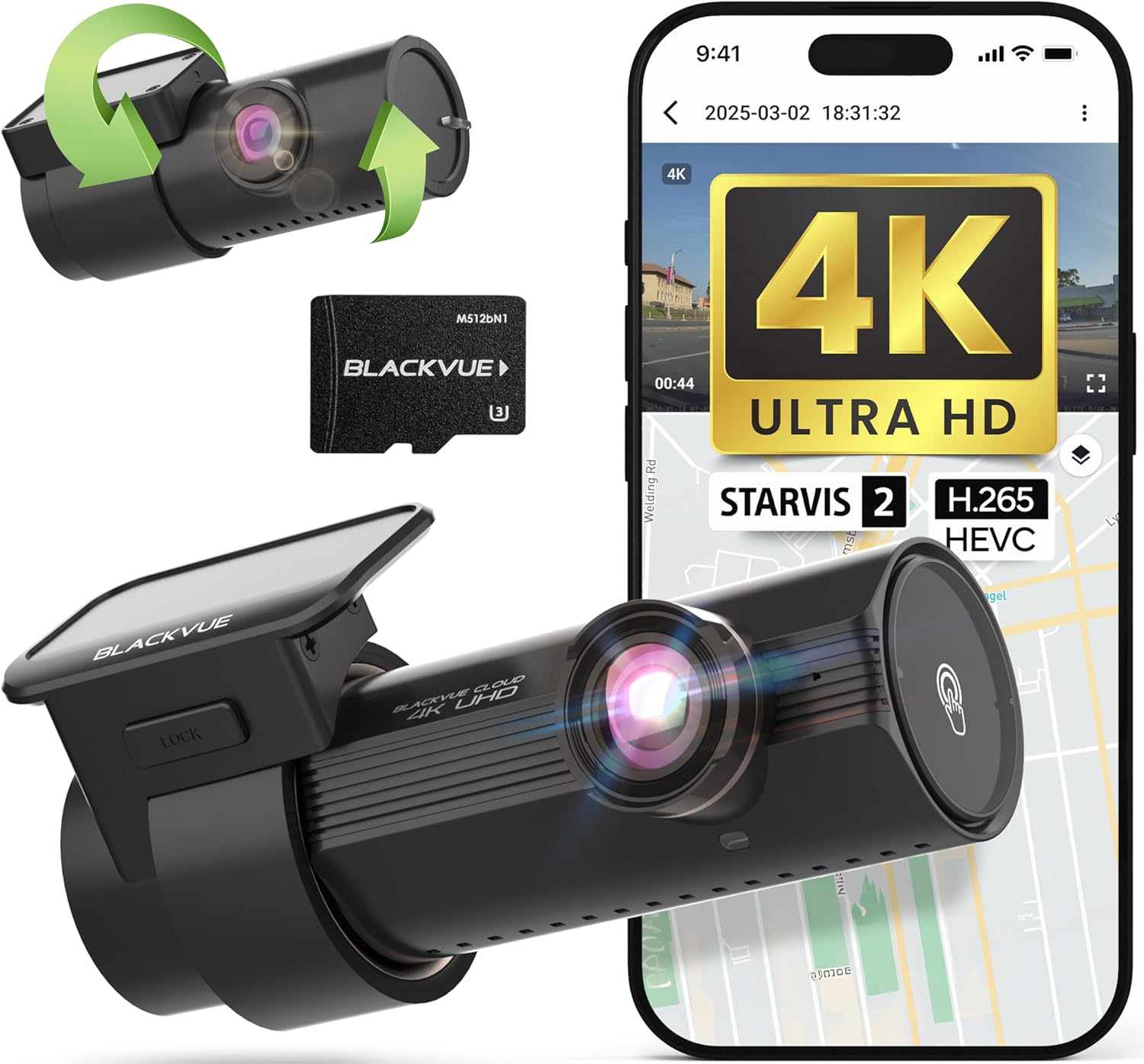
Drivers who care more about front-and-rear evidence than absolute invisibility may prefer BlackVue’s cylindrical low-profile approach. The DR970X-2CH Plus combines a 4K STARVIS 2 front camera with a 1080p rear camera, built-in GPS, Wi-Fi, Bluetooth, impact recording, motion-based parking recording, and support for large microSD cards. Mounted high around the mirror, the front cylinder can remain visually unobtrusive even though it is not an OEM trim replacement. It ranks lower for this specific keyword because the system is physically larger and more installation-intensive than the mini cameras above.
- 4K STARVIS 2 front plus 1080p rear recording
- Cylindrical screen-free body mounts neatly near the mirror
- GPS, Wi-Fi, Bluetooth, parking recording, and high-capacity storage support
- More hardware and cable routing than a single-channel mini camera
| Front | 4K/30fps |
| Rear | 1080p/30fps |
| Front FOV | 146° diagonal |
| Storage | Up to 512GB listed |
8.1/10
9.6/10
7.0/10

Thinkware U3000 — Advanced Parking Protection
If parking surveillance matters more than having the tiniest possible camera, the U3000 brings technology the simpler hidden models cannot match. It records 4K at 30fps with a Sony STARVIS 2 IMX678 front sensor and supports a 152° diagonal view, built-in radar, GPS, Wi-Fi, Bluetooth, several parking-recording modes, and microSD cards up to 256GB. Mounted high behind a mirror it can stay reasonably unobtrusive, but its body is approximately 69.8 × 98.1 × 55.5 mm. That size and its more involved power setup keep it at the bottom of a list focused specifically on hiding the camera.
- 4K Sony STARVIS 2 IMX678 imaging
- Built-in radar supports lower-power parking surveillance strategies
- Multiple parking modes plus GPS, Wi-Fi, Bluetooth, and safety functions
- Noticeably larger than true mini cameras and benefits from a planned hardwire or OBD installation
| Resolution | 4K/30fps |
| Sensor | STARVIS 2 IMX678 |
| FOV | 152° diagonal |
| Storage | Up to 256GB |
7.3/10
9.5/10
6.8/10
Top 3 Head-to-Head: FITCAMX vs VIOFO VS1 vs Garmin Mini 3
These three represent the main choices hidden-dash-cam buyers actually face: fully integrated OEM appearance, maximum image quality in a tiny universal body, or a simple mainstream mini camera.
| Feature | #1 FITCAMX | #2 VIOFO VS1 | #3 Garmin Mini 3 |
|---|---|---|---|
| Concealment | 9.8/10 — Best | 9.4/10 | 9.6/10 |
| Video clarity | 8.7/10 | 9.2/10 — Best | 7.9/10 |
| Installation | 9.1/10 | 8.6/10 | 9.2/10 — Best |
| Choose if… | Factory appearance is your priority | You want stronger image hardware in a mini body | You want the simplest universal mini option |
Who These Hidden Dash Cams Are NOT For
Not every driver benefits from prioritizing concealment over every other feature.
Hidden cameras also make less sense if you change vehicles often and are considering a vehicle-specific OEM housing. In that case, choose a small universal model that can move with you instead of buying trim molded for one mirror assembly.
Common Mistakes to Avoid
Even a good hidden dash cam can become frustrating when fitment, power, or maintenance is handled as an afterthought.
Frequently Asked Questions About Hidden Dash Cams
What is the most hidden type of dash cam?
A vehicle-specific OEM-style camera is usually the least noticeable because its housing integrates with existing trim around the rearview mirror. A mini screen-free camera is the better option when you need universal compatibility.
Can a hidden dash cam record when the car is off?
Yes, if that camera supports parking recording and receives constant power through the required hardwire kit, OBD adapter, battery pack, or supported vehicle connection. Standard ignition-switched power usually turns off with the car.
Do hidden dash cams have screens?
Most of the discreet models in this guide do not use a screen because removing it makes the camera smaller. Setup and footage review are normally handled through a phone app or computer.
Is 1080p enough for a hidden dash cam?
1080p can document the overall sequence of an incident, but 2K or 4K gives you more pixels to work with when small road details matter. Sensor quality, exposure, motion, and lighting still affect whether a plate is readable.
Can I install a hidden dash cam myself?
Many compact and mirror-powered cameras are suitable for DIY installation, but hardwiring and routing near curtain airbags require more care. Our guide comparing DIY and professional dash cam installation can help you choose.
Will an OEM-style hidden dash cam fit any vehicle?
No. OEM-style units are molded around particular mirror housings, sensors, trim, and power connections, so compatibility must be checked for the exact vehicle configuration.
Is a front-and-rear hidden dash cam worth it?
Dual-channel coverage is useful when you want evidence of rear-end impacts and events behind the vehicle, but it requires another camera and a longer cable run. A front-only mini setup remains cleaner and simpler.
Our Final Verdict
The hidden-dash-cam market splits into two groups: integrated cameras that virtually disappear into factory trim and universal mini cameras that sacrifice perfect invisibility for easier compatibility. Your best choice comes down to how much fitment research you are willing to do and how much recording hardware you want to hide.
If factory appearance is the goal, FITCAMX is our strongest fit because the camera becomes part of a vehicle-specific mirror housing. If you want stronger compact-camera imaging without choosing an OEM shell, VIOFO VS1 Mini combines 2K HDR with a modern STARVIS 2 sensor. If you want a simple gift or first dash cam with minimal windshield presence, Garmin Mini 3 is the easier universal choice.

I’m Alex Rahman, a car enthusiast and automotive writer focused on practical solutions, car tools, and real-world driving advice. I share simple and honest content to help everyday drivers make better decisions.
