
Can an OBD2 Scanner Clear the Airbag Light? How It Works
Quick Answer
Yes, an OBD2 scanner can clear an airbag light, but only if it can read the SRS module and only after the fault is fixed. A basic engine reader cannot reach that module, so it shows no codes and clears nothing. An SRS-capable tool reads the stored code, and it clears the light once the repair is done.
- A basic reader covers engine codes only.
- An SRS tool must list airbag support for your car.
- Fix the cause first, then clear the code.
- Crash data needs a module reset or a shop visit.
You see the airbag light stay on, plug in a scanner, and find no codes. That mismatch is common, and it points to the wrong tool, not a clear system. This guide explains which scanners can clear the light, the steps to use one, and the faults that need a shop.
What does the airbag light mean?
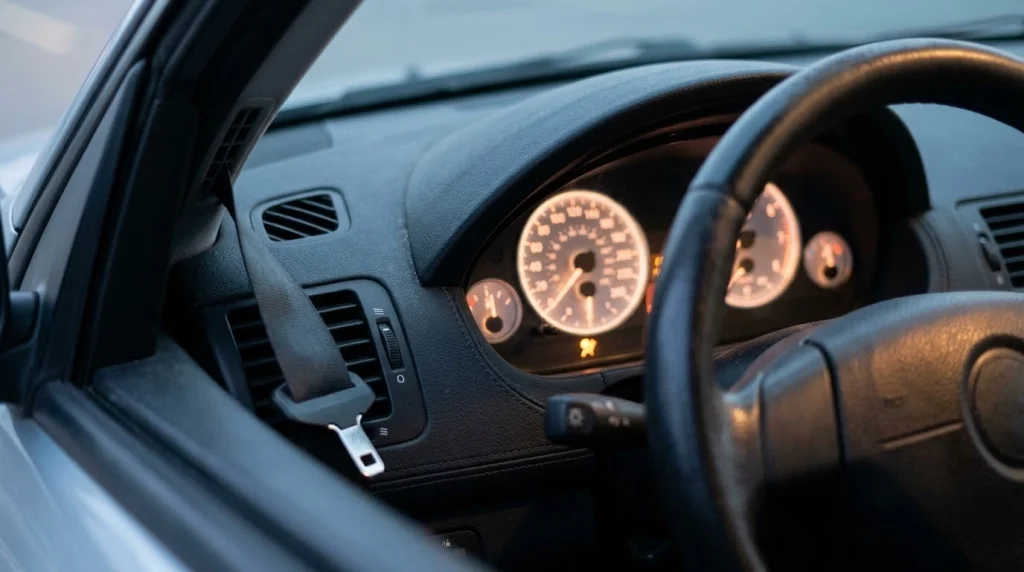
The airbag light reports a fault in the Supplemental Restraint System, called SRS. SRS covers airbags, seat belt pretensioners, crash sensors, seat occupancy sensors, and the control module that links them. The light comes on for a few seconds at start-up for a self-test, then it should go out.
A light that stays on means the module found a fault and stored a code. The airbags may not deploy as designed while that fault is present. The light does not name the failed part, so a scan of the SRS module is the next step.
Common causes include:
- A loose or corroded connector under a seat
- A worn clockspring in the steering column
- A faulty seat occupancy sensor
- Low battery voltage after a jump start or a battery change
- Crash data stored after a collision
Why a basic OBD2 scanner cannot clear it
A basic OBD2 scanner cannot clear an airbag light because it reads engine and emissions data only. The standard OBD2 protocol covers powertrain codes, and it does not include the SRS module. The airbag system needs maker-specific access, so an engine scan can miss it.
Airbag codes often start with B for body or U for network, while engine codes start with P. A tool that shows no P codes can still miss a B code in the SRS module. No codes on the screen does not mean the airbag system is clear, and that gap explains why many drivers think a scanner only reads engine codes.
Which OBD2 scanner can clear an airbag light?
An SRS-capable scanner can clear an airbag light when it lists airbag support for your year, make, and model. The box or product page must name SRS or airbag codes, not engine codes alone. Coverage varies by car, so check the list before you buy or borrow a tool.
The table below compares the three tool types by airbag access.
| Scanner type | Reads airbag codes | Clears airbag light |
|---|---|---|
| Basic code reader | No, engine codes only | No |
| SRS-capable scanner | Yes, for listed cars | Yes, after repair |
| Full-system or shop tool | Yes, with wider coverage | Yes, plus setup steps |
An SRS-capable tool is the right match for most drivers, while a shop tool adds setup steps for a replaced module. A phone adapter can work too, but only if its app lists SRS access for your car. For a wider choice, compare ABS and SRS scanners that cover more than engine codes. The Autel guide to SRS code reading also explains why the tool must reach the SRS module before it can clear the light.
How to clear the airbag light with an OBD2 scanner
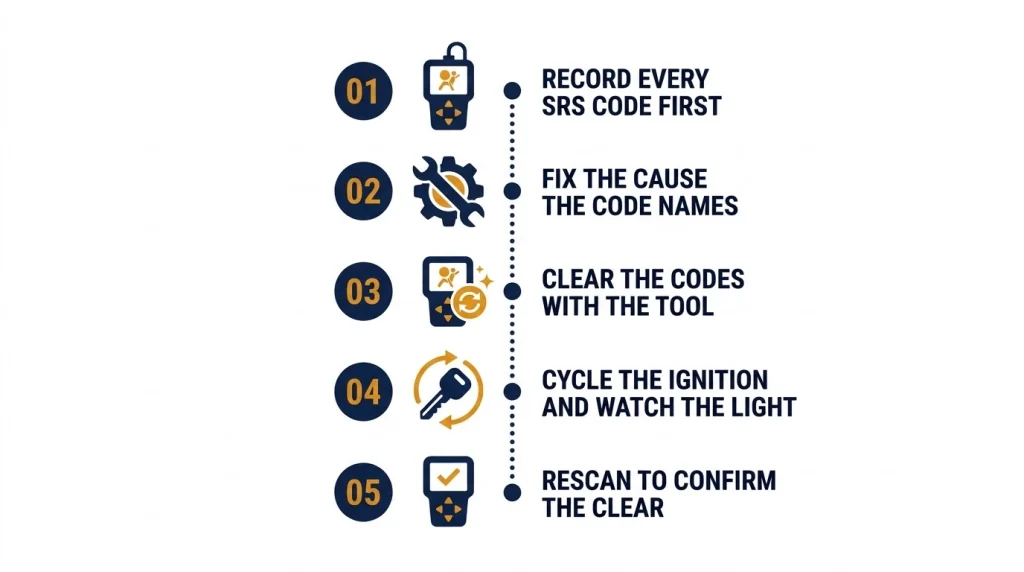
Clearing the airbag light works when repair comes first and the clear comes last. The 2CarPros guide to gather airbag codes shows the same order: read the codes, fix the cause, then clear them with a compatible tool.
Step 1
Record every SRS code first
Plug the tool into the port under the dash, turn the ignition on, and open the SRS menu. Write down each code before you clear anything.
Step 2
Fix the cause the code names
Repair the connector, sensor, clockspring, or wiring fault that the code points to. Leave deployed parts and module work to a qualified shop.
Step 3
Clear the codes with the tool
Choose Clear Codes or Erase DTCs in the SRS menu after the repair is done. Do not clear codes before the repair, or you lose the record that guides the fix.
Step 4
Cycle the ignition and watch the light
Turn the ignition off, wait a short time, then turn it on again. The light should come on for a few seconds for its self-test, then go out.
Step 5
Rescan to confirm the clear
Scan the SRS module again and check for stored codes. A clear that holds through a rescan means the fault is gone for now.
A clear that fails at Step 5 points back to the repair, not to the tool. Read the new code, fix what it names, and clear it once more. If the same code returns at once, the fault is still active.
Warning
Disconnect the battery and wait for the time in your manual before you touch SRS connectors. Airbag parts can still hold a charge, and a wrong move can cause injury or set more codes.
When a scanner cannot clear the light
A scanner cannot clear the light when the fault is locked in module memory or when a part must be replaced first. These cases need more than a code clear, and a shop visit is the safe path. Learn what a scanner cannot do before you spend time on a clear that cannot hold.
- Crash data stored after a collision, which locks the module
- A fired seat belt pretensioner, which is single-use
- A deployed airbag that has not been replaced
- A failed SRS module or a broken circuit that is still open
- A replacement module that needs VIN setup or coding
Crash data sits in non-volatile memory, so it stays stored without power. A module reset service or a replacement module can fix it, but only after the deployed parts are repaired. A used module can carry crash data from another car, so avoid that shortcut.
Why the light comes back after a clear
The light comes back after a clear when the fault is still present at the next self-test. Clearing a code does not fix a loose plug, a worn clockspring, or a failed sensor. The module sees the same fault again and stores the code once more.
An intermittent fault can also return after days or weeks, often from a seat connector that moves with use. A low battery can set a voltage code again after a jump start. If a clear fails twice, stop clearing and get a fresh scan, since each clear hides the record a technician needs. A scanner for clearing codes helps only when the repair behind the code is done.
Can you clear the airbag light without a scanner?
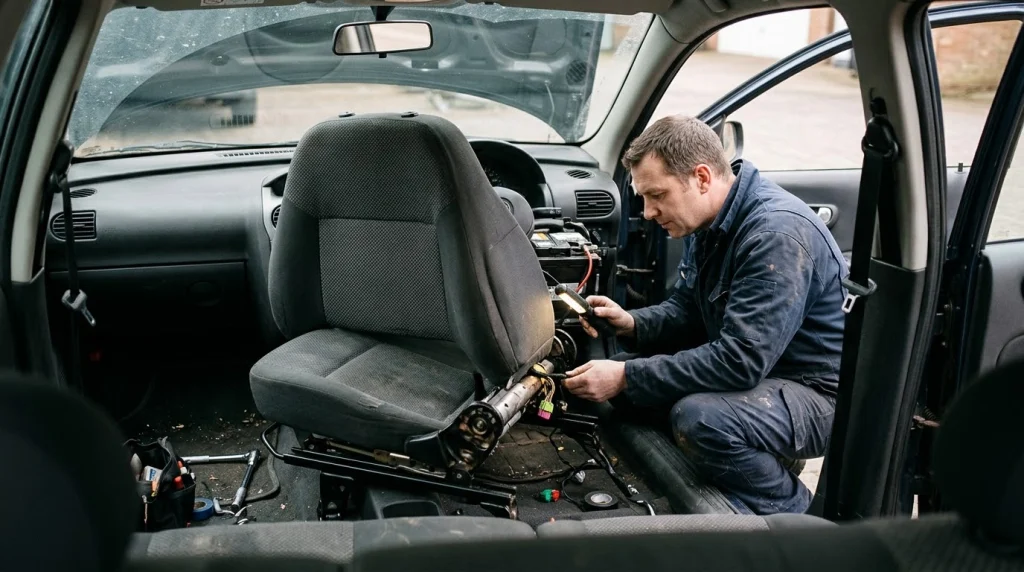
You cannot clear the airbag light without a scanner on most cars, because stored SRS codes need a tool clear. Disconnecting the battery does not fix the fault, and most modules keep codes stored without power. A few older models have a manual procedure in the service manual, but that is the exception.
Do not pull the airbag fuse, fit a resistor, bridge a connector, or probe SRS wiring to hide the light. Those moves can change how the system acts in a crash and can cause injury during service. The right choice depends on what set the light.
If you
have a loose seat plug that is now firm
Choose wait and watch, because a soft fault may clear after clean self-tests.
If you
have a light that stays on after a repair
Choose an SRS-capable scanner, because stored codes need a tool clear.
If you
have a light that came on after a crash
Choose a qualified shop, because crash data needs module work.
Is it safe to drive with the airbag light on?
A car with the airbag light on can move, but its airbags may not deploy as designed in a crash. The light means the restraint system found a fault, so treat it as a safety fault, not a bulb fault. Get a diagnosis soon, and do not wait for a long trip to have it checked.
After a crash, have the restraint system checked before you drive far, even if no airbag fired. A shop can scan the SRS module, list the stored codes, and confirm which parts need repair. That check protects you and the next person who rides in the car.
OBD2 Scanner with SRS Support
This type of scanner can read SRS codes and clear the airbag light after a repair, which a basic engine reader cannot do.
Frequently Asked Questions
Can a cheap OBD2 scanner clear the airbag light?
A cheap OBD2 scanner cannot clear an airbag light unless the maker lists SRS or airbag support for your car. Most low-cost readers cover engine codes only, so they never reach the airbag module. Check the SRS list for your year, make, and model before you buy or borrow a tool.
Will the airbag light go off by itself after a repair?
The airbag light may go off by itself after a soft fault clears, but a stored hard fault needs a scan tool clear. A loose seat plug or a short voltage dip can clear after a few clean self-tests. A failed sensor, a broken wire, or crash data will keep the light on until the repair and a clear are done.
Can disconnecting the battery clear the airbag light?
Disconnecting the battery cannot clear the airbag light on most cars, because SRS codes stay stored without power. The light may go out for a short time, then return when the module runs its next self-test. Use an SRS-capable tool after the fault is fixed.
Why does my scanner show no codes with the airbag light on?
Your scanner shows no codes because it likely read engine data only and never reached the SRS module. Airbag codes live in a separate module, and they need a tool with SRS access for your car. A blank engine scan does not prove the restraint system is clear.
Can an OBD2 scanner clear crash data after an accident?
A standard OBD2 scanner cannot clear crash data, because that record is locked in the module memory after a collision. A shop must reset the module or replace it after all deployed parts are repaired. A replacement module may also need setup for your car.
Is it safe to drive with the airbag light on?
A car with the airbag light on can move, but its airbags may not deploy as designed in a crash. Get a diagnosis soon, and do not treat the light as a bulb fault. After a crash, have the restraint system checked before you drive far.
Conclusion
An OBD2 scanner can clear an airbag light only when it reads SRS codes and the fault is fixed. If your tool shows no airbag codes, check its SRS coverage, then use a tool that lists your car or visit a qualified shop.

I’m Alex Rahman, a car enthusiast and automotive writer focused on practical solutions, car tools, and real-world driving advice. I share simple and honest content to help everyday drivers make better decisions.
