Can OBD2 Diagnose a Mass Airflow Sensor? How to Check It
Quick Answer
Yes, an OBD2 scanner can diagnose a mass airflow (MAF) sensor indirectly by reading diagnostic trouble codes (such as P0100 through P0104) and viewing live sensor data parameters like gram per second (g/s) airflow rates, helping you determine if the sensor is failing or merely dirty.
How OBD2 Scanners Detect Mass Airflow Sensor Issues
An OBD2 scanner serves as your primary electronic gateway into the vehicle’s engine control unit (ECU). When a mass airflow sensor malfunctions, it fails to measure the correct volume and density of air entering the engine combustion chambers.
Because the ECU relies heavily on this data to calculate the proper air-fuel mixture, any signal discrepancy triggers a fault code. A standard diagnostic scan tool reads these stored trouble codes directly from the computer memory.
However, an OBD2 scanner rarely tells you explicitly that a part is broken. Instead, it reports that the signal voltage or calculated airflow value falls outside acceptable factory parameters. Interpreting those numbers correctly allows you to pinpoint the MAF sensor.
Common OBD2 Trouble Codes Associated with a Bad MAF Sensor
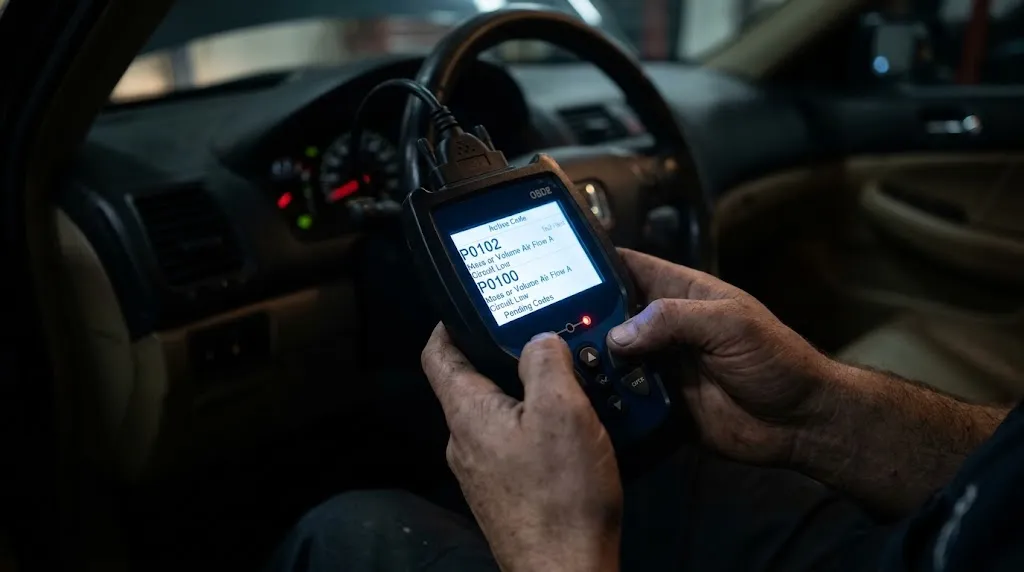
When you plug an OBD2 reader into your vehicle’s port under the dashboard, specific diagnostic trouble codes (DTCs) point directly toward airflow metering issues.
Recognizing these codes helps narrow down the problem before you start replacing expensive engine components:
- P0100: Mass or Volume Air Flow Circuit Malfunction
- P0101: Mass or Volume Air Flow Circuit Range/Performance Problem
- P0102: Mass or Volume Air Flow Circuit Low Input
- P0103: Mass or Volume Air Flow Circuit High Input
- P0104: Mass or Volume Air Flow Circuit Intermittent
A code like P0102 typically indicates low voltage return from the sensor, which often happens when the internal sensing wire becomes coated in oil or dust. Conversely, a P0103 code points toward high voltage return, usually signaling an internal electrical short within the sensor assembly.
Using Live Data Streams to Verify MAF Sensor Operation
Reading stored trouble codes is only the first step. Advanced troubleshooting requires viewing live data streams on your OBD2 scanner while the engine is running.
Look for the parameter labeled MAF or Mass Air Flow, measured in grams per second (g/s). On a typical four-cylinder passenger car idling at normal operating temperature, the baseline MAF reading should hover around 2.0 to 7.0 g/s.
If the reading stays locked at zero, fails to change when you gently rev the engine, or spikes erratically while the engine speed remains steady, the sensor is likely defective or severely contaminated.
Tip
Compare your live MAF readings against engine load and throttle position. As you press the accelerator pedal, airflow values should rise smoothly in direct correlation with engine RPM.
Limitations of OBD2 Diagnostics for Airflow Sensors
While an OBD2 scan tool identifies electrical faults and abnormal sensor output values, it cannot physically inspect the component.
An OBD2 scanner cannot tell the difference between a dead sensor, a disconnected wiring harness, a blown fuse, or an intake air leak upstream or downstream of the filter box. If a vacuum hose has cracked or the air intake boot is torn, unfiltered air bypasses the mass airflow sensor entirely.
This creates a lean running condition that triggers a MAF-related code, even though the sensor itself is operating perfectly.
Warning
Never replace a mass airflow sensor based solely on a trouble code without inspecting the air filter housing, intake clamps, and wiring connections first.
Step-by-Step Diagnostic Process Using Your Scanner
Following a structured troubleshooting sequence prevents misdiagnosis and saves money on unnecessary replacement parts.
- Connect your OBD2 scan tool to the vehicle’s diagnostic port with the ignition key in the on position, engine off.
- Scan for active, pending, and permanent trouble codes, noting any airflow or fuel trim codes present.
- Clear the stored codes to rule out old history codes triggered by past maintenance events.
- Start the engine and monitor live data, focusing on MAF sensor output in grams per second.
- Perform a physical tap test on the sensor housing with the handle of a screwdriver while watching live data for sudden dropouts or electrical spikes.
Distinguishing a Dirty Sensor from a Failed Sensor
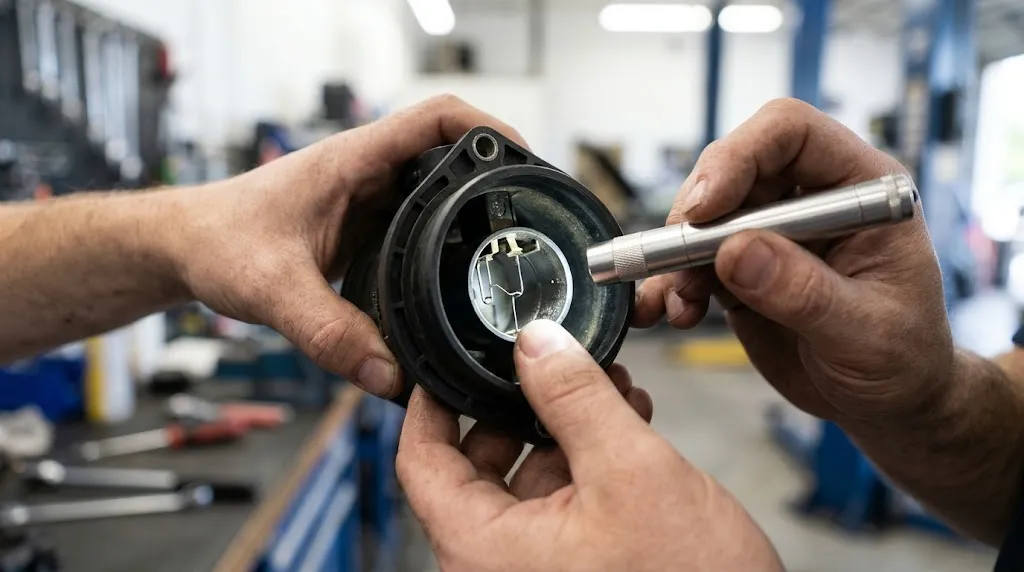
Many modern vehicles experience MAF sensor degradation simply due to microscopic debris or excessive oil from aftermarket reusable air filters coating the delicate platinum wire.
When the wire becomes contaminated, its thermal dissipation properties change, causing inaccurate airflow calculations. An OBD2 scanner will show sluggish response times or skewed g/s values.
Before purchasing a replacement unit, remove the sensor housing and inspect the internal wire or film with a flashlight. If you notice visible buildup, cleaning it with specialized electronic cleaner often restores proper function and clears the trouble codes permanently.
Relevant Product
OBD2 Diagnostic Scan Tool
A reliable code reader with live data capabilities allows you to monitor mass airflow sensor performance and check fuel trim parameters in real time.
As an Amazon Associate, we earn from qualifying purchases.
Frequently Asked Questions
Can a bad mass airflow sensor cause a car not to start?
Yes, in severe cases where the MAF sensor sends completely irrational data to the powertrain control module, the engine may stall immediately after starting or refuse to start altogether due to improper fuel delivery.
Do I need an advanced bidirectional scanner to test a MAF sensor?
No, a basic code reader that supports live data streaming is sufficient to view airflow rates in grams per second and check for associated trouble codes.
Can I unplug the mass airflow sensor to test it?
Unplugging the MAF sensor forces the engine computer to switch to a default speed-density backup table using throttle position and RPM. If the engine idle smooths out immediately when unplugged, the sensor is likely faulty or sending skewed data.
What fuel trim numbers indicate a failing MAF sensor?
If your OBD2 live data shows long-term and short-term fuel trims spiking far above positive or negative 10 percent, it indicates the computer is constantly correcting for unmeasured air or faulty airflow calculations.
How often should a mass airflow sensor be cleaned?
There is no strict mileage interval for cleaning a MAF sensor, but inspecting and cleaning it during routine air filter replacements prevents gradual performance loss and unexpected check engine lights.
Will cleaning a broken MAF sensor fix the problem?
Cleaning only resolves issues caused by surface contamination on the sensing element. If the internal microchip or sensing filament has suffered physical or electrical failure, cleaning will not restore operation, and replacement is required.
Conclusion
Diagnosing a mass airflow sensor with an OBD2 scanner involves examining both stored trouble codes and live data parameters to verify proper air measurement. While scan tools cannot physically inspect components or detect intake leaks on their own, they give you the critical diagnostic evidence needed to determine whether your MAF sensor is dirty, failing, or operating correctly. By combining code reading with live data analysis and physical inspections, you can accurately resolve airflow issues and restore engine performance.

I’m Alex Rahman, a car enthusiast and automotive writer focused on practical solutions, car tools, and real-world driving advice. I share simple and honest content to help everyday drivers make better decisions.
