Can OBD2 Diagnose Oxygen Sensor Faults? Complete Guide
Quick Answer
Yes, an OBD2 scanner can diagnose oxygen sensor faults by reading live sensor voltage data, monitoring fuel trim adjustments, and retrieving specific Diagnostic Trouble Codes (DTCs) such as P0130 through P0167 that point directly to circuit, heater, or performance issues.
How OBD2 Systems Monitor Oxygen Sensors
Modern vehicles rely heavily on computerized engine management to maintain an optimal air-fuel ratio, typically hovering around 14.7 parts air to 1 part fuel by weight. Positioned in the exhaust stream before and after the catalytic converter, oxygen sensors measure the amount of unburned oxygen remaining in the exhaust gas.
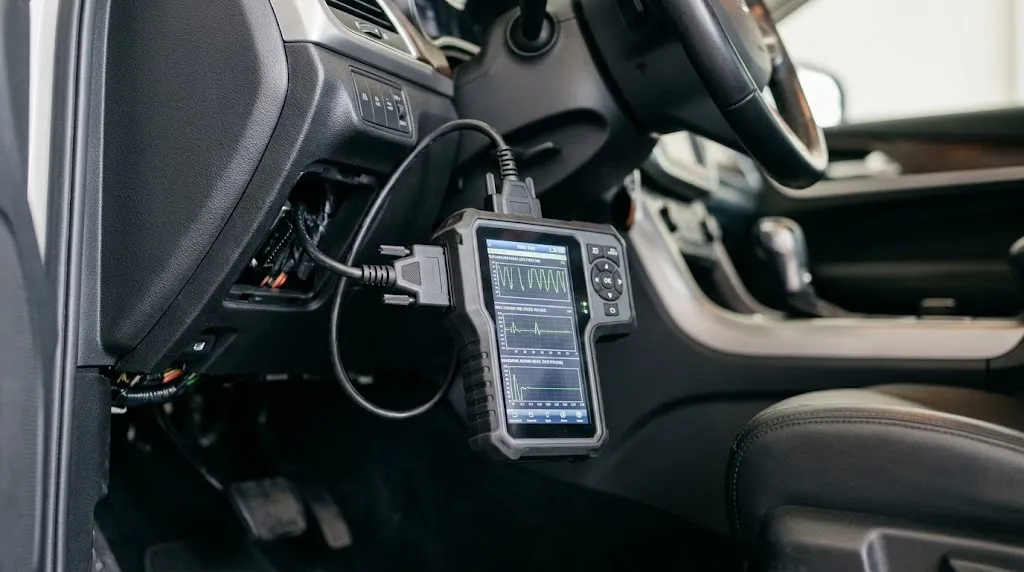
The Powertrain Control Module (PCM) continuously monitors these electrical signals. When an OBD2 scan tool is connected to the vehicle’s diagnostic port under the dashboard, it acts as a digital window into this computerized communication loop.
Basic code readers pull stored or pending fault codes when a sensor fails completely or its internal heater circuit breaks. Advanced code readers and live-data diagnostic scanners display real-time voltage fluctuations, allowing you to observe how rapidly the upstream sensor cycles between rich and lean conditions during closed-loop operation.
Common Diagnostic Trouble Codes Associated with Oxygen Sensors
When an oxygen sensor malfunctions, or when the circuit connecting it to the computer encounters resistance or failure, the PCM triggers a Check Engine Light and assigns a specific DTC. Recognizing these codes is the first step in diagnosing the root cause.
- Circuit Malfunction Codes: Codes like P0130 or P0135 indicate a general malfunction or a fault within the sensor’s internal heater circuit, which prevents the sensor from reaching its proper operating temperature quickly.
- Slow Response Codes: A sensor can become sluggish due to carbon buildup or internal aging, triggering codes that denote a slow switching rate between high and low voltage.
- High or Low Voltage Codes: Persistent voltage readings outside the normal operating range suggest the engine is running permanently rich or lean, or that the sensor element itself is failing.
- Downstream Efficiency Codes: Codes such as P0420 evaluate catalyst system efficiency by comparing upstream and downstream sensor waveforms. While often pointing to a failing catalytic converter, a lazy downstream sensor can also trick the computer into setting this code.
Key Insight
An oxygen sensor code does not always mean the sensor itself is broken. Vacuum leaks, faulty fuel injectors, exhaust leaks before the sensor, and ignition misfires can all force an oxygen sensor to report abnormal readings, resulting in a diagnostic code for a part that is actually functioning correctly.
Interpreting Live Sensor Data Versus Reading Codes
Simply reading a stored fault code provides a starting point, but observing live data separates expert diagnosis from guesswork. A healthy upstream narrowband oxygen sensor generates a fluctuating voltage signal typically ranging from 0.1 volts (lean mixture, high oxygen) to 0.9 volts (rich mixture, low oxygen).
During normal driving at operating temperature, this voltage should sweep rapidly back and forth across the 0.45-volt threshold multiple times per second. If the live data graph shows a flat line, a sluggish response time taking several seconds to change state, or a fixed voltage stuck above or below the midpoint, the sensor is likely degraded or contaminated.
Downstream sensors, by contrast, should display a relatively stable, steady voltage line once the catalytic converter is warmed up, demonstrating that the catalyst is successfully storing and consuming oxygen.
Limitations of OBD2 Oxygen Sensor Diagnostics
While diagnostic scanners are powerful tools, they have distinct boundaries regarding what they can pinpoint independently.
| Diagnostic Task | What OBD2 Scanners Can Do | What Requires Physical Inspection |
|---|---|---|
| Electrical Integrity | Detect open circuits, short circuits, and heater failures via codes. | Locate melted wiring harnesses, frayed wires, or corroded pins. |
| Sensor Performance | Display real-time voltage output and switching frequency. | Check for physical contamination, silicone poisoning, or soot buildup. |
| Exhaust Integrity | Report skewed mixture data caused by unmeasured air. | Find hairline cracks in exhaust manifolds or leaking gaskets. |
An OBD2 tool reveals the symptom and electrical behavior, but physical checks with a multimeter or visual inspections under the vehicle remain necessary to confirm whether the fault lies in the sensor itself, its wiring harness, or an external engine mechanical issue.
How to Perform a Basic OBD2 Oxygen Sensor Check

Diagnosing an oxygen sensor systematically using an advanced OBD2 scan tool involves a structured troubleshooting sequence.
- Plug your OBD2 scanner into the Data Link Connector (DLC) located underneath the driver-side dashboard and turn the ignition key to the ON position without starting the engine.
- Select “Read Codes” to identify any active or pending Diagnostic Trouble Codes related to the oxygen sensors or fuel trim systems.
- Clear any historical codes if routine maintenance was recently performed, then start the engine and allow it to reach normal operating temperature.
- Navigate to the “Live Data” or “Graphing” menu on your scan tool and select the oxygen sensor PIDs, such as O1S1 (Sensor 1, Bank 1) and O2S1 (Sensor 2, Bank 1).
- Observe the upstream sensor voltage at idle and while gently raising engine speed to around 2,500 RPM, verifying that the waveform cycles smoothly and crosses the midpoint regularly.
Warning
Exhaust components reach extremely high temperatures during normal engine operation. Never touch an exhaust pipe, catalytic converter, or oxygen sensor housing until the vehicle has cooled down completely to avoid severe burns.
Troubleshooting Next Steps After Scanning
Once you retrieve codes or analyze live data, determining the appropriate repair action prevents unnecessary part replacement. If a specific heater circuit code appears, checking the fuse box and measuring resistance across the sensor heater pins with a digital multimeter confirms whether the internal heating element has failed.
If the live data indicates a permanently lean mixture, inspect the intake tract for disconnected vacuum hoses, clean the mass air flow sensor, and check for intake gasket leaks before condemning the oxygen sensor. Replacing a sensor contaminated by oil leaks or coolant combustion will only result in the premature failure of the new sensor unless the underlying engine leak is repaired first.
Related Product
OBD2 Diagnostic Scan Tools
A reliable OBD2 scanner with live data graphing capabilities helps you monitor oxygen sensor voltage fluctuations and read trouble codes accurately.
As an Amazon Associate, we earn from qualifying purchases.
Frequently Asked Questions
Can a bad oxygen sensor cause a car to fail an emissions test?
Yes, a malfunctioning oxygen sensor disrupts the computer’s ability to maintain the correct air-fuel mixture, causing elevated hydrocarbon and carbon monoxide emissions that will cause the vehicle to fail tailpipe tests or fail to ready its internal emissions monitors.
Do all OBD2 scanners show live oxygen sensor data?
Basic, inexpensive code readers only retrieve stored diagnostic trouble codes and freeze-frame data. To view real-time oxygen sensor voltage graphs and switching speeds, you need a scanner that supports live data streaming.
How many oxygen sensors does a standard car have?
Most modern vehicles with four-cylinder engines have at least two oxygen sensors: an upstream sensor before the catalytic converter and a downstream sensor after it. Vehicles with V6 or V8 engines often have four or more sensors distributed across multiple exhaust banks.
Can I clean a contaminated oxygen sensor instead of replacing it?
While specialized aerosol cleaners exist for sensors, chemical cleaning rarely restores a heavily carbon-fouled or silicone-poisoned sensor element. Replacement is typically the most reliable and long-lasting solution.
What causes an oxygen sensor to fail prematurely?
Premature failure is commonly caused by internal engine oil leaks, coolant entering the combustion chambers from a blown head gasket, excessive fuel additives, or the use of improper RTV silicone sealants during exhaust repairs.
How often should oxygen sensors be replaced?
Unlike oil filters or spark plugs, oxygen sensors do not always have a strict replacement mileage interval. Many manufacturers recommend inspection around 100,000 miles, replacing them only when performance degrades, response times slow, or fault codes appear.
Conclusion
Diagnosing oxygen sensor faults with an OBD2 scanner gives you direct insight into your engine’s combustion efficiency and emission control systems. By moving beyond simple code reading to evaluate live voltage graphs and checking for underlying mechanical issues, you can accurately determine whether a sensor has failed or if another engine problem is triggering the fault. Systematic troubleshooting ensures you address the true root cause, restoring proper fuel economy and smooth engine performance.

I’m Alex Rahman, a car enthusiast and automotive writer focused on practical solutions, car tools, and real-world driving advice. I share simple and honest content to help everyday drivers make better decisions.
