Can an OBD2 Scanner Work on Any Car? Compatibility Guide
Quick Answer
Yes, an OBD2 scanner will physically plug into and work on any car manufactured from 1996 onward in the United States, as well as 2001 (gas) and 2004 (diesel) onward in the European Union. However, while a basic generic scanner can read and clear standard powertrain trouble codes (P-codes) on any OBD2-compliant vehicle, advanced diagnostic tools are often required to access manufacturer-specific systems like ABS, air bags, or transmission modules.
For vehicle owners and DIY mechanics, the diagnostic port under the dashboard is the primary gateway to understanding what is happening beneath the hood. When a check engine light illuminates, plugging in a scanner is the logical first step. Yet, a common point of confusion arises around whether a single device can communicate with every vehicle on the road, regardless of make, model, or year.
Understanding the boundaries of OBD2 compatibility helps prevent wasted money on advanced tools when a basic reader suffices, or conversely, prevents frustration when a budget scanner fails to diagnose a complex system failure.
The Universal Standard: What OBD2 Actually Means
The On-Board Diagnostics version 2 (OBD2) protocol is a standardized system that vehicle manufacturers were legally mandated to implement. This standardization ensures that standard diagnostic equipment can interface with any compliant vehicle.
Before OBD2 became mandatory, every automotive manufacturer used proprietary diagnostic plugs, communication protocols, and error codes. Mechanics needed entirely different equipment to read a Ford compared to a Toyota or a General Motors vehicle. OBD2 unified the physical connection port and the baseline communication language.
Global Rollout Milestones
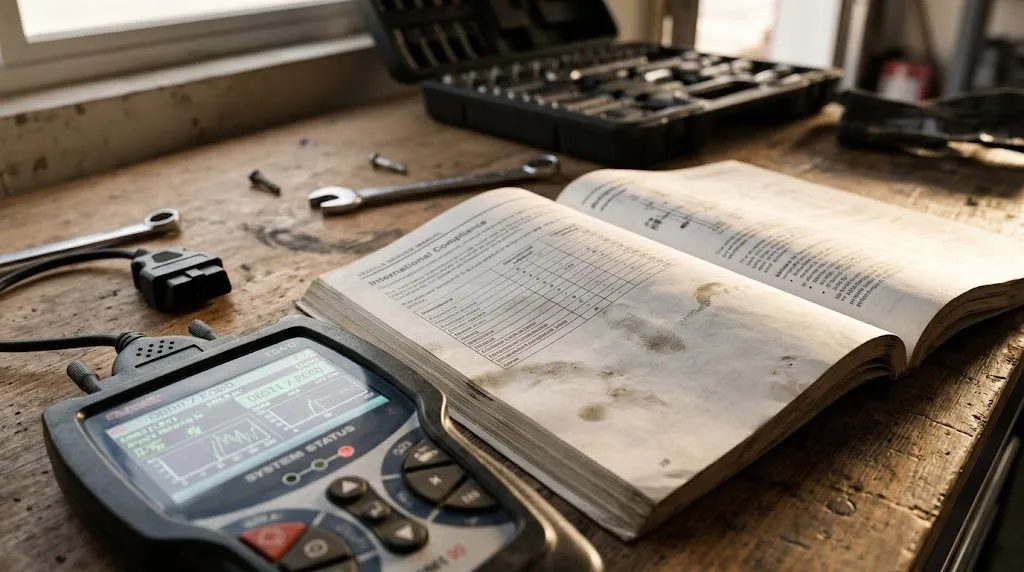
The OBD2 standard was adopted across different regions at different times:
- United States: Mandatory for all light-duty gasoline vehicles starting with the 1996 model year.
- European Union (EOBD): Mandatory for all gasoline vehicles starting in 2001 and diesel vehicles starting in 2004.
- Canada: Aligned with the US standard, requiring OBD2 from 1996 onward.
- Australia: Implemented progressively, becoming mandatory for new vehicle models from 2006 and all vehicles by 2007.
If a vehicle falls into one of these categories and regions, any standard OBD2 scanner will physically plug into the 16-pin Data Link Connector (DLC)—usually located underneath the driver-side dashboard near the steering column—and establish a baseline communication session.
Generic Codes vs. Manufacturer-Specific Systems
While an OBD2 scanner will connect to any compliant car, the depth of information it retrieves depends heavily on the scanner’s capabilities and the vehicle’s onboard computer architecture.
OBD2 protocols divide trouble codes into standardized categories that every compliant scanner can read:
- Powertrain (P-codes): Engine and transmission controls. Universal across all brands.
- Body (B-codes): Cabin electronics, lighting, and interior modules. Often manufacturer-specific.
- Chassis (C-codes): Suspension, steering, and braking systems. Frequently manufacturer-specific.
- Network (U-codes): Communication between vehicle computers. Highly dependent on vehicle architecture.
A basic, inexpensive code reader ($20 to $40) is designed primarily to read and clear generic Powertrain (P-codes). If a vehicle has a misfire, an emissions fault, or an oxygen sensor failure, a basic scanner will successfully diagnose it on a Ford, a Honda, a BMW, or any other compliant brand.
Where Basic Scanners Fall Short
If the dashboard illuminates an ABS (Anti-lock Braking System) warning light, a traction control light, or an airbag (SRS) warning, a standard basic code reader will typically display nothing. These systems operate outside the basic federally mandated emissions protocols.
Advanced diagnostic tools or manufacturer-specific software extensions are required to query these independent modules. Professional-grade bi-directional scanners can communicate with all modules across specific vehicle makes, but budget scanners are intentionally limited to generic OBD2 parameters.
Tip
Before purchasing an OBD2 scanner, check whether you only need to clear a check engine light or if you need to diagnose brake, airbag, or transmission issues that require an advanced multi-system diagnostic tool.
Exceptions and Edge Cases
While the 1996 rule covers the vast majority of modern consumer vehicles, certain edge cases exist where an OBD2 scanner may fail to work as expected.
Heavy-Duty and Commercial Vehicles
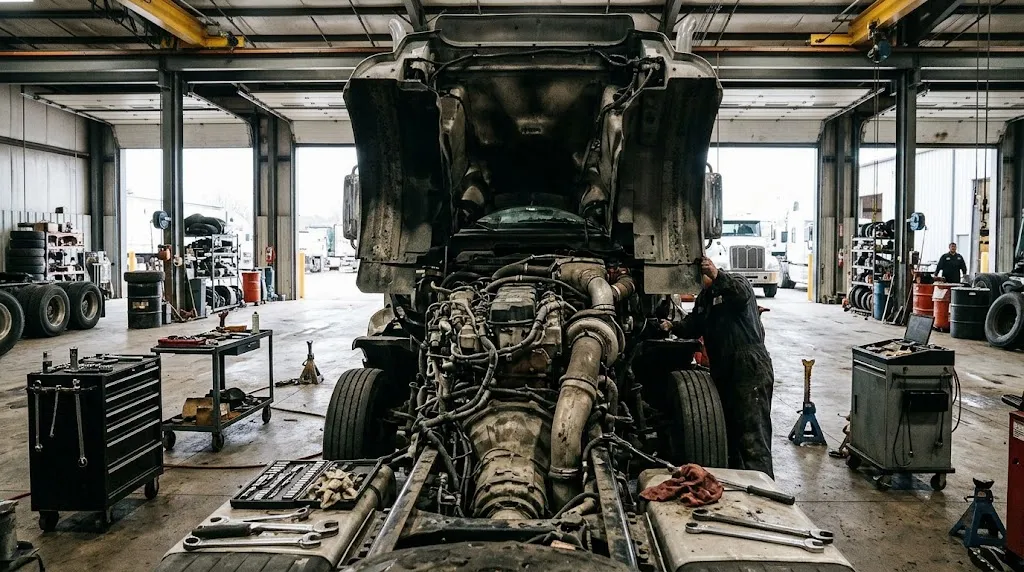
Vehicles exceeding standard light-duty weight ratings—such as heavy-duty commercial trucks, medium-duty delivery vans, and large diesel pick-ups—often use heavy-duty diagnostic standards like J1939 or J1708 instead of standard OBD2 protocols. While a heavy-duty truck may have a 1998 model year, a standard consumer OBD2 scanner will not interface with its commercial engine control module without an adapter or a heavy-duty diagnostic tool.
Pre-1996 Transition Vehicles
Some manufacturers introduced computer-controlled engines and diagnostic ports years before OBD2 became mandatory in 1996. Vehicles from the early 1990s—such as certain GM models with ALDL ports or early Ford EEC-IV systems—have physical plugs under the dash, but a standard OBD2 scanner will not recognize them. These vehicles require specialized adapter cables or manufacturer-specific flashing code methods.
Blown Cigarette Lighter Fuses
A surprising troubleshooting hurdle is power supply failure. Many budget OBD2 scanners draw operating power directly from pin 16 of the diagnostic port. On many vehicle makes, pin 16 shares a fuse with the interior cigarette lighter or accessory power outlet. If the cigarette lighter fuse blows, the scanner will not turn on, leading users to mistakenly believe the scanner is incompatible with their car.
Warning
If your plug-in OBD2 scanner fails to power on when connected to a compliant vehicle, check your vehicle’s interior fuse box for a blown accessory or cigarette lighter fuse before assuming the tool or port is broken.
How to Choose the Right Scanner for Your Vehicle
Because compatibility is broad for basic tasks but narrow for advanced diagnostics, matching the tool to the intended task saves both time and money.
| Scanner Type | Best Used For | System Coverage |
|---|---|---|
| Basic Code Reader | Reading and clearing check engine lights, checking emissions readiness. | Generic Powertrain (P-codes) only. |
| Bluetooth OBD2 Dongle | Real-time sensor monitoring, mobile app integration, fuel economy tracking. | Generic Powertrain + App-dependent enhanced data. |
| All-System Diagnostic Tool | Comprehensive troubleshooting across ABS, SRS, transmission, and body modules. | Full vehicle network (Manufacturer-specific modules). |
For most vehicle owners, a basic reader or a Bluetooth OBD2 adapter paired with a smartphone app provides all the diagnostic capability needed for everyday maintenance checks.
Related Product
OBD2 Diagnostic Scan Tool
A reliable code reader helps you quickly identify engine trouble codes and clear check engine lights on any standard OBD2-compliant vehicle.
As an Amazon Associate, we earn from qualifying purchases.
Frequently Asked Questions
Can an OBD2 scanner damage a car computer?
No. Standard OBD2 scanners are designed strictly as listening and querying devices. They receive data streams from the vehicle computer network and can send basic command prompts (such as clearing codes or initiating readiness monitors), but they cannot alter or corrupt core engine calibration files.
Do I need an internet connection for an OBD2 scanner to work?
Basic code readers operate entirely offline by communicating directly with the vehicle’s onboard computer. However, advanced diagnostic tools and smartphone-connected Bluetooth dongles often use an internet connection to look up complex code definitions or download manufacturer-specific software updates.
Why is my scanner saying “Link Error” or failing to connect?
A connection failure typically occurs due to a loose plug connection, a blown accessory fuse powering the diagnostic port, an aftermarket radio interfering with data lines, or an ignition switch that is turned off. Ensure the key is turned to the “On” position with the engine off when attempting to establish a connection.
Can an OBD2 scanner read hybrid or electric vehicle codes?
Yes, standard OBD2 scanners can read generic powertrain codes on hybrid vehicles because their internal combustion engines utilize standard OBD2 protocols. However, diagnosing high-voltage battery packs, inverter systems, or specialized EV motor controllers usually requires advanced manufacturer-specific software.
Will an OBD2 scanner clear an airbag or ABS light?
Most basic, entry-level OBD2 scanners will not clear ABS or airbag lights because those systems operate outside standard emissions control protocols. Clearing those warning codes requires an advanced multi-system diagnostic tool capable of communicating with body and chassis control modules.
Does a check engine light have to be on to use a scanner?
No. You can plug an OBD2 scanner into a vehicle at any time to monitor live sensor data—such as coolant temperature, oxygen sensor voltage, fuel trim, and engine RPM—even when no warning lights are illuminated on the dashboard.
Conclusion
An OBD2 scanner works universally across all passenger vehicles manufactured from 1996 onward in the US and equivalent years abroad, providing immediate access to standard powertrain diagnostics and emissions data. While basic readers are sufficient for diagnosing common engine faults, understanding their limits regarding ABS, airbag, and body modules ensures you select the right tool for deeper automotive troubleshooting. By verifying your vehicle’s compliance year and matching your diagnostic needs to the appropriate scanner capability, you can efficiently troubleshoot and clear dashboard warning codes on nearly any modern car.
A. SEO Package

I’m Alex Rahman, a car enthusiast and automotive writer focused on practical solutions, car tools, and real-world driving advice. I share simple and honest content to help everyday drivers make better decisions.
