Is a 1080p Dash Cam Good Enough for Real-World Driving?
Quick Answer
A 1080p dash cam is good enough for most drivers. It records clear daytime video and captures basic details for evidence. However, it may miss fine details like license plates at speed or in low light compared to 2K or 4K models.
I once reviewed dash cam footage after a minor crash. The video looked clear at first. But when I zoomed in, the license plate blurred out. That moment changed how I judge dash cams.
I’m Alex Rahman, and I test everyday tech for real-world use. Many drivers ask one simple question. Is a 1080p dash cam good enough today?
The answer is not as simple as yes or no. It depends on how and where you drive. Let’s break it down in a practical way.
Key Takeaways
- 1080p dash cams work well for daily driving and basic evidence.
- License plates are harder to read at speed or night.
- Bitrate and lens quality matter more than resolution.
- Higher resolutions help but increase cost and storage use.
What Does 1080p Mean in a Dash Cam and Why Does It Matter?
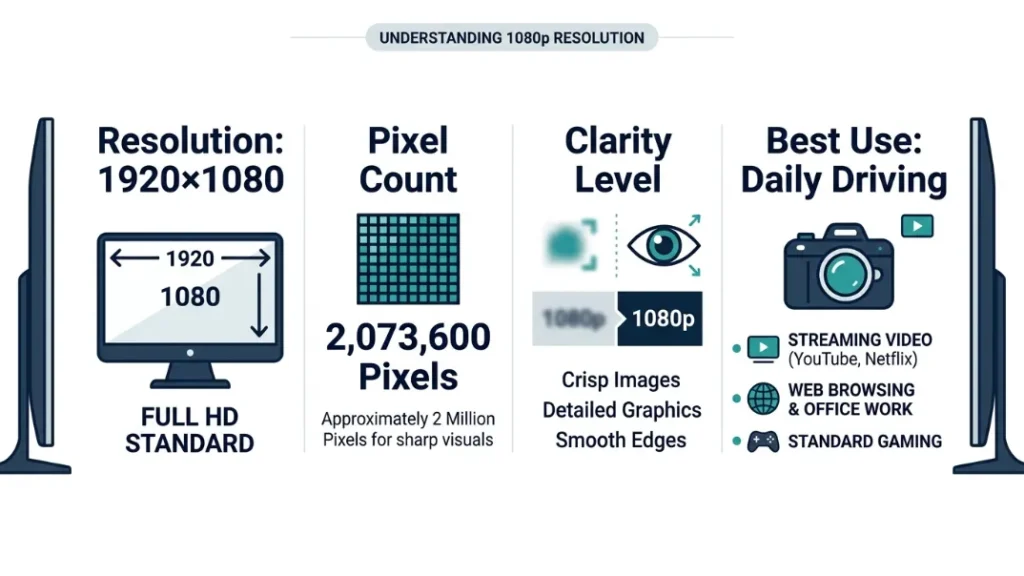
1080p means the camera records video at 1920×1080 pixels, which gives clear Full HD footage that shows road events, vehicles, and general details, but it does not always capture fine text or distant objects with sharp clarity.
This resolution became the standard for years. Many trusted brands like Nextbase and Garmin still use it in entry models.
Here is what that means in practice. You get smooth and clear video during normal driving.
Rule: Resolution controls detail, but it does not control clarity alone.
Focus on how the camera processes video, not just pixel count.
Next, let’s see how it performs on real roads.
How resolution affects video clarity
More pixels mean more detail in each frame. But that only matters if the camera uses enough data.
Why pixels are not everything
A high-resolution camera with low bitrate can look worse than a good 1080p model.
Is a 1080p Dash Cam Good Enough for Everyday Driving?
Yes, a 1080p dash cam is good enough for everyday driving because it records clear road footage, captures traffic events, and provides usable evidence for most situations like minor accidents or insurance claims.
In cities like Dhaka, traffic moves slowly. That helps 1080p cameras capture more detail.
During daytime, footage looks sharp. You can see cars, lanes, and signals clearly.
Rule: Slower speeds improve detail capture at lower resolutions.
If you drive mostly in urban areas, 1080p works well.
Now let’s look at one big concern. License plates.
Daytime performance explained
Bright light helps sensors capture clean images. Even basic cameras perform well here.
Real-world driving scenarios
Stop-and-go traffic gives the best results for 1080p footage.
Tip:
Choose a dash cam with HDR if you drive in mixed lighting conditions.
Can a 1080p Dash Cam Read License Plates Clearly?
Sometimes a 1080p dash cam can read license plates clearly, but only when vehicles move slowly, lighting is good, and the camera has a high bitrate, because fast motion and low light reduce detail sharply.
This is where many users feel disappointed.
At high speeds, motion blur reduces clarity. Even 4K cameras can struggle here.
Rule: Motion and lighting matter more than resolution alone.
To improve results, look for higher bitrate and better sensors.
Let’s compare it with higher resolutions next.
Factors that affect plate readability
- Speed of vehicles
- Lighting conditions
- Camera bitrate
- Lens quality
When it works and when it fails
It works in slow traffic. It fails on highways at night.
Warning:
Do not rely on 1080p footage alone for legal disputes in high-speed accidents.
How Does 1080p Compare to 2K and 4K Dash Cams?
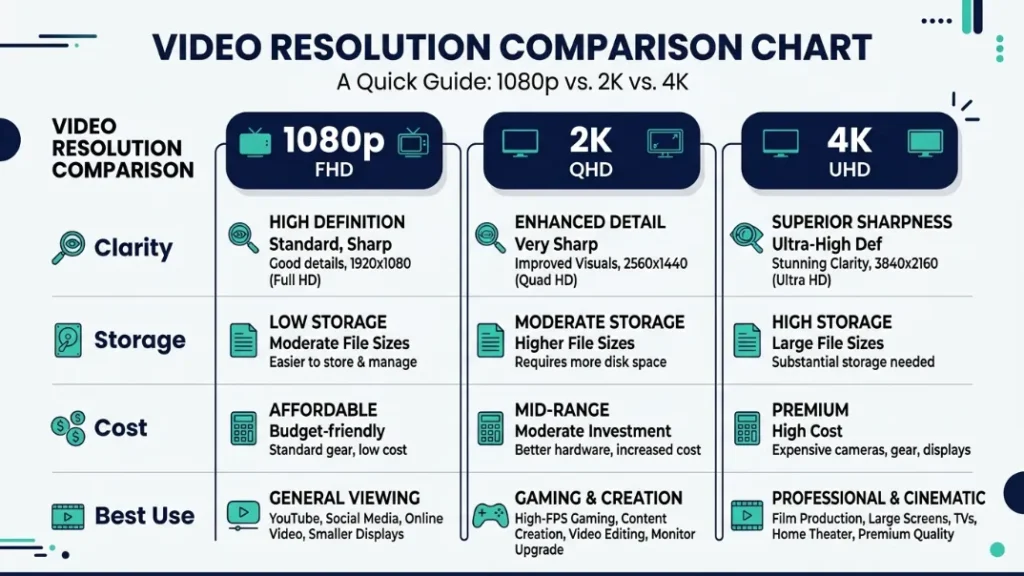
1080p dash cams offer balanced performance, while 2K and 4K models provide sharper detail and better zoom capability, but they also require more storage and higher cost, which may not benefit every driver equally.
| Resolution | Clarity | Storage Use | Best For |
|---|---|---|---|
| 1080p | Good | Low | Daily driving |
| 2K | Better | Medium | Balanced users |
| 4K | Best | High | Detail-focused users |
Rule: Higher resolution helps zoom, not always real-time clarity.
Many reviewers like Nick Murray highlight real-world limits of 4K.
Let’s now check night performance.
Real difference vs marketing hype
Marketing focuses on pixels. Real use depends on lighting and motion.
Does 1080p Dash Cam Work Well at Night?
1080p dash cams can work at night, but performance depends heavily on sensor quality and HDR support, because low light reduces visible detail and increases noise in footage regardless of resolution.
Night is the hardest test for any camera.
Cheap models struggle with glare and shadows.
Rule: Sensor size matters more than resolution at night.
Choose models with HDR or Sony sensors for better results.
Now let’s look at what matters more than resolution.
Low-light challenges
Headlights and streetlights create glare and contrast issues.
Role of HDR and sensors
HDR balances bright and dark areas for clearer footage.
Tip:
Look for dash cams with Sony STARVIS sensors for better night recording.
What Matters More Than Resolution in a Dash Cam?
Bitrate, lens quality, and image sensor matter more than resolution in a dash cam because they directly control how much detail the camera captures and how clearly it processes each frame in real conditions.
Many users focus only on resolution. That leads to poor choices.
Rule: A high bitrate 1080p camera beats a low bitrate 4K camera.
Brands like Viofo prove this with strong 1080p models.
Let’s break down the key factors.
Bitrate and compression explained
Bitrate controls how much data each second of video holds.
Learn more about video compression at
video compression basics.
Lens quality and sensor size
A better lens captures more light and sharper images.
A well-tuned 1080p dash cam often delivers more usable footage than a poorly optimized 4K model.
When Is a 1080p Dash Cam NOT Enough?
A 1080p dash cam is not enough when you need high-detail evidence at speed, record professional footage, or rely on zooming into small details, because it lacks the pixel density required for those demanding situations.
Highway driving exposes its limits.
Fast motion reduces clarity fast.
Rule: Higher speed needs higher resolution.
If you drive long distances, consider 2K or 4K.
Next, let’s optimize what you already have.
High-speed driving
Highways reduce the chance of capturing sharp details.
Legal or professional use
Law enforcement or fleet drivers may need higher clarity.
How to Get the Best Quality From a 1080p Dash Cam?
You can improve 1080p dash cam quality by optimizing settings, positioning the camera correctly, and using a high-quality memory card, because these factors help capture clearer and more stable footage.
Step-by-Step
- Set highest bitrate in camera settings
- Enable HDR or WDR mode
- Mount camera at windshield center
- Keep lens clean at all times
Rule: Setup matters as much as hardware.
These small tweaks improve footage instantly.
Now, who should choose 1080p today?
Settings optimization
Use maximum quality settings for best results.
Placement and angle tips
Center placement reduces distortion and improves coverage.
Who Should Buy a 1080p Dash Cam in 2026?
A 1080p dash cam suits budget buyers and casual drivers because it offers reliable recording, lower storage use, and simple performance without the higher cost and complexity of advanced models.
If you drive daily in city traffic, this is enough.
Rule: Match your camera to your driving style.
Not everyone needs 4K resolution.
Let’s wrap this up with a clear verdict.
Budget buyers
Lower cost makes 1080p a smart entry choice.
Casual drivers vs professionals
Casual users benefit most. Professionals may need more detail.
Final Verdict: Should You Stick With 1080p or Upgrade?
A 1080p dash cam is good enough for most drivers, but upgrading to 2K or 4K makes sense if you want better detail, clearer license plates, and improved performance at speed or in low light.
Here is the simple truth.
Good enough beats perfect when it meets your needs.
I’m Alex Rahman, and I always suggest choosing based on real use, not specs.
If your current setup works, keep it. If not, upgrade smartly.
Frequently Asked Questions
Is 1080p dash cam enough for insurance claims?
Yes, 1080p footage usually provides enough detail for basic claims. It clearly shows events and vehicle movement.
Can 1080p dash cam record at night?
Yes, but quality depends on sensor and HDR support. Low-cost models struggle in dark conditions.
Is 2K better than 1080p for dash cams?
Yes, 2K offers more detail and sharper images. It helps with reading plates and zooming footage.
Do I need 4K dash cam?
No, most drivers do not need 4K. It helps only in specific high-detail situations.
What is more important than resolution?
Bitrate, lens quality, and sensor size matter more. They control real image clarity.
How long can 1080p dash cam record?
It records longer than higher resolutions due to smaller file size. Storage lasts more hours.

I’m Alex Rahman, a car enthusiast and automotive writer focused on practical solutions, car tools, and real-world driving advice. I share simple and honest content to help everyday drivers make better decisions.
