Do You Actually Need a Dashcam — Or Is It Just a Nice-to-Have?
Yes, most drivers need a dashcam. It records continuous video of the road and protects you if an accident happens. A good dashcam costs $50–$200 and can save you thousands in a disputed insurance claim. It is one of the most practical things you can add to any car.
I was parked at a red light when the car behind me rolled forward and tapped my bumper. The driver got out, looked at his car, and told me nothing happened. No damage, no problem, have a good day.
I had a dashcam. I had the whole thing on video. His insurer settled within a week.
Without that footage? It would have been my word against his. That is the situation millions of drivers face every year. I’m Alex Rahman, and after years of driving and researching car safety gear, I know one thing clearly: a dashcam is not a luxury. For most people, it is a quiet form of protection you never think about until you desperately need it.
So let’s answer the real question. Do you actually need one — and if so, which kind?
- A dashcam records your drive continuously and automatically saves footage during a collision.
- Dashcam footage is accepted as evidence in insurance claims and traffic courts in most countries.
- Dual-channel (front and rear) dashcams offer far better protection than front-only models.
- Some UK insurers offer premium discounts of 10–15% for drivers who use approved dashcams.
- You can get solid protection from a dashcam for as little as $50–$80.
What Is a Dashcam and How Does It Keep You Protected on the Road?
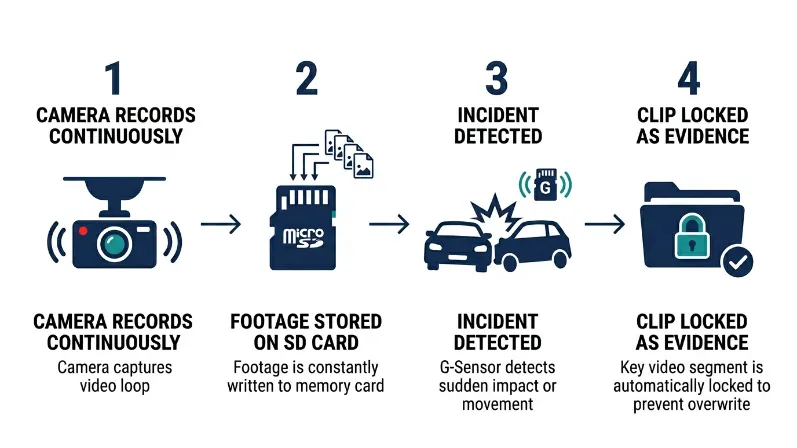
A dashcam is a small camera that mounts to your windshield or dashboard and records video of the road ahead — and sometimes behind — every time you drive. It runs automatically when your car starts and stores footage on a memory card. The whole point is simple: if something happens, you have proof.
Modern dashcams from brands like Nextbase, Vantrue, and BlackVue do far more than just record. They detect impacts, switch to night vision in low light, log your GPS location, and some even upload footage to the cloud in real time. A basic model from Viofo can cost under $60 and still deliver 1080p footage clear enough to read a licence plate.
How Does Loop Recording Work So You Never Run Out of Space?
Loop recording means the dashcam records in short clips — usually one to three minutes each — and automatically overwrites the oldest footage when the SD card fills up. You never have to delete files manually. The camera just keeps going, always keeping the most recent footage available.
When an incident is detected — or when you press the manual save button — that clip gets locked and protected from being overwritten. Everything else cycles normally. A 64GB card typically stores four to six hours of 1080p footage before looping begins.
Use a dashcam-rated SD card, not a standard phone card. Regular cards wear out quickly under constant loop recording. Brands like SanDisk High Endurance and Samsung PRO Endurance are built for this use case.
What Does a G-Sensor Do When You Have an Accident?
A G-sensor (also called an accelerometer) measures sudden changes in force. When you hit something — or something hits you — the dashcam detects the impact and instantly locks the current clip so it cannot be overwritten. This happens in milliseconds, before you have time to react.
You can adjust G-sensor sensitivity in most dashcams. Set it too high and it triggers on every pothole. Set it too low and a minor bump might not register. A medium sensitivity setting works well for everyday driving on normal roads.
What Are the Real Benefits of Having a Dashcam in Your Car?
The biggest benefit of a dashcam is evidence. It gives you an objective, timestamped, GPS-tagged record of exactly what happened and where. No memory gaps, no “he said she said,” no relying on a witness who drove away.
Beyond accidents, dashcams also deter bad behaviour. Studies from the UK’s road safety charity Brake found that drivers behave more carefully when they know they are being recorded — including the person behind the camera. That awareness alone can prevent incidents.
How Does Dashcam Footage Protect You in an Insurance Dispute?
When fault is disputed after a collision, insurers rely on witness statements, vehicle damage patterns, and any available video. Dashcam footage cuts through the dispute immediately. A clear 1080p clip showing the other driver running a red light or rear-ending you removes all ambiguity.
In the UK, where crash-for-cash fraud costs insurers over £340 million per year, dashcam footage has become one of the most important tools for resolving claims quickly. Many insurers like Direct Line and Aviva now actively encourage dashcam use and have systems to accept uploaded footage directly with a claim.
Can a Dashcam Help You Fight Insurance Fraud Like Crash-for-Cash?
Crash-for-cash is a scam where a fraudster deliberately causes a collision and then blames the innocent driver. They brake suddenly in front of you, stage a roundabout incident, or fake injuries. Dashcam footage exposes these scams instantly.
The Insurance Fraud Bureau in the UK estimates that crash-for-cash fraud affects around 170,000 drivers per year. With a dashcam running, you have the exact sequence of events on video — making the fraud impossible to sustain. Fraudsters know this, and many actively avoid tailgating cars with visible dashcams.
Dashcam footage can be used against you too. If you were speeding or ran a light before a collision, that footage exists. Always drive as if your camera is watching — because it is.
Does Dashcam Footage Actually Hold Up in Court?
Yes. Dashcam footage is admissible as evidence in traffic courts across the UK, USA, Australia, and most of Europe. Judges and magistrates treat it as objective documentary evidence, provided the footage is unedited and the metadata (date, time, GPS) is intact.
Traffic attorneys consistently recommend dashcams to clients because video evidence dramatically shortens legal disputes. Cases that might take months of back-and-forth often settle within days once footage is shared. Garmin and Nextbase both build tamper-evident firmware into their cameras specifically to strengthen the legal integrity of recordings.
Who Needs a Dashcam the Most — And Who Can Probably Skip It?
Not everyone has equal risk on the road. Your driving habits, location, and vehicle type all affect how much you stand to gain from a dashcam. The more you drive in high-traffic urban areas, the more a dashcam protects you.
Here is a simple framework to figure out where you fall.
| Driver Type | Dashcam Need | Why |
|---|---|---|
| New / young driver | Very high | Often blamed in disputes; insurance costs already high |
| Daily urban commuter | High | Dense traffic = higher collision risk daily |
| Rideshare / delivery driver | Very high | More hours driving = more exposure; passenger disputes possible |
| Occasional rural driver | Medium | Lower traffic risk but wildlife and road hazards still apply |
| Retired / light driver | Low–Medium | Fewer trips = lower exposure, but still useful for peace of mind |
Why New and Young Drivers Benefit More Than Anyone Else
Young drivers are statistically more likely to be involved in collisions — and more likely to be blamed regardless of fault. A dashcam gives a young driver the same objective evidence that experienced drivers have always lacked.
In the UK, drivers under 25 pay some of the highest insurance premiums in the world. Several insurers now offer young driver dashcam programmes that reduce premiums by 10–20% in exchange for monitored driving data. The Marmalade Young Driver insurance scheme, for example, uses dashcam telematics as its core pricing model.
When Is a Dashcam Less Useful Than You Think?
A dashcam will not help you if the footage is unclear, corrupted, or not saved. Low-resolution cameras struggle at night or in bright sun glare. Cheap cameras with poor night vision often fail exactly when you need them most.
A dashcam also cannot prevent an accident — only document one. If you park in a private car park and someone keys your car out of frame, the camera does nothing. And if you are clearly at fault in the footage, that works against you. A dashcam is a truth-teller, not a defender.
What Are the Different Types of Dashcams and Which One Is Right for You?
Dashcams come in three main configurations: front-only, dual-channel (front and rear), and three-channel (front, interior, and rear). Most drivers get the best value from a dual-channel setup. Here is what each type covers.
Front-Only vs. Dual-Channel Dashcam — What Is the Real Difference?
A front-only dashcam records everything ahead of your vehicle. A dual-channel dashcam adds a second camera for the rear window. The rear camera matters most for rear-end collisions, which account for roughly 29% of all road accidents in the USA according to NHTSA data from 2022.
Without a rear camera, you have no footage of the car that hit you from behind. The at-fault driver can claim you reversed or braked suddenly. A rear camera closes that gap entirely. Vantrue’s E2 Lite and Nextbase’s 622GW with rear camera module are two reliable dual-channel setups under $200.
If budget is tight, start with a front-only dashcam now and add a rear camera later. Most mid-range dashcams from Vantrue and Nextbase support rear camera modules as add-ons.
What Is Parking Mode and Do You Actually Need It?
Parking mode keeps your dashcam recording — or on standby — after you turn off the engine. When motion or an impact is detected near your parked car, the camera activates and records. This is how you catch hit-and-runs in car parks.
Parking mode requires a constant power source. You either hardwire the dashcam to your car’s fuse box or use a dashcam battery pack like the BlackVue B-124E. Without one of these, parking mode drains your car battery within hours. If you park regularly in busy areas or on streets, parking mode is worth the extra setup.
Should You Get a Cloud Dashcam or Stick With an SD Card?
Cloud dashcams like the BlackVue DR970X upload footage to a remote server in real time over a mobile data connection. You can watch live footage, download clips remotely, and access recordings even if the camera is stolen or destroyed.
SD card dashcams store footage locally. They are simpler, cheaper, and do not need a data plan. For most personal drivers, SD card storage is completely sufficient. Cloud dashcams make more sense for fleet operators, rideshare drivers, or anyone who needs remote access to footage regularly.
What Features Matter Most When You Are Buying a Dashcam?
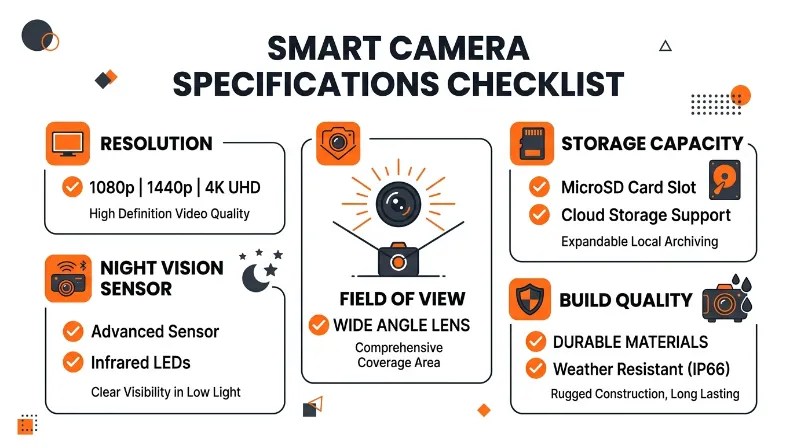
Five features determine whether a dashcam actually delivers when you need it: resolution, night vision, field of view, storage capacity, and build quality. A dashcam with poor night vision is only useful half the time — and many accidents happen in the dark.
Why Video Resolution and Night Vision Make or Break Your Footage
Resolution determines how much detail your footage captures. At 1080p (Full HD), you can read plates at close range in good light. At 1440p or 4K, you can read plates at greater distances and in lower light. For insurance and legal purposes, 1440p is the sweet spot for most drivers.
Night vision quality depends on the camera sensor, not just resolution. Sony STARVIS and STARVIS 2 sensors — used in cameras from Viofo, Vantrue, and BlackVue — perform significantly better in low light than budget sensors. A $60 camera with a STARVIS sensor often outperforms a $90 camera with a generic sensor in darkness.
The single most important dashcam spec is not resolution — it is how well the camera performs at night and in bright backlit conditions like driving into a sunrise. Always check sample footage before buying, not just the spec sheet.
What Is ADAS and Is It Worth Paying Extra For?
ADAS stands for Advanced Driver Assistance Systems. On dashcams, this typically means lane departure warnings, forward collision alerts, and speed camera notifications. These features use the dashcam’s lens to monitor the road and warn you in real time.
Nextbase’s 622GW and Thinkware’s U3000 both include ADAS features. They are genuinely useful on motorways and dual carriageways. In dense city driving, lane detection alerts can become annoying and distracting. You can turn them off — but if you do a lot of highway driving, ADAS adds real value beyond just recording.
Should You Hardwire Your Dashcam or Use the Cigarette Lighter?
Plug-in installation uses the cigarette lighter socket — easy, no tools needed, works immediately. Hardwiring connects the dashcam directly to your car’s fuse box for a cleaner installation and always-on power for parking mode.
- Use cigarette lighter if you want zero installation effort and do not need parking mode.
- Use a hardwire kit if you want parking mode or a cleaner cable-free look.
- Use a dashcam battery pack (like BlackVue B-124E) if you want parking mode without touching your fuse box.
- Hire a car audio installer if you are unsure — hardwiring incorrectly can blow a fuse.
Does a Dashcam Lower Your Car Insurance Premium?
In some cases, yes. Several UK insurers — including Aviva, LV=, and Direct Line — offer discounts of 10–15% for drivers who use approved dashcams and share their data. The discount reflects the fact that dashcam drivers make faster, cleaner claims that cost insurers less to process.
In the USA, dashcam insurance discounts are less standardised. Some insurers count dashcam footage as a positive factor when settling claims but do not offer upfront premium reductions. Check with your specific insurer before buying a dashcam purely for the discount — the savings vary widely. The real financial value comes when you avoid a disputed claim that would raise your premium for years.
Dashcams do not guarantee insurance discounts everywhere — but they almost always speed up claims, reduce disputes, and protect your no-claims bonus. Over three to five years, that protection is worth far more than any upfront premium reduction.
Is It Legal to Use a Dashcam in Your Country?
Dashcams are legal in the UK, USA, Canada, Australia, and most of Europe. The key legal consideration is privacy — you can record public roads freely, but sharing footage publicly or recording private property without consent can create legal issues.
In some European countries, rules around sharing dashcam footage are stricter under GDPR. In Germany, dashcam footage was ruled admissible in court by the Federal Court of Justice in 2018 but must be used proportionately. In the UAE and some parts of Asia, regulations differ — always check local laws before mounting a camera. The RAC has a useful country-by-country legal guide worth reading if you travel internationally with your car.
Never mount your dashcam in a position that blocks your view of the road. In the UK, a dashcam that obstructs the driver’s view is illegal under the Road Vehicles (Construction and Use) Regulations 1986. Mount it behind the rear-view mirror, out of the primary sightline.
How Much Should You Spend on a Dashcam — Budget vs. Premium Compared?
You do not need to spend a lot to get solid protection. A $50–$80 dashcam covers the core use case: recording, G-sensor, loop recording, and readable 1080p footage in daylight. Spending more buys better night vision, rear cameras, GPS, and cloud connectivity.
| Tier | Price Range | What You Get | Best For |
|---|---|---|---|
| Budget | $40–$80 | 1080p, loop recording, G-sensor, basic night vision | Occasional drivers, tight budgets |
| Mid-Range | $80–$150 | 1440p, Sony STARVIS sensor, GPS, Wi-Fi, rear cam option | Daily commuters, urban drivers |
| Premium | $150–$300 | 4K, dual channel included, ADAS, parking mode, cloud | Rideshare drivers, high-mileage commuters |
| Professional | $300+ | 4K dual/triple channel, cloud LTE, remote access, fleet tools | Fleet operators, commercial vehicles |
The Viofo A119 Mini 2 sits in the budget tier and punches well above its price. The Vantrue E2 Lite covers mid-range dual-channel needs cleanly. At the premium level, Nextbase’s 622GW and BlackVue’s DR970X are the two most recommended cameras by UK driving instructors and road safety groups.
Conclusion
So — do you actually need a dashcam? For most drivers, yes. The honest answer is that a $70 dashcam could save you from a $2,000 insurance dispute, a fraudulent claim, or a drawn-out legal fight over an accident that was not your fault.
The protection is quiet. It runs in the background. You forget it is even there — until one day you really need it.
Start with a front-only camera if budget is tight. Go dual-channel if you can stretch to $120–$150. Prioritise night vision quality over resolution numbers. And mount it properly so it does not obstruct your view.
I’m Alex Rahman, and I’ve been recommending dashcams to every driver I know for years. Not because they are exciting gadgets — but because roads are unpredictable, and having evidence of the truth is one of the smartest things you can do before anything goes wrong.
Frequently Asked Questions
Does a dashcam record all the time or only during accidents?
A dashcam records continuously while your car is running using loop recording. It only saves specific clips permanently when the G-sensor detects an impact or you press the manual save button. Everything else is overwritten automatically as the SD card fills up.
Can dashcam footage be used against me in court?
Yes. Dashcam footage is objective evidence, and it records your driving too. If you were speeding, tailgating, or ran a light before a collision, that footage can be used against you. Always drive as if your dashcam is watching — because it is.
How long does dashcam footage stay on the SD card?
It depends on card size and video quality. A 64GB card holds roughly four to six hours of 1080p footage before loop recording overwrites the oldest files. Locked clips from incidents are kept indefinitely until you manually delete them.
Do I need a rear dashcam or is front-only enough?
Front-only covers the most common scenarios but leaves you unprotected in rear-end collisions. A dual-channel dashcam with a rear camera is strongly recommended since rear-end crashes make up nearly 30% of all accidents. If budget allows, go dual-channel from the start.
Does a dashcam work when the car is parked and turned off?
Only if it has parking mode enabled and a continuous power source — either a hardwire kit or a dashcam battery pack. Without one of these, the dashcam powers off when you stop the engine and records nothing while parked.
Will a dashcam lower my car insurance?
Some UK insurers offer discounts of 10–15% for dashcam users, but this is not universal. The bigger financial benefit is avoiding disputed claims that raise your premium. Check with your insurer directly about any available dashcam discount schemes.

I’m Alex Rahman, a car enthusiast and automotive writer focused on practical solutions, car tools, and real-world driving advice. I share simple and honest content to help everyday drivers make better decisions.
