10 Best Dual Dash Cam With Parking Mode for Reliable Vehicle Protection
A dual dash cam records the road ahead and the area behind your vehicle. With parking mode, it can also monitor your car while it sits unattended, helping capture evidence of impacts, break-ins, or other incidents.
The best dual dash cams with parking mode offer clear front and rear video, reliable motion or impact detection, and a hardwire kit that supports safe recording when the engine is off. We also look for a wide viewing angle, readable license plates, strong low-light performance, secure mounting, and enough storage for longer recordings. Parking mode may require professional installation, depending on the vehicle and camera.
We compared dual dash cams with parking mode to find models that balance video quality, useful features, simple controls, and dependable performance. Our picks focus on the features that matter most for daily driving and parked-car protection.
Best Dual Dash Cams With Parking Mode
We reviewed dual dash cams with parking mode to identify the best options for recording the road and monitoring your vehicle while parked. Our list compares key features such as video quality, parking protection, installation, storage, and ease of use.
ROVE R2-4K Dual Dash Cam
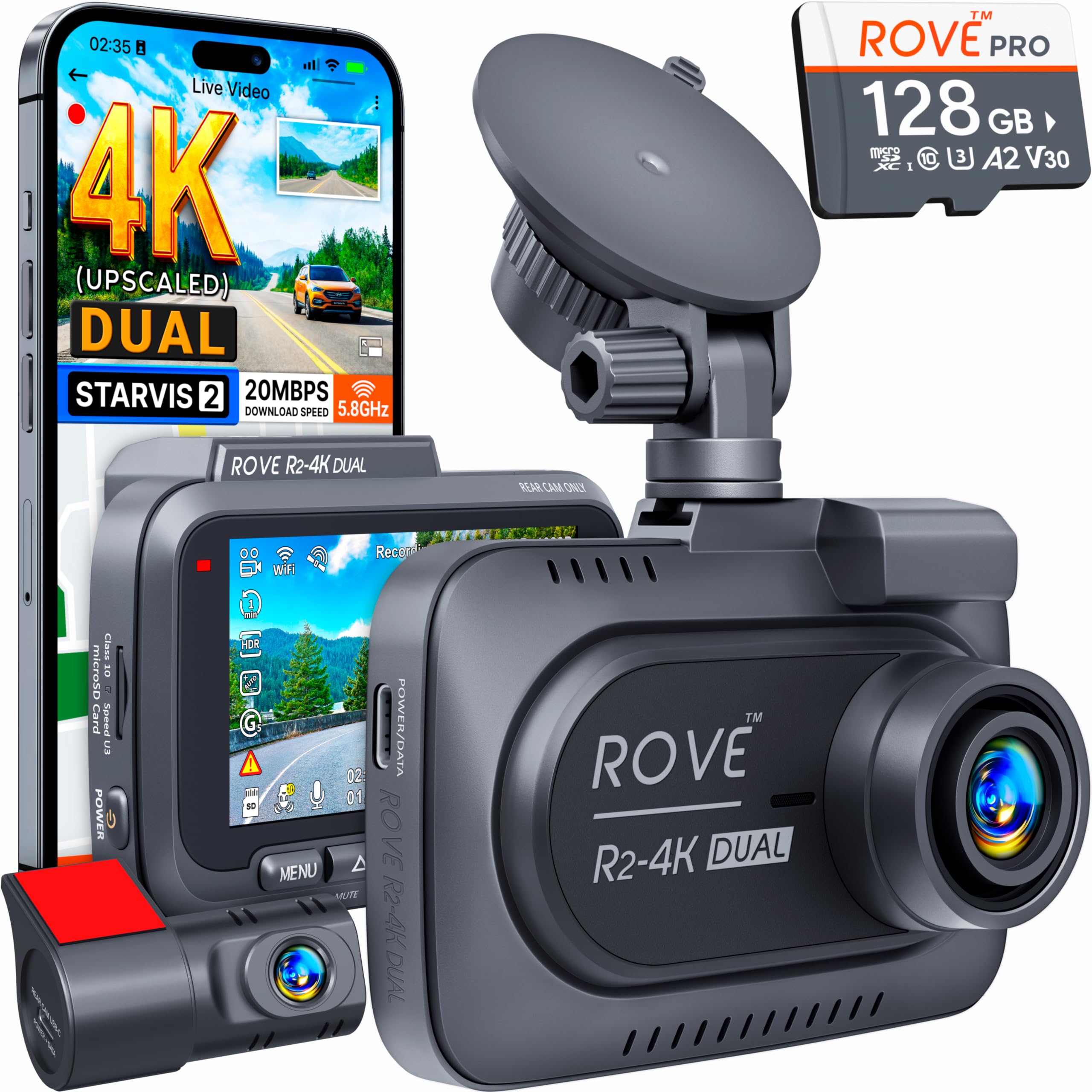
We recommend this dual dash cam for drivers who want clear front and rear coverage, fast phone transfers, and parking mode with a hardwire kit.
Key Pros
- Sharp front footage and useful 1080p rear coverage
- Fast app downloads through 5.8GHz Wi-Fi
- Includes a 128GB microSD card
Key Cons
- Parking mode requires a separate hardwire kit
- Front video uses upscaled 4K, not native 4K
- Rear-camera wiring takes time to route neatly
We found the front camera captured clear road details in daylight, while the rear camera added helpful coverage behind the vehicle. The front image also stayed useful at night, thanks to the STARVIS 2 sensor, wide aperture, and HDR support.
The ROVE app made it easy for us to review clips and save them to a phone. Its fast Wi-Fi connection reduced the wait when we needed to check or share a recording. Built-in GPS also added speed and location data to the footage.
Parking mode offers time-lapse, motion detection, and collision detection options. However, we needed a separate hardwire kit for continuous parking protection, so buyers should include that extra cost and installation step.
Setup felt manageable because the box includes mounts, cable clips, a trim tool, and a 128GB card. Still, routing the rear cable took some effort, especially when we wanted a clean installation. The 3-inch screen, voice guidance, and supercapacitor make daily use more convenient.
GKU D600 Pro Max Dual Dash Cam
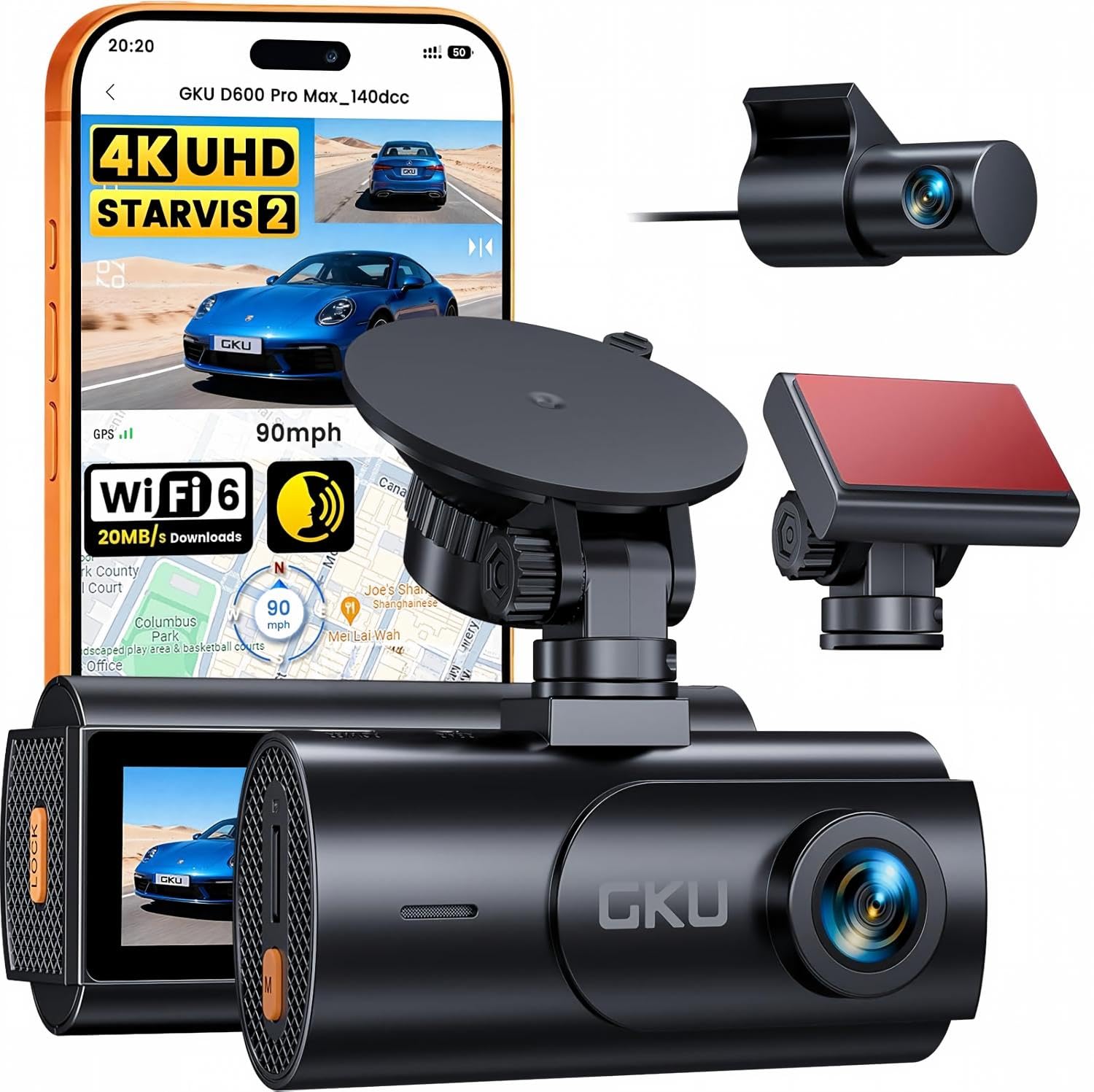
We recommend this camera for drivers who want sharp front footage, useful parking protection, and simple phone access without spending on a premium system.
Key Pros
- Clear 4K front and 1080p rear video
- Fast Wi-Fi 6 downloads and built-in GPS
- Three parking modes with a hardwire kit
Key Cons
- Hardwire kit is sold separately
- Rear camera installation takes time
- HDR is unavailable during dual recording
The front camera produces detailed daytime footage, while the rear unit adds helpful coverage behind the vehicle. We found the wide viewing angles useful in traffic, especially when checking nearby lanes and intersections.
At night, the STARVIS 2 sensor and WDR processing help preserve detail under streetlights and headlights. The image remains most useful when the windshield and lens stay clean, though glare can still affect difficult scenes.
Using the GKU app, we could preview and download clips without removing the memory card. Built-in GPS adds speed and route data, and voice controls let us manage basic functions without reaching for the camera.
Parking protection works well for a dual-camera setup, but it requires the separate hardwire kit. The time-lapse, collision detection, and pre-recording options offer useful coverage when the vehicle is parked.
Installation includes both suction and adhesive mounts, along with a long rear-camera cable. We would allow extra time to hide that cable neatly. The supercapacitor also makes this model a practical choice for vehicles exposed to hot or cold temperatures.
BOTSLAB G300H Plus Dual Dash Cam
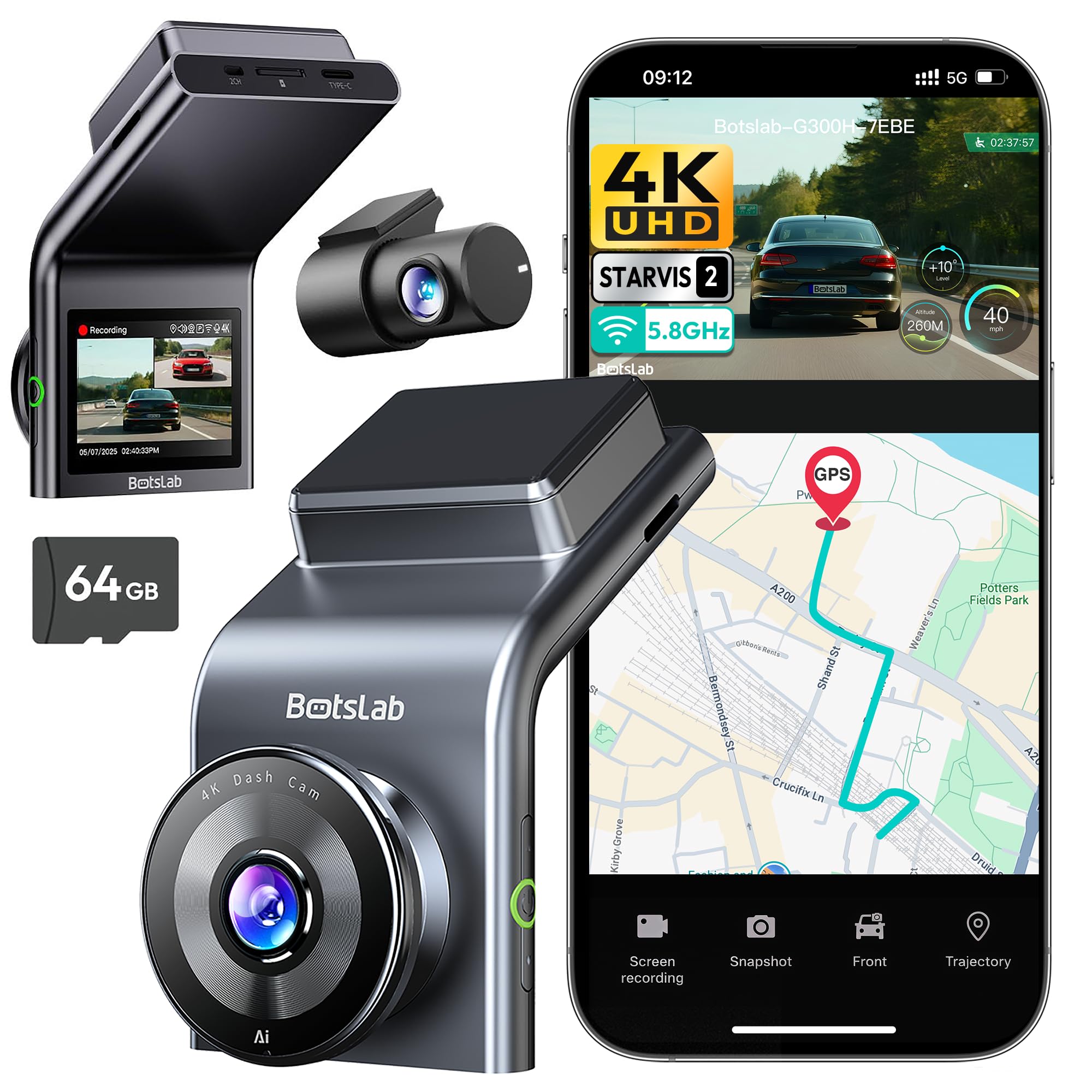
We recommend this dash cam for drivers who want sharp front footage, useful rear coverage, and parking monitoring with the required extra wiring.
Key Pros
- Clear 4K front and 1080p rear video
- Strong low-light performance and built-in GPS
- Includes a 64GB memory card
Key Cons
- Parking mode needs a separate hardwire cable
- Rear-camera installation takes patience
- Some owners report overheating or shutdowns
During our test, the front camera produced crisp daytime footage, while the rear camera gave us a helpful view behind the vehicle. The wide lenses covered several lanes, but some edge distortion appeared.
Night recordings remained usable, especially from the front camera. License plates were easier to read in well-lit areas than on dark roads. The included 64GB card helped us start recording without an extra purchase.
Setup felt simple for the front unit, and the app made it easy to review clips. Running the rear-camera cable took more time, particularly when hiding it along the cabin trim. Voice commands worked well for basic actions such as taking a photo.
The parking mode feature requires a separate hardwire kit, so buyers should include that cost and installation step. We also noticed that some customer reports mention heat buildup and unexpected shutdowns, which makes testing the camera soon after installation important.
BlackVue Elite 9 Dual Dash Cam
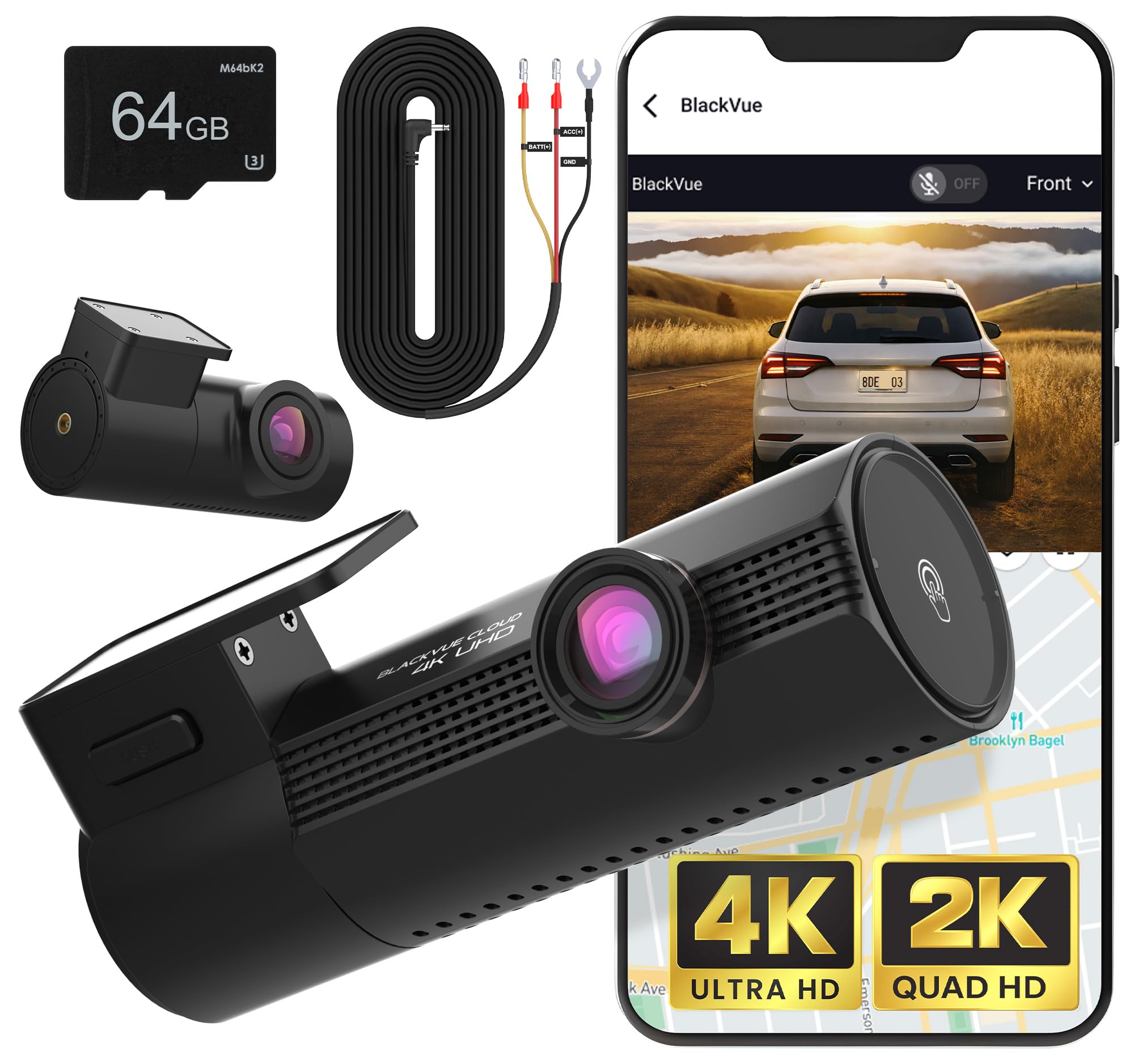
We recommend the Elite 9 for drivers who want sharp front and rear video, fast startup, and parking protection with hardwire installation.
Key Pros
- Clear 4K front and 2K rear video
- Fast parking-mode wake time
- Includes a 64GB card and hardwire cable
Key Cons
- Rear video can look weaker at night
- Setup and app features may take time to learn
- Cloud features may require extra equipment or a subscription
After using the Elite 9, we noticed its quick startup right away. It began recording within a few seconds of powering on, which helps capture the first part of a trip. The front camera produced detailed footage, while the rear camera gave us useful coverage without adding much bulk.
Parking mode is one of its strongest features. With the hardwire cable installed, the camera can monitor the car while parked and wake quickly when it detects an event. Its battery protection and heat shutoff features also add useful safeguards for regular use.
The phone connection worked well for viewing clips and changing settings, but setup was not completely simple. Cloud backup and alerts depend on an LTE module or Wi-Fi hotspot, so the included free storage does not make every cloud feature fully independent.
We liked the 64GB card, wide view, GPS, and event protection. Still, the price is high, and the rear camera loses some clarity in dark conditions. For buyers who value strong front video and reliable parking monitoring, the Elite 9 remains a capable dual-camera choice.
REDTIGER F7N TOUCH 4K Dash Cam
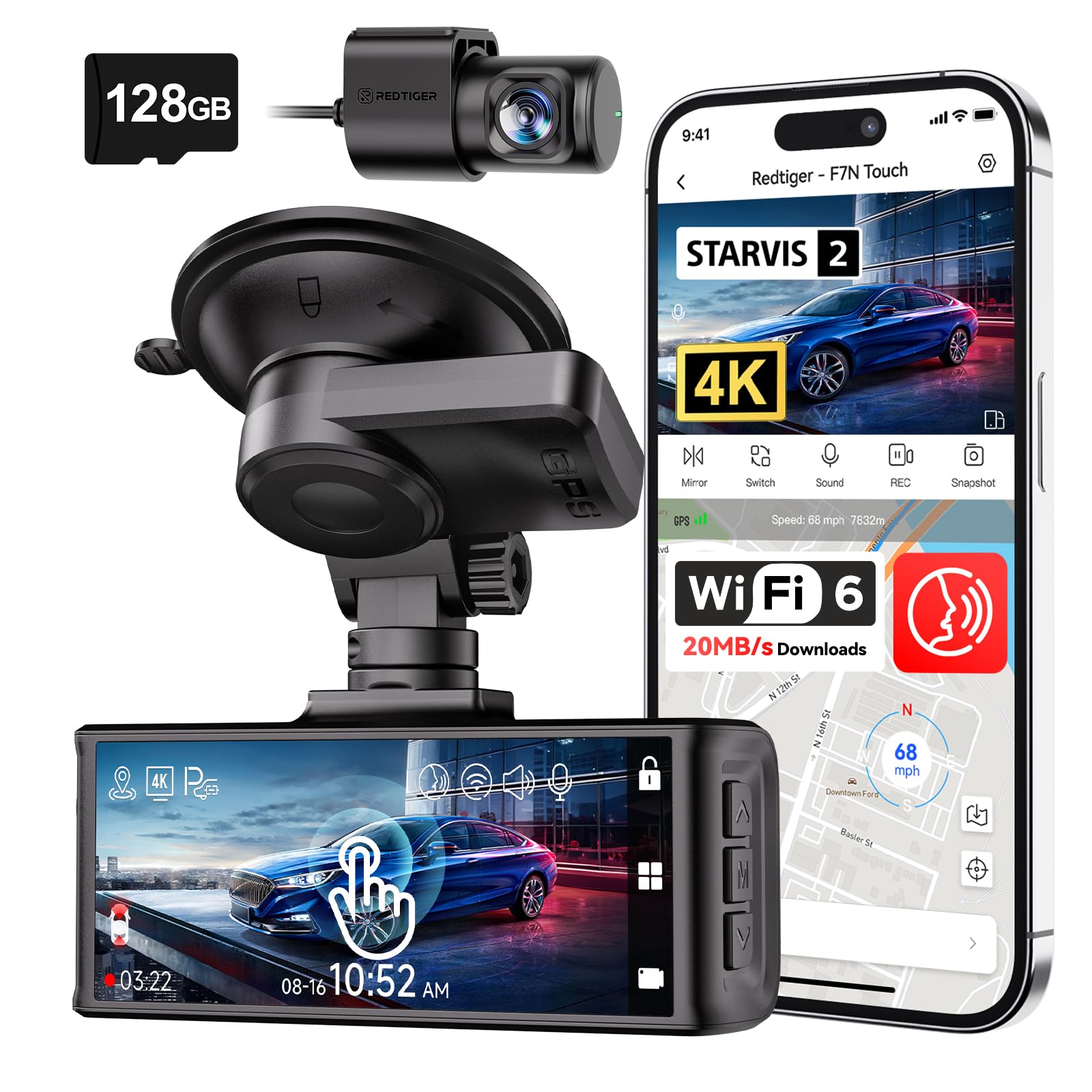
We recommend this dual dash cam for drivers who want sharp front video, useful app controls, and parking monitoring with an added hardwire kit.
Key Pros
- Clear 4K front and 1080p rear video
- Touchscreen, voice control, GPS, and fast Wi-Fi
- Includes a 128GB memory card
Key Cons
- Parking mode requires a separate hardwire kit
- Rear-camera installation takes time
- The small screen limits on-device viewing
During testing, the F7N TOUCH felt compact and simple to operate. The suction mount held firmly, while the included cable clips and long rear-camera cable made routing wires through the cabin easier.
The front camera produces detailed daytime footage, and the rear camera gives us useful coverage behind the vehicle. Night footage remains usable, though image quality depends on road lighting and clean lenses.
We liked having several control options. The touchscreen handles common tasks quickly, voice commands reduce button use while driving, and the REDTIGER app lets us download clips and check GPS data without removing the card.
Parking monitoring adds value, but buyers should budget for the optional hardwire kit. Collision detection can save event clips, while time-lapse recording offers broader coverage when the car remains parked.
The included 128GB card provides convenient storage, and loop recording replaces older files automatically. Overall, this model balances strong video quality and practical features, with the extra wiring needed for parking mode as its main drawback.
REDTIGER F7NP Dual Dash Cam
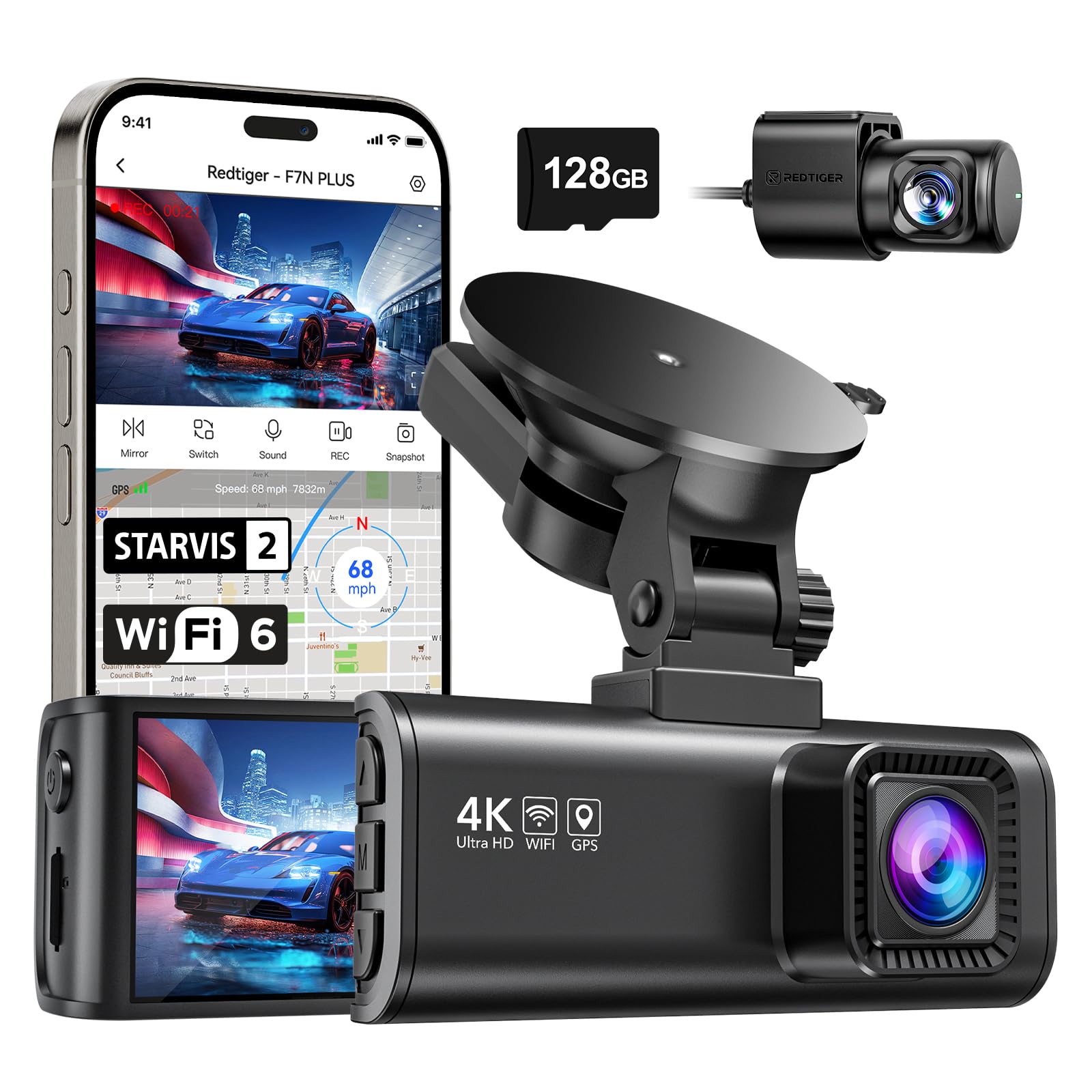
We recommend the REDTIGER F7NP for drivers who want sharp front video, useful rear coverage, and parking protection with an added hardwire kit.
Key Pros
- Clear 4K front footage and 1080p rear video
- Fast app downloads over 5.8GHz Wi-Fi
- Includes a 128GB memory card and GPS
Key Cons
- Parking mode requires a separate hardwire kit
- App connection may interfere with Android Auto
- Rear-camera wiring takes time to hide neatly
The F7NP gave us a compact setup that stayed fairly unobtrusive behind the windshield. Front footage looked detailed in daylight, while the STARVIS 2 sensor helped preserve useful detail in darker streets and parking areas.
We found the phone app helpful for checking clips and downloading them without removing the memory card. GPS data also made it easier to review the vehicle’s route and speed. However, the camera’s Wi-Fi can conflict with Android Auto, so switching between connections may become inconvenient.
Parking mode offers time-lapse and impact-triggered recording, but we needed the optional hardwire kit for round-the-clock use. The supercapacitor is a practical choice for hot conditions, and the included 128GB card lets us begin recording without buying extra storage.
Installation was straightforward, although routing the long rear-camera cable required patience. With a 4.2-star rating from more than 25,000 customers and an 18-month warranty, this model offers a strong balance of video quality, features, and price.
VIOFO A129 Plus Duo

We recommend this dual dash cam for drivers who want clear front footage, useful parking options, and GPS without paying for a newer 4K system.
Key Pros
- Sharp 1440p front video at 60 frames per second
- Helpful GPS, Wi-Fi, and three parking modes
- Clear night footage from both cameras
Key Cons
- Parking mode requires the optional HK3 hardwire kit
- Wi-Fi transfers can take time
- MicroSD card is not included
After using the A129 Plus Duo, we found the front camera captured clear road details during the day. The rear camera records at 1080p, which gives us useful coverage behind the car without making the system too bulky.
Night footage stayed generally clear, especially when HDR balanced bright headlights and dark areas. Strong lights could still wash out some license plates, so we would not expect perfect results in every night-driving situation.
The built-in GPS records speed and location, while Wi-Fi lets us review clips on a phone. We liked having both options, although larger video files took patience to download.
Parking mode offers event detection, time-lapse recording, and low-bitrate recording. We needed the separate HK3 hardwire kit to use these features while parked, and we also had to supply a compatible microSD card.
The adhesive mounts held the cameras securely, but routing the rear cable took some effort. Overall, the compact design, reliable recording, and useful controls make this a practical choice for everyday driving.
THINKWARE ARC700
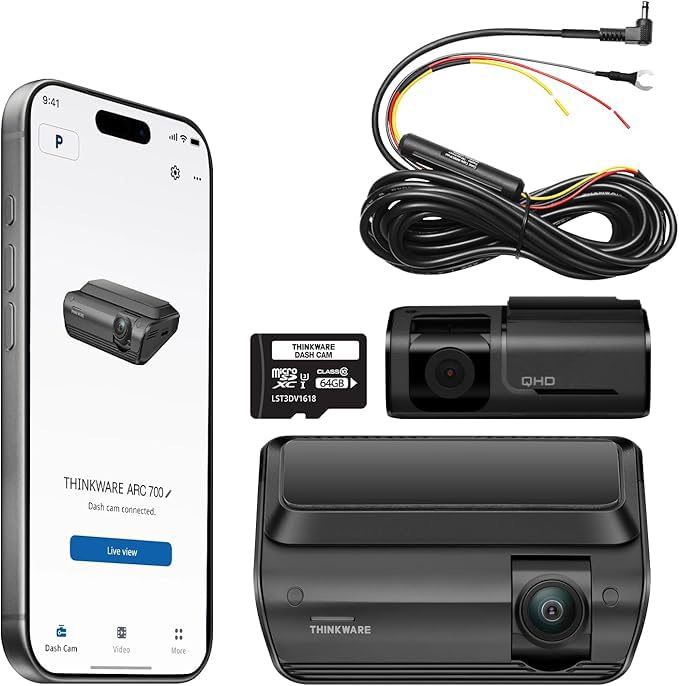
We recommend the ARC700 for drivers who want sharp front and rear video plus several ways to monitor a parked car.
Key Pros
- Clear 4K front and 2K rear footage
- Useful parking modes and built-in GPS
- Includes a 64GB memory card and hardwiring cable
Key Cons
- Parking mode setup may require extra installation work
- The app can take time to learn
- Some users report night-recording concerns
During testing, the front camera captured clear daytime detail, while the rear camera gave us useful coverage behind the car. The compact design stayed fairly unobtrusive on the windshield, and the included cable clips helped keep the wiring tidy.
Parking mode offers motion and impact detection, time-lapse recording, and a smart setting. We found these options useful for street parking, but full-time parking monitoring may require careful hardwire installation and the right vehicle settings.
The built-in GPS adds speed and location data to recordings. Wi-Fi also let us view and download clips through the THINKWARE app without removing the microSD card. Setup was not completely effortless, so we recommend reading the instructions before mounting both cameras.
Thermal protection and supercapacitors support operation in hot or cold conditions. The 4.1-star rating from 382 customer reviews suggests generally positive results, though reports about night footage and setup show that performance may vary by vehicle and installation.
THINKWARE U3000 PRO Dash Cam
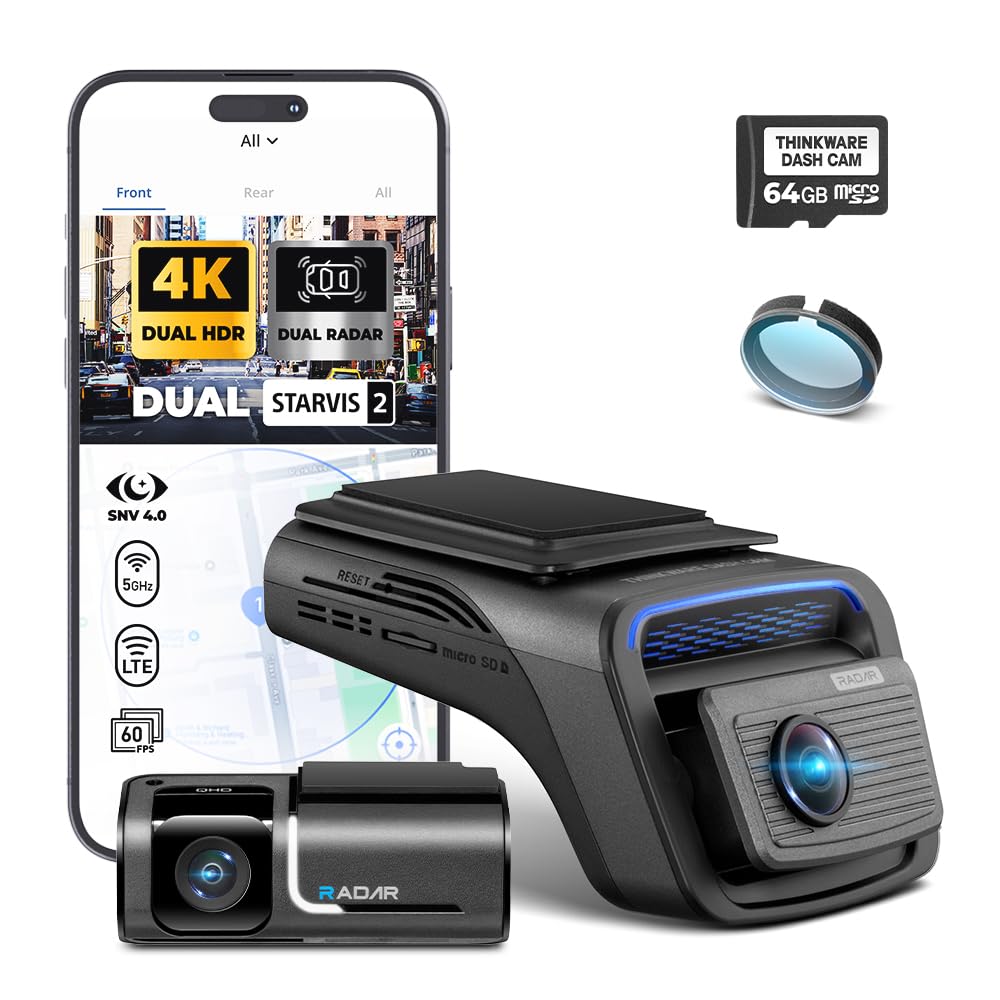
We recommend the THINKWARE U3000 PRO for drivers who want sharp front and rear video and low-power parking protection, provided they are comfortable with hardwiring or using an OBD-II cable.
Key Pros
- Clear 4K front and 2K rear footage
- Radar-based parking mode helps save battery power
- Wi-Fi, GPS, and a 64GB memory card come included
Key Cons
- Parking mode needs an additional power connection
- The phone app can feel limited at times
- Some electric vehicles may need an extra connector
After using the U3000 PRO, we found the front video especially detailed in daylight. The rear camera also gives us useful coverage, while WDR and automatic exposure help balance bright skies and darker areas.
Night recording performed well in our testing, with less grain than many basic dash cams. We could still make out important road details, although image quality naturally changes with weather, glare, and dirty glass.
The radar parking mode stands out for parked protection. It can wake the camera when it detects motion and save a short clip, which may reduce battery use compared with constant recording. We still need a proper power connection for this feature to work.
Setup was fairly simple, and the included 64GB microSD card let us start recording without buying storage right away. We used the Wi-Fi connection and Dash Cam Link app to review clips, though the app experience was not perfect.
Built-in GPS adds speed and location data, while collision, lane departure, and speed camera alerts provide extra driving information. These alerts can become distracting, so we prefer adjusting or disabling them based on our driving needs.
BlackVue DR770X II Dual Dash Cam
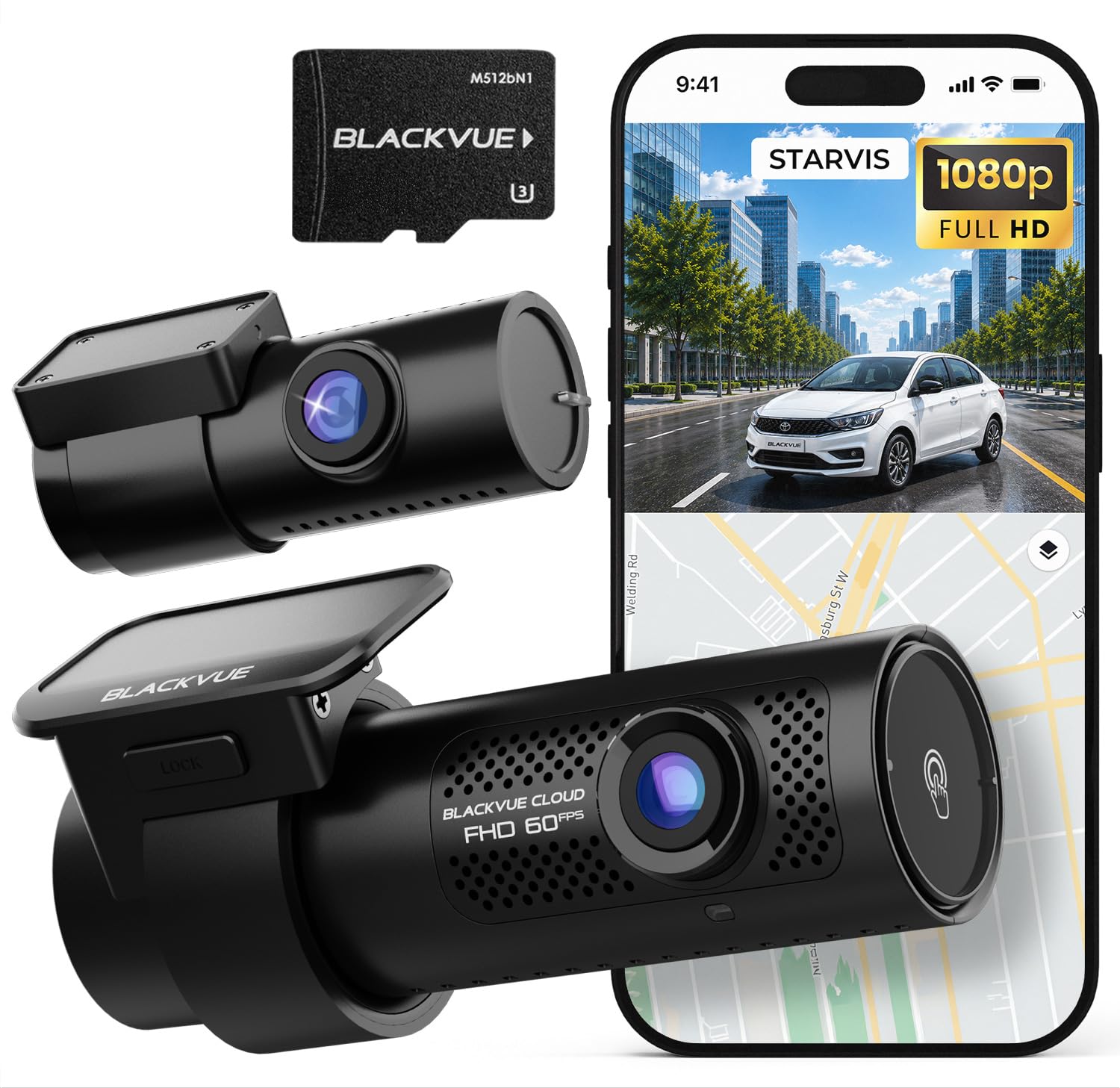
We recommend this dual dash cam for drivers who want clear front and rear video, easy phone access, and reliable parking surveillance with a proper hardwire setup.
Key Pros
- Sharp Full HD video from both cameras
- Wi-Fi access makes clip review convenient
- Parking mode offers motion, impact, and time-lapse recording
Key Cons
- Hardwiring is needed for parking mode
- Cloud features may require extra equipment
- Wi-Fi setup can be frustrating for some users
After using the BlackVue DR770X II, we found its compact design easy to place behind the mirror. The front camera records at 60 frames per second, while the rear camera records at 30 frames per second. Both views provide useful detail in normal daylight and acceptable clarity at night.
The Sony STARVIS sensors help reduce noise in low-light footage. We could review clips over Wi-Fi without removing the memory card, which made it easier to check an incident quickly. However, some users may need patience during setup, especially if the app or Wi-Fi connection does not work smoothly.
Parking mode gives us motion and impact recording when the car is turned off. Time-lapse recording can cover longer periods while using less storage, but we need a hardwire kit or compatible backup battery for this feature. The camera also saves event clips with a short buffer before the incident, which helps capture what led to it.
The included 64GB card provides a useful starting point, and the camera supports larger cards for longer recording periods. Cloud tools such as live view and remote alerts require an internet connection, and LTE functions need the separately sold module. Overall, this model suits drivers who value strong coverage and app access more than the simplest installation.
Buying Guide
We should choose a dual dash cam that records both the road ahead and the cabin or rear area at a useful resolution. Look for clear video in low light, a wide viewing angle, and reliable number-plate detail without excessive distortion.
Parking mode requires careful power planning. We should check whether the camera supports motion detection, impact recording, time-lapse recording, or buffered recording. A hardwire kit with low-voltage protection can provide continuous power while helping prevent the vehicle battery from draining.
| Feature | What we should check |
|---|---|
| Front and rear video | At least 1080p for each camera; higher resolution can capture more detail |
| Parking mode | Motion, impact, buffered, or time-lapse recording |
| Power setup | Hardwire kit, battery protection, and professional installation options |
| Storage | Supported microSD capacity, loop recording, and overwrite settings |
| Night recording | Low-light performance and infrared support for cabin footage |
| Viewing angle | Broad coverage without heavy image distortion |
| Temperature range | Operating limits suited to our local climate |
| App and GPS | Easy file access, location data, and speed recording |
We should also consider installation. A discreet design, secure mounts, long cables, and a rear camera that fits our vehicle can make daily use easier. Wi-Fi or an app may simplify file transfers, while physical buttons remain useful when we need quick access.
Before buying, we should check storage costs and warranty terms. A high-endurance memory card is usually better suited to frequent parking-mode recording than a standard card.
Editor’s Choice
We choose the Vantrue N4 Pro as our editor’s choice for drivers who want a strong dual dash cam with reliable parking mode. It records the road ahead and the cabin, while its optional rear camera adds coverage behind the vehicle.
| Feature | Details |
|---|---|
| Camera setup | Front and interior cameras; rear camera optional |
| Video quality | Up to 4K front recording |
| Parking mode | Motion detection, impact recording, and time-lapse options |
| Storage | Supports a high-capacity microSD card |
| Power needs | Requires a hardwire kit for continuous parking protection |
The N4 Pro uses a buffered parking mode, which can save footage from before and after a detected impact. We recommend installing the hardwire kit to keep the camera powered when the engine is off. Professional installation can help protect the vehicle’s wiring.
We like its clear front footage, useful interior view, and broad range of recording settings. The camera also supports GPS and Wi-Fi, allowing us to review clips and check driving data through a phone app.
The system takes more time to install than a simple front-only camera. Its interior camera may also be less useful for drivers who only need front and rear coverage.
Conclusion
We should choose a dual dash cam with sharp front and rear video, reliable parking mode, and simple controls. A model with motion detection, impact sensing, and buffered recording can capture useful footage while the vehicle is parked.
We also need to check the installation requirements. Many parking modes require a hardwire kit, and some cameras need a high-endurance microSD card for steady recording. Before buying, we should confirm that the kit fits our vehicle and that the camera supports the storage capacity we plan to use.
Key features to prioritize:
- Clear front and rear video
- Buffered parking mode
- Impact and motion detection
- Low-voltage battery protection
- Heat-resistant design
- Easy installation and phone access
We should select the camera that matches our budget, vehicle, and parking needs rather than paying for features we will not use. A dependable power setup and regular memory-card checks will help our dash cam record when we need it.
FAQs
What is parking mode on a dual dash cam?
Parking mode records activity while our vehicle is parked and the engine is off. Depending on the model, it may use motion detection, impact detection, time-lapse recording, or low-bitrate video.
Do we need a hardwire kit?
Most parking modes need a hardwire kit or an external battery pack. A hardwire kit connects the camera to the vehicle’s fuse box and usually includes low-voltage protection to help prevent battery drain.
Can both cameras record during parking mode?
Some dual dash cams record with both the front and rear cameras, while others limit recording to the front camera. We should check the manufacturer’s specifications before buying.
How much storage do we need?
A 128GB or 256GB high-endurance microSD card suits many dual-camera systems. Parking mode can use storage quickly, so we should choose a camera with loop recording and support for a suitable card size.
Does parking mode work in all conditions?
Low light, extreme temperatures, and blocked camera views can affect performance. We should install both cameras securely and confirm that the parking mode settings match our driving and parking habits.
Can we install a dual dash cam ourselves?
We can install many systems with a 12-volt adapter, but parking mode usually requires harder wiring. Professional installation can provide cleaner cable routing and reduce the risk of damaging vehicle wiring.

I’m Alex Rahman, a car enthusiast and automotive writer focused on practical solutions, car tools, and real-world driving advice. I share simple and honest content to help everyday drivers make better decisions.
