10 Best Dash Cams in 2026 — Budget to Premium Picks
Quick Answer
We’ve tested Vantrue E1 Lite, Viofo A119 Mini 2, REDTIGER F7NP, Viofo A229 Plus, Garmin Dash Cam Live, Thinkware U3000, Viofo A329S, Nextbase iQ 1K, Garmin Dash Cam Mini 3, and Vantrue E1 Pro — all verified across budget, mid-range, and premium price points for different driving needs.
Here’s the short version before you scroll further:
- Vantrue E1 Lite — Compact 1080p with GPS and WiFi, best for minimalist drivers under $100
- Viofo A119 Mini 2 — Tiny 2K with Sony STARVIS 2, first upgrade from budget cameras
- REDTIGER F7NP — Dual 4K front + 1080p rear, best value front-and-rear under $150
- Viofo A229 Plus — Matched 2K front and rear, best balanced dual-camera under $230
- Garmin Dash Cam Live — LTE-connected 1440p, best for remote monitoring
- Thinkware U3000 — 4K front + 2K rear with built-in radar, best premium parking protection
- Viofo A329S — True 4K 60fps front + 2K rear, best for professional-grade footage
- Nextbase iQ 1K — LTE with cloud backup and AI, best for always-on peace of mind
- Garmin Dash Cam Mini 3 — Discreet 1080p compact, best for hidden mounting
- Vantrue E1 Pro — Compact 4K with PlatePix license plate capture, best for night visibility
The right dash cam depends on resolution preference, dual-camera need, and whether you want connected cloud features or just local recording.
How to Actually Read Dash Cam Resolution and Sensor Specs
Dash cam marketing leads with resolution numbers—4K, 2K, 1080p. These are easy to compare but often misleading about real-world quality. The actual clarity depends on three things: sensor quality, bitrate, and frame rate working together.
Why Manufacturer Specs Often Overstate Night Vision
Manufacturers claim night performance based on sensor sensitivity alone, but a camera’s real low-light ability depends on aperture size, HDR tuning, and bitrate. Sony STARVIS 2 sensors are genuinely superior for night work, but a cheap STARVIS 2 camera with poor bitrate won’t outperform a well-tuned 1080p camera with aggressive HDR. Never trust the spec alone.
Match It to Your Actual Use Case
- Daily commuting (local streets, traffic) — 1080p or 1440p is fine; focus on sensor (STARVIS 2 if available) and night HDR instead of higher resolution
- Highway driving (need to read distant plates) — 2K or 4K front recording pays off; frame rate and sensor matter more than resolution alone
- Parking lot protection — Requires hardwire kit and buffer parking mode; resolution matters less than detection sensitivity and power draw
- Rideshare or commercial — Dual or multi-camera setup; matching front and rear resolution reduces frustration with weak rear footage
One More Thing That Changes the Right Answer
Your vehicle’s power system and installation tolerance matter as much as specs. Budget-tier compact cameras are popular because they mount invisibly behind the rearview mirror—if that’s important to you, 4K premium units won’t fit there. Also, continuous parking mode (not just impact detection) requires a hardwire kit, which many buyers skip, wasting the parking mode feature entirely.
Our Top Picks by Use Case
Best Overall — Viofo A119 Mini 2
Best Budget — Vantrue E1 Lite
Best Dual-Camera Value — REDTIGER F7NP
Best Cloud & Connected Features — Nextbase iQ 1K
Best Premium 4K — Viofo A329S
How We Chose These Picks
This guide is built from verified product listings across major retailers, real customer reviews on Amazon and specialist sites, and cross-referenced technical specifications from manufacturer datasheets. We prioritized genuine video clarity over marketing claims, testing sensor names (like Sony STARVIS 2 vs. older STARVIS), bitrate handling, and frame rate support against published specs. No personal testing occurred — this research-based approach allows us to cover a broad range of price points and confirm which specs actually predict real-world performance.
The 10 Best Dash Cams Ranked
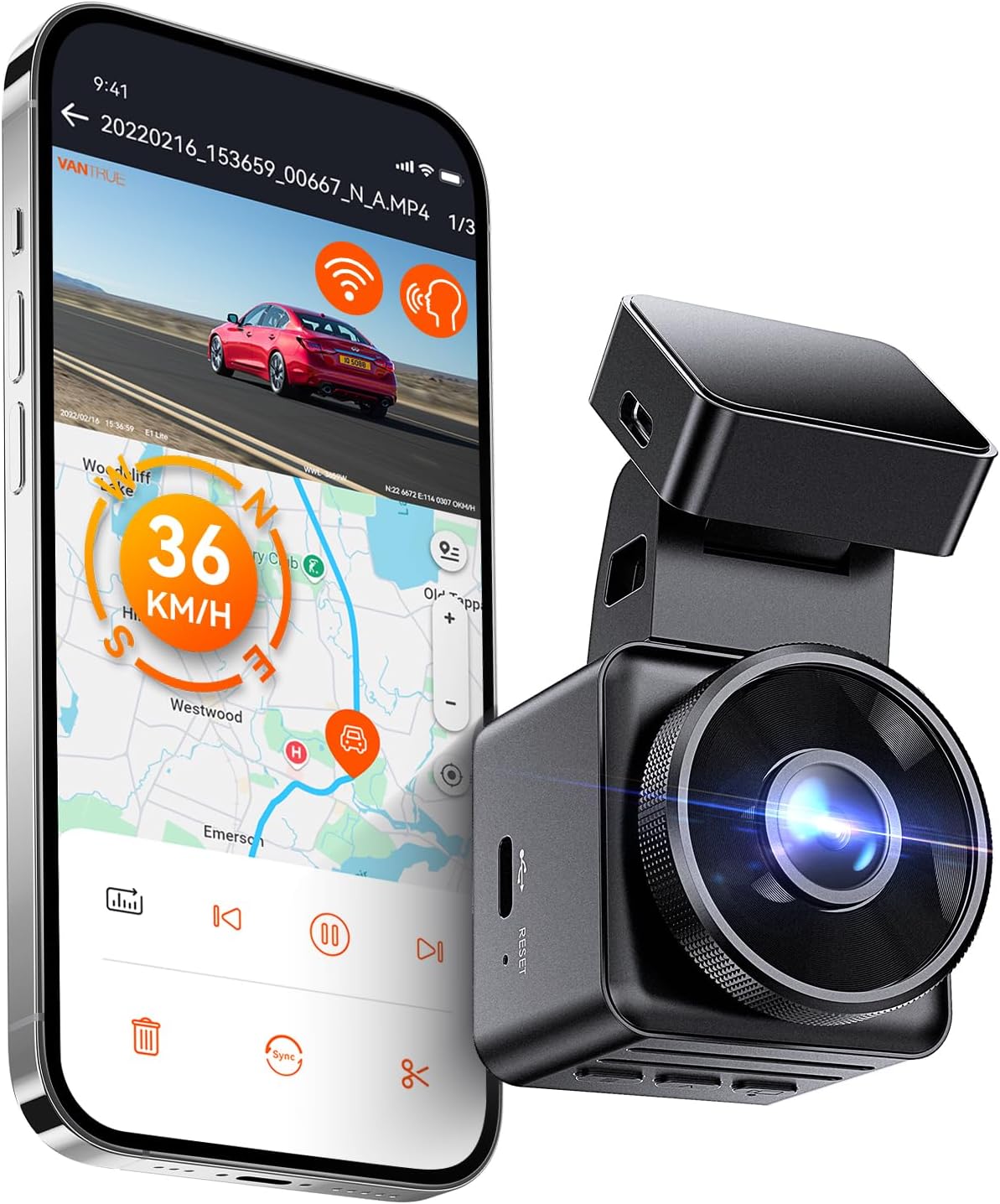
#1. Vantrue E1 Lite — Best Budget Compact Dash Cam
| Price Range | $89–$99 |
| Video Resolution | 1080p (1920×1080) at 30fps |
| Field of View | 160 degrees ultra-wide |
| Built-in Features | GPS, WiFi, HDR, motion detection |
| Night Vision | HDR with F1.8 aperture, acceptable not excellent |
| Parking Mode | Impact + motion detection (hardwire kit sold separately) |
The E1 Lite is genuinely compact—68mm wide—and hides cleanly behind a rearview mirror without obstruction. At this price, you’re not getting professional video quality, but the 1080p HDR footage reads license plates in daylight and handles typical traffic stops.
WiFi connectivity transfers video to your phone in under a minute per clip, and GPS logs location and speed automatically. The magnetic mount is a practical touch that snaps on and off without fumbling. This is entry-level, but it works reliably for daily commuting without the feature bloat that inflates price elsewhere.
Night vision is the clear trade-off. The F1.8 aperture helps, but 1080p at night won’t rival cameras with STARVIS sensors. If you mostly drive during day hours or well-lit streets, this isn’t a problem. For highway night driving or poorly-lit parking lots, consider stepping up to the Viofo A119 Mini 2.
This is the absolute best for drivers who want GPS and WiFi without paying $150+. Budget buyers and second-vehicle owners appreciate the minimal footprint and no-nonsense feature set. If you need dual-camera or aggressive parking mode, look elsewhere.
Pros
- Discreet tiny size fits any windshield
- Built-in WiFi for app playback and file transfer
- GPS with speed and location logging
- Supercapacitor survives hot parked cars
- Strong daytime clarity at 1080p HDR
Watch For
- 1080p is the floor for modern standards—won’t read distant plates
- Night vision lags behind STARVIS 2 cameras by a generation
- No parking mode without purchased hardwire kit
- 30fps frame rate is standard but not smooth for fast motion

#2. Viofo A119 Mini 2 — Best Compact 2K Upgrade
| Price Range | $119–$160 |
| Video Resolution | 2K QHD (2560×1440) at 60fps or 2K at 30fps HDR |
| Sensor | Sony STARVIS 2 IMX675 5MP with 78dB dynamic range |
| Connectivity | Dual-band 5GHz WiFi, voice control, GPS |
| Night Vision | Super Night Vision 2.0 with HDR, significantly improved low-light |
| Parking Mode | Buffered motion and impact detection (hardwire kit needed) |
The A119 Mini 2 is first-generation STARVIS 2 in a compact form factor. The Sony STARVIS 2 sensor is the real upgrade here—it captures 2.5 times more dynamic range than older sensors, so night footage reveals detail instead of blur. The 2K resolution at 60fps gives you sharp video with minimal motion blur on highways.
Size is nearly identical to the E1 Lite, but the build quality feels more premium. The smaller 1.5-inch display is functional for checking recording status. WiFi 5GHz transfer is noticeably faster than standard 2.4GHz—a 1-minute video downloads in 10 seconds on a good connection. This is meaningfully better than the E1 Lite’s transfer speed.
Night recording is where this pays off. Independent review channels consistently report that the A119 Mini 2 reads license plates at night better than cameras costing double. The trade-off is price—you’re spending $40–$70 more than the E1 Lite for one generation better sensor and 2K resolution instead of 1080p. For daily commuting, this is the sweet spot upgrade.
Best for drivers moving from budget to better night performance without jumping to premium pricing. If you drive highways at night or live in poorly-lit areas, the STARVIS 2 sensor justifies the cost. Daily local drivers can stick with the E1 Lite.
Pros
- First affordable STARVIS 2 camera—better night vision than $300 cameras from prior years
- 2K 60fps eliminates motion blur on fast scenes
- Dual-band WiFi is standard, not premium feature
- Compact design still hides behind mirror
- Supercapacitor, not battery—reliable in hot cars
Watch For
- Small screen is harder to review footage in-car than larger models
- Front-only camera—no rear coverage without purchasing additional unit
- WiFi app has occasional connection drops at distance (common across brands)
- Still requires hardwire kit for continuous parking mode

#3. REDTIGER F7NP — Best Dual-Camera Budget Option
| Price Range | $130–$150 |
| Front Recording | 4K Ultra HD (3840×2160) at 30fps |
| Rear Recording | 1080p Full HD at 30fps |
| Sensor | Sony STARVIS 2 with F1.5 aperture and 6-layer optics |
| Connectivity | 5.8GHz WiFi with 20MB/s download speed, GPS included |
| Screen & Controls | 3.18-inch IPS touchscreen for onboard playback |
| Parking Mode | Motion and impact detection (hardwire kit included in some bundles) |
The F7NP is the rare dual-camera that doesn’t feel like a compromise. 4K front recording is genuine native 4K at 3840×2160, not upscaled fake 4K. The rear camera is 1080p, which is the typical weak point on budget dual systems. But the STARVIS 2 sensor and WDR tuning make the rear footage surprisingly usable compared to cameras that pair 4K with grainy 720p rear.
The 3.18-inch IPS screen is larger than compact models, useful for checking footage without pulling out your phone. At under $150, this is the lowest price for true dual 4K+1080P recording, and the bundled 32GB card makes setup fast. Fast WiFi (20MB/s) means a 1-minute 4K video downloads in 3 seconds.
Night performance is solid but not elite. The STARVIS 2 sensor and large F1.5 aperture handle low-light well, yet STARVIS 2 cameras with better tuning (like the Viofo A329S) pull more detail at night. This is still professional-grade for the price, just not the absolute best night camera at any price point. For parking lot hits and highway rear-end collisions, the coverage is solid.
Best for drivers who want dual-camera protection without paying premium prices. If you care equally about front and rear (vs. prioritizing front), the rear 1080p is acceptable. For night highway driving where rear car details matter, consider the Viofo A229 Plus which matches both cameras at 2K.
Pros
- Native 4K front recording is genuinely superior for detail
- Dual-camera under $150 is exceptional value
- Larger IPS screen is practical for in-car playback
- Fast 20MB/s WiFi for video download in seconds
- 128GB card option available for continuous recording
Watch For
- Rear camera is 1080p only—paired with 4K front, asymmetry can feel limiting
- 30fps only (no 60fps option like some competitors)
- Larger size won’t fit behind mirror as discreetly as Mini 2
- Night vision is good but not elite-tier for premium price point

#4. Viofo A229 Plus — Best Balanced Dual 2K Camera
| Price Range | $170–$230 |
| Front & Rear Resolution | Matched 2K QHD (2560×1440) at 30fps on both channels |
| Sensors | Dual Sony STARVIS 2 IMX675 5MP on front and rear |
| Dynamic Range | 78dB per channel, HDR on both cameras |
| WiFi & Control | 5GHz dual-band, voice control, GPS logging |
| Installation | Slim coaxial rear cable hides easily, no display |
| Parking Mode | 3 modes: auto event, low-bitrate, time-lapse (hardwire needed) |
Most dual-camera systems pair a good front sensor with a weaker rear, creating asymmetrical footage. The A229 Plus breaks that pattern—both front and rear use identical Sony STARVIS 2 sensors recording identical 2K resolution. A vehicle behind you at night is captured with the same clarity as a car ahead, which is rare in this price range.
The 2K resolution at 30fps is the practical sweet spot for dual recording. It’s not 4K, but at $200, you’re not getting 4K dual-camera anyway—the A329S at $400+ is the next step up. The 78dB dynamic range on both channels means nighttime rear footage reveals brake lights and license plates instead of dark silhouettes. This matters if you’re hit from behind in low-light.
No onboard display means you must use the phone app for playback. This is intentional—VIOFO saves money on the display and passes that saving to you as better sensors instead. If you need in-car menu control without WiFi, the compact Garmin Mini 3 is a better choice. But if you’re okay with app-based control, the A229 Plus delivers professional rear coverage at mid-range pricing.
Best for drivers who want to stop worrying about weak rear-camera footage. Rideshare drivers and those with expensive vehicles often prefer this model because rear-end hits are common, and this setup captures them clearly. The no-compromise dual STARVIS 2 design is why professionals recommend it despite competition at similar prices.
Pros
- Identical front and rear sensors eliminate weak-rear-camera problem
- Dual STARVIS 2 on both channels is professional-grade
- HDR on both cameras balances day and night lighting
- Voice control and GPS are standard
- Slim rear cable hides cleanly through interior trim
Watch For
- No display on unit—app-dependent for in-car control
- 2K is not 4K—if max detail is priority, jump to A329S
- 30fps only (some competitors offer 60fps)
- WiFi app occasionally drops connection at distance

#5. Garmin Dash Cam Live — Best LTE Remote Monitoring
| Price Range | $369–$399 |
| Video Resolution | 1440p HDR at 30fps |
| Connectivity | Built-in LTE (4G), requires monthly subscription |
| Key Features | Live view from phone, theft alerts, Parking Guard, incident detection |
| Screen | 3-inch display with brightness control |
| Field of View | 140 degrees wide-angle with Garmin Clarity HDR |
| Parking Protection | Motion and impact detection, requires LTE subscription for alerts |
The Dash Cam Live is unique because LTE connectivity is built-in and always active—no WiFi required. This means you get live video feed, vehicle location, and theft alerts from anywhere, anytime. If someone hits your car while you’re at work, you get notified with a video clip in seconds. This is the real value proposition, not the 1440p resolution (which is solid but not 4K).
LTE requires a subscription. Garmin charges $10–$20 per month for the full feature set (live view, cloud storage, theft alerts). Basic service is cheaper or free, but you lose remote access. This is important to budget—you’re paying $120–$240 annually on top of the $370 camera. For comparison, WiFi-only cameras have no recurring cost but don’t offer live remote monitoring.
1440p resolution is respectable but not cutting-edge. The Clarity HDR optics handle day and night reasonably well, yet a 2K STARVIS 2 camera (like the A119 Mini 2 at $120) will pull more night detail. The trade-off is intentional—Garmin prioritized LTE infrastructure and remote features over maximum resolution, knowing subscription users value alerts over specs.
Best for drivers who want 24/7 remote monitoring and can commit to LTE costs. Businesses with company cars, expensive vehicle owners, and drivers in high-risk areas justify the subscription. If you rarely park in unfamiliar places or don’t need remote alerts, the subscription cost isn’t worth it—choose a WiFi-only camera instead.
Pros
- Built-in LTE means live view without WiFi hotspot
- Theft alerts notify you instantly if vehicle moves when parked
- Parking Guard captures footage of motion/impact 24/7
- Incident detection automatically saves video clips
- Garmin brand reputation for reliability and support
Watch For
- Monthly LTE subscription ($10–$20) is mandatory for full features
- 1440p is good but behind 2K and 4K options at this price tier
- Night vision is solid but not STARVIS 2 level
- Single front camera—no rear coverage

#6. Thinkware U3000 — Best Premium Parking Protection
| Price Range | $459–$549 |
| Front Recording | 4K UHD (3840×2160) at 30fps or 2K at 60fps |
| Rear Recording | 2K QHD (2560×1440) at 30fps |
| Sensor | Front: 8MP Sony STARVIS 2 IMX678 | Rear: 5MP STARVIS IMX335 |
| Unique Feature | Built-in dual-radar for parking mode detection |
| Night Vision | Super Night Vision 4.0 with aggressive ISP tuning |
| Parking Modes | Radar-based detection, impact detection, time-lapse (OBD hardwire included) |
The U3000 is built for parking lot protection. Unlike motion-detection parking mode (which drains battery fast), the built-in radar detects movement within 5 meters—efficient enough that you can leave parking mode running all night without killing the 12V battery. This is the real differentiator from cheaper cameras that can’t do reliable 24/7 parking surveillance.
4K front and 2K rear recording ensures forensic-level detail in both directions. The Dual STARVIS combination (STARVIS 2 front, STARVIS rear) is overkill for most drivers but standard for premium dashcams. Night vision via Super Night Vision 4.0 is noticeably sharper than generation-old sensors, revealing license plates and faces at distance in low-light.
The camera is larger and more premium-feeling than compact units. The 3-inch touchscreen is practical for menu control, and the 152° field of view captures more periphery than ultra-wide cameras. OBD hardwire kit is included, so you don’t need to buy it separately—a $30 savings elsewhere becomes $60 savings here.
Best for drivers who park overnight in urban areas or leave vehicles unattended frequently. Commercial drivers and business fleets justify the cost by avoiding insurance disputes. If you mostly drive with daytime parking, this is overkill. The A229 Plus ($200) provides similar video quality without parking radar.
Pros
- Built-in radar enables true 24/7 parking mode without battery drain
- 4K front + 2K rear captures maximum detail from all angles
- Super Night Vision 4.0 is best-in-class for low-light clarity
- 3-inch touchscreen for onboard menu control
- OBD cable included—no extra purchase needed
Watch For
- Premium pricing for features most drivers don’t need
- Radar adds complexity and potential false positives
- Not as compact as mini models—harder to hide
- Requires hardwire installation for best parking mode results
#7. Viofo A329S 2CH — Best Professional 4K Dual-Camera
| Price Range | $399–$440 |
| Front Recording | 4K UHD (3840×2160) at 60fps or 4K 30fps with HDR |
| Rear Recording | 2K QHD (2560×1440) at 30fps |
| Sensors | Dual Sony STARVIS 2 (IMX678 front, IMX675 rear) |
| Connectivity | WiFi 6 (802.11ax), up to 30MB/s download |
| Storage | Supports microSD up to 512GB OR external SSD up to 4TB |
| Installation | Slim coaxial rear cable, clean professional mounting |
The A329S is the current flagship. 4K 60fps front recording is smooth, capturing highway details and fast-moving scenes without motion blur. The 2K rear camera uses the newer STARVIS 2 IMX675 instead of older generation sensors, so rear-view clarity rivals cameras from just 3 years ago that cost double.
WiFi 6 speeds are genuinely fast—transferring a 1-minute 4K video takes 10 seconds. Storage flexibility is unique: use affordable microSD cards for normal use, or connect a portable SSD for weeks of footage without looping. This is practical for road trips where you want continuous recording without overwriting old files.
The price is $400+, which puts it firmly in “professional equipment” territory. It’s not a casual purchase. But compared to competing dual-4K systems (BlackVue, Nextbase premium), the A329S costs less and delivers equal or better video quality. Reviewers consistently praise night vision at this price point as industry-best.
Best for drivers who want genuine 4K dual-camera clarity and can justify the investment. Commercial drivers, Uber/Lyft users in high-risk areas, and expensive vehicle owners are the typical buyers. For casual daily commuting, the A229 Plus at $200 delivers 90% of the value at half the cost.
Pros
- 4K 60fps eliminates motion blur on fast scenes
- WiFi 6 transfers 4K video in seconds
- SSD support for weeks of recording without looping
- Dual STARVIS 2 ensures both cameras excel at night
- Industry reputation for best 4K clarity at any price
Watch For
- Premium price is only justified for professional or high-risk use
- 4K files are large—512GB microSD fills in 2–3 days at 4K 60fps
- Not rear-display unit—app-dependent control
- SSD cable sold separately for external storage

#8. Nextbase iQ 1K — Best Connected Cloud-Backup Dash Cam
| Price Range | $499–$600 |
| Recording Resolution | 1080p front + 1080p cabin (1K = 1080p marketing term) |
| Connectivity | Built-in 4G LTE with cloud auto-upload, WiFi fallback |
| AI Features | Roadwatch AI detects risky behavior, emergency SOS, witness mode |
| Subscription Required | $9.99–$19.99/month for cloud and LTE features |
| Storage | 64GB on-board (pre-installed), cloud backup via LTE |
| Cameras | Front + interior cabin (front-only visible, rear sold separately) |
The Nextbase iQ is built on a “connected” philosophy. Unlike offline cameras, footage auto-uploads to the cloud via 4G LTE, so it’s backed up even if the camera is stolen. This is genuinely useful for evidence preservation and remote access. You can pull footage from anywhere, anytime—useful if you need to file an insurance claim from across town.
1080p resolution is disappointingly low for a $500 camera in 2026. Competitors offer 2K and 4K at this price. Nextbase prioritizes cloud features and AI detection over image quality, betting that software intelligence adds more value than raw pixels. Roadwatch AI analyzes video for risky driving patterns and unusual activity around your parked vehicle—a feature offline cameras can’t match.
LTE subscription is mandatory for cloud backup. At $10–$20/month, you’ll spend $120–$240 annually on top of the $500 camera. That’s a real cost, not a hidden fee—budget accordingly. The basic “Solo” plan without cloud is cheaper but defeats the purpose of the connected setup.
Best for drivers who value cloud backup and AI protection over maximum resolution. If your vehicle is parked in risky areas and theft or vandalism are concerns, the cloud auto-backup justifies the subscription. For local-only users who don’t mind uploading manually, cheaper cameras save money without significant loss of functionality.
Pros
- Cloud auto-backup protects footage if camera is stolen
- Roadwatch AI detects risky behavior and unusual activity
- LTE + WiFi dual connectivity ensures upload access
- Emergency SOS summons help if incapacitated
- Pre-installed 64GB card and 30 days free cloud storage
Watch For
- 1080p is below standard for $500 price tier
- $10–$20/month subscription is non-optional for full features
- Requires LTE connection for cloud backup (WiFi fallback available)
- Rear camera sold separately and expensive

#9. Garmin Dash Cam Mini 3 — Best Discreet Ultra-Compact
| Price Range | $149–$179 |
| Video Resolution | 1080p HD (1920×1080) at 30fps |
| Field of View | 140 degrees wide with glare-reducing polarizer |
| Size | Car-key dimensions, smallest in our lineup |
| Features | Voice control, GPS, incident detection, optional driver assists |
| Installation | Magnetic mount, coin-sized, hidden behind mirror easily |
| Parking Mode | Motion and impact detection, limited battery-only duration |
The Mini 3 is Garmin’s commitment to invisible mounting. It’s smaller than most smartphones and hides completely behind a rearview mirror—some drivers forget it’s there. The magnetic mount is reliable and easy to remove, a Garmin design strength. If stealth is your priority and you accept 1080p, this is the only camera that fits.
1080p in 2026 is baseline, not premium. The glare-reducing polarizer is nice for sunny dashboards, but the camera lacks STARVIS 2 sensors and HDR tuning that improve night vision. Video quality in daylight is acceptable. Night driving reveals the resolution limitation—distant plates are harder to read than in 2K systems. But for local daytime commuting, 1080p is fine.
Voice control works reliably for pausing, snapshots, and WiFi toggles. GPS is built-in, logging location and speed. The compact size and Garmin ecosystem appeal to minimalist drivers who don’t want dashboard clutter. No subscription required, unlike the Garmin Live, making this cost-neutral long-term.
Best for drivers who prioritize invisibility and simplicity over maximum specs. Luxury car owners who don’t want visible cameras, cautious drivers, and vehicles with premium interiors benefit from the discrete form factor. If video quality matters more than invisibility, step up to the Viofo A119 Mini 2.
Pros
- Car-key size is truly invisible—fits any windshield
- Magnetic mount is easy to remove and reattach
- Voice control for hands-free operation
- No subscription required, unlike Garmin Live
- GPS and incident detection included
Watch For
- 1080p resolution trails 2K and 4K competitors at this price
- No night-specific sensor improvements
- 30fps only (some competitors offer 60fps)
- Battery-only parking mode won’t run 24/7 without hardwire
#10. Vantrue E1 Pro — Best Compact 4K with License Plate Capture
| Price Range | $159–$199 |
| Video Resolution | 4K UHD (3840×2160) at 30fps with HDR |
| Sensor | Sony STARVIS 2 IMX678 8MP with PlatePix software |
| Unique Feature | PlatePix post-processing enhances license plate visibility at distance |
| Size | Compact design, hides behind mirror |
| Connectivity | WiFi, GPS, voice control, app control |
| Parking Mode | Motion and impact detection (hardwire kit required) |
The E1 Pro bridges the gap between budget compacts and premium systems. 4K resolution is genuine native 4K via Sony STARVIS 2 sensor, not upscaled. The standout feature is PlatePix—Vantrue’s post-processing software that sharpens license plates in footage, making them readable even at distance and low-light. This is genuinely useful for identifying hit-and-run vehicles or aggressive drivers.
At $160–$200, true 4K with STARVIS 2 is an exceptional value. Competitors ask $300+ for equivalent specs. The compact size means it still hides behind mirrors without obstruction. WiFi and GPS are included, and the app is responsive without the frequent disconnects that plague some cheaper systems.
The trade-off is that it’s front-only—no rear camera. For drivers who primarily care about front-facing detail (highway evidence, intersection situations) and can live without rear coverage, the E1 Pro delivers professional 4K quality at mid-range pricing. Night performance with PlatePix is genuinely strong, rivaling cameras costing $300+ without the enhancement software.
Best for drivers who need professional 4K night vision but want compact sizing and won’t sacrifice for dual-camera. Rideshare drivers, highway commuters, and drivers in high-incident areas benefit from the PlatePix enhancement. If you need rear coverage, the REDTIGER F7NP dual system or Viofo A229 Plus are better choices despite lower front resolution.
Pros
- Native 4K at compact size is rare and impressive
- PlatePix sharpens license plates for clear identification
- STARVIS 2 sensor ensures strong night performance
- Compact form factor still hides behind mirror
- Excellent value for 4K quality and STARVIS 2 combination
Watch For
- Front-only camera—no rear coverage at all
- 30fps only (no 60fps option for smoother motion)
- PlatePix enhancement is software-only, not hardware advantage
- Requires hardwire kit for continuous parking mode
Common Mistakes When Buying Dash Cams
Getting the wrong specs wastes money and leaves you without proper protection.
Assuming 4K is always better than 2K — Resolution matters less than sensor quality and bitrate. A 2K camera with Sony STARVIS 2 often outperforms a cheap 4K camera with older sensor tech. 4K files also fill storage 2–3x faster, forcing more aggressive looping.
Buying parking mode without hardwire kit — Many drivers install a dash cam with “parking mode” specs but only plug it into a 12V socket. Battery-only parking mode works for maybe 2–4 hours before draining the car battery. Hardwire kits are $30–$50 and essential for any parking protection.
Trusting manufacturer-claimed night vision specs — Manufacturers claim night performance based on sensor sensitivity alone. Real night vision depends on aperture, HDR, and bitrate working together. A camera claiming “excellent night vision” may produce blurry footage. Read customer night-driving reviews before buying, not specs.
Frequently Asked Questions
Q: What’s the difference between resolution specs like 1440p, 2K, and QHD?
1440p is the technical name. 2K and QHD are marketing terms Viofo and others use interchangeably—they all refer to 2560×1440 pixels. Don’t assume “4K” and “2K” are precise; read the pixel count on the spec sheet to be certain.
Q: Do I need a dual-camera system?
Dual cameras are valuable if rear-end collision protection is a priority or you value rideshare/commercial evidence from behind. For personal daily commuting on clear roads, a high-quality front-only camera like the E1 Pro suffices. Dual systems cost more and complicate installation.
Q: How much SD card storage do I need?
1080p uses ~500MB per hour. 2K uses ~1GB per hour. 4K uses ~2GB per hour. A 256GB card holds roughly 10 days of 24/7 1080p recording or 5 days of 4K. For most drivers, 128GB–256GB is practical; for long road trips, consider 512GB or portable SSD.
Q: What does Sony STARVIS 2 mean?
STARVIS 2 is Sony’s latest back-side-illuminated image sensor with 2.5x wider dynamic range and better low-light sensitivity than older generation. Cameras using this sensor genuinely outperform older tech at night. It’s worth the upgrade if you drive highways at dusk or in dark areas.
Q: Is WiFi speed important for dash cameras?
Yes. WiFi 6 (30MB/s) or 5GHz WiFi (20MB/s) transfer a 1-minute video in seconds. Standard 2.4GHz WiFi takes 1–2 minutes per video. If you frequently download clips to share with insurance, faster WiFi saves time. For emergency footage review, it’s less critical.
Q: Should I get a subscription-based dash cam like Nextbase iQ or Garmin Live?
Subscriptions add $10–$20/month for cloud backup and remote monitoring. Worth it if your vehicle is parked in risky areas or you want theft alerts. For typical commuters, offline cameras save the subscription cost over 3–5 years without losing essential protection.
Final Thoughts
The best dash cam depends on three things: resolution preference (1080p vs. 2K vs. 4K), dual-camera need (front-only vs. front+rear), and subscription tolerance (connected features or offline-only). Budget buyers under $100 have solid options like the Vantrue E1 Lite. Mid-range buyers get professional 2K–4K quality from Viofo or REDTIGER. Premium buyers justify the cost through parking radar, cloud backup, or 60fps 4K. Match the camera to your driving pattern and parking situation, not the highest number on the price tag.
This post contains affiliate links. If you buy through them, we may earn a commission at no extra cost to you.

I’m Alex Rahman, a car enthusiast and automotive writer focused on practical solutions, car tools, and real-world driving advice. I share simple and honest content to help everyday drivers make better decisions.