What Can an OBD2 Scan Reveal on a Used Car? Complete Guide
Quick Answer
An OBD2 scan on a used car can reveal stored and pending diagnostic trouble codes (DTCs), emission monitor readiness status, freeze-frame data capturing engine conditions when a fault occurred, live sensor metrics, and electronic VIN mismatches. However, it cannot reveal mechanical wear items like brake pad thickness, suspension damage, clutch wear, or hidden engine issues if the seller recently cleared the computer memory.
Introduction to OBD2 Scanning During a Used Car Purchase
Buying a used car always carries a degree of uncertainty. While inspecting the exterior paint, checking the tire tread, and taking a test drive are standard steps, what happens underneath the dashboard is often where the true story of the vehicle lies. Modern automobiles rely heavily on electronic control units (ECUs) to manage everything from fuel injection and ignition timing to emissions and transmission shifting.
Plugging an OBD2 (On-Board Diagnostics II) scanner into a used car’s diagnostic port unlocks a wealth of computerized data that can protect you from purchasing a lemon. But understanding what an OBD2 scan actually reveals—and equally important, what it misses—is crucial for making an informed buying decision. This guide breaks down every layer of data an OBD2 tool exposes, helping you evaluate a used vehicle with confidence.
Understanding Diagnostic Trouble Codes (DTCs)
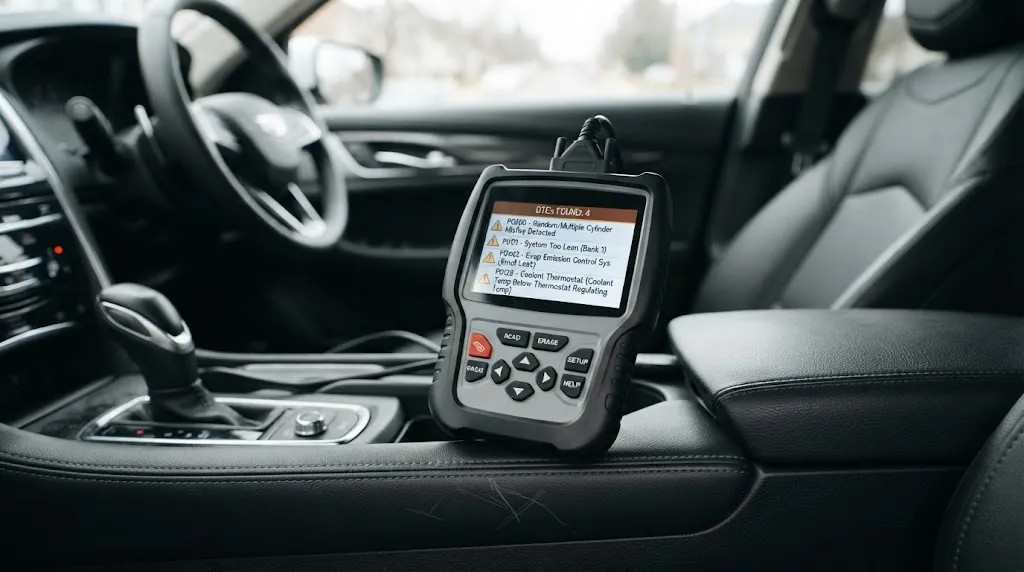
The most immediate and well-known function of an OBD2 scan is retrieving Diagnostic Trouble Codes, commonly known as DTCs. When a vehicle’s computer detects a malfunction in a sensor, circuit, or component, it triggers a code and usually illuminates the Check Engine Light on the instrument cluster.
However, the absence of an illuminated dashboard light does not automatically mean the car is clean. Scanners can uncover three distinct categories of trouble codes that every used car buyer must understand:
- Stored Codes: These are confirmed faults that caused the Check Engine Light to illuminate. Even if the light was temporarily turned off, permanent codes often remain stored in the computer’s history until cleared through multiple drive cycles.
- Pending Codes: These indicate intermittent issues or faults that the computer has detected once or twice. If the problem repeats, a pending code will mature into a stored code and light up the dash. Finding pending codes during a pre-purchase inspection is a major warning sign.
- Permanent Codes: Introduced in newer vehicles to prevent emissions testing fraud, permanent codes cannot be erased simply by disconnecting the battery or using a basic code reader. They remain in the ECU until the vehicle successfully runs its self-diagnostic tests and proves the underlying problem is fixed.
The Red Flag of Cleared Codes and Readiness Monitors
One of the oldest tricks used by unscrupulous sellers is clearing the car’s computer memory right before a buyer arrives. This turns off the Check Engine Light and temporarily erases all stored trouble codes, making a broken engine appear healthy to an untrained eye.
An OBD2 scanner exposes this tactic immediately through emission readiness monitors. When a car’s battery is disconnected or its diagnostic memory is cleared, these electronic self-tests—covering components like the catalytic converter, oxygen sensors, evaporative emissions (EVAP), and EGR system—are reset to “Not Ready” or “Incomplete.”
Warning
If you scan a used car and see multiple monitors marked as “Not Ready” on a vehicle that has supposedly been driven regularly for weeks, walk away. It is a strong indicator that the seller recently cleared codes to hide a persistent mechanical or emissions failure.
Freeze-Frame Data: Capturing the Exact Moment of Failure
When a serious fault code is stored in a vehicle’s computer, the ECU takes a snapshot of operating conditions at that exact millisecond. This feature is called freeze-frame data, and it provides invaluable context during a used car evaluation.
Freeze-frame data can reveal:
- Engine coolant temperature when the fault occurred
- Vehicle speed and engine RPM
- Engine load percentage
- Fuel trim status (short-term and long-term fuel adjustments)
- Throttle position
By reviewing freeze-frame data, you can see whether a code was triggered during a cold start on the highway or while idling in heavy traffic. This helps distinguish between a minor sensor glitch and a catastrophic powertrain event.
Live Sensor Data and Real-Time Performance
Beyond static codes, advanced OBD2 scanners allow you to view live data streams while the engine is running. This capability lets you evaluate how components operate in real time rather than just waiting for them to fail.
Key live metrics to check during a used car test drive include:
- Oxygen (O2) Sensor Switching: Healthy upstream O2 sensors fluctuate rapidly between lean and rich mixtures. Lazy or flatlined responses indicate a failing sensor or exhaust leak.
- Fuel Trim Readings: Long-term fuel trims should ideally stay close to zero. Extremely high positive or negative numbers indicate the engine is struggling to compensate for unmetered air, clogged fuel injectors, or a weak fuel pump.
- Coolant Temperature: Verifies whether the thermostat opens correctly and prevents overheating issues from being masked by a rigged temperature gauge on the dashboard.
- Mass Air Flow (MAF) Rate: Confirms that air entering the engine matches expected specifications at various RPM levels.
Tip
Always plug your scanner in and turn the ignition to the “On” position without starting the engine first. This allows you to verify that the Check Engine Light actually illuminates during the bulb check test, ensuring dishonest sellers haven’t physically removed or taped over the dashboard bulb.
Electronic VIN Verification via the ECU
Vehicle Identification Number (VIN) fraud, title washing, and hidden frame swaps present serious risks in the used car market. While you can check the VIN stamped on the dashboard and door jamb, an OBD2 scan allows you to cross-reference the VIN stored digitally inside the vehicle’s computer modules.
If the VIN read electronically by the scanner does not match the physical plate on the car, it signals that an ECU, engine, or transmission was replaced from a donor vehicle—often due to major collision damage or flooding. This discovery warrants an immediate professional inspection and title investigation.
What an OBD2 Scan Cannot Reveal

While diagnostic tools provide powerful insights, buyers must recognize their inherent limitations. An OBD2 scan is strictly an electronic health check; it cannot detect pure mechanical wear or structural problems that lack electrical sensors.
Critical issues an OBD2 scan will miss include:
- Brake System Wear: Worn brake pads, warped rotors, and leaking brake lines rarely trigger digital diagnostic codes unless an ABS or stability control sensor fails.
- Suspension and Steering Damage: Worn shock absorbers, blown bushings, failing ball joints, and alignment issues leave no electronic footprint in standard powertrain computers.
- Manual Transmission and Clutch Health: Slipping clutches, worn synchronizers, and internal manual gearbox wear operate entirely mechanically without electronic monitoring.
- Oil Leaks and Fluid Condition: While low oil pressure might trigger a warning, a slow oil leak from a gasket or degraded transmission fluid requires a physical visual inspection under the vehicle.
- Interior and Body Condition: Frame rust, structural corrosion, electrical window failures, and HVAC blower motor issues operate outside the scope of basic OBD2 diagnostics.
How to Perform an OBD2 Scan During a Used Car Inspection
Conducting a proper scan takes only a few minutes and requires very little technical expertise. Follow these steps during your next car viewing:
- Locate the OBD2 port, typically positioned underneath the driver’s side dashboard near the steering column.
- Plug in your diagnostic tool or Bluetooth OBD2 adapter while the vehicle ignition is turned off.
- Turn the ignition key to the “On” position (engine off) to power up the computer modules and check dashboard warning lights.
- Run a full system diagnostic scan to check for stored, pending, and permanent diagnostic trouble codes.
- Check the emission readiness monitor status to ensure monitors are complete and codes have not been recently cleared.
- Start the engine, switch to live data view, and monitor sensor metrics during a test drive to evaluate real-time performance.
Related Product
OBD2 Diagnostic Scan Tool
A reliable handheld OBD2 scanner lets you read trouble codes, check emission readiness monitors, and view live sensor data before buying a used car.
As an Amazon Associate, we earn from qualifying purchases.
Frequently Asked Questions
Can a basic OBD2 scanner clear permanent trouble codes?
No. Basic code readers cannot clear permanent diagnostic trouble codes. These codes are specifically designed to remain stored in the ECU until the vehicle completes specific drive cycles and self-tests confirming the underlying repair is successful, preventing emissions test evasion.
What does it mean if all OBD2 readiness monitors show “Not Ready”?
This strongly indicates that the vehicle’s battery was recently disconnected or the computer memory was cleared. Sellers often do this to hide active Check Engine Light codes. To make the monitors ready again, the car must be driven through a specific combination of city and highway driving cycles.
Will an OBD2 scan show transmission problems?
Yes, but with limitations. Powertrain OBD2 codes (starting with ‘P’) cover both engine and automatic transmission operation. However, standard generic scanners may miss manufacturer-specific transmission control module (TCM) codes unless the scanner supports enhanced diagnostics for that specific automotive brand.
Can an OBD2 scanner detect odometer tampering?
In many modern vehicles, mileage is stored across multiple electronic modules, including the instrument cluster, transmission computer, and ECU. Advanced scan tools can sometimes read mileage data stored in secondary modules, allowing you to cross-reference it against the odometer display.
Is it normal to find pending trouble codes on a used car?
No. Finding pending codes indicates that a component is on the verge of failure or an intermittent fault has occurred recently. Even if the Check Engine Light is currently off, pending codes mean trouble is likely developing.
Do cheap Bluetooth OBD2 adapters work as well as expensive scan tools?
For basic code reading, reading live data, and checking emission readiness monitors, inexpensive Bluetooth adapters paired with smartphone apps work remarkably well. However, professional-grade diagnostic tablets are required for bi-directional controls, advanced ABS diagnostics, and brand-specific module scanning.
Conclusion
An OBD2 scan is an indispensable tool for anyone shopping for a used car. By revealing stored and pending trouble codes, emission readiness status, freeze-frame snapshots, and live sensor metrics, a diagnostic scan strips away the guesswork and exposes hidden mechanical or electronic trouble. However, because scanners cannot evaluate physical wear like suspension damage or brake health, always pair an electronic scan with a thorough visual inspection and a professional mechanic review before finalizing your purchase.

I’m Alex Rahman, a car enthusiast and automotive writer focused on practical solutions, car tools, and real-world driving advice. I share simple and honest content to help everyday drivers make better decisions.
