Do Jump Starters Lose Charge When Stored? Yes — Here’s the Fix
Yes, jump starters do lose charge when stored. All batteries self-discharge over time — even when you’re not using them. Lead-acid jump starters can lose 5–15% of their charge every month. Lithium-ion models are much better, losing only 2–5% per month. To keep yours ready, recharge it every 3 months and store it in a cool, dry place.
You tossed your jump starter in the trunk six months ago and forgot about it. Now your car won’t start, and you’re reaching for that device — hoping it still has juice.
Sound familiar? This happens to drivers every single day. I’m Alex Rahman, and I’ve tested and researched portable jump starters for years. The short answer is yes, they do lose charge in storage. But how fast depends on the type you own.
Let me break this down so you know exactly what to expect — and how to fix it.
- All jump starters lose charge when stored — it’s called self-discharge.
- Lead-acid models lose 5–15% of charge per month. Lithium-ion models lose only 2–5%.
- Extreme heat — like a hot car trunk — can cut charge retention by 50% in just weeks.
- Recharge your jump starter every 3 months to keep it ready for emergencies.
- Store it between 50°F and 70°F (10°C–21°C) to slow down battery drain.
What Does “Self-Discharge” Actually Mean?
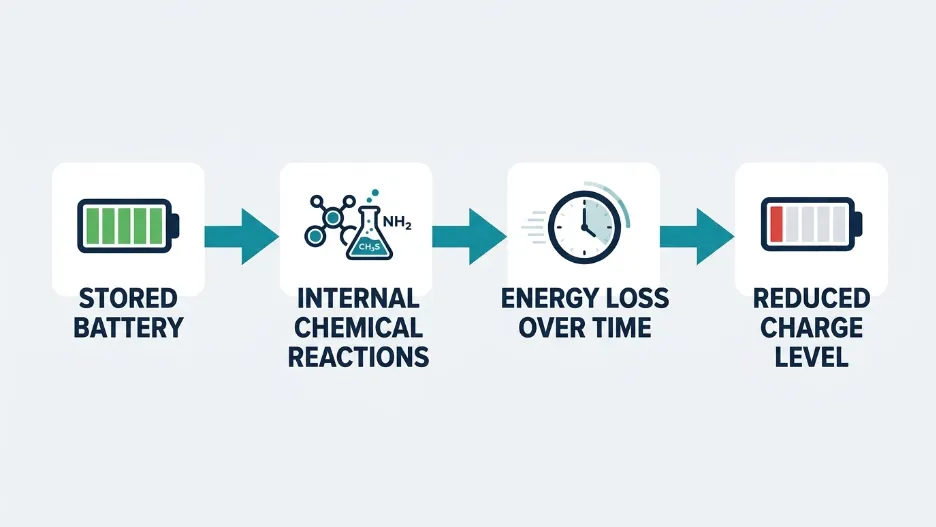
Here’s the thing. Every battery leaks a tiny bit of energy over time — even with nothing connected to it. This natural process is called self-discharge.
Think of it like a slow air leak in a tire. You park the car, come back months later, and the tire is low. The jump starter battery works the same way.
Self-discharge happens because of the chemical reactions inside the battery. Those reactions never fully stop — even when the device is off and sitting on a shelf.
The rate of self-discharge depends on two big factors: battery chemistry and storage temperature. We’ll cover both in detail below.
How Fast Do Jump Starters Lose Charge in Storage?
The speed of charge loss depends on what type of battery your jump starter uses. There are two main types on the market today.
Lead-Acid Jump Starters
Lead-acid is the older technology. These are the bigger, heavier units — the kind professional mechanics and tow truck drivers have used for decades. Brands like Clore Automotive (the makers of the JNC line) and Schumacher Electric have built solid lead-acid units for years.
The problem with lead-acid in storage? They drain fast. Lead-acid jump starters lose about 5–15% of their charge every single month. Leave one in your garage from October to April without charging it, and it could be completely dead when spring arrives.
There’s another issue too. If a lead-acid battery sits in a fully discharged state for too long, a process called sulfation occurs. Sulfate crystals build up on the battery plates. This permanently reduces capacity — and you can’t reverse it.
If you own a lead-acid jump starter, never let it sit discharged for more than 30 days. Clore Automotive recommends recharging every 30 days to prevent permanent battery damage from sulfation.
Lithium-Ion Jump Starters
Lithium-ion technology changed the game. Modern lithium jump starters — like the popular NOCO Boost Plus GB40 — lose only about 2–5% of their charge per month.
That’s a massive difference. A well-made lithium jump starter can hold a usable charge for 6 to 12 months in normal storage conditions. Some premium models, like HULKMAN’s lineup with their ultra-low self-discharge design, claim up to 18 months of charge retention when stored correctly.
Lithium-ion cells also don’t suffer from sulfation. That alone makes them a better fit for anyone who stores their jump starter for long periods.
| Battery Type | Monthly Self-Discharge | Usable Charge in Storage | Recharge Frequency Needed |
|---|---|---|---|
| Lead-Acid (AGM) | 5–15% | 3–6 months max | Every 30 days |
| Lithium-Ion (Li-ion) | 2–5% | 6–12 months | Every 3 months |
| LiFePO4 (Lithium Iron Phosphate) | 1–3% | 12–18 months | Every 3–6 months |
Does Temperature Affect How Fast a Jump Starter Loses Charge?
Absolutely — and this is the part most people miss entirely.
The ideal storage temperature for a jump starter is between 50°F and 70°F (10°C–21°C). At this range, chemical degradation slows to its minimum rate.
Push that temperature higher, and things get ugly fast. For every 18°F rise above 85°F, the self-discharge rate roughly doubles. That’s not a small issue — car trunks in summer regularly hit 140°F in direct sunlight.
Never store your jump starter in your vehicle during summer. Trunk temperatures can exceed 140°F, which can cut charge retention by 50% or more in just a few weeks — and cause permanent battery damage over time.
Cold temperatures are less damaging for storage, but they do affect performance. A jump starter stored at 20°F will deliver noticeably less power than the same unit stored at 60°F. Clore Automotive notes this directly in their storage guidelines — cold storage reduces available cranking power even in units that are fully charged.
Here’s a real-world example from research done by Battery Skills: a marine mechanic who stored their NOCO GB40 in a climate-controlled toolbox at 50% charge retained 89% capacity after 10 months. A coworker’s identical unit left in a hot truck bed held only 42% capacity in the same period.
That’s the same device, same charge level — just different storage temperatures. The result was night and day.
How Long Can a Fully Charged Jump Starter Stay in Storage?
Here’s a quick breakdown based on battery type and storage conditions:
- Lead-acid in cool storage: 3–4 months before significant charge loss
- Lithium-ion in cool storage: 6–12 months before needing a top-up
- LiFePO4 (lithium iron phosphate) in cool storage: Up to 18 months
- Any type stored in a hot car: 2–6 weeks before serious degradation
The universal rule — regardless of battery type — is to recharge every 3 months if the unit is not in regular use. This is the guidance given by Clore Automotive, HULKMAN, and most other reputable manufacturers.
Set a phone reminder every 90 days to check and top off your jump starter. It takes 3 minutes to plug in. It could save you from a dead device during an actual emergency.
What Happens If You Never Charge Your Jump Starter in Storage?
Let’s say you buy a jump starter, throw it in the trunk, and forget about it for a year. What actually happens?
For a lead-acid unit, the outcome is often permanent damage. The battery over-discharges and sulfation sets in. You may find it won’t charge back up — or won’t hold a charge even after charging. In many cases, the unit is ruined entirely.
For a lithium-ion unit, the damage is less severe but still real. Most lithium jump starters have a Battery Management System (BMS) built in. The BMS protects against deep over-discharge by cutting off the cell before it drops to dangerous levels. But if the battery sits at critically low voltage for months, the BMS can’t always prevent capacity loss.
The takeaway? Both types suffer from neglect. The lithium-ion unit just handles neglect better — and bounces back more easily.
A jump starter left completely uncharged for 12+ months may fail to start your car — or fail to recharge at all. Lead-acid models are at higher risk of permanent damage. Lithium-ion models are more forgiving but still need attention. The fix is simple: check it every 3 months.
The Best Jump Starter to Buy for Long-Term Storage
If charge retention during storage is your top concern, you want a lithium-ion model. Specifically, look for one with a low self-discharge rate and a solid BMS.
The NOCO Boost Plus GB40 is one of the most consistently recommended units on the market. It delivers 1,000 amps of starting power, handles gas engines up to 6.0L, and is small enough to live in your glove box.
NOCO Boost Plus GB40 1000A UltraSafe Car Battery Jump Starter Pack, Portable Jump Starter, Lithium Battery Booster Pack, Battery Jumper Box, and Jumper Cables for 12-Volt Batteries
One of the most trusted lithium jump starters available — compact, IP65 water-resistant, with spark-proof protection and up to 20 jump starts per charge. A smart pick for long-term trunk storage.
How to Store a Jump Starter So It Keeps Its Charge Longer
Good storage habits make a real difference. Here’s what the data and the manufacturers actually recommend.
- Fully charge the unit before putting it in long-term storage.
- For lithium-ion, storing at 40–80% charge is ideal for long-term battery health.
- Store in a cool, dry location — indoors at room temperature works best.
- Keep it away from direct sunlight and heat sources.
- Store in the included bag or a padded case to protect connections and avoid accidental activation.
- Check the charge level every 90 days and top it off if needed.
- Always recharge fully after every use before putting it back in storage.
Signs Your Jump Starter Has Lost Too Much Charge
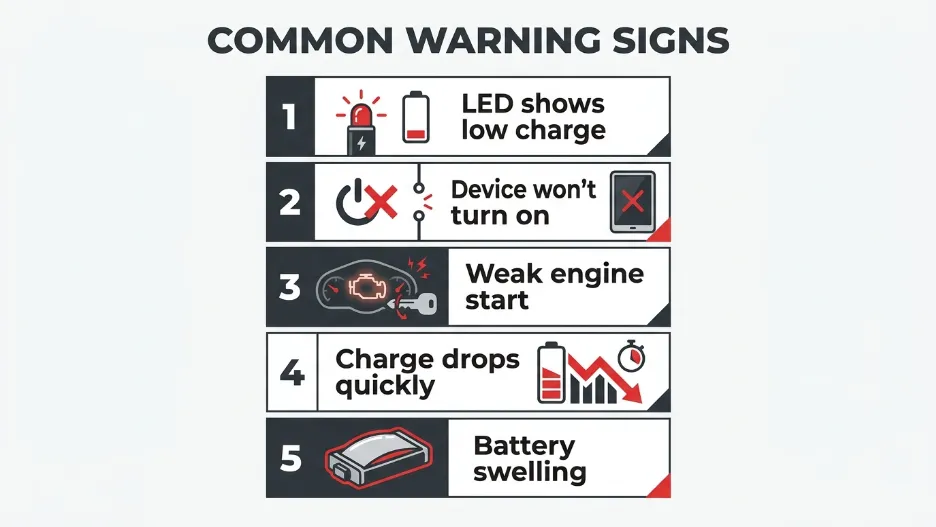
Sometimes you don’t know there’s a problem until you actually need the device. Here are warning signs to check before you need it in an emergency.
- LED indicator shows low charge — most modern units have indicator lights. Check them regularly.
- The unit won’t turn on — could mean it’s deeply discharged or the BMS has shut it down.
- It starts the car slowly or not at all — reduced peak amps is a sign of capacity loss.
- Charges but drops quickly — the battery cells have degraded and no longer hold a full charge.
- Visible swelling or bloating — a serious warning sign on lithium units. Stop using immediately.
A fleet manager tracking 50 NOCO GB40 units found that units stored at 30–70% charge lasted an average of 4.7 years. Units regularly charged to 100% only lasted 3.1 years. Partial-charge storage extended lifespan by 50%.
Can You Revive a Jump Starter That Lost Its Charge in Storage?
Good question — and the answer depends on how long it sat and what type it is.
For a lithium-ion unit, connect it to its original charger and leave it plugged in. If the BMS hasn’t fully locked out the cells, it should recover slowly over a few hours. Many units will flash a low-battery indicator during recovery charging.
For a lead-acid unit, recovery is possible if sulfation hasn’t gone too far. Use a smart charger — like the NOCO Genius line — that includes a desulfation or recovery mode. These chargers send controlled pulses to break down minor sulfate buildup. It doesn’t always work on severely damaged cells, but it’s worth trying.
Check the voltage with a multimeter before assuming your jump starter is dead. A lithium unit should read above 12.8V when healthy. A lead-acid unit should show above 12.4V. If either reads significantly lower, begin recovery charging immediately.
Lead-Acid vs. Lithium-Ion Jump Starter: Which Holds Charge Better in Storage?
Let’s be direct. Lithium-ion wins — and it’s not even close when it comes to storage performance.
Schumacher Electric, a brand that makes both types, confirms that lead-acid units can lose about 5% of charge per month and face damage if they become over-discharged. Their lithium units, by contrast, hold charge for months with minimal attention needed.
AutoZone’s product guides also highlight that lithium-ion jump starters hold a charge longer during storage compared to lead-acid alternatives. The chemistry simply works better for infrequent use scenarios.
That said, lead-acid units have their place. They’re cheaper, often have higher cold-cranking capacity for very large engines, and the batteries are replaceable. If you use yours regularly and charge it consistently, lead-acid is a perfectly valid choice.
But if the device lives in your trunk and gets checked twice a year? Go lithium.
| Factor | Lead-Acid | Lithium-Ion |
|---|---|---|
| Monthly charge loss | 5–15% | 2–5% |
| Storage life (cool temp) | 3–6 months | 6–18 months |
| Risk of permanent damage if neglected | High (sulfation) | Low (BMS protection) |
| Maintenance needed | Monthly charging | Every 3 months |
| Weight | Heavy | Lightweight |
| Price | Lower upfront | Higher upfront, longer lifespan |
How Often Should You Charge Your Jump Starter?
Here’s the simple answer: every 3 months at a minimum, and always after every use.
Manufacturers across the board — Clore Automotive, HULKMAN, Schumacher, and NOCO — all point to the 3-month rule as the baseline for maintaining readiness.
If you keep your jump starter inside your home in a climate-controlled space, you can probably push that to every 4 months for lithium-ion. But 3 months is the safe standard.
One more thing to avoid: don’t recharge from a running vehicle. Clore Automotive specifically warns against leaving a jump starter connected to a running car after a successful jump. The alternator output is much higher than the safe charging rate for jump starter batteries. This harms battery health over time, even if it feels like a convenient shortcut.
Always use the original charger or a manufacturer-approved charger. Generic USB chargers often don’t regulate voltage and current properly — this causes incomplete charging and slowly reduces your battery’s effective capacity.
Keep these habits, and your jump starter will be ready whenever you actually need it. That’s the whole point of having one.
Frequently Asked Questions
Do jump starters lose charge when not in use?
Yes, all jump starters lose charge over time due to natural self-discharge. Lead-acid models lose 5–15% per month, while lithium-ion models lose only 2–5% per month. Regular charging every 3 months keeps them ready for use.
How long can a jump starter sit before it needs charging?
A lithium-ion jump starter stored in a cool location can sit for 6 to 12 months before needing a recharge. A lead-acid unit should be recharged every 30 days. Regardless of type, charging every 3 months is the safe standard all manufacturers recommend.
Is it bad to store a jump starter in your car?
Storing it in a car long-term is not ideal, especially in summer. Trunk temperatures can exceed 140°F, which accelerates self-discharge and causes permanent battery damage. For best results, store indoors between 50°F and 70°F.
Can a jump starter go bad from sitting unused?
Yes, especially lead-acid models. If left uncharged for too long, sulfation occurs and permanently reduces battery capacity. Lithium-ion models are more resilient due to built-in Battery Management Systems, but they can still degrade if stored deeply discharged for extended periods.
Should I fully charge my jump starter before storing it?
For lead-acid units, yes — store fully charged. For lithium-ion, storing at 40–80% is actually better for long-term battery health. Either way, always top it off at least every 3 months during storage.
How do I know if my jump starter still has enough charge to work?
Check the LED indicator lights — most modern jump starters show charge level through colored LEDs. You can also use a multimeter: a lithium unit should read above 12.8V, and a lead-acid unit above 12.4V. Anything significantly lower means it needs charging before use.
Does cold weather drain a jump starter’s charge?
Cold storage doesn’t drain charge as fast as heat does, but it does reduce available starting power. A jump starter stored at 20°F will deliver less cranking power than one stored at 60°F. Bring it indoors to warm up before use if possible.

I’m Alex Rahman, a car enthusiast and automotive writer focused on practical solutions, car tools, and real-world driving advice. I share simple and honest content to help everyday drivers make better decisions.
