What Is OBD2 Mode 04? How OBD2 Code Clearing & Resets Work
Quick Answer
OBD2 Mode 04 is a standardized diagnostic command used by scan tools to clear Diagnostic Trouble Codes (DTCs), reset MIL (Check Engine Light) status, and erase emission-related diagnostic information and readiness monitor statuses from a vehicle’s Engine Control Unit (ECU).
Modern vehicles rely heavily on computerized management systems to monitor emissions, engine performance, and electrical integrity. When a fault occurs, the vehicle’s onboard computer logs a diagnostic trouble code and illuminates the dashboard check engine light. Once the underlying mechanical or electrical issue is resolved, clearing that code and resetting the monitoring system becomes a necessary step in the repair workflow.
This is where OBD-II diagnostic service modes come into play. While most drivers are familiar with reading codes using generic scan tools, fewer understand the specific service modes operating underneath the software interface. Among the ten standardized diagnostic modes defined by automotive regulatory standards, Mode 04 governs the clearing of emission-related diagnostic data.
What Is OBD2 Mode 04?
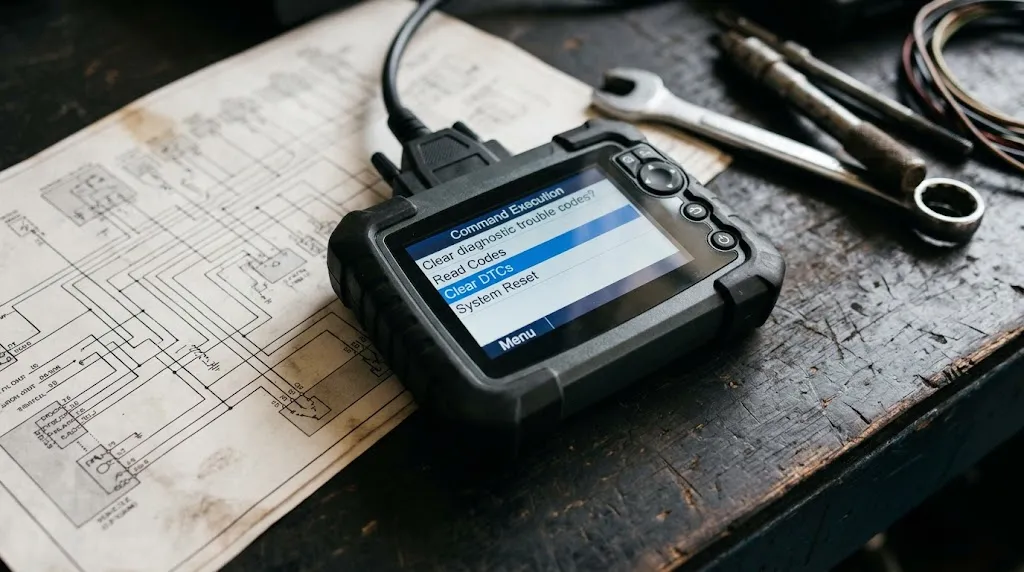
OBD2 Mode 04, officially designated as Service $04 in the SAE J1979 / ISO 15031-5 standards, is the command function that allows an external diagnostic scan tool to clear or reset emission-related diagnostic trouble codes and stored values within the powertrain control module (PCM) or engine control unit (ECU).
When you press the “Clear Codes” or “Erase DTCs” button on an OBD2 scanner, the tool sends a Mode 04 request across the vehicle’s communication bus (such as CAN, ISO 9141, or PWM). Upon receiving and validating this request, the vehicle computer initiates a comprehensive reset sequence.
This command does not fix mechanical problems, nor does it reprogram software calibrations. Instead, it acts as a digital reset switch that wipes the slate clean for the vehicle’s diagnostic self-monitoring systems.
What Happens Inside the ECU When Mode 04 Is Executed?
Executing Mode 04 triggers several distinct operational changes inside the vehicle’s computer memory. Understanding these internal shifts helps clarify why a simple code clear changes how a vehicle behaves immediately afterward.
First, all stored Diagnostic Trouble Codes (DTCs) are wiped from active and historical memory registers. Pending codes, current codes, and permanent codes that are eligible for clearance are removed, which extinguishes the Malfunction Indicator Lamp (MIL), commonly known as the check engine light.
Second, Mode 04 clears freeze frame data. Freeze frame data represents a snapshot of critical sensor inputs—such as engine RPM, coolant temperature, vehicle speed, and fuel trim values—captured at the exact millisecond the ECU detected the initial fault. Wiping this data erases the historical record of when and under what conditions the failure occurred.
Third, and most importantly for emissions compliance, Mode 04 resets all OBD-II readiness monitors. These monitors are self-tests that the ECU runs continuously or periodically to verify that emission-controlling components like the catalytic converter, oxygen sensors, EVAP system, and EGR valve are functioning properly. When Mode 04 runs, these monitors revert to an “incomplete” or “not ready” status.
Key Insight
Running Mode 04 resets every emission monitor simultaneously. Until the vehicle completes a specific series of driving conditions known as a “drive cycle,” the ECU cannot verify system health for state smog testing.
Why and When Mode 04 Is Used
Automotive technicians, fleet managers, and DIY mechanics use Mode 04 for specific, structured purposes during vehicle maintenance and repair. It is rarely used as a standalone procedure; rather, it is part of a larger diagnostic workflow.
After a faulty component—such as a failing oxygen sensor or a loose fuel cap—is replaced, Mode 04 is used to clear the lingering trouble code. This allows the technician to verify whether the repair was successful. If the underlying problem has truly been fixed, the check engine light will remain off during subsequent driving.
Another common scenario involves intermittent or historical codes. Sometimes, an electrical glitch or a temporary sensor fluctuation triggers a code that does not point to a failing part. Clearing the code via Mode 04 allows the mechanic to monitor if the fault returns under normal operating conditions.
It is also utilized during pre-inspection checks. When preparing a vehicle for an official state emissions test, ensuring that no active codes are present is essential, though technicians must be careful not to run Mode 04 immediately before the test, as doing so will cause the vehicle to fail due to incomplete monitors.
Common Misconceptions About Clearing Codes
There are several widespread myths regarding what OBD2 diagnostic code clearing achieves. Misunderstanding these concepts often leads to wasted time and repeated diagnostic frustration.
The most dangerous misconception is that clearing a code fixes the underlying vehicle problem. Mode 04 is strictly a software housekeeping command. It erases the notification of a problem, but it does nothing to repair a worn-out spark plug, a leaking vacuum line, or a failing catalytic converter.
If the root cause of the fault remains unaddressed, the ECU will continuously run its self-tests, detect the failure again, log a new diagnostic trouble code, and turn the check engine light back on—often within a few miles of driving.
Another common misunderstanding involves permanent diagnostic trouble codes. Modern OBD-II protocols feature permanent codes that cannot be cleared manually using Mode 04 scan tool commands. These codes remain stored in non-volatile memory until the ECU itself confirms through multiple successful driving cycles that the underlying emission fault is completely resolved.
The Impact of Mode 04 on Emissions Testing and Readiness Monitors

For drivers facing mandatory state emissions or smog inspections, understanding how Mode 04 affects readiness monitors is critical.
During normal driving, the vehicle’s computer continuously evaluates emissions hardware. Once each system passes its internal checks, its corresponding readiness monitor flips from “incomplete” to “ready.” State inspection stations require a specified number of these monitors to show a “ready” status before they can legally run an OBD-II emissions test.
When Mode 04 is executed, every single readiness monitor is instantly reset to “not ready.” Driving into an inspection station immediately after clearing codes guarantees an automatic rejection or failure because the testing equipment cannot read system performance.
Warning
Never clear codes using Mode 04 right before going to a smog check. You must drive the vehicle through a specific manufacturer-defined drive cycle over several days to reset all monitors.
To set these monitors back to ready status, the vehicle must be driven through a specific combination of cold starts, steady-speed highway cruising, deceleration phases, and idle periods. This driving pattern allows the ECU to safely re-test every emission component under real-world operating conditions.
How OBD2 Mode 04 Is Initiated Using a Scan Tool
Interacting with Mode 04 requires an OBD-II compatible diagnostic tool, ranging from basic handheld code readers to advanced bidirectional diagnostic tablets used in professional repair shops.
The process of sending the Mode 04 command is typically straightforward:
- Locate the vehicle’s 16-pin OBD-II data link connector (DLC), usually positioned underneath the driver’s side dashboard near the steering column.
- Plug the OBD2 scanner into the connector while the vehicle ignition is turned to the ON position (engine off).
- Establish communication between the scan tool and the vehicle’s ECU by selecting the correct vehicle make, model, and VIN.
- Navigate the scanner menu to the diagnostic trouble code (DTC) management or service functions section.
- Select the command to “Clear Codes,” “Erase Trouble Codes,” or “Reset Diagnostic Information.”
- Confirm the prompt when the scanner warns that memory, freeze frames, and readiness monitors will be erased.
- Verify that the scan tool displays a confirmation message indicating the command was successfully executed by the ECU.
Once confirmed, the scan tool will show an empty code list, and the dashboard check engine light should turn off, provided no active hard faults are currently preventing the system from clearing.
Tip
Always record or take a photograph of all diagnostic trouble codes and freeze frame data before executing a Mode 04 clear, ensuring you have a permanent reference if the issue returns.
By understanding what OBD2 Mode 04 does beneath the surface, vehicle owners and technicians can use diagnostic tools more effectively, avoid common inspection pitfalls, and maintain strict control over vehicle emissions compliance.
Related Product
OBD2 Diagnostic Scan Tool & Code Reader
An OBD2 scanner allows you to read fault codes, view live sensor data, check emission readiness monitors, and safely execute code resets.
As an Amazon Associate, we earn from qualifying purchases.
Frequently Asked Questions
Does OBD2 Mode 04 permanently repair car problems?
No. Mode 04 is only a software command that clears error codes and resets diagnostic monitors in the vehicle’s computer. It does not fix mechanical or electrical malfunctions. If the root cause is not repaired, the fault code and check engine light will return shortly after driving.
Will executing Mode 04 pass an emissions test?
No. Running Mode 04 resets all emission readiness monitors to an “incomplete” status. Taking a vehicle to an inspection station immediately after clearing codes will result in an automatic test failure because the testing equipment cannot read monitor test results.
Can all diagnostic trouble codes be cleared using Mode 04?
Standard current and pending diagnostic trouble codes can be cleared using Mode 04. However, permanent emission-related trouble codes cannot be cleared manually with a scan tool; they automatically clear only after the ECU verifies during normal driving that the underlying fault has been resolved.
What happens to freeze frame data when Mode 04 is run?
All stored freeze frame data—which records vehicle operating parameters like RPM, coolant temperature, and speed at the exact moment a fault was triggered—is completely wiped from the ECU memory when Mode 04 is executed.
Is it safe to clear codes with Mode 04 without fixing the car?
It is safe in the sense that it will not damage the vehicle. However, clearing codes without making repairs hides warning signs and prevents the computer from monitoring critical emissions and safety systems until the fault registers again.
Do I need an expensive scan tool to use Mode 04?
No. Virtually all standard OBD-II code readers, Bluetooth diagnostic adapters, and professional scan tools support Mode 04 functionality, allowing users to clear codes and check monitor statuses easily.
Conclusion
OBD2 Mode 04 serves as an essential utility command within automotive diagnostics, giving technicians and vehicle owners the ability to clear trouble codes, erase freeze frame data, and reset readiness monitors. While it is an indispensable tool for verifying repairs and managing vehicle maintenance workflows, it remains purely a diagnostic reset function rather than a mechanical fix. Understanding how Mode 04 operates, how it affects ECU memory, and why it impacts state emissions testing ensures that drivers and mechanics use diagnostic tools effectively and avoid common pitfalls.

I’m Alex Rahman, a car enthusiast and automotive writer focused on practical solutions, car tools, and real-world driving advice. I share simple and honest content to help everyday drivers make better decisions.
