Can a Used Car Pass an OBD2 Scan After Clearing Codes?
Quick Answer
No, clearing trouble codes will not allow a used car to pass an OBD2 emissions scan immediately. While erasing codes turns off the Check Engine Light, it simultaneously resets the vehicle’s internal computer monitors to “not ready.” Emissions testing stations scan these readiness monitors; if they are not set, the car will fail automatically, even if no active trouble codes appear.
What Happens When You Clear OBD2 Trouble Codes
When a mechanic or car owner connects an OBD2 scanner and clears diagnostic trouble codes (DTCs), the computer erases the stored fault data and turns off the dashboard warning light. For a brief moment, the system appears clean. However, erasing codes wipes the temporary memory of the powertrain control module (PCM).
This action resets the onboard diagnostic readiness monitors. These monitors are self-tests that the car’s computer runs continuously while driving to verify that critical emissions components—such as the catalytic converter, oxygen sensors, and evaporative emission (EVAP) system—are functioning properly.
Key Insight
Clearing codes does not fix the underlying mechanical or electrical problem. If the fault persists, the computer will eventually turn the Check Engine Light back on once the system completes its self-test cycle.
Why “Not Ready” Monitors Cause an Automatic Test Failure
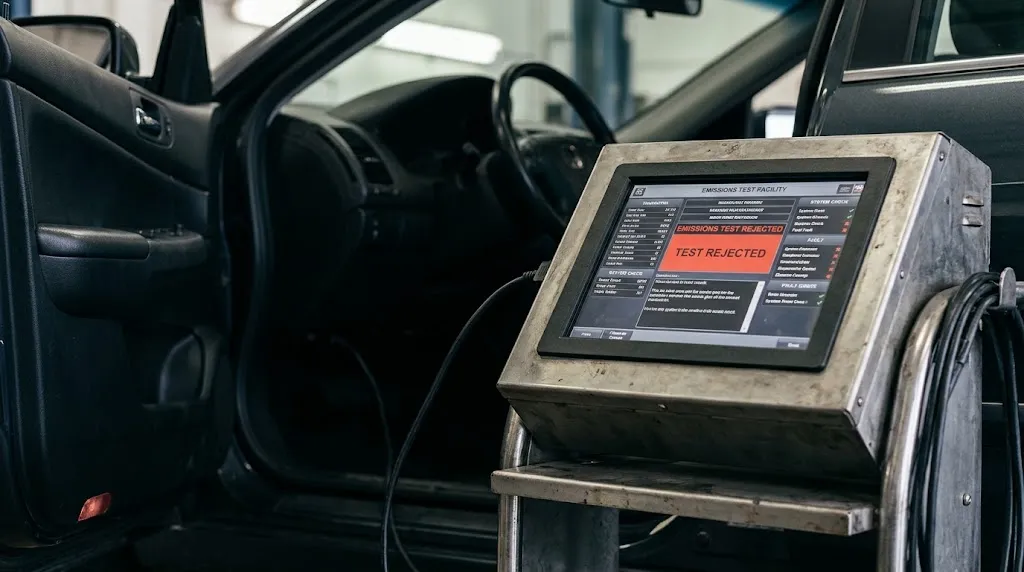
Emissions testing facilities do more than look for an illuminated Check Engine Light. During an OBD2 inspection, the testing equipment communicates with the car’s computer to check the status of these diagnostic monitors.
If a car has been driven recently after a battery disconnect or code reset, the monitors will report as “incomplete” or “not ready.” State and federal emissions guidelines permit only one incomplete monitor on most OBD-II compliant vehicles (typically the EVAP monitor), while older models may allow two. If multiple core monitors—like the catalyst, oxygen sensor, or EGR system—show as incomplete, the testing machine will reject the vehicle immediately.
This safeguard prevents sellers from temporarily hiding persistent engine issues right before a smog check or state safety inspection.
How Driving Cycles Reset Emission Monitors
To change readiness monitors from “not ready” to “ready,” the vehicle must go through a specific sequence of operating conditions known as a drive cycle. A standard drive cycle involves starting a cold engine, idling, accelerating to highway speeds, maintaining steady speeds, and decelerating.
Every automotive manufacturer has a unique drive cycle protocol. Completing these drive cycles requires a mix of city and highway driving over a span of several days or miles. Some monitors, particularly the EVAP system test, require specific fuel tank levels (often between one-quarter and three-quarters full) and overnight parking so the system can run its cold-start checks.
Tip
If you are inspecting a used car and notice that readiness monitors are incomplete, ask the seller for maintenance records. Avoid purchasing a vehicle immediately after a code clear unless you have verified that no lingering mechanical faults exist.
Risks of Buying a Used Car with Cleared Codes
When dishonest sellers clear trouble codes right before a prospective buyer arrives, they are attempting to conceal an active problem. Once the buyer drives the car home for a few days, the drive cycle completes, the underlying fault is detected again, and the Check Engine Light illuminates.
Common issues masked by a recent code clear include:
- Failing catalytic converters that require expensive replacements.
- Worn oxygen sensors affecting fuel economy and emissions.
- Vacuum leaks or EVAP system failures that trigger stubborn emission codes.
- Internal engine or transmission sensor faults.
Using an inexpensive handheld OBD2 scanner during a pre-purchase inspection allows you to check monitor readiness before exchanging money.
How to Check Monitor Readiness Before Buying
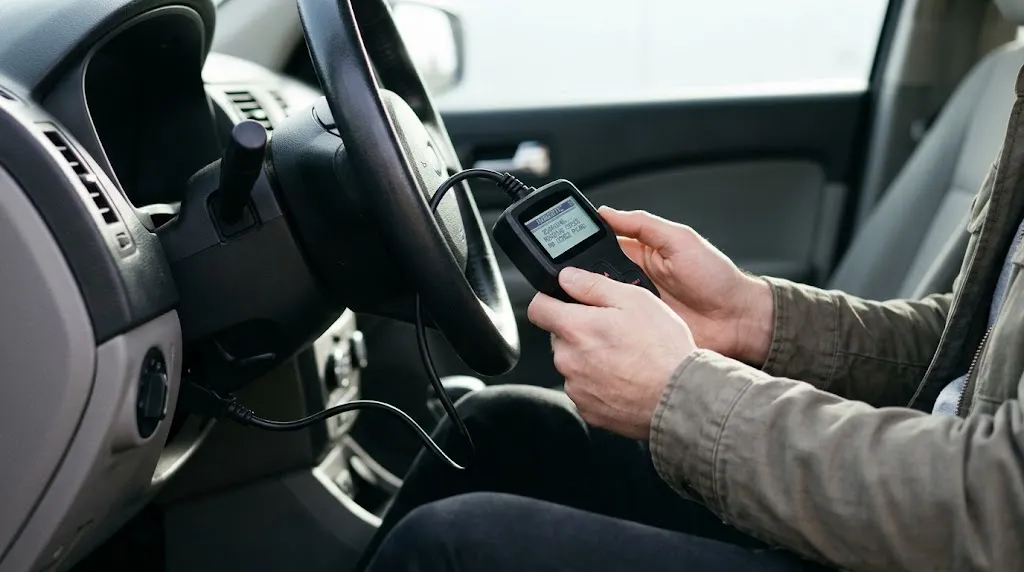
Protecting yourself during a used car purchase requires a quick scan using a basic OBD2 code reader plugged into the vehicle’s port beneath the dashboard. Review the live data for monitor status.
If every single monitor reports as “ready” and no trouble codes are stored, the emissions system is stable. If the tool reports that monitors are “not ready,” ask the owner how long ago the battery was disconnected or why the codes were cleared. If the seller insists the car is fine but refuses to allow a proper inspection cycle, treat it as a red flag.
Relevant Product
OBD2 Diagnostic Scan Tool
A compact code reader helps you instantly check monitor readiness and hidden trouble codes during a pre-purchase inspection.
As an Amazon Associate, we earn from qualifying purchases.
Frequently Asked Questions
Can a mechanic tell if codes were recently cleared?
Yes. Mechanics and emissions testing stations can easily see that the vehicle’s internal computer monitors have been reset to “not ready,” indicating a recent code clear or battery disconnect.
How many miles do you need to drive to reset readiness monitors?
There is no fixed mileage requirement. Resetting monitors typically requires between 50 and 100 miles of mixed highway and city driving, combined with cold starts and steady cruising over several days.
Will a disconnected battery clear emissions monitors?
Yes. Disconnecting the vehicle’s battery or pulling the PCM fuse completely erases the computer’s memory, turning off warning lights and resetting all readiness monitors back to incomplete.
Can you pass emissions with one monitor not ready?
In most jurisdictions, yes. Modern regulations typically allow vehicles (especially 2008 and newer models) to pass an emissions test with one monitor—usually the EVAP system—set to “not ready.”
Why does the EVAP monitor take the longest to become ready?
The EVAP monitor requires very specific environmental and operating conditions, including a fuel tank level between one-quarter and three-quarters full and an extended cold soak period overnight.
What should I do if a used car fails inspection due to incomplete monitors?
You must complete a proper drive cycle specified by the vehicle manufacturer so that all necessary self-tests finish running before taking the car back for a re-test.
Conclusion
Clearing OBD2 trouble codes is only a temporary fix that turns off dashboard warning lights without addressing underlying mechanical problems. Because testing stations verify internal readiness monitors, a freshly cleared car will automatically fail an emissions scan. Always check monitor status with an OBD2 tool before finalizing a used vehicle purchase to avoid unexpected repair bills.

I’m Alex Rahman, a car enthusiast and automotive writer focused on practical solutions, car tools, and real-world driving advice. I share simple and honest content to help everyday drivers make better decisions.
