Do All OBD2 Vehicles Use CAN Bus? Protocols Explained
Quick Answer
No, not all OBD2 vehicles use the Controller Area Network (CAN) bus protocol. While CAN bus became mandatory for all light-duty vehicles sold in the United States starting in 2008, the OBD2 standard itself was enacted in 1996. Between 1996 and 2007, many vehicles utilized alternative communication protocols such as SAE J1850 (PWM/VPW), ISO 9141-2, and ISO 14230 (KWP2000) before the industry fully transitioned to the unified CAN bus system.
Understanding the Evolution of OBD2 Communication Protocols
To understand why not all OBD2 vehicles use the CAN bus, it helps to look at the timeline of automotive diagnostics. The On-Board Diagnostics II (OBD2) standard was introduced to ensure vehicle emissions compliance and standardize diagnostic trouble codes (DTCs). However, the mandate focused on the connector shape, pin layout, and diagnostic protocol capabilities rather than mandating a single underlying communication language.
When OBD2 rolled out in the mid-1990s, different automotive manufacturers relied on distinct electronic architectures. As a result, the Society of Automotive Engineers (SAE) and the International Organization for Standardization (ISO) approved several different protocols to communicate with the vehicle’s computer systems. A generic OBD2 scanner must support all of these legacy protocols to interface properly with pre-2008 models.
The 2008 Mandate and the Shift to CAN Bus
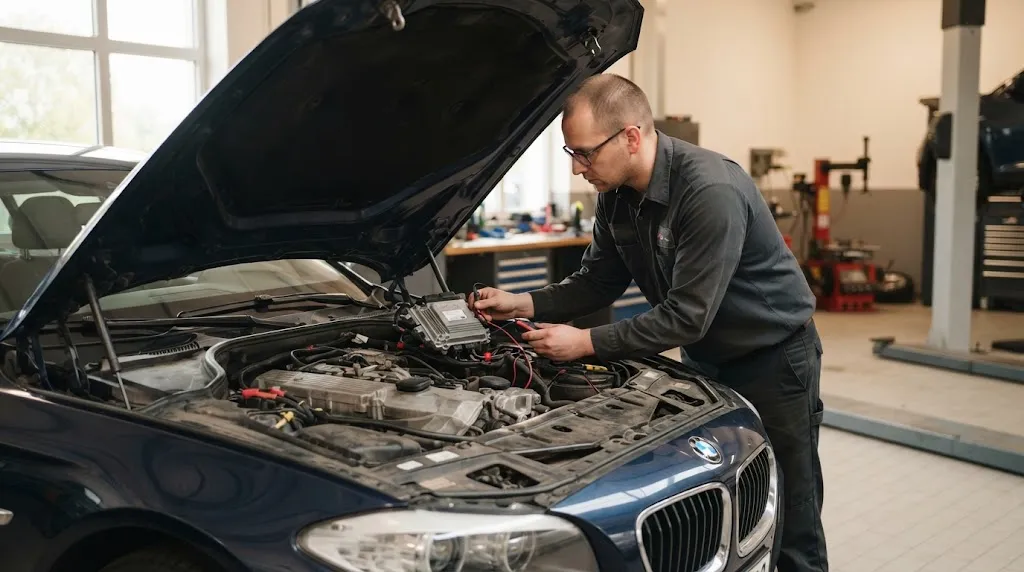
The Controller Area Network protocol revolutionized automotive networking by allowing microcontrollers and devices to communicate with each other within a vehicle without a host computer. Because of its superior speed, reliability, and reduced wiring complexity, regulatory bodies eventually streamlined diagnostic standards.
In the United States, the Environmental Protection Agency (EPA) mandated that all light-duty cars, trucks, and SUVs model year 2008 and newer must utilize the CAN bus communication protocol (specifically ISO 15765 / SAE J2480). European markets enforced similar standards under the EOBD mandate around the same timeframe. Consequently, any OBD2 vehicle manufactured from 2008 onward is guaranteed to use the CAN bus system.
Pre-2008 Legacy OBD2 Protocols
If you are diagnosing a vehicle built between 1996 and 2007, you are likely encountering one of the older non-CAN protocols. Recognizing these protocols is essential when choosing diagnostic scanners or interpreting connection errors:
- SAE J1850 PWM (Pulse Width Modulation): Primarily used by Ford motor vehicles. It operates at a communication speed of 41.6 kbps.
- SAE J1850 VPW (Variable Pulse Width): Widely used by General Motors (GM) trucks and older passenger cars. It operates at 10.4 kbps.
- ISO 9141-2: Frequently found in older Chrysler, European, and Asian import vehicles. Uses a serial communication line.
- ISO 14230-4 (KWP2000 / Keyword Protocol 2000): An evolution of ISO 9141 used by many European and Asian manufacturers during the late 1990s and early 2000s.
| Protocol Name | Common Manufacturers | Active Era | OBD2 Pin Usage |
|---|---|---|---|
| SAE J1850 PWM | Ford, Lincoln, Mercury | 1996 – 2007 | Pins 2 and 10 |
| SAE J1850 VPW | GM, Chevrolet, Cadillac | 1996 – 2007 | Pin 2 only |
| ISO 9141-2 / KWP2000 | Chrysler, European, Asian Imports | 1996 – 2007/2008 | Pins 7 and 15 |
| CAN Bus (ISO 15765) | All Manufacturers (Universal) | 2008 – Present (optional earlier) | Pins 6 and 14 |
The table above illustrates how protocol allocation shifted over the years, highlighting why diagnostic equipment must be multi-protocol compatible to service older fleets.
How to Identify Which Protocol Your Vehicle Uses
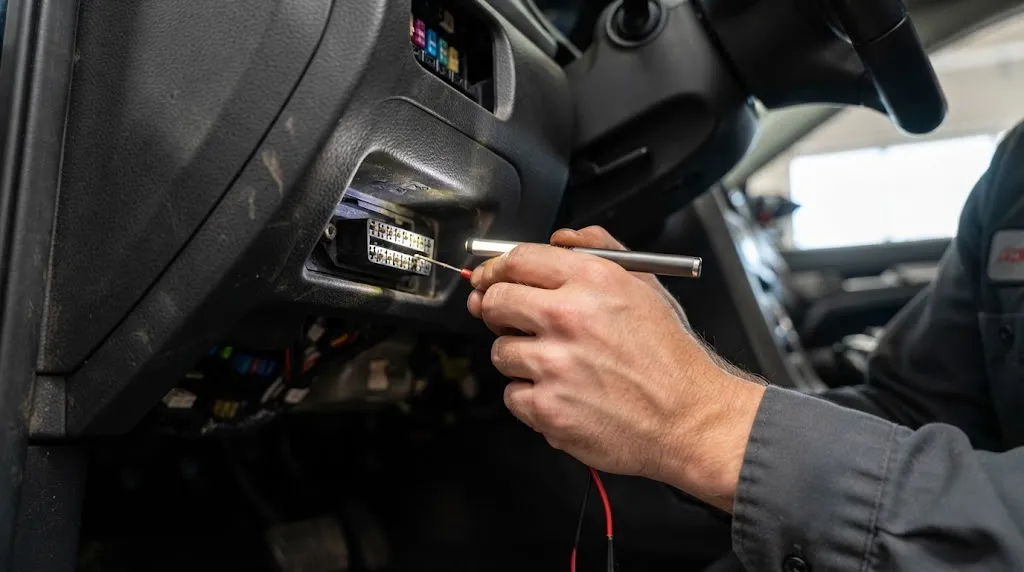
If you are working on a vehicle near the 2008 transition threshold and want to verify whether it runs on a CAN bus network, you can examine the physical diagnostic link connector (DLC) under the dashboard. The standard 16-pin trapezoidal connector has specific pins allocated for each protocol:
- Inspect the metal pins inside the vehicle’s OBD2 port.
- If pins 6 and 14 are populated with metal terminals, the vehicle supports the CAN bus protocol.
- If pin 2 or pin 7 is present instead of pins 6 and 14, the vehicle relies on an older legacy protocol.
Tip
Many vehicles built between 2004 and 2007 adopted CAN bus early alongside older protocols. Checking the emissions information sticker under the hood will often explicitly state whether the vehicle is certified compliant with OBDII and CAN standards.
Practical Implications for Diagnostics and Tool Compatibility
The distinction between CAN bus and older protocols impacts how diagnostic scanners interact with vehicle modules. Older protocols transmitted data at much lower speeds, which sometimes resulted in noticeable delays when pulling live data streams or clearing multiple diagnostic trouble codes.
Modern CAN bus architecture operates at speeds up to 500 kbps (High-Speed CAN) or 125 kbps (Low-Speed CAN), enabling near-instantaneous communication across multiple onboard computers, including the powertrain control module, transmission control module, and anti-lock braking system. When purchasing an OBD2 scanner, ensure it explicitly supports multi-protocol communication if you plan to service pre-2008 automobiles.
Related Product
OBD2 Multi-Protocol Diagnostic Scanner
An advanced multi-protocol OBD2 code reader capable of communicating with both legacy pre-2008 systems and modern CAN bus architectures.
As an Amazon Associate, we earn from qualifying purchases.
Frequently Asked Questions
Did cars have OBD2 before CAN bus was mandatory?
Yes. The OBD2 standard became federally mandated for all light-duty vehicles sold in the United States starting in the 1996 model year. CAN bus was not universally required until 2008, meaning a 12-year gap exists where vehicles used older non-CAN protocols.
Can I use a CAN-only scanner on a 2000 model year vehicle?
No. A scanner that exclusively supports the CAN bus protocol will fail to link or establish communication with a pre-2008 vehicle that utilizes legacy protocols like SAE J1850 or ISO 9141-2. You need a universal OBD2 scanner that supports legacy protocols.
How do I know if my car uses CAN bus?
Any light-duty vehicle from model year 2008 or newer automatically uses the CAN bus system. For vehicles built between 1996 and 2007, you can inspect the OBD2 port under the dashboard for pins 6 and 14, or check the emissions control label under the hood.
What are the main benefits of the CAN bus protocol?
The CAN bus protocol offers significantly faster data transmission speeds, superior noise immunity, simplified wiring harnesses by eliminating point-to-point wiring, and the ability for multiple vehicle modules to broadcast data simultaneously on a shared two-wire network.
Does CAN bus apply to heavy-duty commercial trucks?
Heavy-duty commercial vehicles (Class 4 through 8 trucks) follow separate standards governed by SAE J1939 and similar heavy-duty diagnostic frameworks, which utilize distinct connector types and communication speeds rather than standard light-duty OBD2 ports.
Will older non-CAN OBD2 protocols become obsolete?
While manufacturers no longer produce new vehicles using legacy OBD2 protocols, millions of pre-2008 cars and trucks remain on the road. Automotive technicians and DIY mechanics continue to require multi-protocol diagnostic tools to service these older fleets.
Conclusion
Not all OBD2 vehicles use the CAN bus system. While the CAN protocol became the universal standard for light-duty vehicles starting in 2008, the broader OBD2 diagnostic framework dates back to 1996. Vehicles built during the intervening decade relied on various legacy communication standards. Recognizing these differences ensures proper tool selection and accurate vehicle diagnostics across diverse automotive generations.

I’m Alex Rahman, a car enthusiast and automotive writer focused on practical solutions, car tools, and real-world driving advice. I share simple and honest content to help everyday drivers make better decisions.
