Can OBD2 Diagnose Transmission Problems? Capabilities & Limits
Quick Answer
Yes, an OBD2 scanner can diagnose many transmission problems, but its capability depends entirely on whether the transmission control module (TCM) stores diagnostic trouble codes (DTCs) for the specific fault. While basic generic OBD2 scanners primarily read powertrain codes (P-codes) that cover major electronic and sensor-related transmission issues, advanced or manufacturer-specific diagnostic tools are often required to access deep internal hydraulic, mechanical, or fluid-pressure codes.
How OBD2 Systems Interact With Modern Transmissions
Modern vehicles rely heavily on computer-controlled electronic automatic transmissions. These systems feature dedicated computer modules—often integrated into the Powertrain Control Module (PCM) or operating as a separate Transmission Control Module (TCM)—that constantly monitor sensors measuring input and output shaft speeds, fluid temperature, shift solenoid performance, and hydraulic pressures.
When an operating parameter falls outside normal factory thresholds, the computer triggers a warning light (such as the Check Engine Light or a dedicated transmission indicator) and writes a diagnostic trouble code into its memory. An OBD2 scanner plugs directly into the vehicle’s diagnostic link connector (DLC) under the dashboard to retrieve these stored codes.
However, understanding what an OBD2 scanner can and cannot see prevents misdiagnosis. While electronic anomalies register immediately, purely mechanical failures—such as a worn clutch pack slipping due to normal wear or a clogged internal fluid filter—do not always trigger a direct electronic fault code unless they cause a measurable slip ratio or pressure drop.
What Transmission Problems Can a Basic OBD2 Scanner Detect?
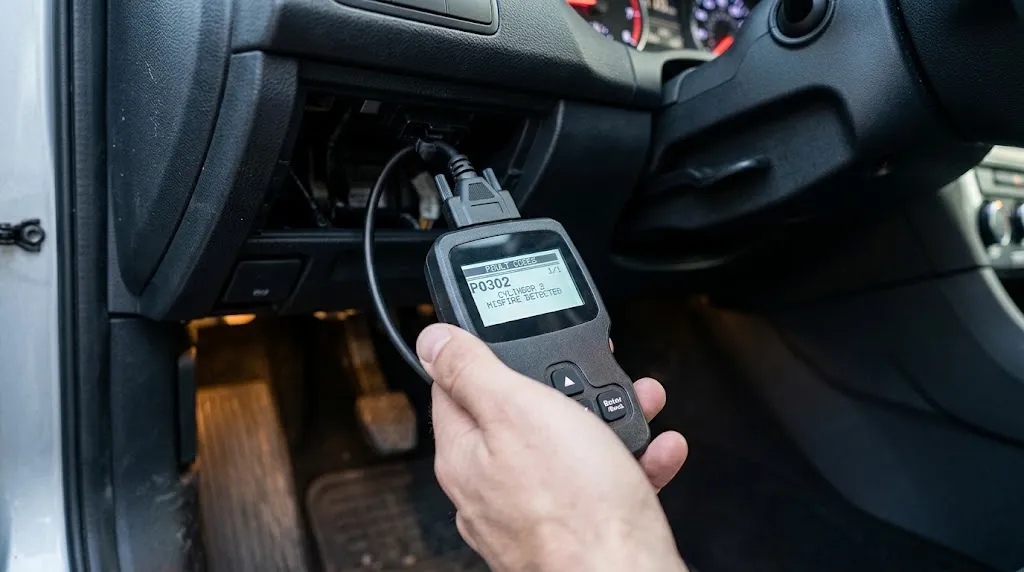
Standard, low-cost code readers sold at auto parts stores typically read generic OBD2 powertrain codes. These scanners can successfully identify electronic and sensor malfunctions that directly affect transmission operation, including:
- Shift Solenoid Failures: Electrical faults, open circuits, or stuck solenoids that prevent fluid from routing correctly to engage specific gears (such as codes P0750 through P0770).
- Speed Sensor Issues: Faulty input (turbine) or output speed sensors that prevent the computer from calculating proper shift points.
- Transmission Fluid Temperature (TFT) Faults: Overheating warnings or sensor circuit failures indicating abnormal fluid operating temperatures.
- Torque Converter Clutch (TCC) Circuit Issues: Electrical or performance problems with the torque converter lock-up solenoid (such as code P0740).
- Gear Ratio Errors: Discrepancies between engine RPM and transmission output speed that indicate internal slipping or component failure (such as code P0730).
Key Insight
A generic OBD2 code points toward a specific circuit or monitored behavior, but it rarely names the exact physical broken part. For example, a gear ratio code indicates that the transmission is slipping, but determining whether that slip stems from low fluid, worn clutches, or a failing valve body requires further physical and hydraulic testing.
Limitations of Generic Scanners vs. Advanced Diagnostic Tools
One of the most common pitfalls car owners encounter is using a basic code reader and concluding that the transmission is fine simply because “no codes are stored.” Generic OBD2 protocols mandate the reporting of standard emissions-related powertrain codes, but they often lack access to manufacturer-specific enhanced data streams.
Advanced diagnostic scan tools—including bi-directional scanners used by professional technicians and dealership level software—can communicate with the specific TCM sub-system to read:
- Live fluid pressure readings from internal hydraulic transducers.
- Adaptive learning values that show how much internal clutches have worn over time.
- Manufacturer-specific diagnostic trouble codes (such as U-codes or proprietary C-codes) that basic readers ignore.
- Live graphing of individual sensor inputs during a road test.
Without access to live data parameters, a generic scanner may miss intermittent electrical glitches or early-stage mechanical wear that has not yet set a permanent hard fault code.
Transmission Problems That OBD2 Scanners Cannot Directly Diagnose

Because OBD2 is an electronic monitoring system, physical and chemical transmission failures often require manual inspection rather than digital scanning. Issues that a scanner will not directly pinpoint include:
- Low or Contaminated Fluid: While low fluid pressure can trigger performance codes, the scanner cannot measure fluid level directly, nor can it smell burnt friction material or spot metallic shavings in the pan.
- Clogged Internal Filters: Restricted fluid flow caused by debris clogging a pickup filter often creates shifting delays or low pressure without triggering a dedicated filter code.
- Worn Mechanical Clutches and Bands: Physical friction material degradation results in slipping that may only be inferred indirectly through gear ratio errors.
- Valve Body Blockages: Tiny varnish deposits or debris sticking a mechanical spool valve inside the valve body often mimic electronic solenoid failures while being entirely mechanical in nature.
Warning
Do not rely solely on the absence of trouble codes if your vehicle exhibits severe physical symptoms like harsh engagement, delayed shifting, or grinding noises. Continuing to drive a mechanically failing transmission can lead to total internal destruction and catastrophic failure.
How to Perform a Complete Preliminary Transmission Check
When evaluating potential transmission issues using an OBD2 scanner, combine electronic diagnostics with physical inspections for an accurate assessment:
- Connect your OBD2 scanner to the vehicle’s diagnostic port with the ignition in the ON position and check for any stored, pending, or permanent DTCs.
- Record any retrieved codes and cross-reference them with the specific vehicle manufacturer definitions.
- Check the transmission fluid dipstick (where applicable) to inspect the fluid level, color, and smell. Clean, bright red fluid indicates healthy condition, while dark brown or burnt-smelling fluid points toward internal overheating or clutch wear.
- Monitor live data streams on the scanner during a test drive to observe whether sensor inputs match actual vehicle behavior.
Frequently Asked Questions
Can a standard OBD2 scanner clear transmission warning lights?
Yes, a standard OBD2 scanner can clear stored diagnostic trouble codes and turn off temporary warning lights. However, if the underlying mechanical or electrical fault is not repaired, the warning light and code will return shortly after driving.
What does a gear ratio incorrect code mean?
A gear ratio error code (such as P0730) means the transmission control module detects a mismatch between the expected speed ratio of the input and output shafts for the currently selected gear. This usually indicates internal clutch slipping, hydraulic pressure loss, or a failing speed sensor.
Will disconnecting the battery clear transmission codes?
Disconnecting the battery may temporarily erase volatile memory and turn off the dashboard warning light, but it does not fix the underlying problem. Furthermore, many modern transmissions require an adaptive relearn procedure after power loss, making proper code clearing via a scanner preferable.
Do all vehicles have a separate transmission control module?
No. In many modern vehicles, transmission control software is integrated directly into the main Powertrain Control Module (PCM). In larger trucks and heavier applications, the TCM is often housed as a separate physical unit.
Can low battery voltage cause fake transmission codes?
Yes. Low system voltage from a failing battery or a weak alternator can cause erratic computer behavior, leading to multiple false sensor codes and erratic transmission shifting behavior that disappears once the electrical system is stabilized.
When should I take my car to a transmission specialist?
You should consult a professional transmission shop if your scanner reveals persistent mechanical gear slip codes, if the fluid is heavily burned or contains metal debris, or if the vehicle enters “limp mode” and refuses to shift past a single gear despite cleared codes.
Related Product
OBD2 Diagnostic Scan Tool
An advanced bi-directional OBD2 scanner helps read live transmission data, monitor fluid temperatures, and isolate electronic sensor faults.
As an Amazon Associate, we earn from qualifying purchases.
Conclusion
An OBD2 scanner is a powerful initial diagnostic tool that successfully identifies electronic, sensor, and solenoid faults within a modern automatic transmission system. While it cannot directly view physical mechanical wear or low fluid levels without interpreting indirect sensor data, reading stored trouble codes saves valuable time and narrows down potential problems. Pairing scanner data with routine fluid inspections ensures you catch minor electrical or hydraulic issues before they escalate into major transmission failures.

I’m Alex Rahman, a car enthusiast and automotive writer focused on practical solutions, car tools, and real-world driving advice. I share simple and honest content to help everyday drivers make better decisions.
