Do EVs Use OBD2? What Electric Car Diagnostics Can Read
Quick Answer
Yes, most electric vehicles feature a physical OBD2 port that looks identical to the one in a gas-powered car. However, a standard generic OBD2 scanner can only access basic 12-volt system data and limited powertrain codes. Deep diagnostic metrics—such as high-voltage battery health, cell voltages, and thermal management data—require specialized, vehicle-specific apps and adapters.
The Physical OBD2 Port in Electric Vehicles
If you look under the dashboard of almost any modern electric vehicle, you will find a familiar 16-pin trapezoidal connector. Government regulations for emissions and basic vehicle diagnostics historically required internal combustion engine (ICE) vehicles to use this standardized port. Because many early electric platforms evolved directly from gas-powered vehicle architectures, manufacturers kept the physical port in the same location under the driver’s side dash.
However, finding the port does not mean a standard handheld scanner will work the same way. While the hardware connector shape is universal, the digital language spoken underneath is entirely different. Instead of monitoring emissions, fuel trims, and exhaust sensors, an EV computer manages high-voltage power electronics, inverter temperatures, and lithium-ion battery chemistry.
What a Standard OBD2 Scanner Can Do on an EV
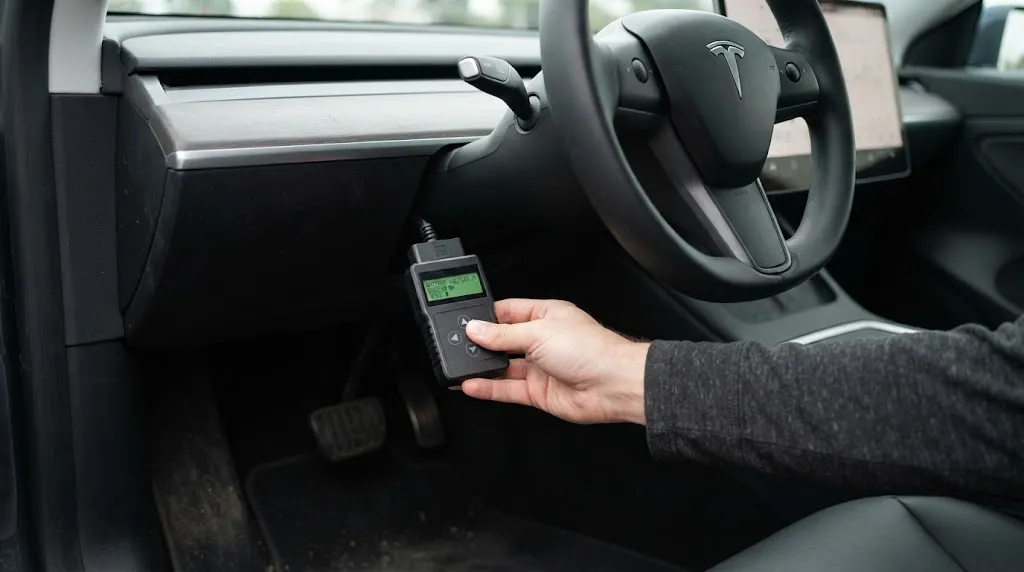
Plugging a generic consumer OBD2 scanner or basic code reader into an electric vehicle is completely safe. It will not damage the onboard computer or trigger electrical faults. However, the data you receive will be heavily restricted.
A standard scanner can typically interface with the vehicle’s low-voltage subsystem. This allows you to read and clear generic powertrain diagnostic trouble codes (P-codes) if they relate to shared modules like body control units, anti-lock brakes, or steering components. It can also monitor the 12-volt auxiliary battery voltage.
Tip
If your electric car experiences strange electrical glitches, dashboard blackouts, or failure to shift out of park, check the 12-volt battery using a standard multimeter or basic OBD2 tool before assuming the high-voltage system has failed.
What Standard Scanners Miss: High-Voltage Data
The most critical components of an electric vehicle—the lithium-ion battery pack and the high-voltage drivetrain—operate completely outside the scope of standard OBD2 protocols. A generic code reader cannot access proprietary manufacturer networks that track core EV health metrics.
Critical metrics hidden from standard scanners include:
- State of Health (SOH): The overall degradation level and remaining capacity of the main traction battery pack.
- Individual Cell Voltages: Real-time voltage metrics for individual battery cells to detect failing modules or unbalanced packs.
- Thermal Management Data: Temperatures across the battery cooling loops, electric motors, and power inverter.
- DC Fast-Charging Statistics: Historical data regarding rapid charging frequency and thermal throttling events.
How Different Manufacturers Handle EV Diagnostics
Not all automakers approach the diagnostic interface the same way. While most brands retain a standard OBD2 port layout with proprietary software layers behind it, some diverge significantly.
Tesla represents the biggest departure from the traditional standard. Tesla Model 3, Model Y, Model S, and Model X vehicles do not use a standard, accessible OBD2 port under the dash for primary diagnostics. Instead, they feature a proprietary diagnostic connector hidden behind interior trim panels. Accessing this port requires a specialized physical adapter cable combined with compatible software.
Other manufacturers like Volkswagen, Nissan, and Hyundai-Kia include standard physical ports, but encrypt or isolate their battery management system (BMS) data. To read deep metrics on these vehicles, owners and technicians rely on dedicated software applications paired with specialized Bluetooth OBD2 dongles. Popular examples include LeafSpy for Nissan models, OBDeleven for Volkswagen group vehicles, and Scan My Tesla for Tesla platforms.
Why Specialized EV Diagnostic Tools Matter
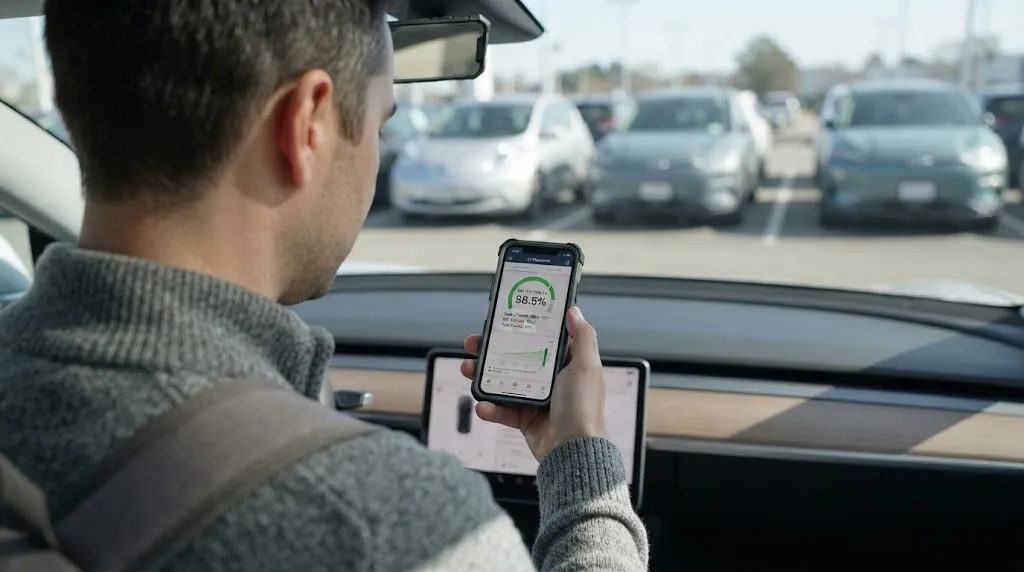
As the secondary market for used electric vehicles expands, understanding true battery health has become essential. Relying on an electric vehicle’s dashboard display alone only provides a general state of charge, not the chemical degradation of the battery pack.
Using specialized software and compatible adapters allows buyers and owners to inspect individual cell degradation, identify weak modules before they trigger dashboard warnings, and verify overall powertrain efficiency. Without these tools, diagnosing complex thermal or electrical faults inside the high-voltage architecture requires visiting a certified dealership with proprietary factory software.
Related Product
OBD2 Bluetooth Diagnostic Adapters
Pair a reliable wireless OBD2 adapter with vehicle-specific mobile apps to monitor live EV battery health and cell voltages.
As an Amazon Associate, we earn from qualifying purchases.
Frequently Asked Questions
Will plugging a regular OBD2 scanner damage my electric vehicle?
No. Plugging a standard, generic OBD2 scanner into an electric vehicle is completely safe. The communication pins follow standardized safety guidelines, meaning your scanner will simply fail to read proprietary high-voltage modules rather than causing any electrical damage.
Can a standard scanner check my EV battery health?
No. Standard scanners lack the software protocols required to communicate with the Battery Management System (BMS). To view metrics like state of health (SOH) or degradation percentage, you need an EV-specific app and a compatible adapter designed for your exact vehicle make and model.
Why do Tesla vehicles require special adapters for diagnostics?
Tesla vehicles do not feature a standard, exposed OBD2 port under the driver’s side dashboard for primary powertrain diagnostics. Instead, they use a proprietary internal connector, requiring technicians or owners to use a custom adapter harness to bridge standard diagnostic tools to Tesla’s internal network.
What data can I actually read on an EV with a basic scanner?
A basic generic scanner can read 12-volt battery voltage, general chassis and body control trouble codes, basic sensor inputs shared with gas vehicles, and emission system readiness monitors left over from shared platform architectures.
Is it safe to leave an OBD2 dongle plugged into an EV long-term?
It is generally safe for short diagnostic sessions, but leaving a cheap Bluetooth scanner plugged in continuously can cause a small parasitic draw on the 12-volt auxiliary battery, potentially draining it over several days of parking.
How do I test a used EV battery before buying?
The most reliable method is to use a dedicated diagnostic mobile application paired with a high-speed OBD2 adapter tailored to that brand (such as LeafSpy for Nissan or Scan My Tesla). Alternatively, you can request an official state-of-health diagnostic report from an authorized dealership service center.
Conclusion
Electric vehicles do feature physical OBD2 ports that mirror traditional gas-powered cars, but their underlying communication protocols differ significantly. While standard scanners remain completely safe for checking 12-volt systems and basic trouble codes, accessing high-voltage battery health requires brand-specific software and adapters. Understanding these limitations helps owners and prospective buyers select the right diagnostic tools to properly monitor and maintain their electric vehicles.

I’m Alex Rahman, a car enthusiast and automotive writer focused on practical solutions, car tools, and real-world driving advice. I share simple and honest content to help everyday drivers make better decisions.
