Can OBD2 Diagnose Hybrid Vehicles? | Explained
Quick Answer
Yes, OBD2 can diagnose hybrid vehicles, but only up to the level your scanner supports. A basic scanner can usually read engine and emissions codes, while hybrid battery, inverter, and motor faults often need a hybrid-capable scanner that can reach the hybrid control modules and read manufacturer-enhanced data.
A hybrid warning light rarely means one simple thing. It may be an engine, battery, cooling, or communication fault, and a generic reader may show only part of that picture.
The short answer: yes, with an important split
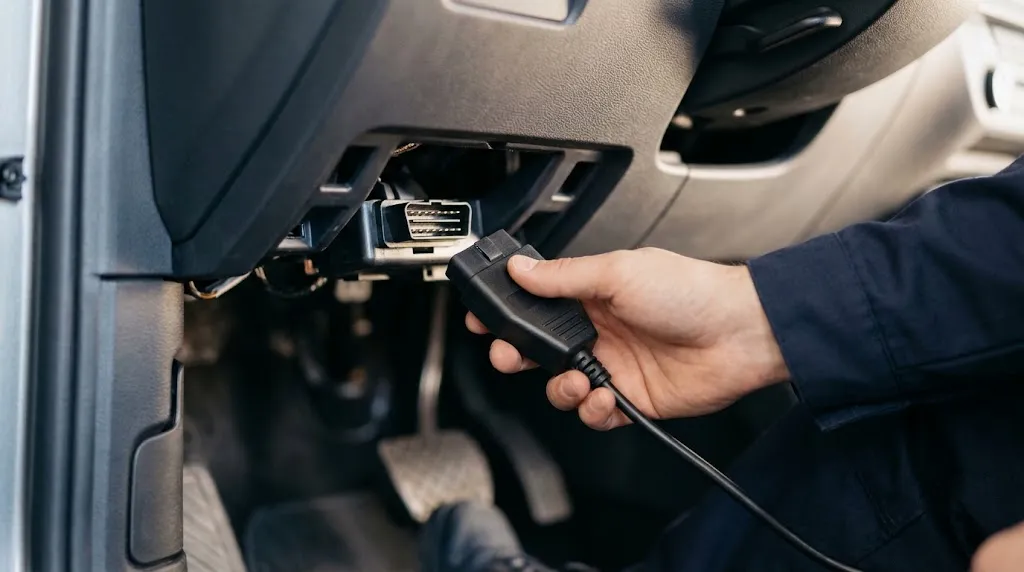
Hybrids with a gasoline engine are generally OBD2-compliant, like conventional gasoline cars. They use the same 16-pin port, store standardized trouble codes, and report emissions live data and readiness monitors.
That first layer is genuinely useful. If the check engine light is on for a misfire, an oxygen sensor fault, or an evaporative leak, a basic scanner will usually find it.
The second layer is hybrid-specific. The battery pack, power electronics, electric motors, and hybrid control system are managed by additional control modules. Their codes and live data are often manufacturer-enhanced, so they are not all exposed through the generic functions every scanner supports.
The practical question is whether your scanner can reach the hybrid modules on your make, model, and year. A generic-only scanner can connect successfully and still miss the hybrid fault.
What OBD2 can see on a hybrid
A hybrid combines a gasoline engine system and an electric drive system, coordinated by hybrid control software. OBD2 was designed mainly around the engine and emissions side, then extended as hybrids arrived.
| Area | Basic scanner | Hybrid-capable scanner |
|---|---|---|
| Engine and emissions codes | Usually yes | Yes |
| Live engine data and freeze frame | Usually yes | Yes, plus hybrid data |
| Emissions readiness monitors | Usually yes | Yes |
| Hybrid battery block voltages | Often no | Often yes, if supported |
| Inverter, converter, and motor faults | Only if a generic code is set | More likely, via hybrid modules |
| Battery health as a single score | No | Not reliably, even with advanced tools |
No ordinary OBD2 scan gives a definitive battery health percentage on its own. It can show behaviour pointing toward deterioration, but that is not the same as measuring remaining capacity.
Why a basic scanner can miss a hybrid fault
The most common misunderstanding is assuming that “no codes” means “no hybrid problem.” A basic scanner usually asks the engine control module for generic codes. If the fault lives in a hybrid module that has not set a generic code, the basic scan can come back clean.
Coverage and live data are the other limits. Hybrid-specific codes often use the P0A range, covering the high-voltage battery, DC/DC converter, or inverter cooling system, and a basic tool may give only a vague description or miss the module entirely. Battery block voltages, battery temperatures, and state of charge are often enhanced data, so check that a tool explicitly lists hybrid support for your make and model, not just “all OBD2 cars.”
The hybrid type changes what to check
Not every hybrid has the same electric system. A mild hybrid mainly assists the engine and cannot drive on electricity alone. A full hybrid can drive short distances on electricity at low speed. A plug-in hybrid has a larger battery, covers a meaningful distance on electricity, and is recharged externally as well as by the engine and regenerative braking.
For a mild hybrid, focus on engine codes, the 48-volt assist system, and the 12-volt system. For a full hybrid, battery block balance, temperature, and control codes become central. For a plug-in hybrid, add charging faults and battery behaviour after charging. The Kelley Blue Book guide to mild hybrid vehicles explains these types in plain terms.
Common hybrid codes, and what they actually mean
Hybrid codes point to a system, not automatically to a part to replace. The same code can be caused by a failing module, a cooling problem, a wiring problem, or a control module issue.
- P0A80, replace hybrid battery pack: a pack-level problem, often linked to voltage imbalance or deterioration.
- P0A7F, hybrid battery pack deterioration: an earlier deterioration signal; fuel economy may fall and the engine may run more often.
- P0A93, inverter cooling system performance: check coolant, hoses, pump, and fan behaviour before assuming the inverter has failed.
- P0AA6, high-voltage isolation fault: leakage or isolation trouble between the high-voltage system and the body. Do not clear and ignore it.
- P3011 to P3024, weak battery block: on many Toyota and Lexus models, this points to a specific block out of balance, not to one cell inside it.
- P0A0D, high-voltage system interlock: a safety interlock fault, often relating to connectors, covers, or service disconnects.
Two traps matter: fixing only an accompanying engine code may leave the hybrid fault untouched, and a weak 12-volt auxiliary battery can trigger warnings that look like a high-voltage pack failure. Check the 12-volt battery before concluding the expensive pack has failed.
Tip
If several unrelated warnings appear at once, check the 12-volt battery first. It is cheap to test, easy to overlook, and a common cause of misleading hybrid warnings.
How to run a useful hybrid scan

Use the same sequence each time, so results are comparable. For connection and menu basics, see how to use an OBD2 scanner.
- Note the symptoms first: warning lights, reduced power, falling fuel economy, frequent engine cycling, or a change after charging, and when each happens.
- Connect the scanner and let it identify the vehicle. If it offers a system scan, run the all-system or hybrid system scan, not only the generic engine scan.
- Record every code exactly, including pending codes and the module that reported it. Do not clear anything yet, because clearing erases freeze frame data showing conditions when the fault was set.
- Open freeze frame for the main code, noting battery temperature where available, engine state, and whether the car was in electric, hybrid, or engine mode.
- Check hybrid live data at rest, then under light load if your tool supports it safely. Look for one battery block clearly lower than the rest, or state of charge swinging unusually.
- Check the 12-volt battery and inverter coolant level where accessible, without opening high-voltage components, then recheck after a normal drive.
If your scanner cannot reach the hybrid modules, note that plainly: “generic scan, hybrid modules not accessed.” See whether an OBD2 scanner works on any car for broader compatibility limits.
What OBD2 cannot tell you about battery health
A scan can show voltage balance, temperature behaviour, state of charge, and fault history. It cannot, by itself, measure true remaining capacity in amp-hours, isolate every weak cell inside a block, or prove that a pack with normal-looking voltages at rest will hold up under sustained load.
Voltage balance is a clue, not a capacity test. A block that lags under load, or triggers repeated deterioration codes, is a warning sign, while a pack that looks balanced at rest can still be weak. State of charge is also easy to misread: it shows how full the battery is now, not how much capacity remains over its life.
For a purchase or replacement decision, combine the scan with symptoms, fuel economy trend, and fault history, plus a dedicated battery test or specialist assessment where available. Treat a single “battery health” percentage from an app as that app’s estimate, not a manufacturer measurement.
Key Insight
A hybrid scan answers “which system flagged a fault and what was happening then.” It does not, on its own, answer “how many miles of battery life are left.”
Hybrid readiness, emissions checks, and clearing codes
Hybrids add a wrinkle to emissions readiness. The gasoline engine may be off for parts of a trip, so some monitors need particular driving conditions before they complete. An incomplete monitor is not automatically a fault; it may simply not have had the right conditions since the last reset.
Clearing codes is especially costly on a hybrid. It can reset readiness monitors, erase freeze frame data, and remove the history that would help a technician find an intermittent fault. It can also make a vehicle appear clean on the dashboard while the underlying fault remains.
Before an emissions test, check readiness using the “since codes cleared” view, and compare it with your local program rules rather than the scanner’s summary alone. The EPA’s vehicle emissions inspection and maintenance information explains how those programs are structured. See how OBD2 readiness monitors work and whether clearing OBD2 codes fixes the problem before erasing a hybrid code.
Warning
Do not open a high-voltage battery enclosure, disconnect orange high-voltage cables, or probe inverter terminals. High-voltage systems can remain energised after the vehicle is switched off, and that work belongs to a trained hybrid technician with the correct insulated equipment and service information for your model.
When to get specialist help
A scanner is the right first step, not the whole repair. Get specialist help promptly for an isolation fault, a repeated battery deterioration or replacement code, an inverter cooling fault that does not resolve with coolant and pump checks, smoke, heat, leaking fluid, unusual odour, or damage after a collision or flood.
Also escalate if the car enters reduced-power mode, will not start reliably, or shows a warning that returns immediately after clearing. Bring the exact codes, module names, freeze frame notes, and a short symptom timeline to help a technician distinguish a battery problem from a cooling, wiring, or 12-volt problem.
Related Product
OBD2 scanner with hybrid system support
For a hybrid, the useful upgrade is not a larger screen; it is confirmed hybrid module coverage and battery live data for your make and model.
As an Amazon Associate, we earn from qualifying purchases.
Frequently Asked Questions
Will a basic OBD2 scanner work on my hybrid?
For engine and emissions codes, usually yes. For hybrid battery, inverter, and motor data, often no. Check that the scanner lists hybrid module coverage for your exact make, model, and year before relying on a clean generic scan.
Can OBD2 tell me if my hybrid battery needs replacing?
It can point strongly in that direction, especially with repeated deterioration or replacement codes and clear voltage imbalance, but it cannot prove remaining capacity on its own. Combine the scan with symptoms, fuel economy trend, and a specialist battery assessment before deciding on replacement.
Why has my fuel economy dropped if there are no codes?
Fuel economy can fall for non-hybrid reasons, such as tyres, alignment, driving pattern, climate use, or a weak 12-volt battery, and some deterioration develops before a fault threshold is crossed. Check live battery behaviour under load, not only stored codes.
Do I always need a dealer tool for a hybrid?
No, not always. Many capable aftermarket scanners cover common hybrid models well. A dealer or hybrid specialist tool becomes more important for manufacturer-specific functions, software updates, deep battery testing, and high-voltage repairs.
Can I clear a hybrid code and keep driving?
Clearing may turn the warning off temporarily, but it does not repair the fault and it erases freeze frame data and readiness history. If the code returns, or if it involves isolation, cooling, or battery deterioration, have it diagnosed rather than clearing it repeatedly.
Does OBD2 work on a plug-in hybrid when the engine is off?
Often yes for a diagnostic connection, but the data available depends on vehicle state and scanner coverage. Some live values only make sense during driving, charging, or engine operation, so a scan taken only while parked may miss a fault that appears under load.
Conclusion
OBD2 can diagnose hybrid vehicles, but depth depends on the scanner. A basic tool suits engine and emissions faults, while hybrid battery, inverter, and control faults usually need hybrid-capable coverage for your model. Record codes and freeze frame data before clearing anything, check the 12-volt battery and cooling early, and treat voltage balance as a clue, not a capacity test. For an isolation, cooling, or repeated battery code, a specialist assessment is the safer next step.

I’m Alex Rahman, a car enthusiast and automotive writer focused on practical solutions, car tools, and real-world driving advice. I share simple and honest content to help everyday drivers make better decisions.
