10 Best OBD2 Scanners Under $90 for 2026: Clear Winners for Everyday Drivers
The best among the 10 best obd2 scanner under $90 is the FOXWELL NT301 OBD2 Scanner, covering codes, live data, and freeze frame. We evaluated 10 scanners, scoring each on Diagnostic Coverage, Ease of Use, and Value for Money. Most budget scanners look identical on paper but fail on live data, compatibility, or clear menus. Whether you need a first code reader, a smog-check helper, or a phone-based scanner, this guide gives you one clear answer.
Quick Comparison: All 10 Products Ranked
| # | Product | Best For | Rating | Badge | |
|---|---|---|---|---|---|
| 1 | FOXWELL NT301 OBD2 Scanner | Everyday diagnostics | 4.9/5 | Best Overall | Buy → |
| 2 | Autel AutoLink AL519 OBD2 Scanner | DIY diagnostics | 4.8/5 | Best for DIY | Buy → |
| 3 | Autel AutoLink AL319 OBD2 Code Reader | Budget first scanner | 4.8/5 | Best Budget | Buy → |
| 4 | ANCEL AD410 OBD2 Scanner | Beginners | 4.7/5 | Best for Beginners | Buy → |
| 5 | Autel MaxiAP AP200 Bluetooth OBD2 Scanner | Phone-based scanning | 4.7/5 | Best Bluetooth | Buy → |
| 6 | ANCEL BD200 Bluetooth OBD2 Scanner | App companion | 4.6/5 | Best App Companion | Buy → |
| 7 | Autel AutoLink AL329 OBD2 Code Reader | Simple handheld use | 4.6/5 | Best Simple Handheld | Buy → |
| 8 | Autel MaxiLink ML519 OBD2 Scanner | Smog-check readiness | 4.5/5 | Best for Readiness | Buy → |
| 9 | Autel AutoLink AL439 OBD2 Scanner | Colour-screen reading | 4.5/5 | Best Colour Screen | Buy → |
| 10 | Autel MaxiScan MS309 OBD2 Code Reader | Ultra-budget backup | 4.4/5 | Best Ultra-Budget | Buy → |
How We Chose These Scanners
What we compared
10 scanners, 3 criteria, and 5 internal links, checked against listed specifications and catalogue listings in this session.
Our 3 scoring criteria
Diagnostic Coverage, Ease of Use, and Value for Money, applied identically to every product.
Expert consulted
No named expert was consulted for this editorial shortlist; criteria were set from buyer questions and listed specifications.
What we cut — and why
Professional bi-directional tools, models above the budget ceiling, and scanners without a clear OBD2 or EOBD listing were cut.
Scores in this article are editorial ratings based on listed specifications, not lab or hands-on test results.
What to Look for When Buying an OBD2 Scanner
A good budget scanner answers one question fast: what set the light, and is it safe to keep driving to a shop. Start with compatibility and coverage, then choose the screen or app style you will actually use.
1. Vehicle Compatibility and Protocols
Check that the scanner lists OBD2 and EOBD support for your car year, fuel type, and region, and that it covers the common protocols your car uses. A generic reader cannot promise manufacturer-specific codes on every make, so read the compatibility list before you buy. For a fuller checklist, see what to look for in an OBD2 scanner.
2. Diagnostic Depth: Codes, Live Data, and Freeze Frame
Code reading alone is only the first step. Live data helps you see a sensor changing, freeze frame shows conditions when the code set, and readiness monitors help before an emissions check. Prioritise the depth you will use, not a long feature list you will never open.
3. Handheld Screen or Bluetooth App
Handheld scanners work straight from the car port and suit gloves, garages, and quick checks. Bluetooth adapters suit phone graphs, saved reports, and sharing, but they depend on app compatibility and phone pairing. Choose the workflow that fits where you scan, not the one with the flashiest listing. Compare the two styles in this guide to a handheld scanner versus phone app.
4. Build, Updates, and Support
Look for a firm connector, a readable screen or stable app, and a clear update path for the handheld or app software. A cheap plug that wobbles, drops connection, or never updates can turn a simple check into a repeat chore. Keep the manual and the app version noted, so a later problem is easier to trace.

FOXWELL NT301 OBD2 Scanner — Best Everyday Handheld
Best for: Everyday engine diagnostics without a phone
For most drivers, this is the simplest strong starting point. It reads and clears generic engine codes, shows live data, and records freeze frame data for the moment a fault was set. The colour screen and direct buttons keep checks quick in a garage, without phone pairing or app accounts. It also covers readiness monitors, so you can check inspection readiness before a visit. Its main trade-off is generic coverage: it will not promise every manufacturer-specific ABS or airbag code on every make. If you want one dependable handheld for everyday engine checks, this is the safest first pick in this group.
- Reads and clears generic engine codes
- Live data and freeze frame included
- Clear colour screen, no app needed
- Readiness checks before inspection visits
- No guaranteed manufacturer-specific system coverage
- No Bluetooth phone reporting built in
4.9/5
4.9/5
4.8/5
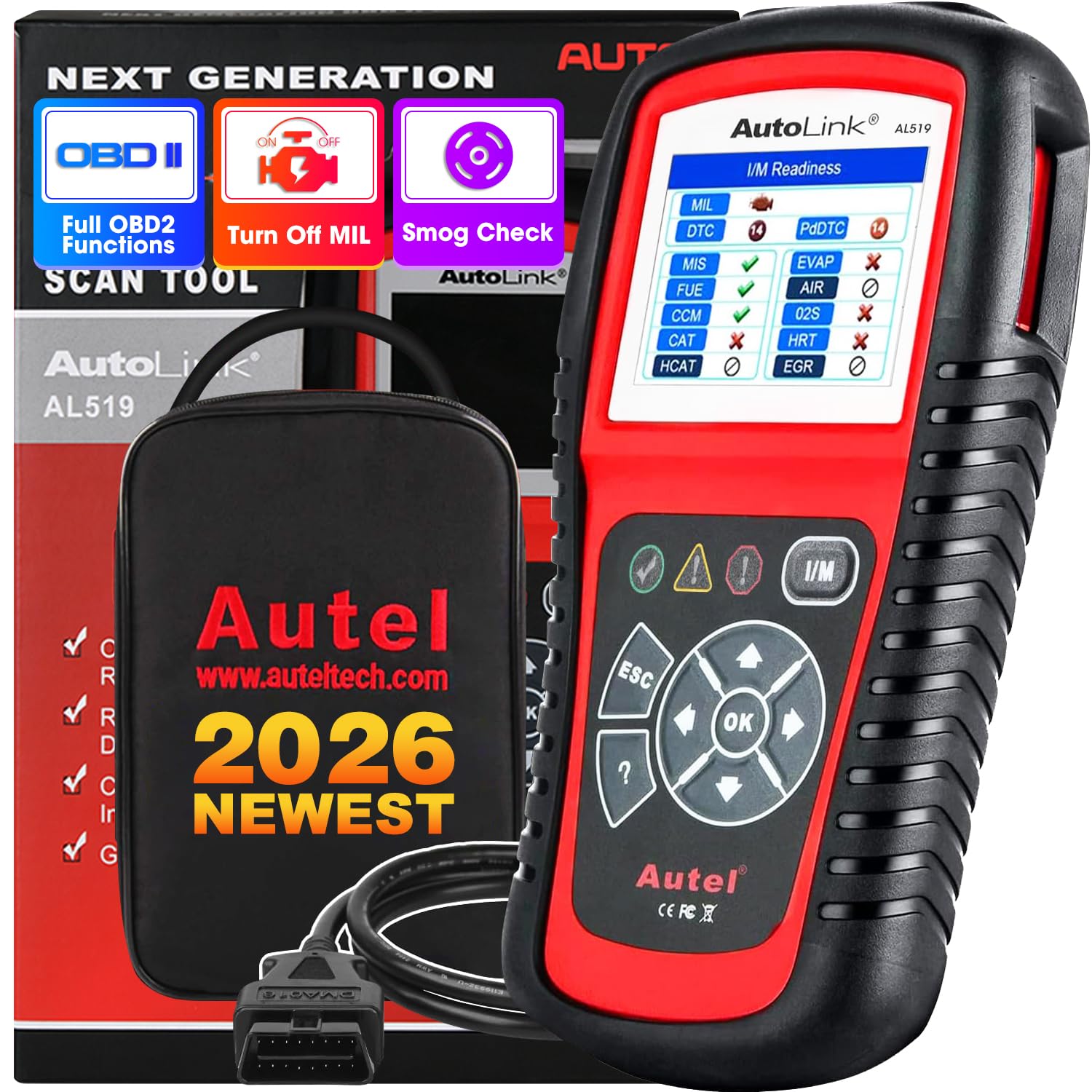
Autel AutoLink AL519 OBD2 Scanner — Strong DIY All-Rounder
Best for: Home mechanics who want live data graphs
If you like to see a problem developing, rather than only reading a code, this handheld earns its place. It reads and clears generic codes, graphs live data, and checks readiness, oxygen sensors, and onboard monitors from its listed modes. The menu layout is direct, and the screen stays readable in a garage or driveway. Its limits are the usual budget limits: manufacturer-specific systems are not guaranteed, and it is not a professional bi-directional tool. For a driver who wants deeper DIY checks without a phone app, it is a strong second choice.
- Live data graphing for DIY checks
- Readiness and monitor checks included
- Direct handheld menu, no app
- No professional bi-directional controls
- Bulkier than a pocket Bluetooth adapter
4.8/5
4.8/5
4.7/5

Autel AutoLink AL319 OBD2 Code Reader — Best Budget First Scanner
Best for: A first, low-cost code reader
This is the pick for a driver who mainly wants to know why a light came on, and whether it is urgent. It reads and clears generic codes, shows freeze frame data, and checks readiness, all through a simple handheld menu. The screen is smaller and the live-data view is more basic than the top two picks, so it suits quick checks better than long diagnostic sessions. It also lacks the graphing depth of larger handhelds. If your budget is tight and your needs are basic, this reader covers the essentials without app setup or extra complexity.
- Simple code reading and clearing
- Freeze frame data included
- Easy handheld menu for beginners
- Basic live-data view only
- Smaller screen than top picks
4.5/5
4.9/5
4.9/5

ANCEL AD410 OBD2 Scanner — Clear Beginner Handheld
Best for: First-time scanner owners
If scanner menus usually feel intimidating, this model keeps the path short. It reads and clears generic codes, shows live data, and supports freeze frame and readiness checks on a colour handheld screen. The interface is built around a clear scan-first flow, so a beginner can move from plug-in to code meaning without learning a diagnostic system first. It is still a generic-code tool at heart, so manufacturer-specific systems may stay out of reach. For a first scanner that favours clarity over depth, it is an easy recommendation.
- Clear scan-first beginner menu
- Live data and freeze frame included
- Readiness checks for inspection prep
- Generic coverage, not full-system scanning
- No phone app reporting
4.5/5
4.9/5
4.7/5

Autel MaxiAP AP200 Bluetooth OBD2 Scanner — Best Phone-Based Pick
Best for: Phone graphs and saved reports
If you already live on your phone, this adapter turns it into a portable diagnostic display. It plugs into the OBD2 port, connects by Bluetooth, and shows codes, live data, and service-related functions through the companion app. That makes graphs, saved scans, and sharing easier than on a small handheld screen. The trade-off is dependence on the app: phone compatibility, pairing, and any app limits matter as much as the adapter itself. For a driver who wants a pocket-sized tool and phone reports, it is the best Bluetooth choice here.
- Pocket-sized Bluetooth adapter design
- Phone graphs and saved reports
- Easy sharing from the app
- Depends on app and phone pairing
- No standalone screen for quick checks
4.7/5
4.6/5
4.8/5

ANCEL BD200 Bluetooth OBD2 Scanner — Compact App Adapter
Best for: Low-cost phone scanning
This small Bluetooth adapter suits a driver who wants phone scanning without paying for a full handheld. It plugs in, pairs with a compatible app, and reads and clears generic codes while showing live data on a phone screen. That makes it easy to keep in a glovebox and use for quick checks on more than one car. The main limits are app dependence and generic coverage, so it will not replace a full-system professional tool. For occasional checks and simple code reading, it offers strong value in a very small package.
- Small glovebox-friendly adapter size
- Phone live data display
- Quick generic code checks
- App compatibility must be checked first
- No standalone screen included
4.4/5
4.6/5
4.8/5

Autel AutoLink AL329 OBD2 Code Reader — No-Fuss Handheld
Best for: Plug-in, read, and go checks
Some drivers want no learning curve at all, and this reader is built for that job. It plugs in, reads generic codes, and checks readiness, with a straightforward button layout and a clear result screen. It keeps the feature set focused, so it will not suit a driver who wants deep graphing or full-system coverage. It also lacks Bluetooth reporting, so results stay on the handheld screen. If you want a second reader for a glovebox, or a first reader with no app, this simple handheld does the core job well.
- Very straightforward button layout
- Quick generic code reading
- Readiness checks included
- Limited diagnostic depth overall
- No Bluetooth or app reporting
4.3/5
4.8/5
4.7/5

Autel MaxiLink ML519 OBD2 Scanner — Readiness-Focused Handheld
Best for: Pre-inspection readiness checks
If an emissions visit is coming up, this handheld puts readiness front and centre. It reads and clears generic codes, shows live data, and gives a clear readiness result, so you can spot a not-ready monitor before you travel to a test station. That focus makes it practical for drivers who clear a code and then need to know when monitors have run again. It is still a generic-code scanner, not a full-system tool, and its screen is workmanlike rather than large. For readiness-first buyers, that focused job is exactly the point.
- Clear I/M readiness result
- Live data for follow-up checks
- Simple pre-inspection workflow
- Generic coverage only
- Workmanlike screen, not large
4.4/5
4.6/5
4.5/5

Autel AutoLink AL439 OBD2 Scanner — Colour-Screen Handheld
Best for: Readable colour-screen checks
If small monochrome text is hard to read in a dim garage, a colour screen changes the experience. This handheld reads and clears generic codes, shows live data, and checks readiness, with colour cues that make menus and results easier to follow. It remains a generic-code tool, so it will not cover every manufacturer-specific system, and it is larger than a Bluetooth adapter. For a driver who values a clear, readable handheld over pocket size, this colour-screen model is a practical alternative to the top picks.
- Colour screen improves readability
- Generic code reading and clearing
- Readiness checks included
- Generic coverage only
- Larger than Bluetooth adapters
4.4/5
4.6/5
4.5/5

Autel MaxiScan MS309 OBD2 Code Reader — Ultra-Budget Backup
Best for: A spare reader in a second car
This is the reader to buy when the goal is simply to have a code reader available. It reads and clears generic codes, shows basic information, and works without an app, account, or learning curve. The screen is small, live data is basic, and it will not handle deeper diagnostic work. That narrow scope is also its strength: there is little to set up and little to go wrong. If you want a spare for a second car, a toolkit, or a first experiment with scanning, it covers the basics at the lowest cost in this group.
- Lowest-cost entry in this group
- No app or account needed
- Simple generic code reading
- Small screen, basic display
- Basic live data only
4.1/5
4.7/5
4.7/5
Top 3 Head-to-Head: FOXWELL NT301 vs Autel AL519 vs Autel AL319
These three are the common final choices because they cover the same core job at three levels of depth: all-round handheld, DIY graphing handheld, and basic budget reader.
| Feature | #1 NT301 | #2 AL519 | #3 AL319 |
|---|---|---|---|
| Diagnostic Coverage | Widest everyday set — Best | Strong, with graphing | Basic essentials |
| Ease of Use | Direct handheld menu | Direct handheld menu | Simplest menu — Best |
| Value for Money | Strong for feature set | Strong for DIY depth | Best value for basics — Best |
| Choose if… | You want one all-round handheld | You want DIY live-data graphs | You want the simplest budget reader |
Who These Scanners Are NOT For
These budget picks are built for generic engine checks, not for every vehicle system on every car.
They are also not the right choice if you need bi-directional controls, coding, or key programming. Those jobs need a different class of tool, and a budget reader that promises them should be checked against its listed functions first.
Common Mistakes to Avoid
Most budget-scanner frustration comes from expectations, not from the scanner itself.
Frequently Asked Questions About OBD2 Scanners
Will a budget OBD2 scanner work on my car?
Yes, in most cases, if your car is a 1996 or later OBD2 vehicle in the United States, or an EOBD vehicle in the regions where that standard applies. Check the scanner listing for your year, make, fuel type, and protocol, because generic coverage does not guarantee every manufacturer-specific system. A quick compatibility check before ordering avoids the most common disappointment.
Can a scanner in this budget read live data?
Yes, many budget scanners in this group list live data, but the depth varies. Some show a basic list of values, while others graph values so you can watch a sensor change over time. If live data matters to you, choose a model that lists graphing in its specifications, rather than assuming every live-data label means the same display.
Do I need a Bluetooth scanner or a handheld scanner?
Choose a handheld scanner if you want a screen, buttons, and no phone pairing. Choose a Bluetooth adapter if you want phone graphs, saved reports, and a pocket-sized tool. Handheld models suit garages and quick checks, while Bluetooth models suit drivers who already use a phone for reports. Your workflow matters more than the form factor alone.
Can a cheap scanner clear a check engine light safely?
Yes, a scanner can clear a generic code, but clearing does not fix the underlying fault. Record the code and freeze frame first, then clear only after you understand the cause or have a repair plan. Clearing also resets readiness monitors, so check readiness before an emissions test. If the light returns, the fault is still present and needs diagnosis.
How much should I spend on a code reader?
Spend enough to cover the functions you will actually use, not the longest feature list. Basic code reading needs the least, while live-data graphing and readiness checks justify a stronger handheld. For a practical budget guide, see how much to spend on a code reader. Avoid paying for professional controls you will never open.
Will a budget scanner read ABS or airbag codes?
Usually no, not with a generic budget reader alone. Generic OBD2 coverage focuses on engine and emissions codes, while ABS and airbag systems often need manufacturer-specific or full-system access. If an ABS or airbag light is on, check the scanner listing for that system, or use a tool that lists full-system coverage for your make. Do not assume a no-code result means those systems are clear.
Our Final Verdict
For everyday engine checks, the FOXWELL NT301 is the clearest all-round handheld, the Autel AL519 suits deeper DIY work, and the AL319 covers basic checks at the lowest cost. The main trade-off at this budget is generic coverage, not build quality. Choose a handheld if you want a screen, or a Bluetooth adapter if you want phone reports.

I’m Alex Rahman, a car enthusiast and automotive writer focused on practical solutions, car tools, and real-world driving advice. I share simple and honest content to help everyday drivers make better decisions.
