Can OBD2 Reveal Transmission Problems Before Buying a Car?
Quick Answer
Yes, an OBD2 scanner can reveal transmission problems before buying a car, but only if active fault codes are stored, pending codes are present, or sensor data parameters indicate abnormal behavior. It can uncover hidden transmission trouble codes (DTCs), monitoring failures, and erratic fluid temperature or gear ratio slips, though it cannot detect mechanical wear, burnt fluid, or internal component damage that has not yet triggered a computer fault or sensor anomaly.
What an OBD2 Scanner Can and Cannot Reveal About a Transmission
When evaluating a used car, plugging an OBD2 scanner into the diagnostic port is one of the fastest ways to check for hidden computer-logged issues. Modern automatic, continuously variable (CVT), and dual-clutch transmissions are heavily computerized. Sensors monitor input and output shaft speeds, fluid temperature, hydraulic pressures, and shift solenoid performance.
If a component fails or performs outside normal parameters, the Powertrain Control Module (PCM) or Transmission Control Module (TCM) records a Diagnostic Trouble Code (DTC). However, understanding the limitations of diagnostic scanning prevents false confidence when inspecting a potential purchase.
What Scanners Can Detect
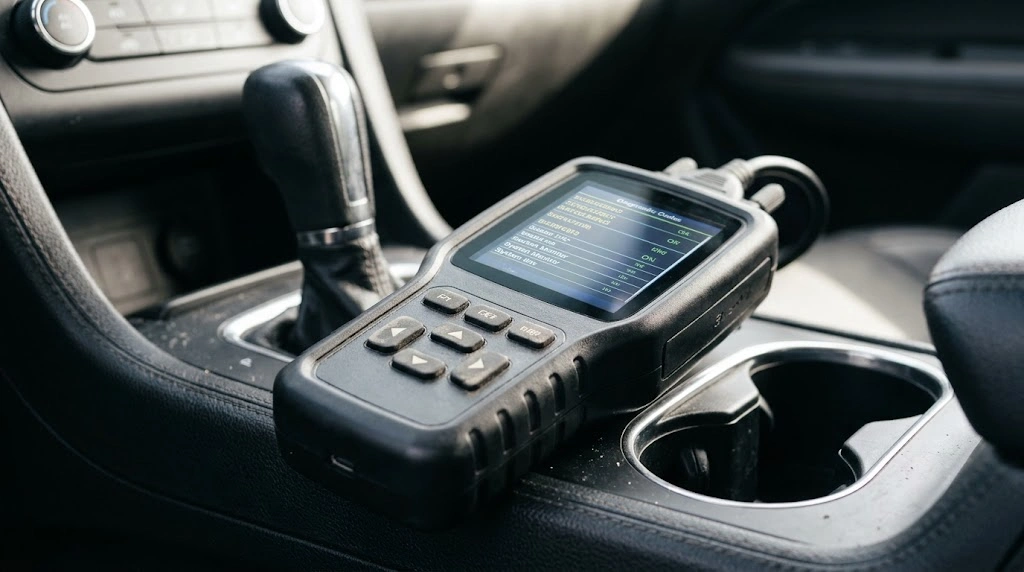
An OBD2 scanner can successfully uncover several computer-recorded transmission red flags during a pre-purchase inspection:
- Stored Transmission Trouble Codes (P0700–P0999): Codes explicitly related to transmission performance, solenoid faults, or pressure control issues.
- Pending Codes: Intermittent faults that have occurred during recent driving cycles but have not yet turned on the Check Engine Light.
- Monitor Status: Information showing whether the vehicle’s self-diagnostic emission and powertrain monitors have recently been cleared, which often indicates a seller recently erased a fault code.
- Live Sensor Data: Real-time readings such as transmission fluid temperature (TFT) and gear ratio slip indicators.
What Scanners Cannot Detect
Diagnostic tools are limited by what the vehicle’s onboard computer is programmed to measure. A scanner will generally not reveal:
- Worn Clutch Packs or Internal Slippage: If mechanical friction material is wearing down slowly without causing an immediate speed sensor mismatch, the computer may remain silent.
- Degraded or Contaminated Fluid: Fluid that is burnt, old, or contaminated with coolant will not trigger an electronic code until internal damage becomes severe.
- Early-Stage Mechanical Noise or Vibration: Whining, humming, or minor shuddering caused by mechanical wear often lacks a corresponding sensor code.
Common Transmission Trouble Codes to Watch For
When scanning a vehicle before purchase, certain alphanumeric codes indicate specific transmission vulnerabilities. Recognizing these codes helps distinguish between minor electrical glitches and major internal failures.
Transmission-specific codes usually begin with the letter P, followed by numbers in the 0700 to 0999 range. For example, a generic P0700 code simply indicates that the TCM has requested the illumination of the Check Engine Light because a fault exists within the transmission control system. More specific sub-codes point directly to the root issue.
| Code Range | General Category | Typical Implication |
|---|---|---|
| P0700 – P0709 | Hydraulic / Control System | Issues with pressure control solenoids, range switches, or general TCM communication. |
| P0710 – P0739 | Temperature & Gear Ratios | Fluid temperature sensor failures or incorrect gear ratios indicating internal mechanical slip. |
| P0740 – P0750 | Torque Converter Clutch | Torque converter lock-up solenoid circuit failures or mechanical slipping. |
| P0751 – P0799 | Shift Solenoids & Speed Sensors | Electrical or hydraulic failures preventing proper shifting between gears. |
When any of these codes appear during a pre-purchase scan, treat the vehicle with extreme caution. Even if the car drives smoothly during a short test drive, stored or pending codes indicate that the computer has recently registered abnormal operating thresholds.
Warning
Never trust a seller who claims a check engine light or transmission code was caused by a “loose gas cap” if the code starts with a P07xx transmission prefix. Gas cap issues trigger evaporative emissions codes (such as P0440–P0457), never transmission performance codes.
How to Check for Recently Cleared Codes (Not Ready Monitors)
One of the oldest tricks used by dishonest sellers is clearing diagnostic trouble codes right before a buyer arrives. When a code is cleared, the dashboard warning light goes out, but the computer’s internal diagnostic tests are reset to “Not Ready” or “Incomplete.”
An advanced OBD2 scanner allows you to check the status of the vehicle’s emission and powertrain readiness monitors. If a car is several years old and multiple monitors show as “Not Ready” or “Incomplete,” it strongly suggests the battery was recently disconnected or trouble codes were deliberately wiped.
Steps to Spot a Cleared Computer
- Connect your OBD2 scanner to the vehicle’s data link connector (DLC), usually located under the driver-side dashboard.
- Turn the ignition key to the “On” position without starting the engine.
- Navigate to the “Monitor Status” or “I/M Readiness” menu on the scanner.
- Review the status of continuous and non-continuous monitors (such as Misfire, Fuel System, and Comprehensive Components).
- If most non-continuous monitors read “Not Ready,” ask the seller how long ago the battery was replaced or if diagnostic codes were recently cleared.
Driving a vehicle for 20 to 50 miles under varied road conditions is usually required for these monitors to run their self-tests again. If a seller insists the car has been driven daily for weeks yet the monitors remain unset, codes were almost certainly cleared recently to mask an underlying defect.
Using Live Data to Inspect Transmission Health
Basic code readers only display stored faults, but mid-range and advanced OBD2 scan tools can stream live data parameters (PIDs) directly from the car’s computers while the engine runs.
Monitoring specific live data feeds during a test drive provides a clearer picture of transmission health than relying solely on static fault codes.
Key Parameters to Watch
- Transmission Fluid Temperature (TFT): Overheating is the primary killer of automatic transmissions. Normal operating temperatures typically range between 175°F and 200°F. If the scanner shows fluid temperatures climbing well above 220°F during normal driving, the cooling system or transmission internals are under excessive stress.
- Input and Output Shaft Speeds: Comparing the rotational speed of the transmission input shaft against the output shaft helps identify gear slippage. If engine RPM rises significantly without a corresponding increase in vehicle speed while holding a steady gear ratio, internal clutch slippage is occurring.
- Commanded vs. Actual Gear: Advanced scanners show what gear the computer is asking for versus what gear the transmission is actually using. A noticeable lag or mismatch indicates hydraulic valve body or solenoid sluggishness.
Tip
When test driving a used car, bring a scanner capable of recording live data streams. Have a passenger watch the transmission fluid temperature and gear engagement parameters while you navigate varying road speeds and inclines.
Physical Checks That Complement an OBD2 Scan
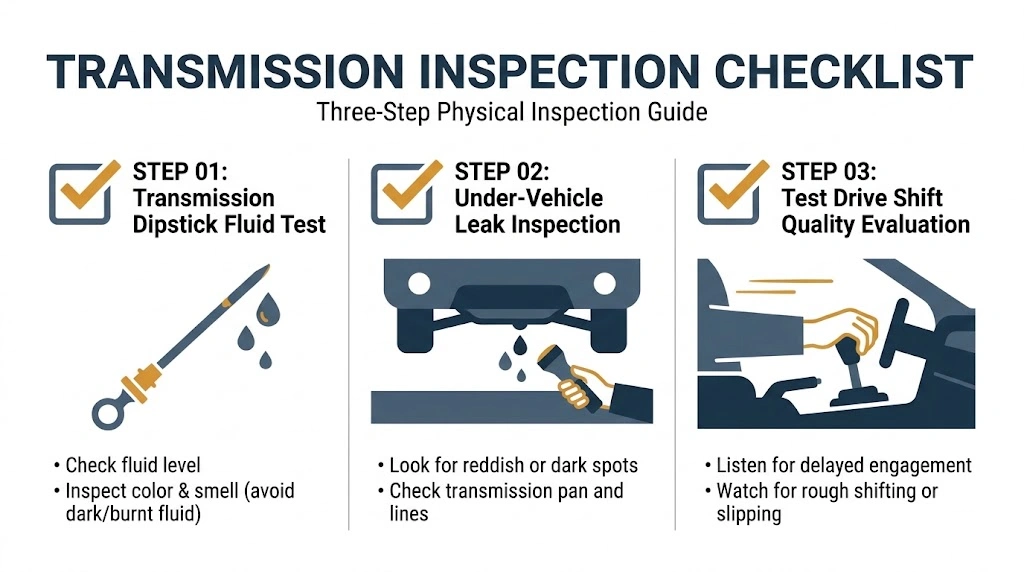
Because an OBD2 scanner cannot detect burnt fluid, metal shavings, or physical wear that has not yet triggered an electronic sensor, physical inspection remains vital.
Never rely exclusively on digital diagnostics when evaluating a used vehicle purchase. Combine the scanner results with these traditional evaluation steps:
- Check the Transmission Dipstick (If Available): Pull the transmission dipstick and wipe the fluid onto a clean white paper towel. Healthy fluid is bright red or pink with a mild petroleum scent. Dark brown, black, or smelling strongly of burnt toast indicates severely degraded fluid and worn internal components.
- Inspect for Leaks: Look underneath the vehicle for reddish or dark oily puddles around the transmission pan gasket, output shaft seals, and cooler lines.
- Evaluate Shift Quality: Pay close attention during the test drive. Harsh engagement when shifting into Drive or Reverse, delayed engagement, shuddering during acceleration, or slipping between gear changes point to mechanical trouble even if no codes are present.
Related Product
OBD2 Diagnostic Scan Tool with Live Data
A reliable bidirectional or live-data OBD2 scanner helps you quickly check transmission trouble codes and monitor sensor temperatures during pre-purchase test drives.
As an Amazon Associate, we earn from qualifying purchases.
Frequently Asked Questions
Can a basic $20 code reader check for transmission problems?
Yes, basic code readers can retrieve stored generic powertrain codes (like P0700) and pending fault codes from the engine and transmission computer. However, they usually cannot read manufacturer-specific enhancement codes or display live sensor data like fluid temperature and shaft speeds.
What does it mean if a car has no transmission codes, but it shifts roughly?
Many early-stage mechanical wear issues, worn motor mounts, low fluid levels, or software calibration quirks cause rough shifting without immediately setting a trouble code. Sensors only trigger codes when parameters cross specific failure thresholds.
Can an OBD2 scanner tell me the transmission fluid level?
No. Most modern automatic transmissions do not have an electronic fluid level sensor that transmits data to the OBD2 port. Fluid level must be checked manually via a dipstick or under-car check plug.
Why would a car drive fine during a test drive despite having stored transmission codes?
Some transmission faults are intermittent, occurring only when the fluid is fully warmed up, under heavy load, or during specific highway driving conditions. A short neighborhood test drive may not be enough to replicate the exact conditions required for the fault to reappear.
Is it possible to reset transmission adaptive learning with an OBD2 scanner?
Some advanced mid-range and professional-grade scan tools allow you to clear transmission adaptive values. However, basic consumer code readers lack this capability and can only read and clear standard diagnostic trouble codes.
Should I walk away from a car with stored transmission codes?
In most cases, yes. Transmission repairs and replacements are among the most expensive automotive services, frequently costing between $3,500 and $7,000. Unless you are purchasing the vehicle as a dedicated project at a heavily discounted salvage price, stored transmission codes are a significant financial risk.
Conclusion
An OBD2 scanner is an invaluable tool during a used car inspection, capable of uncovering hidden computer fault codes, pending failures, and recently cleared diagnostic monitors. While it cannot identify every mechanical defect or degraded fluid condition on its own, scanning the computer provides essential insight into the vehicle’s electronic health. Combining a thorough digital scan with live data monitoring, a careful physical fluid check, and an extended test drive ensures you avoid costly transmission surprises after purchase.

I’m Alex Rahman, a car enthusiast and automotive writer focused on practical solutions, car tools, and real-world driving advice. I share simple and honest content to help everyday drivers make better decisions.
