Can an OBD2 Scanner Turn Off the Check Engine Light? (2026)
Quick Answer
Yes. An OBD2 scanner can turn off the check engine light by sending a “clear codes” command that erases the stored trouble code from the engine computer. But clearing the code does not fix the underlying fault. If the problem is still present, the light will come back once the vehicle re-runs its self-tests. On newer vehicles, permanent codes cannot be cleared by any scanner and only disappear after the vehicle confirms the repair through drive cycles.
What an OBD2 Scanner Actually Does When It Clears a Code
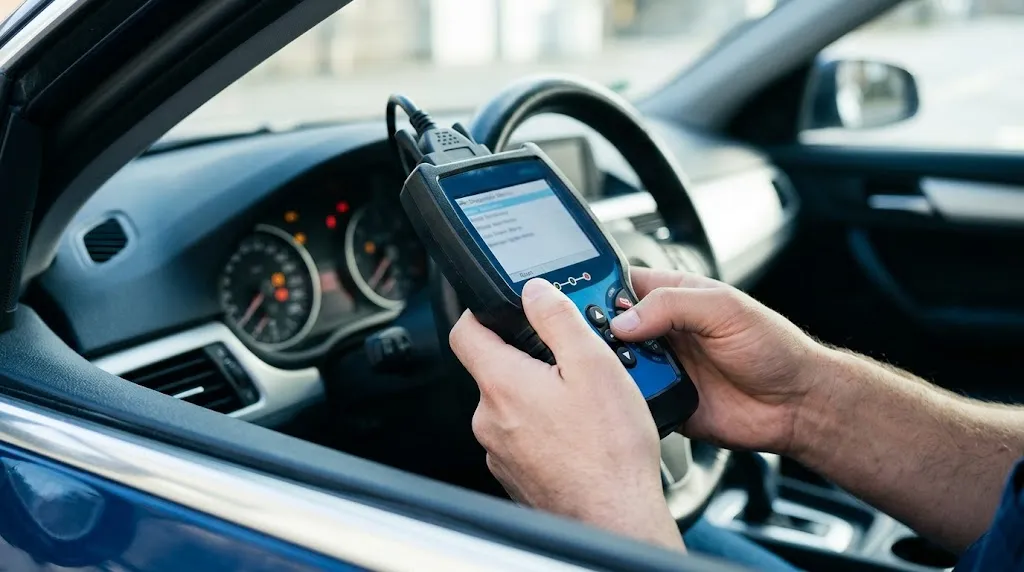
When you press “Erase Codes” or “Clear DTCs” on a scan tool, you are not repairing anything. You are telling the engine control unit to wipe its diagnostic memory[reference:0].
That memory includes the stored trouble code, freeze-frame data captured at the moment of the fault, and the results of the vehicle’s emissions self-tests[reference:1]. The check engine light goes out because the computer no longer has a stored fault that commands it on.
From the dashboard’s point of view, the problem looks gone. From the vehicle’s point of view, nothing physical has changed. A failing oxygen sensor is still failing. A vacuum leak is still leaking. A misfire is still misfiring.
The scanner has reset the record book, not the car.
Why the Light Comes Back After Clearing (and Why That Matters)
Modern vehicles do not simply store a code and forget about it. They run continuous and periodic self-tests called monitors. When you clear codes, most of those monitors reset to “not ready” or “incomplete”[reference:2].
As you drive, the computer begins testing systems again. For a test to run, specific conditions must be met: engine temperature, speed, throttle position, fuel level, and sometimes outside temperature. Once the monitor runs and sees the same fault, the computer sets the same code and turns the light back on[reference:3].
This is why the light can return immediately after clearing, or after a few miles, or after a few days. The timing depends on how quickly the relevant monitor runs and confirms the fault is still there.
Warning
If the check engine light is flashing rather than steady, do not clear it and keep driving. A flashing light usually signals a severe misfire that can overheat and destroy the catalytic converter. Stop driving and get the fault diagnosed[reference:4].
The Difference Between Clearing a Code and Fixing the Problem
Clearing a code is a diagnostic action, not a repair. It belongs at the end of a job, after the faulty part or circuit has been addressed. Used before a repair, it simply hides the symptom.
Here is the practical difference:
| Action | What it does | What it does not do |
|---|---|---|
| Clear the code | Turns off the light temporarily, erases stored data, resets readiness monitors | Repair the fault, restore emissions performance, or prevent the code from returning |
| Fix the fault, then clear | Addresses the cause and removes the stored code after the repair | Guarantees the monitor will pass immediately; drive cycles may still be needed |
The second row is the only sequence that produces a durable result. The first row is the one that sends the light back onto the dashboard.
Permanent Codes: Why Some Faults Cannot Be Cleared by Any Scanner
On many newer vehicles, a confirmed emissions-related fault can set a permanent code in addition to the normal stored code. A permanent code is stored in non-volatile memory and is not erased by a scan tool’s clear command or by disconnecting the battery.
The purpose is straightforward: to stop someone from clearing a code right before an emissions test. A permanent code only clears after the vehicle itself re-runs the relevant monitor and confirms the repair[reference:6].
This means a scanner can turn off the light on the dashboard while a permanent code remains in the background. The vehicle may still fail an emissions inspection until the repair is confirmed through enough drive cycles for the permanent code to clear on its own[reference:7].
Key Insight
A dark dashboard is not proof of a repair. A permanent code can keep a vehicle from passing an emissions test even after the check engine light has been cleared.
Readiness Monitors: The Hidden Consequence of Clearing Codes
Every time codes are cleared, the vehicle’s emissions readiness monitors reset to “not ready.” This is not a side effect that can be avoided. It is built into the system[reference:8].
Readiness monitors are the self-tests the computer runs on systems such as the catalytic converter, oxygen sensors, evaporative emissions system, and EGR system. A scanner can show whether each monitor is “ready” or “not ready,” but it cannot force a monitor to complete[reference:9].
If you clear codes shortly before an emissions test, the light may be off, but the vehicle can fail because too many monitors are incomplete. Most states reject a vehicle with more than one incomplete monitor, and some are stricter[reference:10]. Clearing codes to “get through” a test is one of the most common ways to guarantee a failure instead.
You can learn more about how monitors behave after a reset in our guide to why OBD2 monitors are not ready.
When Clearing Codes Is Legitimate (and When It Is Not)
Clearing codes is appropriate in a few specific situations:
- After a repair. Once the faulty component has been replaced or the circuit repaired, clearing the code removes the stored fault and allows the system to start fresh.
- After confirming a code was set by a temporary condition. A loose gas cap, for example, can set an EVAP code. Once the cap is tightened and the condition is corrected, clearing the code is reasonable after the system has been checked.
- To verify a repair. Clearing the code and then running the relevant monitor to completion confirms whether the fault returns.
Clearing codes is not appropriate as a substitute for diagnosis, as a way to silence a warning before selling a vehicle, or as a shortcut before an emissions test. It also should not be used to clear a flashing check engine light without addressing the misfire.
Tip
Always record the code and freeze-frame data before clearing anything. The code tells you what the computer detected; the freeze frame tells you the conditions when it happened. Once cleared, that information is gone unless you saved it[reference:11].
How to Clear Codes Properly If You Have Done the Repair
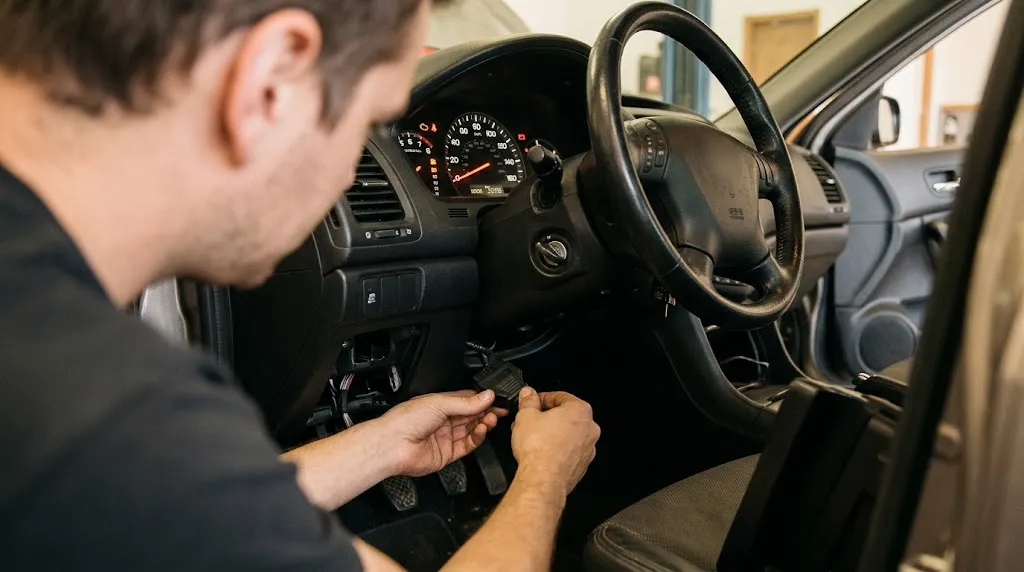
If the repair is complete and you are ready to clear the code, the process is straightforward:
- Connect the scanner to the OBD2 port, usually under the dashboard near the steering column.
- Turn the ignition to the “ON” position without starting the engine.
- Read and record all stored and pending codes before doing anything else.
- Select “Erase Codes” or “Clear DTCs” from the scanner menu.
- Turn the ignition off, then start the engine and confirm the light is off.
After clearing, the vehicle will need to be driven through the relevant drive cycles for the monitors to complete. If the repair was successful, the monitors will pass and the code will not return. If the fault is still present, the light will come back once the monitor runs[reference:12].
You can read a more detailed explanation of what happens when you clear diagnostic codes without fixing the problem if you want to understand the tradeoffs before erasing anything.
What to Do If the Light Stays On or Returns Immediately
If the light returns immediately after clearing, the fault is still active. The computer is seeing the same condition within the same drive cycle or shortly after. Stop clearing and diagnose the code.
If the light stays off but the vehicle fails an emissions test, the likely cause is incomplete readiness monitors rather than an active code. A scanner can show which monitors are “not ready.” The vehicle needs to be driven through a proper drive cycle, not simply cleared again[reference:13].
If a permanent code is present, the scanner may show it even when the light is off. In that case, the only path forward is to confirm the repair and complete enough drive cycles for the vehicle to clear the permanent code on its own.
For a broader look at how stored and pending codes differ, see our guide to stored vs. pending trouble codes. Pending codes can be an early warning before the light ever comes on.
Related Product
Basic OBD2 Scanner / Code Reader
A basic code reader lets you read the code, record freeze-frame data, and check readiness monitors before deciding whether to clear anything.
As an Amazon Associate, we earn from qualifying purchases.
Frequently Asked Questions
Does clearing a code fix the check engine light permanently?
No. Clearing a code turns the light off temporarily, but it does not repair the fault. If the underlying problem is still present, the light will return once the vehicle re-runs its self-tests and confirms the fault[reference:14]. A permanent fix requires addressing the cause.
Can an OBD2 scanner clear a permanent code?
No. A permanent code is stored in non-volatile memory and cannot be erased by a scan tool’s clear command or by disconnecting the battery. It only clears after the vehicle itself re-runs the relevant monitor and confirms the repair through drive cycles.
Why does my check engine light come back immediately after clearing?
An immediate return usually means the fault is still active and the relevant monitor has run quickly. The computer sees the same condition and resets the code right away. Clearing again will not help; the fault needs to be diagnosed.
Will clearing codes help me pass an emissions test?
Usually not. Clearing codes resets the readiness monitors to “not ready.” Most emissions programs reject a vehicle with too many incomplete monitors, even if the check engine light is off. Clearing codes right before a test is more likely to cause a failure than prevent one[reference:16].
Is it illegal to clear a check engine light?
Clearing codes on your own vehicle is not illegal in itself. But clearing codes to hide a fault before an emissions test or a sale can violate emissions inspection rules and may constitute tampering or misrepresentation depending on your jurisdiction. The legal risk is not in the scan tool; it is in the intent to conceal a known fault.
What should I do before clearing a code?
Read and record every stored and pending code, along with freeze-frame data. Note when the light came on and under what conditions. That information is your diagnostic roadmap. Once you clear the code, it is erased and cannot be recovered with a standard scanner.
Conclusion
An OBD2 scanner can turn off the check engine light, but it cannot make a faulty car healthy. Clearing the code erases the evidence and resets the monitors. If the repair has been done, that is exactly what you want. If the repair has not been done, the light will return, the monitors will be incomplete, and a permanent code may still block an emissions test.
The practical rule is simple: read first, repair second, clear last. Use the scanner to understand what the car is telling you, not to interrupt it.

I’m Alex Rahman, a car enthusiast and automotive writer focused on practical solutions, car tools, and real-world driving advice. I share simple and honest content to help everyday drivers make better decisions.
