Can an OBD2 Scanner Control Vehicle Components? Explained
Quick Answer
No, standard entry-level OBD2 scanners cannot control vehicle components. They are strictly read-only devices designed to pull diagnostic trouble codes and view live sensor data. However, advanced bi-directional OBD2 scan tools can send commands to vehicle computers to actively test and operate specific components like fuel injectors, cooling fans, and ABS modules.
Understanding Standard OBD2 Scanners vs. Bi-Directional Tools
To understand whether an OBD2 tool can control vehicle parts, it helps to look at how communication works inside modern vehicles. Most car owners are familiar with basic handheld code readers that plug into the under-dash port. These standard devices act like a stethoscope: they listen to what the vehicle’s computer (the ECU) is reporting, but they cannot talk back or issue commands.
A basic scanner can read fault codes, display live data streams like engine RPM or coolant temperature, and clear check engine lights. It cannot command a window to roll down, test a fuel pump, or actuate a cooling fan because it lacks two-way communication capabilities.
By contrast, bi-directional scan tools (often called active diagnostic tools or scan tools with actuation capabilities) can both read data and send commands back to the vehicle’s electronic control modules. This ability to command a component to turn on or off is what technicians call bi-directional control or active testing.
What Components Can an Advanced Scan Tool Actually Control?
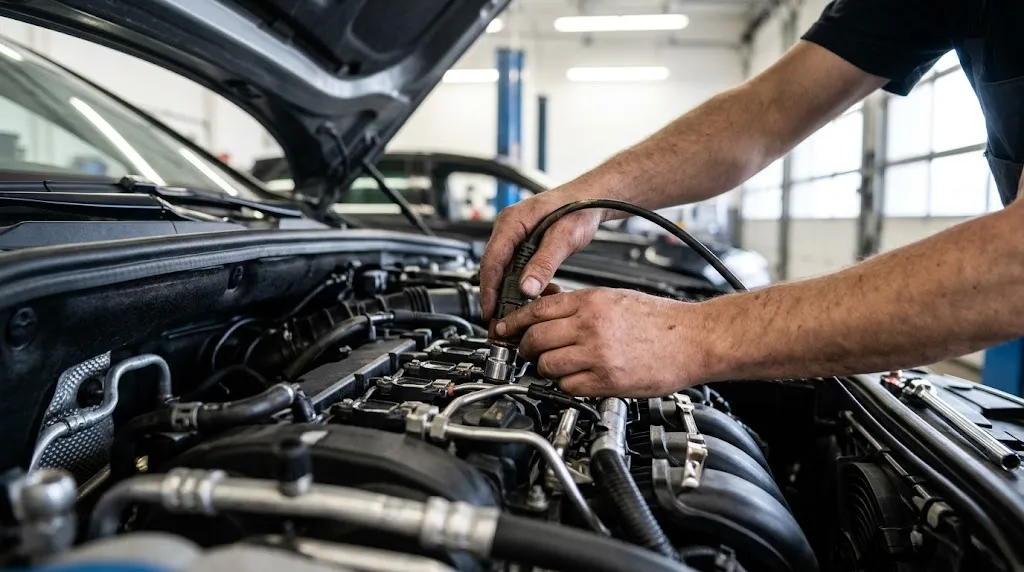
When using a bi-directional scan tool, you are not directly wiring power to a component. Instead, you are instructing the vehicle computer to activate its internal relays, switches, or solenoids to operate specific parts. This is immensely helpful for troubleshooting without needing to manually test wiring or bypass fuses.
Common components and systems that advanced bi-directional scanners can test or control include:
- Powertrain components: Fuel injectors, ignition coils, idle air control valves, and cooling fans.
- Body control modules: Power windows, door locks, interior lights, and sunroof operation.
- Braking systems: Anti-lock braking system (ABS) automated bleeding routines and electronic parking brake retraction.
- Emissions and intake: Exhaust Gas Recirculation (EGR) valves, EVAP purge solenoids, and turbocharger wastegates.
Key Insight
Bi-directional control does not mean permanent modification. When you command a cooling fan to turn on via a scan tool, it runs temporarily to verify circuit integrity, then returns to normal computer control once the test concludes.
How Bi-Directional Control Helps in Diagnostics
The primary value of component control is isolation testing. For example, if a car engine is running rough, a basic scanner might tell you that Cylinder 3 is misfiring. However, it cannot tell you whether the issue is a dead spark plug, a bad fuel injector, or low compression.
With a bi-directional scan tool, a mechanic or advanced DIYer can perform a cylinder balance test or manually shut off fuel delivery to individual injectors one by one. If shutting off injector three causes the engine idle to drop further, you know that injector was working. If the idle remains completely unchanged, you have instantly isolated the faulty injector or circuit without pulling parts off the engine.
Limitations: What OBD2 Scanners Cannot Do
Even advanced diagnostic tools have strict software and hardware limitations governed by vehicle manufacturers. Knowing these boundaries prevents costly tool mis purchases:
- No physical rewiring: A scanner cannot bypass physical mechanical failures, broken gears, or burned-out electric motor windings.
- Manufacturer security restrictions: Many modern vehicles use secure gateways (such as FCA Secure Gateway) that require authenticated software credentials just to clear codes, let alone run active tests.
- Software dependencies: A scanner is only as capable as the software package installed. A high-end tablet scanner may support bi-directional tests on Ford and Toyota models while offering limited diagnostic depth on niche European imports unless upgraded.
Warning
Never attempt active component testing on high-voltage hybrid or electric vehicle inverter systems unless you have specialized professional training. Forcing components like electric compressors or cooling loops out of sequence can cause severe electrical damage or personal injury.
How to Choose the Right Diagnostic Tool for Your Needs
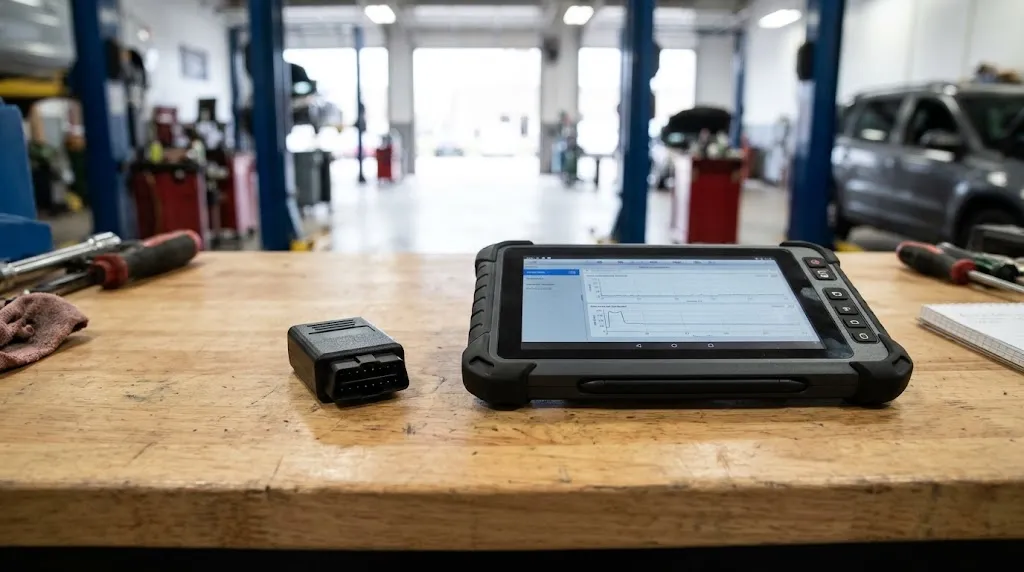
If you only need to check why your check engine light came on, pass an emissions test, or monitor basic live data like engine temperature and fuel trim, an inexpensive code reader or a basic Bluetooth OBD2 dongle is more than enough.
However, if you plan to perform advanced automotive repairs—such as bleeding your own ABS brakes after replacing brake lines, resetting steering angle sensors, or commanding actuators during troubleshooting—you will need to invest in a dedicated bi-directional scan tool or tablet diagnostic system. Always check the manufacturer’s vehicle coverage list before purchasing to ensure your specific make, model, and year are supported for active tests.
Related Product
Bi-Directional Automotive Diagnostic Scan Tool
An advanced multi-system diagnostic tablet with active testing capabilities for troubleshooting complex electrical and powertrain components.
As an Amazon Associate, we earn from qualifying purchases.
Frequently Asked Questions
Can a cheap $20 code reader control car parts?
No. Inexpensive code readers are strictly read-only devices. They communicate using basic generic protocols to pull and clear diagnostic trouble codes, but they lack the internal hardware and software required to send active control commands to vehicle modules.
Do I need a subscription to use bi-directional scan tools?
It depends on the brand. Many professional-tier scan tools include the first year or two of software updates for free, after which optional subscription renewals may be required to maintain coverage for newer vehicle models and security gateway protocols.
Can an OBD2 scanner reprogram my transmission or engine computer?
Some advanced bi-directional tools support ECU coding, module initialization, and firmware flashing for specific components, but full module reprogramming usually requires specialized factory software or J2534 pass-thru programming devices.
Can active testing damage my car?
When used properly within safe diagnostic parameters, active tests are programmed by manufacturers to be safe. However, overriding safety interlocks or running certain actuator tests continuously outside of recommended diagnostic procedures can cause component wear or overheating.
Why won’t my scan tool communicate with certain modules?
This is usually caused by lack of software coverage for that specific module, a blown fuse powering the diagnostic port, or modern security gateway restrictions that require an authenticated account to unlock writing privileges.
Is bi-directional control the same as remapping or tuning?
No. Bi-directional control involves temporarily commanding existing factory components for diagnostic testing. Remapping or tuning involves permanently modifying the calibration data stored inside the engine control computer to change performance characteristics.
Conclusion
Standard OBD2 code readers are limited to reading data and clearing warning lights, but advanced bi-directional scan tools give DIYers and technicians the power to actively test and control vehicle components. By understanding the distinction between simple code readers and active diagnostic systems, you can choose the right tool for your mechanical needs and troubleshoot complex automotive issues with confidence.

I’m Alex Rahman, a car enthusiast and automotive writer focused on practical solutions, car tools, and real-world driving advice. I share simple and honest content to help everyday drivers make better decisions.
