Can OBD2 Scanners Diagnose Fuel Trim Problems? (Explained)
Quick Answer
Yes, an OBD2 scanner can diagnose fuel trim problems by reading live data parameters and fault codes. While a basic code reader can spot generic system lean or rich trouble codes, a scanner capable of streaming live data is required to view actual short-term and long-term fuel trim percentages in real time.
Understanding Fuel Trim Basics
Modern engine management computers constantly adjust the air-fuel mixture to maintain optimal combustion efficiency. Fuel trim refers to the adjustments the powertrain control module (PCM) makes to deliver more or less fuel relative to its baseline programming.
When an engine runs under normal conditions, the computer monitors exhaust oxygen levels using upstream oxygen or air-fuel ratio sensors. If the exhaust indicates unburned oxygen, the computer adds fuel. If it detects a lack of oxygen, it reduces fuel delivery. These ongoing adjustments are measured and reported as percentages.
An OBD2 diagnostic tool acts as a window into these computer calculations. Understanding how to interpret these numbers allows vehicle owners and technicians to pinpoint vacuum leaks, failing fuel pumps, clogged injectors, or faulty sensors long before catastrophic engine damage occurs.
Short-Term vs. Long-Term Fuel Trim Explained
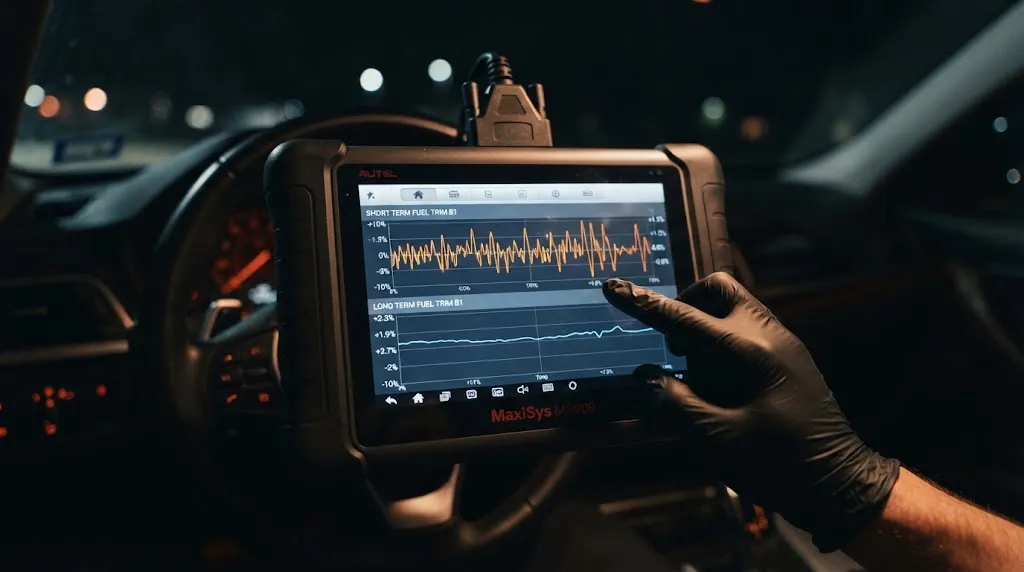
Diagnostic scanners divide fuel adjustments into two distinct categories: short-term fuel trim and long-term fuel trim. Each category serves a different function in monitoring engine health.
Short-Term Fuel Trim (STFT)
Short-term fuel trim represents rapid, moment-to-moment adjustments made by the computer in response to immediate sensor readings. These numbers fluctuate constantly as you accelerate, decelerate, or cruise. A healthy engine typically sees STFT values rapidly bouncing between positive and negative single digits.
Long-Term Fuel Trim (LTFT)
Long-term fuel trim tracks persistent trends over time. If short-term adjustments consistently lean in one direction—such as constantly adding extra fuel—the computer gradually shifts the long-term fuel trim to compensate and bring the short-term numbers back toward a neutral baseline. LTFT provides a stable indicator of overall mechanical health and underlying system efficiency.
Key Insight
Healthy fuel trim numbers typically hover close to zero percent under normal operating conditions. Sustained deviations exceeding ten percent in either direction usually indicate an underlying mechanical or electrical fault that warrants investigation.
How OBD2 Tools Read Fuel Trim Data
Basic code readers only display stored Diagnostic Trouble Codes once a dashboard warning light illuminates. However, advanced code readers and bi-directional scan tools feature a live data stream function.
When connected to the vehicle’s OBD2 port beneath the dashboard, the scan tool requests live parameter identifiers (PIDs) from the engine computer. By navigating to the live data menu and selecting fuel system parameters, you can view real-time percentage values for Bank 1 and Bank 2, covering both short and long-term metrics.
Observing how these numbers change under different driving conditions—such as idling versus holding a steady two thousand RPM—provides critical diagnostic clues. For instance, a high fuel trim at idle that drops back to normal during acceleration often points to an unearned vacuum leak.
Interpreting Fuel Trim Numbers: Lean vs. Rich Conditions
Fuel trim numbers carry specific positive or negative signs that tell you whether the computer is adding or removing fuel.
| Trim State | Percentage Meaning | Common Underlying Causes |
|---|---|---|
| Positive Trims (Lean Condition) | Computer is adding extra fuel (+5% to +20% or higher) | Vacuum leaks, dirty mass air flow sensor, weak fuel pump, clogged fuel injectors. |
| Negative Trims (Rich Condition) | Computer is reducing fuel delivery (-5% to -20% or lower) | Leaking fuel injectors, restricted air filter, faulty fuel pressure regulator, stuck EVAP purge valve. |
When the system reaches its maximum adjustment threshold—typically around twenty to twenty-five percent—the computer triggers a generic diagnostic trouble code, such as P0171 for a system lean condition on Bank 1.
Common Causes of Abnormal Fuel Trims
Pinpointing the root cause of erratic fuel trim data requires systematic inspection of related engine subsystems. Several frequent culprits account for the majority of abnormal readings.
- Vacuum Leaks: Unmetered air entering the engine past the mass air flow sensor dilutes the air-fuel mixture, forcing positive fuel trims.
- Mass Air Flow (MAF) Sensor Contamination: A dirty or failing MAF sensor underreports incoming airflow, causing the computer to deliver insufficient fuel.
- Fuel Delivery Issues: A clogged fuel filter, failing fuel pump, or weak pressure regulator restricts fuel volume under load.
- Ignition Misfires: Unburned fuel passing into the exhaust misleads oxygen sensors into signaling a false lean condition.
Warning
Do not rely solely on trouble codes to replace expensive parts. Always verify sensor data using live OBD2 diagnostics to confirm whether a component is truly failing before making repairs.
Step-by-Step Diagnostic Workflow Using Live Data
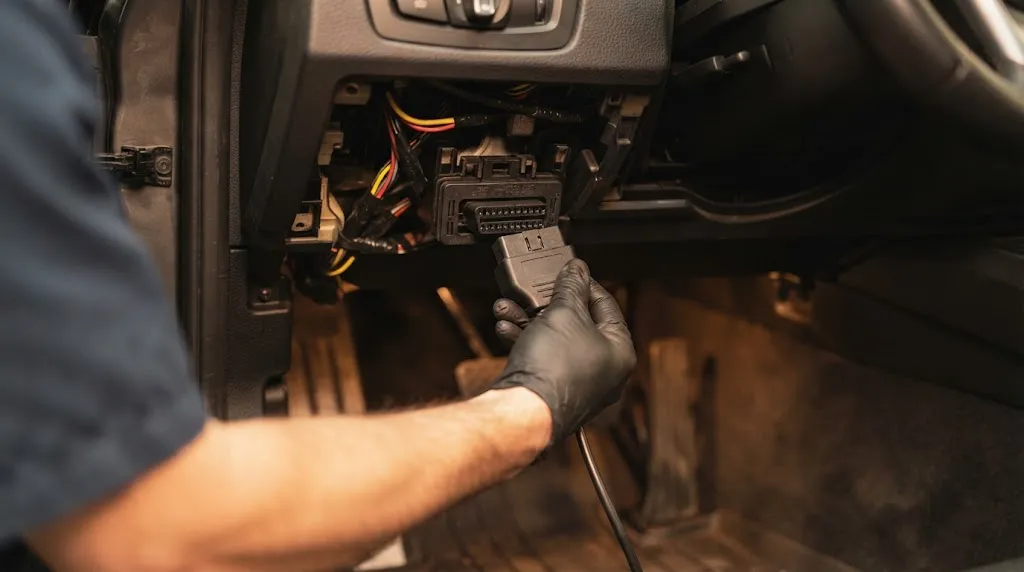
Diagnosing fuel trim issues effectively requires a structured testing approach using a live-data compatible OBD2 scan tool.
- Connect your scan tool to the vehicle’s OBD2 port and turn the ignition key to the ON position without starting the engine.
- Navigate to the live data menu and select short-term and long-term fuel trim parameters for available cylinder banks.
- Start the engine and allow it to reach normal operating temperature in park or neutral.
- Observe idle numbers; check if trims drop closer to zero when you raise engine speed to approximately 2,500 RPM.
- Inspect auxiliary sensor data, including oxygen sensor voltages and mass air flow grams-per-second readings, to confirm mechanical findings.
Related Product
OBD2 Live Data Scanner & Code Reader
Inspect real-time short and long-term fuel trims, view sensor graphs, and diagnose engine performance faults quickly.
As an Amazon Associate, we earn from qualifying purchases.
Frequently Asked Questions
Can a basic code reader check fuel trim?
Basic code readers typically only read and clear stored diagnostic trouble codes. To view live short-term and long-term fuel trim percentages, you need a scanner that supports live data streaming.
What is considered a normal fuel trim percentage?
Normal fuel trim values generally stay within plus or minus five to ten percent under varied driving conditions. Readings consistently exceeding ten to fifteen percent indicate an underlying mechanical issue.
Why do fuel trims change between idle and acceleration?
Vacuum leaks let in unmetered air that heavily impacts idle performance, causing high positive trims that often drop back down as engine speed and airflow increase.
Can a bad oxygen sensor cause abnormal fuel trims?
Yes, a sluggish or contaminated oxygen sensor sends incorrect exhaust data to the computer, which can trick the system into making unnecessary fuel adjustments.
What trouble codes are associated with fuel trim problems?
The most common codes are P0171 and P0175 for system lean conditions, alongside P0172 and P0176 for system rich conditions on respective engine banks.
Do I need professional training to read live fuel trims?
While understanding engine mechanics helps, reading fuel trim percentages simply requires monitoring basic numbers on a scan tool display and comparing idle versus cruising behavior.
Conclusion
Diagnosing fuel trim issues using an OBD2 live data scanner provides a reliable method for uncovering hidden engine performance problems before they trigger dashboard warning lights. By monitoring short-term and long-term percentage shifts, you can effectively distinguish between vacuum leaks, fuel delivery faults, and sensor failures. Utilizing live data streamlines the repair process and ensures accurate vehicle maintenance.

I’m Alex Rahman, a car enthusiast and automotive writer focused on practical solutions, car tools, and real-world driving advice. I share simple and honest content to help everyday drivers make better decisions.
