Is My Car OBD2 Compatible? Check Year, Port & Labels
Quick Answer
To know if your car is OBD2 compatible, check if it is a gasoline vehicle manufactured for the US market from 1996 onward (or diesel from 2008 onward), look for a 16-pin trapezoidal diagnostic port under the driver’s side dashboard, and verify the emissions label under the hood.
What Makes a Car OBD2 Compatible?
On-Board Diagnostics II (OBD2) is a standardized electronic system that monitors your vehicle’s engine performance, emissions, and key electronic components. Before OBD2 became mandatory, manufacturers used separate, proprietary diagnostic ports and codes for every brand, making vehicle troubleshooting complicated.
The OBD2 standard introduced a universal 16-pin connector and a shared set of diagnostic trouble codes. This means any standard OBD2 code reader or scanner can plug into a compatible vehicle and pull error codes, live sensor data, and system readiness metrics.
Determining compatibility depends primarily on three factors: the vehicle’s model year, its original sales market, and its fuel type. While regulations varied globally, standardized timelines dictate whether a car features a built-in OBD2 port.
Method 1: Check the Model Year and Market Rules
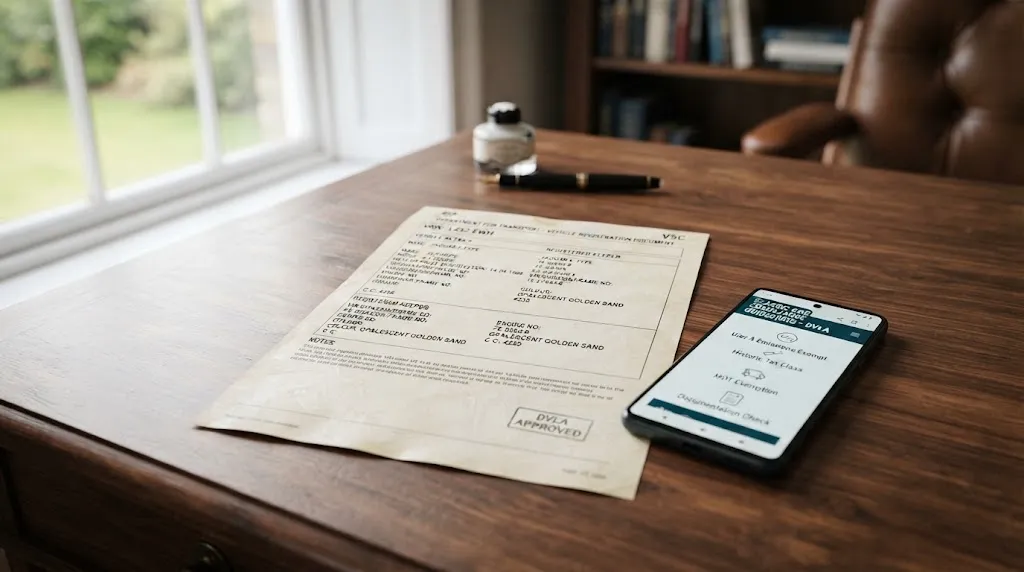
The fastest way to determine compatibility is checking the vehicle’s manufacture year and the country where it was originally sold. Different regions adopted the OBD2 mandate at different times:
- United States: All light-duty gasoline cars and trucks built from January 1, 1996, onward are required by federal law to be OBD2 compliant.
- European Union (EOBD): Petrol (gasoline) vehicles registered for the first time from January 1, 2001, and diesel vehicles from January 2004 are compliant.
- Canada: Adopted the same 1996 mandate timeline as the United States.
- Australia: Implemented OBD requirements progressively, becoming mandatory for all new petrol vehicle models from 2006 and diesel models from 2007.
If your vehicle falls after these threshold dates, it is almost certainly equipped with a standard OBD2 system. For a deeper understanding of how these systems function once connected, read our guide on what OBD2 is and what it can tell you.
Method 2: Locate the Diagnostic Link Connector (DLC)
If your car sits close to the transition years (such as 1994 to 1997), the physical presence of the diagnostic port is the definitive test. The standard 16-pin Diagnostic Link Connector (DLC) must be located inside the passenger compartment within reach of the driver.
To find the port, look in these common areas:
- Under the driver’s side dashboard, directly beneath the steering column.
- Just above the gas or brake pedal area, sometimes tucked behind a small removable plastic trim cover.
- Near the center console, inside the lower dashboard area, or underneath the ash tray or center armrest compartment.
Key Insight
An authentic OBD2 port is shaped like a trapezoid with two rows of 8 pins and must match the standardized SAE J1962 physical specification. Older pre-OBD2 ports are often round, square, or feature a different pin count.
Method 3: Inspect the Under-Hood Emissions Label
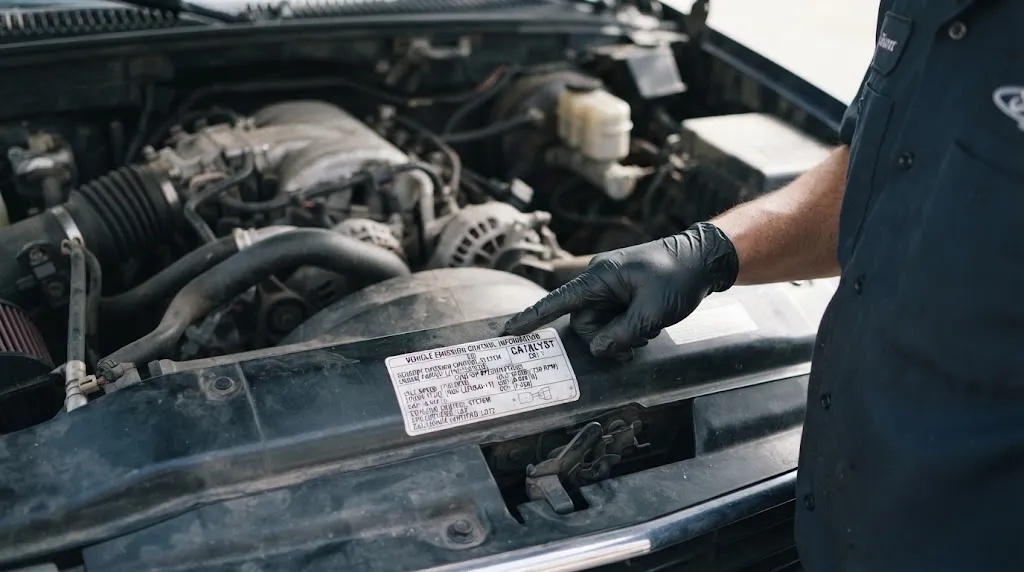
If you are still uncertain—especially with imported vehicles, grey-market cars, or models built right around the 1996 transition window—open the hood and look for the Vehicle Emission Control Information (VECI) label.
This sticker is typically attached to the underside of the hood, near the radiator support, or on top of the valve cover. Scan the text on the label for explicit compliance wording:
- Look for phrases such as “OBD II Certified” or “OBD-II Compliant”.
- Check if the text explicitly states conformance with US EPA or California CARB emissions standards for the specific model year.
If the label verifies OBD2 compliance, your car’s computer supports standard diagnostic scanners, tools, and advanced equipment like an ELM327 OBD2 adapter.
What to Do If Your Car Is Pre-OBD2 or Non-Standard
Vehicles built before the OBD2 mandate often use proprietary diagnostic systems, commonly referred to as OBD1. These older vehicles require manufacturer-specific scan tools, jumper wires, or blink-code sequences to flash check-engine light codes.
Warning
Do not force a standard OBD2 scanner plug into an older rectangular or round pre-1996 diagnostic port. Forcing incompatible pins can bend the internal terminals and damage your car’s wiring harness.
If your vehicle is an older classic or a transition model, consult your specific factory service manual to identify the correct diagnostic procedure. For modern vehicles, understanding how your computer system reports diagnostic data can also help you prep for inspections, as outlined in our guide on OBD2 readiness monitors.
Related Product
OBD2 Code Reader and Diagnostic Scanner
A plug-and-play diagnostic tool lets you quickly verify your port connection, read active engine fault codes, and clear check engine lights.
As an Amazon Associate, we earn from qualifying purchases.
Frequently Asked Questions
Are all 1996 cars guaranteed to have OBD2?
Most gasoline-powered passenger vehicles sold in the US from 1996 onward are OBD2 compliant. However, a small number of heavy-duty trucks, incomplete vehicles, or late-release 1996 models built early in the production cycle received temporary federal exemptions.
Can I install an OBD2 port in a pre-1996 car?
No. OBD2 compatibility relies on the vehicle’s engine control unit (ECU), sensor wiring harness, and proprietary software protocols. Adding a physical plug connector will not make an older vehicle computer communicate with modern scanners.
Where is the OBD2 port usually located?
In almost all modern passenger vehicles, the 16-pin diagnostic port is located within two feet of the steering wheel underneath the driver’s side dashboard, often left exposed or behind a small pop-out panel.
Will an OBD2 scanner work on a diesel car?
Passenger diesel cars and light trucks sold in the US became universally OBD2 compliant starting with the 2008 model year, following the expansion of federal emissions standards.
What does it mean if my scanner powers on but won’t link?
If the scanner lights up but fails to communicate with the car’s computer, check the vehicle’s cigarette lighter or accessory fuse. Many manufacturers wire the OBD2 port power circuit through the same fuse as the interior auxiliary power outlets.
Can electric or hybrid vehicles use standard OBD2 scanners?
Yes. Hybrid and electric vehicles feature standardized OBD2 communication ports. While they do not have traditional internal combustion engines, their onboard computers use the protocol to track battery management systems, thermal controls, and chassis diagnostics.
Conclusion
Determining whether your vehicle is OBD2 compatible comes down to verifying three straightforward indicators: a model year of 1996 or later for gasoline vehicles, the presence of a 16-pin trapezoidal diagnostic port under the driver’s side dash, and an under-hood emissions label confirming certification. Checking these details takes only a minute and ensures you purchase the correct diagnostic tools or scanners for your vehicle.

I’m Alex Rahman, a car enthusiast and automotive writer focused on practical solutions, car tools, and real-world driving advice. I share simple and honest content to help everyday drivers make better decisions.
