Is OBD2 Mandatory in the US? Federal Law vs State Rules
Quick Answer
OBD2 is mandatory in the United States for all new passenger cars and light-duty trucks sold since the 1996 model year. However, this federal mandate applies to vehicle manufacturers, not to individual states requiring emissions inspections. Whether you must pass an OBD2-based emissions test depends entirely on where the vehicle is registered and operated.
What the Federal Mandate Actually Requires
The confusion around OBD2 mandates usually comes from mixing up two different legal obligations. The federal government requires manufacturers to install OBD2 systems on new vehicles. It does not directly require every driver to maintain or test them.
The U.S. Environmental Protection Agency (EPA) established the federal OBD program, with full compliance required for the 1996 model year . From that point forward, all new passenger cars and light-duty trucks sold in the United States had to be equipped with a second-generation on-board diagnostic system capable of monitoring emissions-related components and illuminating a malfunction indicator lamp when something failed.
A crucial distinction emerges from the Clean Air Act itself. The statute requires manufacturers to install OBD systems in light-duty vehicles. It does not impose a general legal duty on vehicle owners to maintain the OBD system in working order, at least not through the federal manufacturing provisions . That does not mean tampering is legal everywhere, but it explains why the federal mandate and state inspection rules operate on different legal footing.
Why Your State Matters More Than the Federal Rule
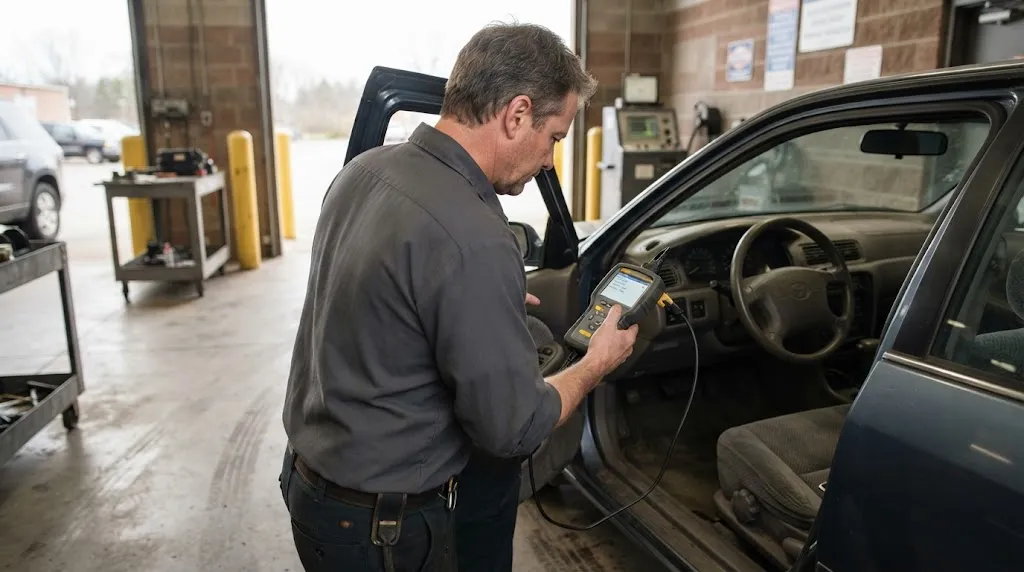
If you are asking whether OBD2 is mandatory because you need to pass an inspection, the federal mandate is almost irrelevant to your immediate situation. What matters is your state’s inspection and maintenance (I/M) program.
Roughly half of U.S. states operate some form of emissions inspection program. Some run statewide programs, others test only in certain counties, and a significant number have no emissions testing at all . States with no emissions inspection requirements include Alabama, Alaska, Arkansas, Florida, Hawaii, Iowa, Kansas, Kentucky, Michigan, Minnesota (outside specific areas), Mississippi, Montana, Nebraska, North Dakota, Oklahoma, South Carolina, South Dakota, and Wyoming .
In states that do test emissions, OBD2 is typically the primary method for inspecting 1996 and newer vehicles. The EPA has noted that OBD-based inspections offer accurate diagnosis, short inspection times, and early detection of emission problems . But the specific exemptions vary widely. Many states exempt vehicles older than a certain age, new vehicles for the first few years, electric vehicles, and sometimes low-mileage vehicles .
| Question | Answer |
|---|---|
| Must all new vehicles have OBD2? | Yes, since model year 1996 for passenger cars and light trucks |
| Must every state test OBD2? | No. About half the states have no emissions inspection program |
| Can you legally remove OBD2? | Federal law prohibits tampering with emissions monitoring devices; some states add their own penalties |
| Does OBD2 apply to heavy trucks? | Requirements expanded over time; heavier vehicles have separate, later deadlines |
That table summarizes the practical landscape, but the tampering question deserves closer attention because it is where federal enforcement has become more aggressive in recent years.
Can You Get in Trouble for Removing or Disabling OBD2?
Yes, but the legal theory is more complicated than most people assume. Federal prosecutors have successfully pursued criminal cases against businesses and individuals who disable OBD systems as part of emissions “delete” operations, particularly on diesel trucks.
The Department of Justice has obtained convictions and guilty pleas in multiple cases involving tampering with OBD systems. In one Colorado case, a business owner and his company were sentenced for disabling OBD systems on hundreds of heavy-duty commercial trucks, resulting in significant excess pollution . In a Maine case, a man was sentenced to probation and a $40,000 fine for installing defeat devices and tampering with OBD systems on diesel vehicles .
The legal basis for these prosecutions is the Clean Air Act’s criminal tampering provision, which prohibits knowingly tampering with any monitoring device required under the Act . Some defense attorneys have argued that the statute was intended for stationary sources like power plants, not vehicle OBD systems, but at least one federal court has rejected that argument and allowed prosecution to proceed . The practical result is that commercial delete operations and tuners face real legal risk.
Warning
Colorado law now prohibits selling, leasing, or even transferring title to a vehicle with a tampered emissions control system, including a disabled OBD. The statute applies statewide and to all model years, regardless of whether the vehicle is in an emissions testing area . Similar enforcement trends are appearing in other states.
For individual vehicle owners in states without emissions testing, enforcement is less likely in practice. But if you sell the vehicle, move to a testing state, or interact with a dealer, a tampered OBD can create serious problems. Colorado’s law, for example, makes it illegal for a dealer to sell a vehicle with a tampered emissions system and requires repairs before retail sale .
What About Older Vehicles and Exemptions?
The federal OBD2 installation mandate applies to model year 1996 and newer passenger cars and light trucks. Vehicles from 1995 and earlier were not required to have OBD2, though some had earlier OBD-I systems. If you own a pre-1996 vehicle, the federal OBD2 mandate does not apply to it.
State inspection exemptions are a separate matter. Many states exempt vehicles older than 20 or 25 years from emissions testing entirely, and some exempt new vehicles for the first few model years . California, for example, exempts vehicles from 1975 and older. These exemptions mean that even in a state with strict OBD2 testing, your specific vehicle might not need to pass an OBD2 scan.
The practical takeaway is that you should not assume OBD2 testing applies to you based on the national rule. Check your state’s DMV or emissions program website for the specific model year, vehicle type, and county rules that apply to your registration address.
How OBD2 Fits Into the Broader Emissions System
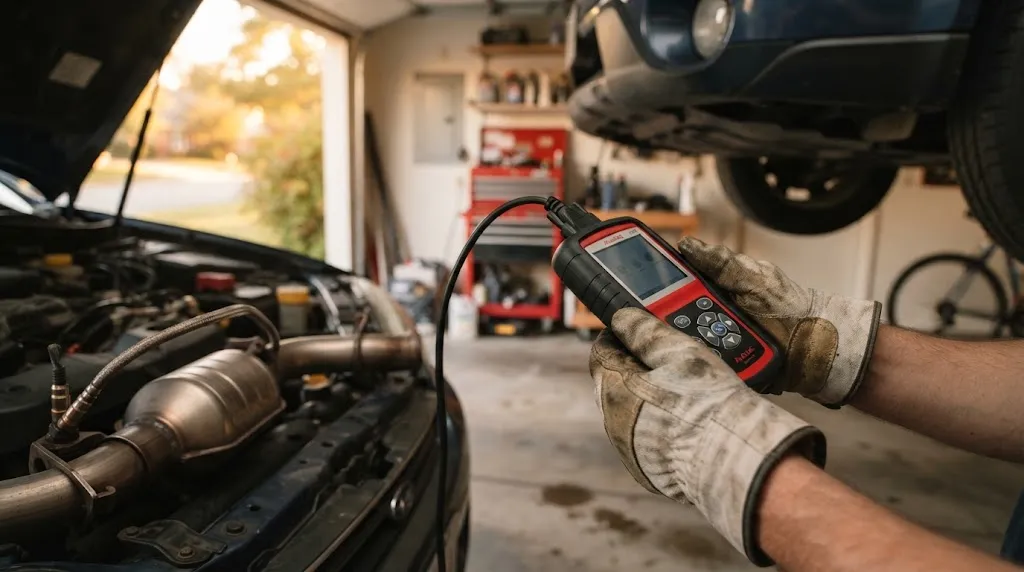
OBD2 is not a standalone emissions control device. It is a monitoring system that watches the components that actually reduce pollution: catalytic converters, oxygen sensors, evaporative emissions systems, and others. When one of those components fails or degrades, the OBD system detects the problem and turns on the check engine light.
This is why tampering with OBD2 is treated seriously in enforcement contexts. Disabling the monitor does not improve emissions performance; it simply hides the fact that the emissions system is failing. In the diesel delete cases prosecuted by the DOJ, the OBD tampering was part of a broader scheme to remove or disable the actual emissions controls, leading to substantial excess nitrogen oxides and particulate matter .
If your goal is simply to pass an inspection, the better approach is to address the underlying fault code rather than attempt to circumvent the system. A scan tool that can read the relevant codes is the starting point. For context on what different scanners can and cannot access, resources like this guide to OBD2 scanner capabilities for transmission codes explain the difference between basic code readers and enhanced diagnostic tools. The same principle applies to emissions codes: the scanner needs to support the specific system and vehicle to give you useful information.
If you are dealing with a check engine light and need to understand what your scanner is telling you, the distinction between generic and manufacturer-specific codes matters. A basic reader may show you a code, but a tool with enhanced coverage may be necessary to see the full picture.
The Short Version
OBD2 has been mandatory on new cars and light trucks in the U.S. since 1996, but that mandate targets manufacturers. For drivers, the real question is whether your state requires an OBD2-based emissions inspection. About half do not. If you live in a testing area, your 1996-or-newer vehicle will likely need a functioning OBD2 system to pass. Tampering with it is illegal under federal law and carries growing enforcement risk, especially for commercial operations.
Frequently Asked Questions
Is OBD2 required on all cars in the US?
Every new passenger car and light-duty truck sold in the U.S. since the 1996 model year has been required to have OBD2. Older vehicles and some heavier vehicles follow different rules. The requirement applies to manufacturers selling new vehicles, not to every vehicle currently on the road.
Do all states require OBD2 emissions testing?
No. Roughly half of U.S. states have no emissions inspection program at all. Even among states that do test, requirements vary by county, model year, vehicle type, and exemptions. Check your state DMV for the rules that apply to your registration address.
Can I remove OBD2 from my vehicle legally?
Federal law prohibits tampering with emissions monitoring devices, and the DOJ has prosecuted businesses and individuals for disabling OBD systems. Some states, like Colorado, have additional laws that make it illegal to sell or transfer a vehicle with a tampered emissions system. The practical risk is highest for commercial operations and for anyone who sells a tampered vehicle.
Does OBD2 apply to diesel trucks?
OBD requirements have expanded to heavier vehicles over time. The EPA added OBD requirements for heavier vehicles and engines in the 2000s, with separate deadlines and standards for diesel engines . The delete and tuning enforcement cases have primarily involved diesel trucks.
What happens if my vehicle fails an OBD2 inspection?
If your state requires an OBD2 inspection and your vehicle fails, you typically need to repair the underlying emissions fault before retesting. The specific rules for retesting, waivers, and repair cost limits vary by state. A failed OBD2 test usually means the system detected a malfunction or the monitors are not ready.
Is OBD2 the same as a check engine light?
No. The check engine light is the visible alert. OBD2 is the system that monitors emissions components, stores diagnostic trouble codes, and triggers the light when a fault is detected. You can have an OBD2 system without the light being on if no faults are currently detected, though the system may still show “not ready” monitor status.
Conclusion
The short answer to whether OBD2 is mandatory in the United States depends on who you ask. For automakers, yes, it has been required on new cars and light trucks since 1996. For drivers, the mandate only becomes practically relevant when your state requires an emissions inspection. About half the country has no such requirement. If you do live in a testing area, keeping your OBD2 system functional is simpler and safer than trying to work around it. Federal and state enforcement against tampering has increased, and the legal risks are not worth the short-term convenience.

I’m Alex Rahman, a car enthusiast and automotive writer focused on practical solutions, car tools, and real-world driving advice. I share simple and honest content to help everyday drivers make better decisions.
