
4K+4K Dual Dash Cam Front and Rear: Honest 2026 Review
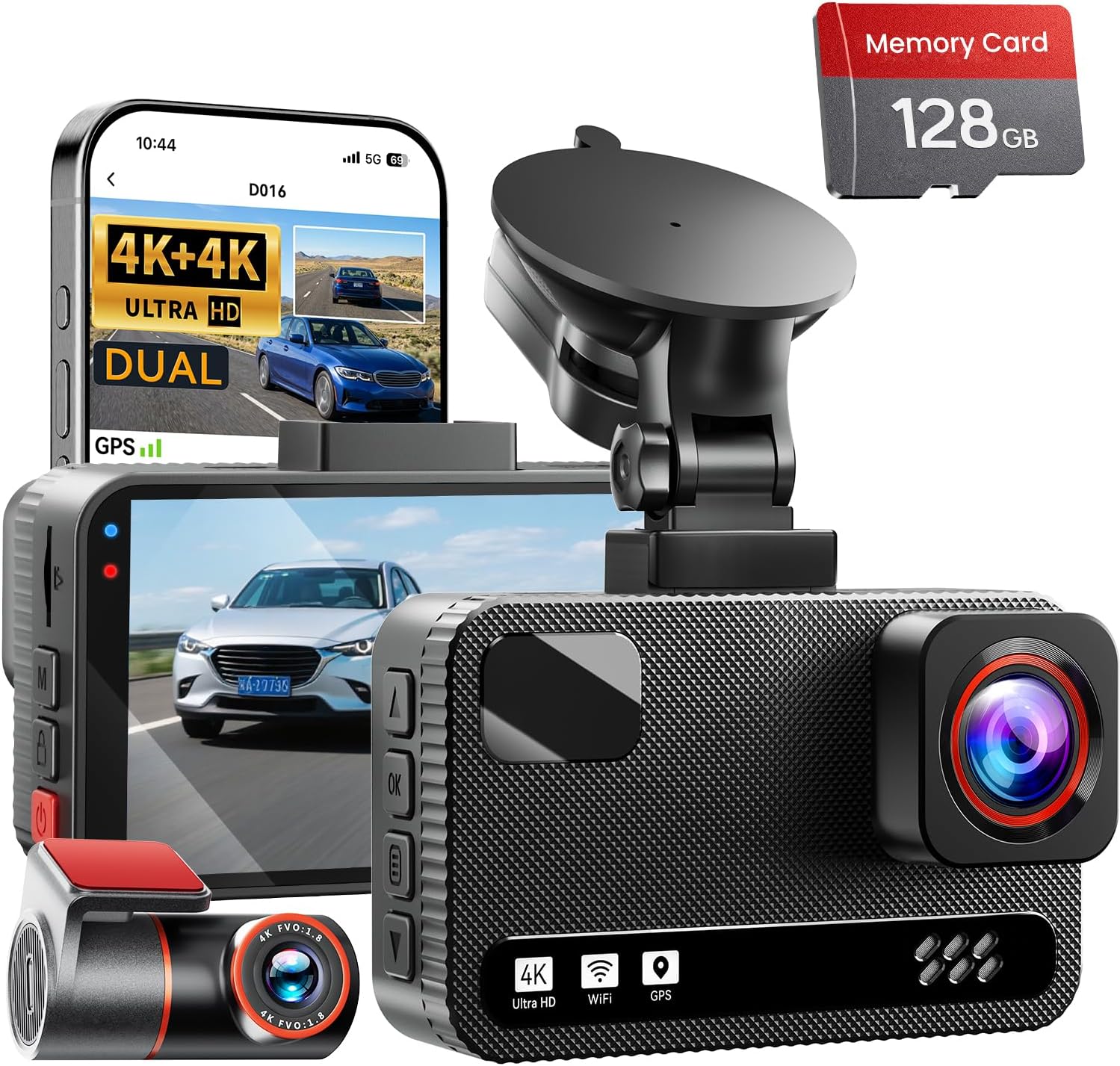
The 4K+4K Dual Dash Cam Front and Rear, Free 128GB Card, Starlight Night Vision | Dual-Channel Recording, 5.8GHz WiFi, 20MB/s Download Speed, GPS, 3″ IPS Screen, Collision Sensor, 24H Parking Mode is aimed at drivers who want high-detail recording from both ends of the car without buying storage on day one.
On paper, its strongest points are true 3840×2160 recording on both cameras, built-in GPS, fast local Wi-Fi, and a supplied 128GB card. I have not physically driven with this exact unit, so this review does not pretend to be a hands-on test. It is based on the current Amazon listing, documented specifications, and the practical demands of daily dash-cam use.
| Overall: 4.3/5 | Performance: 4.5/5 |
| Value: 4.1/5 | Design: 4.2/5 |
| ✅ Best For: Drivers who want front and rear 4K plus GPS and included storage. | |
| ❌ Not Ideal For: Buyers who want a proven premium brand or cloud remote viewing. | |
| Price: Around $180–$190 when checked. | |
| Check Price on Amazon | |
What Arrives in the Box
The bundle is unusually complete for a dual-channel camera. Amazon lists the main 4K unit, a separate 4K rear camera, a 6.5-meter rear-camera cable, an 11-foot USB-C power cable, GPS bracket, spare adhesive pads, cable clips, cleaning wipes, lint-free cloths, a pry tool, and the manual.
The front unit weighs 119 g and measures about 3.46 by 1.75 by 2.24 inches, so it is compact enough to hide high on the windshield. The 3-inch screen helps with framing before cable routing.
4K+4K Performance in Real Use
The headline feature is simultaneous 3840×2160 front and rear recording. The listing also specifies 25 fps. That frame rate is fine for normal road footage, but fast cross-traffic and plates on vehicles moving in the opposite direction can still show motion blur. Resolution helps, yet shutter speed, light, and angle still matter.
Daytime Highway Driving
In bright conditions, a 4K front feed has enough pixel detail to give road signs, lane markings, and nearby vehicles a strong chance of staying readable. The front field of view is listed at 170 degrees, so it covers a broad slice of the road. The tradeoff with very wide lenses is that distant plates can look smaller in the frame.
Rear-Camera Coverage
The rear camera is also listed at 3840×2160. That is a meaningful advantage over common 4K-front/1080p-rear kits, especially after a rear impact. Amazon’s bullet section states a 150-degree rear lens, while another spec area describes the overall wide-angle setup differently. I would treat the exact rear field of view as something to confirm before purchase.
Night City Driving
Low-light hardware looks promising. The camera is listed with an f/1.5 aperture, a five-element optical lens, a starlight-level sensor, and WDR. Those features should help keep darker areas visible while reducing blown highlights from street lamps. Still, no night-vision claim guarantees perfect plate capture when headlights reflect directly into the lens.
Rain and Changing Light
WDR matters most when the scene changes quickly, such as leaving a parking garage, driving toward sunset, or meeting bright headlights on a dark road. The camera should have more exposure flexibility than a basic non-WDR unit. A dirty windshield or water droplets can erase that advantage, so lens and glass cleanliness remain part of real image quality.
Footage Transfer and GPS
The listing supports 2.4GHz and 5GHz Wi-Fi, with advertised downloads up to 20MB/s. The app can preview, play, and download video on iPhone or Android, while built-in GPS can show route and speed data. If you want more detail about this workflow, the guide on connecting a dash cam to your phone explains why local Wi-Fi is useful without meaning the camera has remote internet access.
Impact and Loop Recording
Emergency video lock, loop recording, and a collision sensor are listed features. That combination is what you want after a sudden bump: normal footage keeps cycling, while an event clip can be protected from immediate overwrite. It is still smart to copy important footage soon after an incident rather than assuming it will stay on the card forever.
What Daily Ownership Feels Like
Once installed, the workflow should be simple: power on with the car, record to microSD, then use the screen or app when you need a clip. The included 128GB card is a real convenience. Wi-Fi also avoids pulling the card every time you want to save a short video.
The small hassles are predictable. Dual cameras mean more cable routing, app connection takes an extra step, and parking mode needs extra wiring. The 3-inch screen works for setup, but a phone or computer is better for important footage.
Compact Build and Mounting
The main camera uses a windshield mount and a rotatable bracket. At 119 g, it is not especially heavy, which should reduce strain on the adhesive when the glass gets hot. The black casing is discreet and the footprint is modest.
| Part | Listed Detail |
| Main unit | 119 g |
| Screen | 3-inch IPS |
| Mount | Windshield, rotatable |
The included spare sticky pads are useful because placement is rarely perfect on the first try. Before final mounting, check the wiper sweep, rear-camera view, and whether the front lens sits inside the cleaned area of the windshield.
Day, Night, and Low Light
Daylight should be this camera’s easiest job. Dual 4K gives it plenty of recorded detail, while the wide front lens captures more of intersections and side approaches. At night, the f/1.5 aperture, starlight sensor, and WDR are the important parts of the spec sheet.
I would expect the biggest limits to appear with reflective plates, rain, fog, or cars moving quickly across the frame. Those are hard scenes for any dash cam. The sensible expectation is usable evidence in many conditions, not perfect freeze-frame plate reading every time.
Keeping the Camera Reliable
Dash cams are low-maintenance, but they are not no-maintenance. Wipe the front and rear lenses when you clean the glass, especially after dusty trips. Fingerprints are easy to add while adjusting the mount, and a small smear can turn night lights into large halos.
| Task | Practical Routine |
| Lens | Wipe when hazy |
| Storage | Check card monthly |
| Cables | Inspect after trim work |
The included card removes an early cost, but storage deserves attention. Amazon’s listing is internally inconsistent: one feature area says support up to 1TB, while the formal specification table lists 512GB maximum. Until the seller clarifies that mismatch, I would confirm larger-card compatibility before spending on an upgrade. The guide on retrieving dash-cam recordings is also useful before an incident forces you to learn in a hurry.
Where It Wins and Loses
The spec sheet is strong, but this is still a lesser-known brand competing with mature dash-cam names. That makes feature value attractive while long-term ecosystem confidence is harder to judge.
| Pros | Cons |
|
|
How It Compares
Two useful reference points are REDTIGER’s F7NP and IIWEY’s 4K+4K dual-channel model. Both are established listings in the same shopping lane, but they emphasize different things.
Aputeta vs REDTIGER and IIWEY
The Aputeta model gives you 4K front and 4K rear, GPS, a 128GB card, 5GHz-class Wi-Fi, and a 3-inch screen. REDTIGER’s F7NP listing combines 4K/1080p capture with STARVIS 2, GPS, Wi-Fi, parking monitoring, a supercapacitor, and a 128GB card. IIWEY lists 4K+4K, 5G Wi-Fi, a 3-inch screen, parking monitoring, and a 64GB card.
| Model | Recording | Included Card |
| Aputeta D016 | 4K + 4K | 128GB |
| REDTIGER F7NP | 4K + 1080p | 128GB |
| IIWEY 4K+4K | 4K + 4K | 64GB |
If dual 4K and included storage matter most, Aputeta looks competitive. If brand history and a documented supercapacitor matter more, REDTIGER may feel safer. IIWEY is a closer spec match and can be attractive when priced lower.
Who Should Buy This Dash Cam?
Buy this if:
- You want 4K recording front and rear.
- You want GPS without an extra module.
- You prefer a 128GB card included.
- You often move clips to a phone.
Avoid this if:
- You need cellular cloud viewing.
- You want a long-established premium brand.
- You refuse to hardwire parking mode.
Long-Term Reliability Questions
The listing says the casing is designed for heat and cold and includes an 18-month warranty. Still, that is not years of field data. I would watch adhesive strength, cable condition, card health, and summer heat over time.
Check the mount after very hot days and inspect saved clips every few weeks. A failing card can quietly stop giving you usable files.
Power and Parking Installation
Normal use can run through the supplied 11-foot USB-C power cable. For true 24-hour parking operation, the listing specifically requires a hardwire kit, ASIN B0H8Y69RQC. In parking mode, time-lapse can monitor for longer periods, while the collision sensor can save a one-minute event clip.
Hardwiring adds time and care because the cable must reach the fuse area cleanly. The site guide on hiding dash-cam wires covers practical routing, while the guide on parking-mode power explains why a constant supply and battery protection matter.
Questions Buyers Ask
These are the practical questions I would settle before ordering or installing this model.
Does this dash cam record 4K front and rear?
Yes. The current Amazon specification lists 3840×2160 for both the front and rear cameras, with dual-channel recording.
Does it include a memory card?
Yes. A 128GB card is listed as included. The exact maximum supported upgrade size is unclear because two parts of the listing disagree.
Can I view footage on my phone?
Yes. The listing supports iPhone and Android app access over 2.4GHz or 5GHz Wi-Fi for preview, playback, downloads, GPS data, and settings.
Does parking mode work without hardwiring?
The listing says 24/7 parking mode requires the separate hardwire kit. Do not assume normal USB accessory power will stay active after the ignition is off.
Does it have GPS built in?
Yes. GPS route tracking and real-time speed display are listed features, and a GPS bracket is included in the package.
| Verdict: A feature-heavy dual-4K setup with useful storage and GPS, best for buyers comfortable with a newer brand. | |
| Price: Around $180–$190 when checked. | |
| Amazon rating: 4.9/5 from 26 reviews on the direct listing checked. | |
| Check Current Price & Availability |
My Final Take
The Aputeta 4K+4K Dual Dash Cam Front and Rear makes the most sense for drivers who want high recorded resolution from both directions, GPS logging, fast local Wi-Fi, and a ready-to-use 128GB card in one package. Its f/1.5 lens, WDR, collision locking, and parking features round out a strong specification list.
The main cautions are just as clear. Parking mode needs extra hardwiring, the listed 25 fps is not ideal for every fast-motion scene, and the storage-limit information conflicts inside the listing. I would recommend it to a spec-focused buyer who checks those details first, but shoppers who value a long brand track record may prefer a more established alternative.

I’m Alex Rahman, a car enthusiast and automotive writer focused on practical solutions, car tools, and real-world driving advice. I share simple and honest content to help everyday drivers make better decisions.
