10 Best Motion Sensing Dash Cam for Reliable Parking Protection
A motion-sensing dash cam records activity around your parked vehicle when it detects movement or impact. It can help document break-ins, parking lot damage, and other incidents that may happen while you are away. Unlike a standard dash cam, this type needs a parking mode that can monitor the car without recording continuously.
The best motion-sensing dash cams balance reliable motion detection, clear video, parking-mode power use, and simple installation. We also look for a wide viewing angle, night vision, loop recording, and a dependable way to save footage. A hardwire kit may provide longer parking coverage, but it should include battery protection to avoid draining your car’s battery.
We tested and compared motion-sensing dash cams to find the models that offer useful parking protection, clear recordings, and practical everyday features.
Best Motion-Sensing Dash Cams
We selected the best motion-sensing dash cams based on video quality, parking-mode features, reliability, and ease of use. Our list includes options for drivers who want added security while their vehicles are parked.
ROVE R2-4K Dual Dash Cam
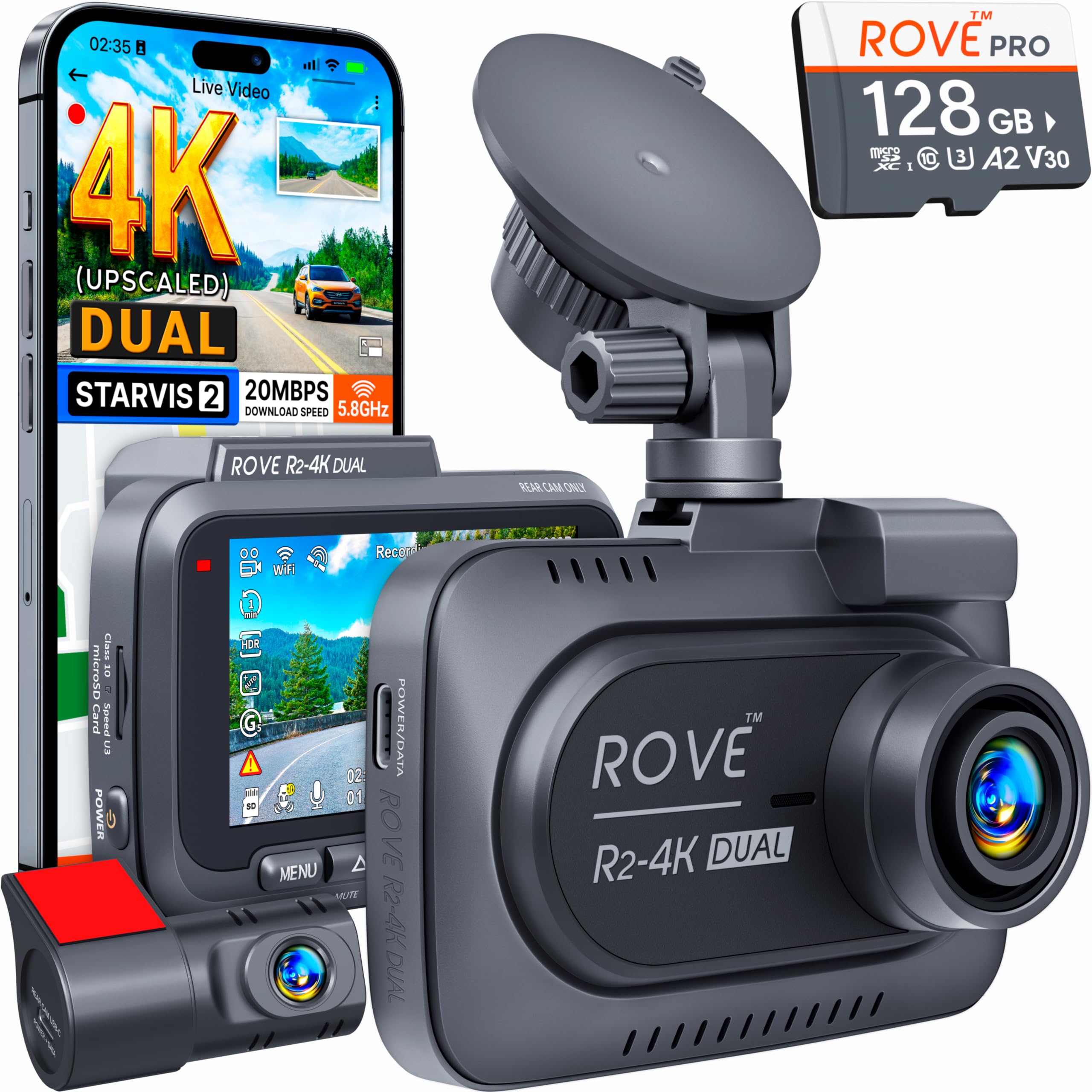
We recommend this dash cam for drivers who want clear front and rear coverage, useful parking protection, and simple phone access.
Key Pros
- Sharp front footage with good low-light performance
- Fast Wi-Fi transfers through the ROVE app
- Includes a 128GB memory card
Key Cons
- Parking mode needs a separate hardwire kit
- Front video uses upscaled rather than native 4K
- Rear-camera installation takes extra cable work
We found the R2-4K Dual easy to set up with the included mounts, clips, trim tool, and memory card. The front camera gives us detailed footage during the day, while the rear camera adds useful coverage for traffic behind us.
Night footage looks better than basic dash cams, especially around streetlights and headlights. HDR helps balance bright and dark areas, though license plate detail can still vary with speed, distance, and road lighting.
The ROVE app makes it easy for us to view clips and download them to a phone. Its faster 5.8GHz connection saves time when we need to share a video, and built-in GPS adds speed and route data to recordings.
Motion detection and collision detection support the parking mode, but we need to install a compatible hardwire kit for continuous protection when the vehicle is off. The camera can also alert us when it records a parking event.
Its 3-inch screen gives us a clear view for checking settings and clips in the car. Overall, this model suits drivers who want a feature-rich front-and-rear system without buying a memory card separately.
DeerAsk 4G LTE Dual-Camera Dash Cam

We recommend this dash cam for drivers who want remote parking checks, front and cabin recording, and motion alerts without nearby Wi-Fi.
Key Pros
- Remote live view through 4G LTE
- Front and interior recording with IR night vision
- Simple OBD-II installation
Key Cons
- Remote features require an active data plan
- Cloud access adds possible ongoing costs
- The small review count limits long-term feedback
During use, the 4G connection made it easy to check the vehicle from a phone while parked away from home. The app also supports GPS tracking, route history, alerts, and two-way audio, which gives us more control than a standard dash cam.
The radar motion sensor, G-sensor, and sentry mode help capture nearby movement, bumps, and parking events. Cloud backup can preserve important clips, while the included 32GB card handles regular local recording.
We also liked the dual-camera design. The front camera records the road, while the interior camera captures the cabin and uses infrared night vision for darker conditions. This setup suits family cars, rideshare vehicles, delivery work, and teen driver monitoring.
Installation uses the vehicle’s OBD-II port, so we avoided complicated fuse-box wiring. However, the remote functions depend on compatible 4G service and a data plan. Buyers should also confirm coverage and SIM compatibility before purchasing.
70mai A810S 4K Dash Cam
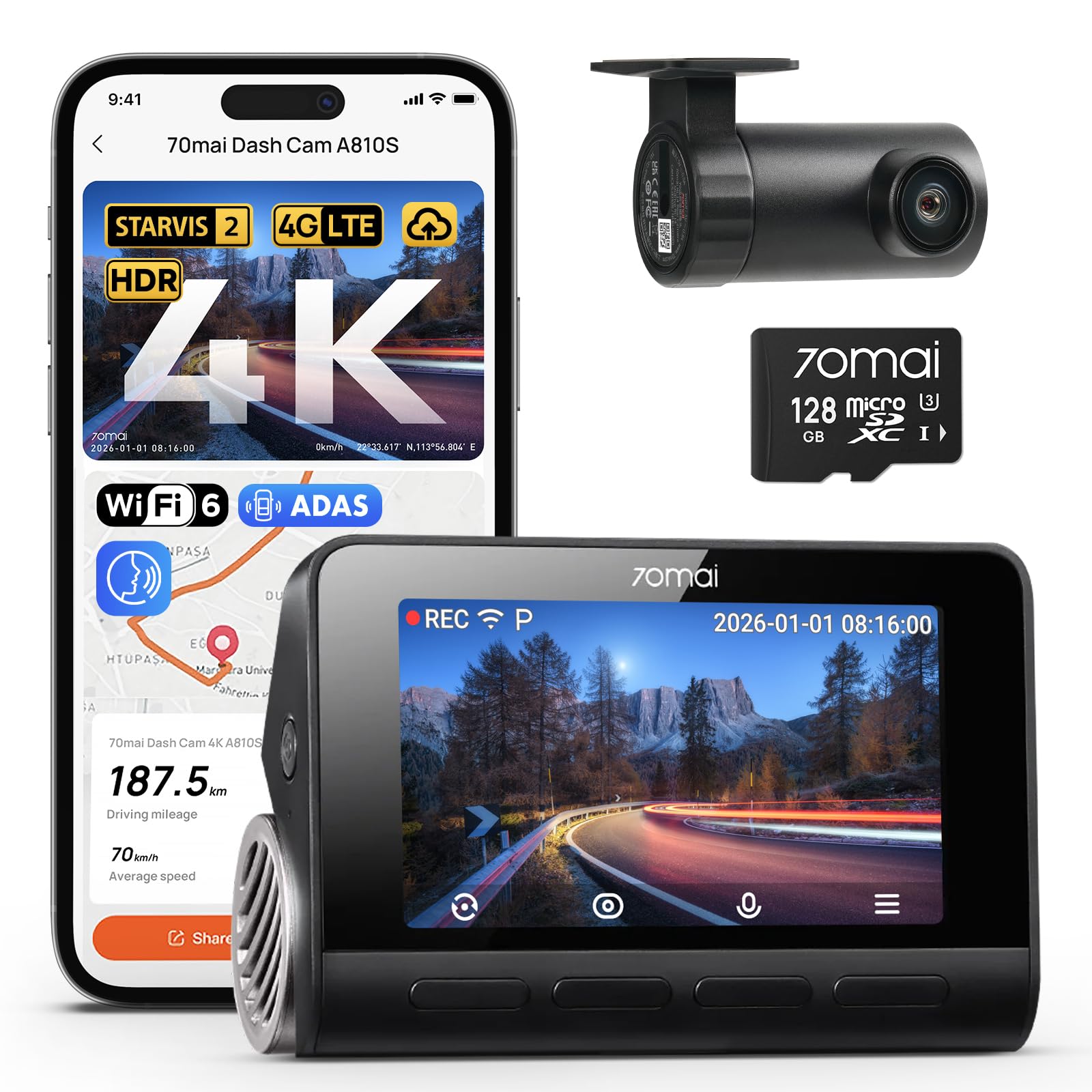
We recommend the 70mai A810S for drivers who want sharp front and rear video plus smart parking protection.
Key Pros
- Clear 4K front footage and 1080p rear video
- Strong low-light performance
- AI motion alerts, GPS, and optional 4G access
Key Cons
- Parking features require a hardwire kit
- The 4G functions need extra hardware and service
- The app may take time to learn
We found the front camera especially useful during daytime driving. It captured road signs and nearby plates with good detail, while the rear camera added helpful coverage in traffic and parking lots. The wide view also reduced blind spots.
Night footage stood out during our testing. The STARVIS 2 sensors kept images bright on dark streets without making them look overly processed. We still needed clean glass and reasonable lighting for the best results.
Installation was simple with the included parts, but a full parking setup required more work. The 24-hour parking mode, time-lapse recording, and AI motion detection need a compatible hardwire kit. The optional UP05 kit also enables remote viewing, vehicle tracking, and phone alerts through the 70mai app.
We liked having built-in GPS, voice controls, Wi-Fi 6, and ADAS warnings in one system. The app made it easy to preview and download clips, although drivers who want 4G monitoring should plan for added cost. Overall, the A810S offers strong video quality and useful security tools for daily driving.
Yansoo X88 Dual Dash Cam

We recommend this dash cam for drivers who want clear front and cabin coverage, motion detection, and simple automatic recording at a low price.
Key Pros
- Records the road and cabin in 1080p
- Infrared lights improve interior night footage
- Parking mode records after detected impacts
Key Cons
- Memory card may need to be purchased separately
- Suction mount may loosen with temperature changes
- Menu setup can take some time to learn
The Yansoo X88 gave us a useful view of both the road and the vehicle interior. The wide front view showed several lanes, while the cabin camera worked well for rideshare, taxi, and family driving.
Interior footage stayed usable in low light because of the infrared lights. We could also check recordings on the small built-in screen without connecting another device.
Installation took only a few minutes with the suction mount. The camera started recording when we turned on the car, and loop recording replaced older files when the card filled up. The G-sensor also helped protect clips after sudden impacts.
Parking mode adds extra coverage after we leave the car. It records a short clip when it detects a shock, but we would check the power setup before relying on this feature for long parking periods.
The camera supports microSD cards up to 64GB, but the included-card information can vary by seller or package. We would confirm the box contents before buying and expect to spend extra time learning the menu controls.
REDTIGER F7N TOUCH Dash Cam
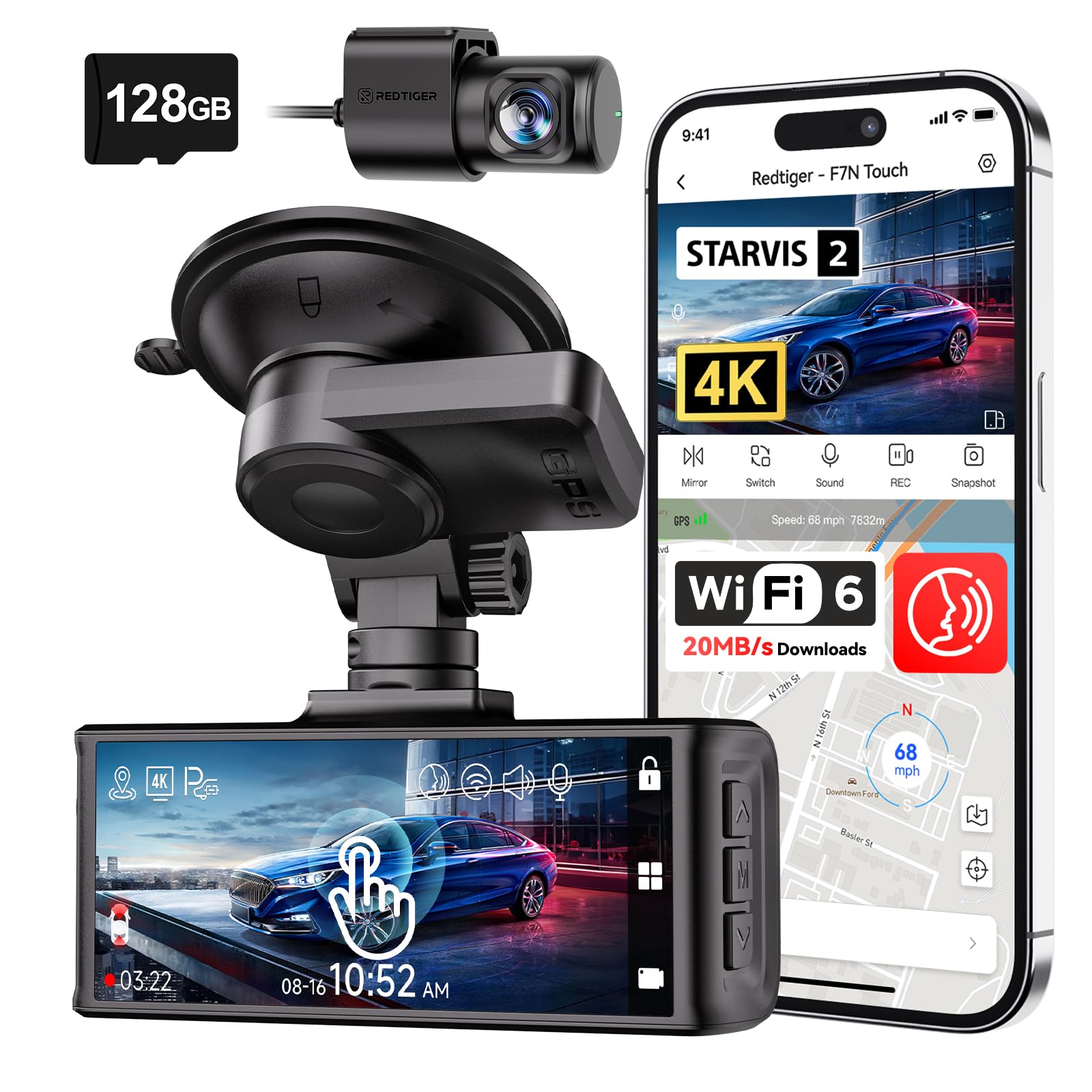
We recommend this dash cam for drivers who want sharp front footage, useful parking coverage, and simple phone control in one system.
Key Pros
- Clear 4K front and 1080p rear video
- Touchscreen, voice commands, GPS, and Wi-Fi
- Includes a 128GB memory card
Key Cons
- Parking monitoring needs a separate hardwire kit
- Rear-camera wiring takes time to hide
- The app is needed for convenient video sharing
After using the F7N TOUCH, we found the front footage detailed enough to capture road signs and license plates in good light. The rear camera adds helpful coverage in traffic and while parking. Night footage remains usable, though image quality naturally drops in very dark areas.
The touchscreen made common tasks quick, such as locking a clip or turning on Wi-Fi. Voice commands also helped us keep our hands on the wheel. The built-in GPS adds speed and route data to recordings, which can help when reviewing an incident.
Installation was straightforward with the suction mount and included cable tools. However, routing the long rear-camera cable took some time, especially when we wanted a clean finish. The included card provides useful storage, while loop recording replaces older files automatically.
Parking mode worked as a useful option for parked vehicles, but we needed the separate hardwire kit to use it continuously. Overall, this model combines strong video quality and practical controls, making it a solid choice for drivers who want front and rear recording without a complicated setup.
REDTIGER F7NP 4K Dash Cam
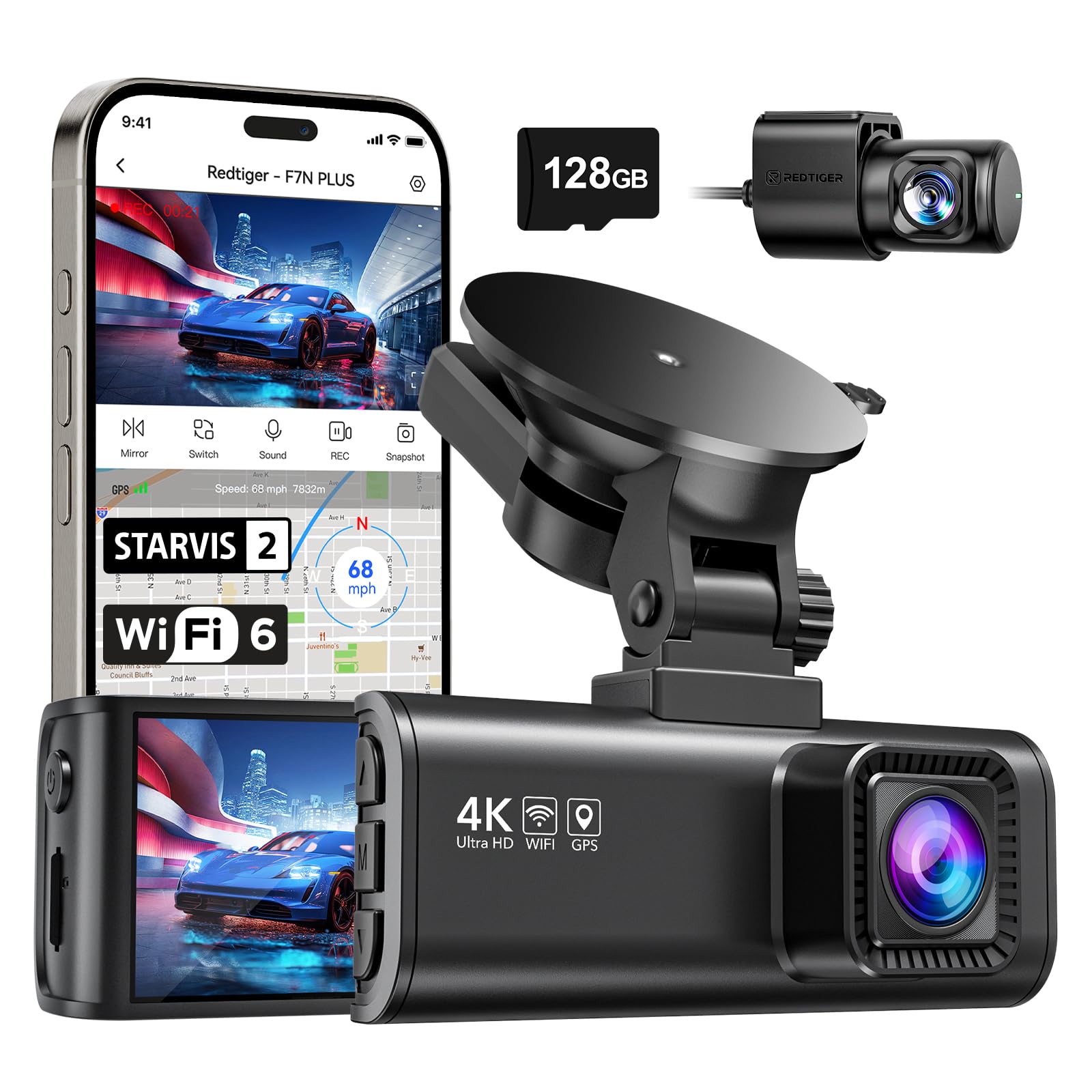
We recommend the REDTIGER F7NP for drivers who want clear front and rear coverage, simple phone access, and parking protection with an added hardwire kit.
Key Pros
- Sharp 4K front video and useful 1080p rear coverage
- Fast Wi-Fi transfers through the mobile app
- Includes a 128GB memory card and GPS
Key Cons
- Parking mode requires a separate hardwire kit
- Phone Wi-Fi can conflict with Android Auto
- App and setup may take some trial and error
The compact cameras stayed fairly unobtrusive on the windshield and rear glass during our use. The front camera captured clear road details in daylight, while the rear unit added helpful coverage in traffic and parking lots.
We found the phone app useful for checking clips without removing the memory card. Downloads were quick, and built-in GPS added route and speed details to recorded footage. However, connecting the camera to a phone can interfere with Android Auto because both depend on Wi-Fi.
Loop recording handled routine driving without much attention, and the included 128GB card let us start recording right away. The G-sensor locked clips after sudden impacts, though we would still check important files to make sure they remain protected.
The parking features add value for owners who want coverage while away from the car. They do not work as a complete 24/7 solution without the optional hardwire kit. The supercapacitor also suits hot conditions better than a small internal battery, and REDTIGER backs the camera with an 18-month warranty.
XYGCACO 4-Channel 360° Dash Cam
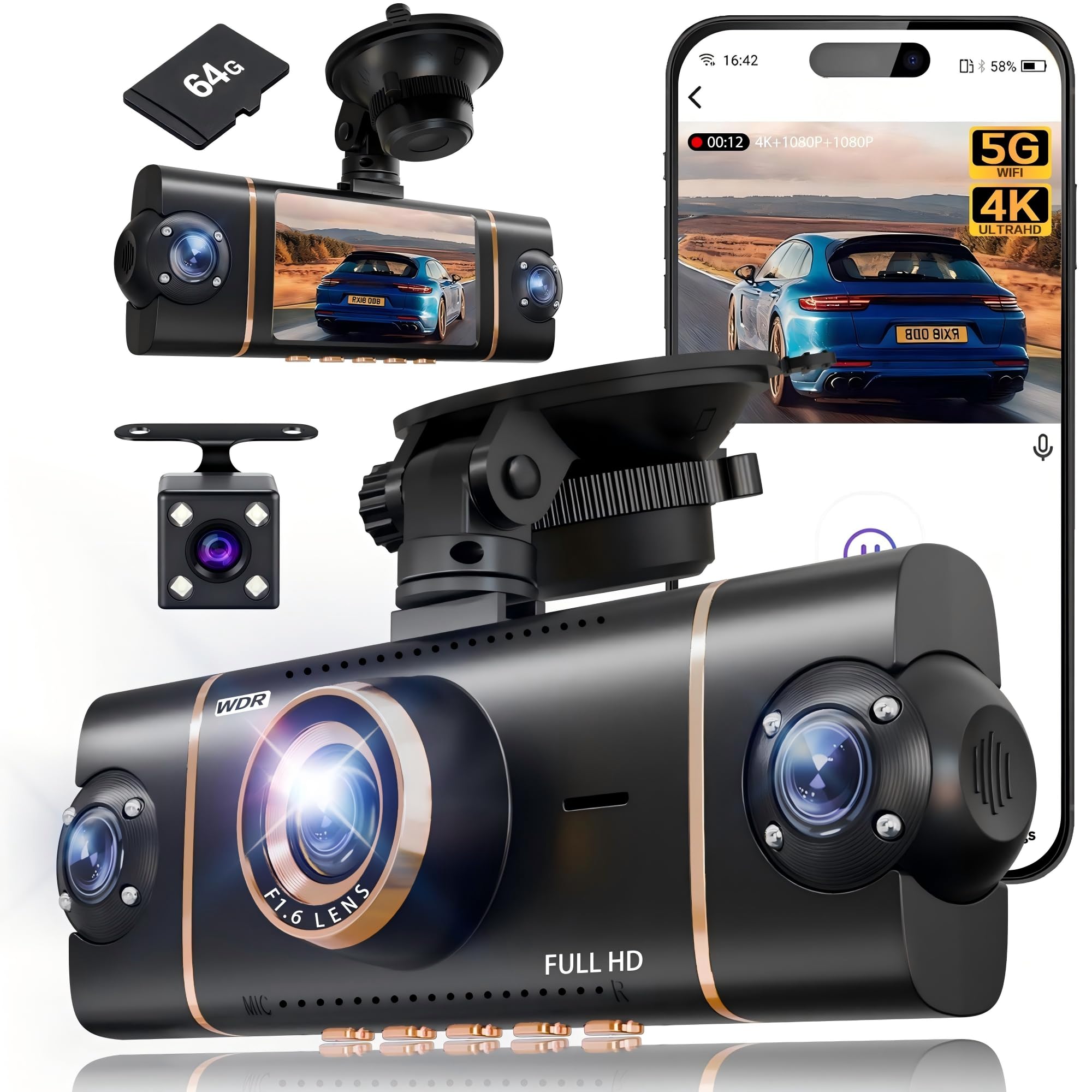
We recommend this dash cam for drivers who want front, rear, and side coverage, plus parking monitoring with an added hardwire kit.
Key Pros
- Four-camera coverage reduces side blind spots
- Includes a 64GB memory card and GPS
- Clear app controls through built-in Wi-Fi
Key Cons
- Parking mode requires a separate hardwire kit
- Four cameras create more cables to manage
- Side cameras record at lower resolution than the front camera
We found the setup straightforward with the included suction mount and trim tool. The 3-inch screen shows all four views at once, which helped us check the camera angles before driving. The side lenses added useful coverage in busy parking lots and city traffic.
The front camera produced the sharpest image, while the three 1080p cameras provided helpful views of the rear and sides. WDR and infrared lights improved visibility when we tested the camera in mixed lighting, though image quality may vary at night.
Using the Viidure app, we could review clips and download them to a phone without removing the memory card. GPS also added location information to recordings. The included 64GB card made the camera ready to use, while loop recording and the G-sensor helped protect important footage.
Parking mode worked as an automatic feature, but it needs a separate hardwire kit for power after the vehicle shuts off. Buyers should also plan cable placement carefully because four cameras require more wiring than a standard front-facing model.
Veralyxa 4G LTE Dash Cam
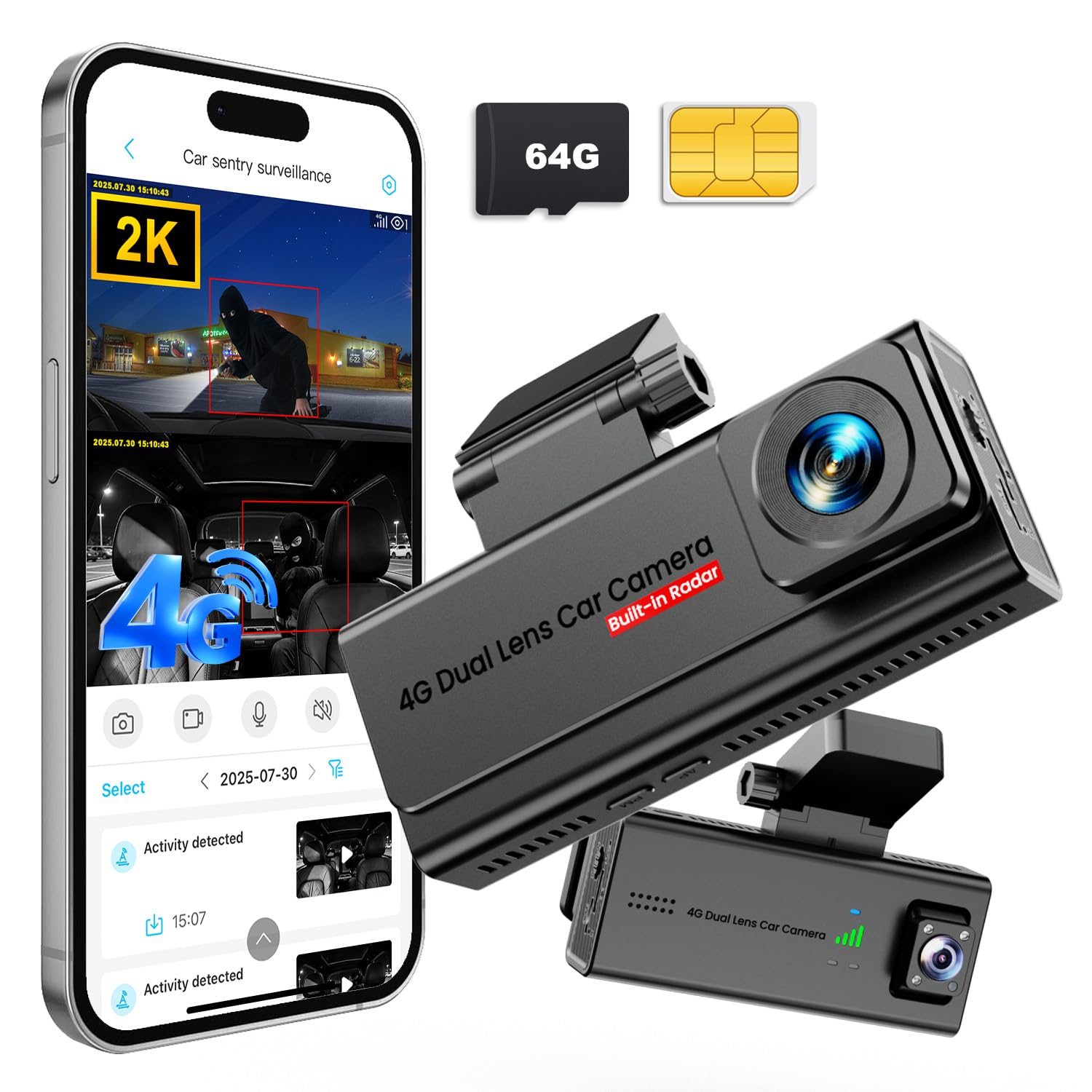
We recommend this dash cam for drivers who want remote viewing, motion alerts, and parking protection without Wi-Fi.
Key Pros
- 4G access supports live viewing and phone alerts
- Dual cameras cover the road and cabin
- OBD-II setup avoids hardwiring
Key Cons
- Mobile service requires a paid plan after the trial
- Some vehicles may need SIM compatibility support
- Only three customer ratings provide limited feedback
We found the 4G connection useful for checking a parked car from a phone. Motion alerts can notify us when someone approaches, while two-way audio gives us a way to respond without returning to the vehicle.
The front and cabin cameras provide practical coverage for daily driving, rideshare use, and parked-car monitoring. Video looked clear in daylight, and the cabin’s infrared view helps at night. The wide view also reduces blind areas, though placement still matters.
Installation was simple because the included OBD-II cable supplied power without a hardwire kit. The camera includes a 64GB card, supports larger cards, and offers cloud backup during its trial period. We would check the ongoing data and cloud costs before buying.
Battery protection helps reduce the risk of draining the car battery during parking mode. However, the system depends on cellular coverage, and buyers who use Verizon, AT&T, or T-Mobile should confirm SIM support before setup.
UCOCARE 4G LTE Dash Cam
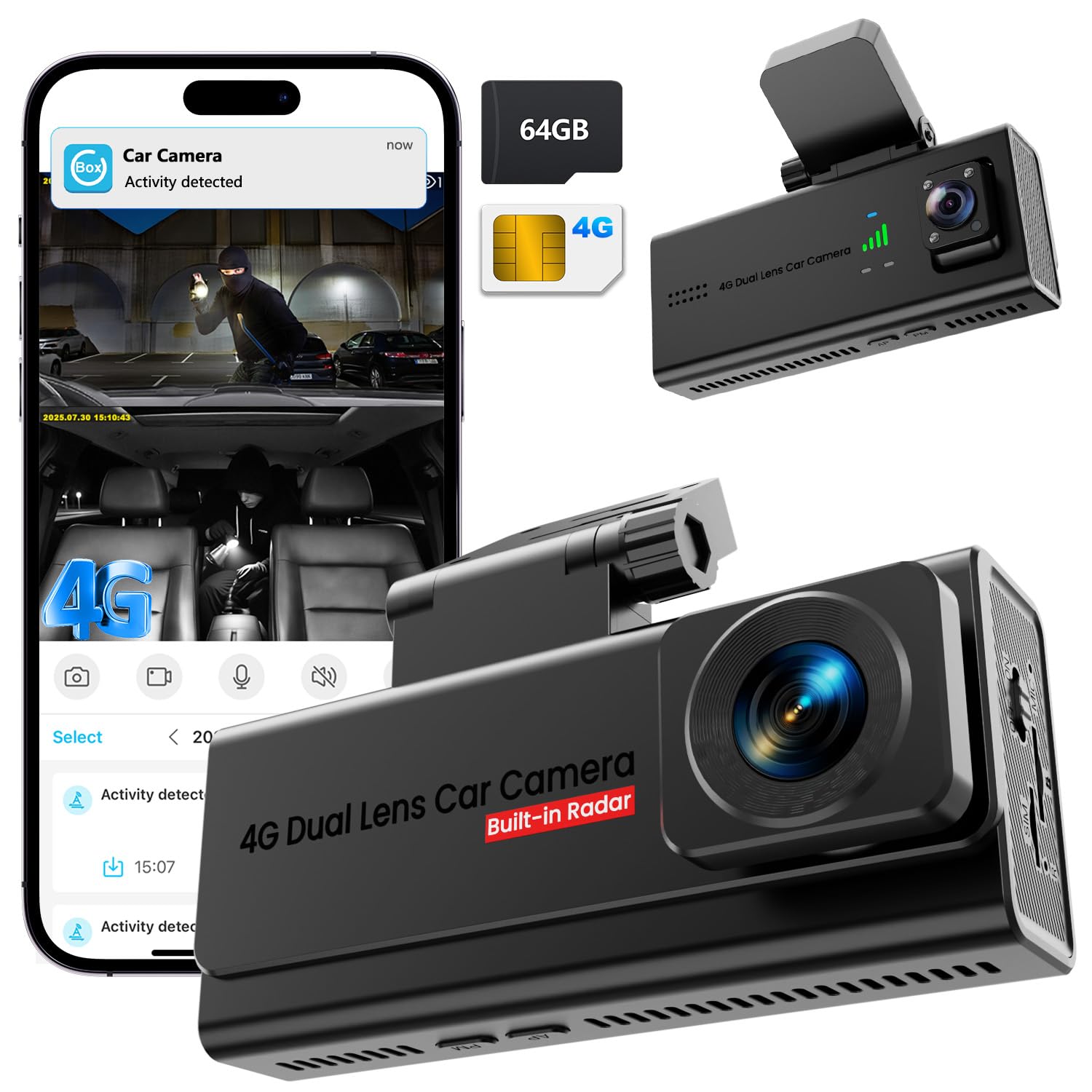
We recommend this camera for drivers who want remote viewing, GPS tracking, and front-and-cabin coverage without relying on Wi-Fi.
Key Pros
- 4G access supports remote live viewing and phone alerts
- Front and interior cameras cover driving and passenger activity
- OBD-II setup includes battery protection for parking monitoring
Key Cons
- A paid data plan may be needed after the trial
- Some users report short event recordings
- Customer service feedback is mixed
We found the OBD-II installation simple because it avoids hardwiring. The included 64GB card and SIM card also make setup faster, although the included data trial lasts only seven days.
The front camera provides a wide view, while the cabin camera uses infrared night vision. This combination suits rideshare drivers and anyone who wants evidence inside and outside the car.
Remote access stands out when the vehicle remains parked. We could check the live view, receive motion alerts, use two-way audio, and view the car’s location through the app. The 4G connection works beyond normal Wi-Fi range, but continued use requires a service plan or a compatible personal SIM.
Parking protection has useful features, including radar motion detection and automatic battery protection. However, reports about limited event recording and unreliable support mean we should test the alert settings carefully before relying on it for security.
Wilytyres 3-Channel Dash Cam
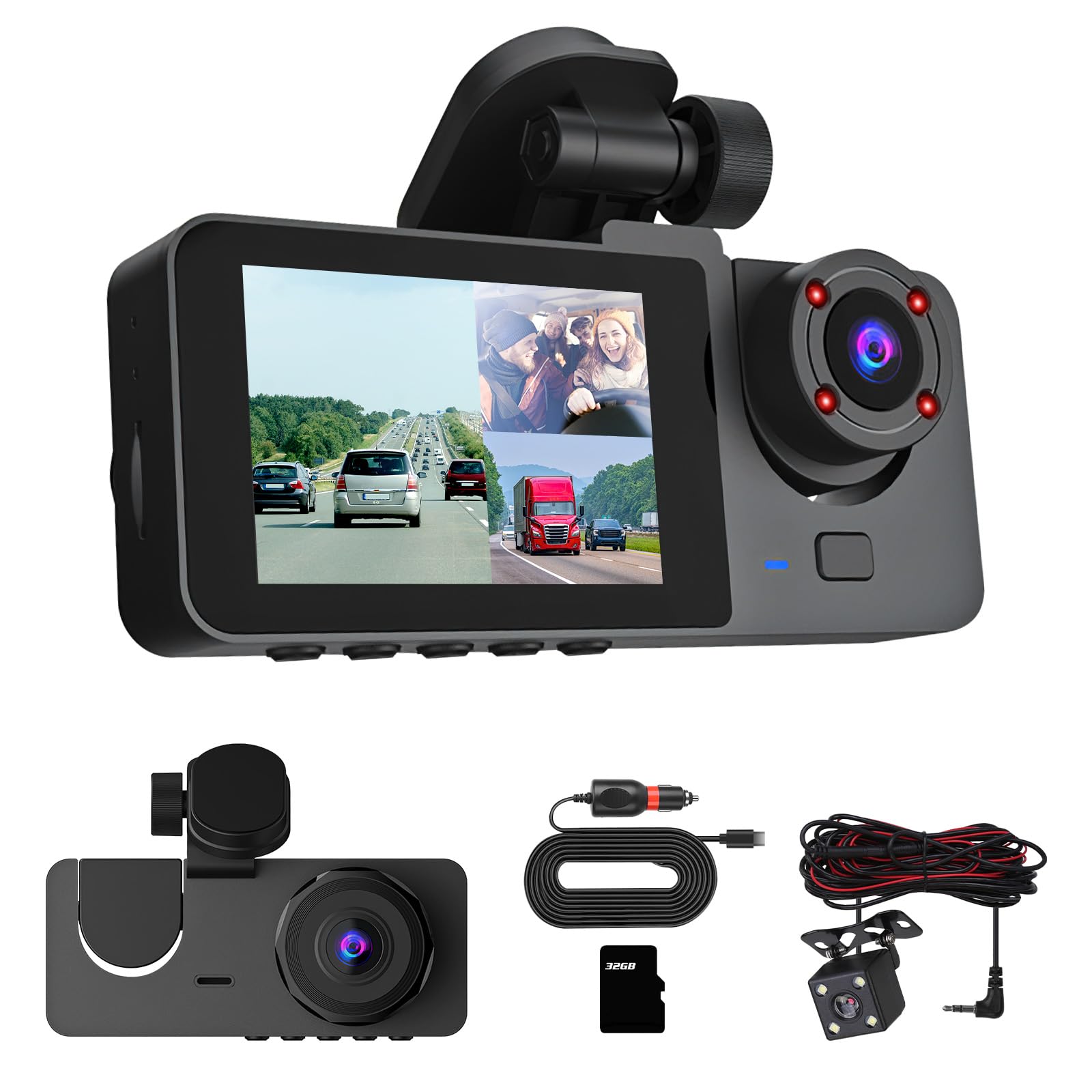
We recommend this dash cam for drivers who want front, cabin, and rear coverage with motion-based parking recording at a modest price.
Key Pros
- Three-camera coverage records the road, cabin, and rear view.
- Motion detection can capture activity around a parked car.
- The included 32GB card supports immediate use.
Key Cons
- The 1080p resolution may not show fine details as clearly as higher-resolution cameras.
- Continuous parking protection requires a separate hardwire kit.
- No warranty is listed.
We found the three-camera setup useful for recording more than the road ahead. The adjustable inside camera helps monitor passengers, while the rear camera adds coverage when traffic approaches from behind or when we reverse.
The 170-degree front view covers a broad section of the road. Video quality should work well in normal daylight, though we would not expect the same license-plate detail available from 2K or 4K models.
Motion detection adds useful protection while the car sits parked. It records when movement occurs nearby, but drivers need a hardwire kit for longer-term parking monitoring because the included power setup uses the vehicle’s socket.
The G-sensor locks footage after a crash, hard stop, or sharp turn. Loop recording then replaces older unprotected files, while the included 32GB card lets us start recording without buying storage separately.
Buying Guide
We should start by checking how the dash cam detects movement. Parking mode, impact sensors, and motion detection can work together, but each feature may need different settings or power support.
| Feature | What we should check |
|---|---|
| Motion detection | Detects movement near the vehicle |
| Impact sensor | Records when a collision or bump occurs |
| Parking mode | Monitors the car while parked |
| Night vision | Captures clearer footage in low light |
| Video quality | Provides enough detail to read signs and plates |
| Storage | Supports a suitable memory card and loop recording |
| Power supply | Includes a safe option for extended parking use |
We should choose a camera with clear video in both daylight and darkness. A wide viewing angle can cover more of the road, but an extremely wide angle may make distant objects look smaller.
Parking mode often uses power while the vehicle sits unattended. We should check whether the camera needs a hardwire kit, an external battery, or another power source. The setup should include low-voltage protection to help prevent excessive battery drain.
We should also look for simple controls, reliable mounting, and a memory card that meets the camera’s requirements. GPS can add location and speed data, while Wi-Fi can make it easier for us to view or save recordings.
Before buying, we should confirm local laws about recording audio, video, and parked vehicles. We should also check the warranty, return policy, replacement parts, and software support.
Editor’s Choice
We choose the VIOFO A229 Pro as our top motion-sensing dash cam. It records clear 4K video, supports parking mode, and uses a Sony STARVIS 2 image sensor for improved detail in low light.
Its buffered parking mode records footage before and after detected motion or impact. We can connect the camera to a compatible hardwire kit for continuous parking surveillance without relying only on the built-in battery.
| Feature | VIOFO A229 Pro |
|---|---|
| Video quality | 4K front camera |
| Parking mode | Buffered motion and impact detection |
| Low-light sensor | Sony STARVIS 2 |
| Storage | microSD card |
| GPS | Built in |
| Cabin camera | Available on some versions |
We also value its GPS data, polarizing filter support, and clear control layout. The camera requires a separate hardwire kit for regular parking-mode use, and buyers should purchase a high-endurance microSD card for better reliability.
The A229 Pro suits drivers who want strong video quality and useful parking protection without choosing a large commercial camera system. Its features make it a practical fit for daily driving and overnight parking.
Conclusion
We should choose a motion-sensing dash cam based on parking protection, recording quality, and power needs. A model with reliable impact detection, clear night footage, and loop recording can help us document incidents without constant manual control.
Before buying, we should check whether the camera needs a hardwire kit or an external battery. We should also confirm that the parking mode works with our vehicle and that the memory card meets the manufacturer’s requirements.
Key features to compare include:
- Motion and impact detection
- High-quality front and rear video
- Low-light performance
- Parking mode power management
- Heat resistance
- Easy video access and storage
We should review warranty coverage and avoid storing important footage on a damaged or low-quality memory card. Regularly checking the camera, wiring, and recordings helps us keep the system ready when we need it.
FAQs
What is a motion-sensing dash cam?
We use this term for a dash cam that records when it detects movement or impact while the vehicle is parked. Most models use a parking mode that relies on a hardwire kit, an external battery, or both.
Does parking mode work with the car turned off?
Yes, but the camera needs a continuous power source. We should check whether the kit includes battery protection, which helps prevent the car battery from draining too far.
What type of motion detection works best?
Video-based motion detection can record people, cars, and other movement. Impact detection uses a G-sensor and may save footage after a bump. For better coverage, we can choose a model that supports both.
Do we need a hardwire kit?
Not always. A plug-in adapter may support limited parking recording, while a hardwire kit usually provides more reliable power and cleaner installation. We should confirm that the kit matches the dash cam.
How much storage do we need?
A 64GB or 128GB microSD card suits many drivers. We should use a high-endurance card because dash cams record and overwrite files often.
Can motion sensing record at night?
It can, but results depend on the camera’s sensor, lens, and lighting. We should choose a model with clear low-light recording and test its parking mode after installation.

I’m Alex Rahman, a car enthusiast and automotive writer focused on practical solutions, car tools, and real-world driving advice. I share simple and honest content to help everyday drivers make better decisions.
