Why Does My OBD2 Scanner Return Zero Codes? Fixes & Causes
Quick Answer
An OBD2 scanner returning zero codes usually means either your vehicle genuinely has no active emissions or powertrain faults stored, the diagnostic tool is not establishing a proper communication link with the car’s computer, or recent battery maintenance has cleared the diagnostic memory.
Understanding the Zero-Code Reading
When you plug an OBD2 scanner into your vehicle’s diagnostic port and it returns zero codes, your immediate reaction might be relief. However, if your check engine light is actively illuminated on the dashboard, a zero-code reading points to a communication failure, a system limitation, or a transient power reset rather than a clean bill of health.
Modern vehicle computers manage thousands of parameters. Understanding why a scanner reports a clean slate requires looking at how diagnostic link connectors, powertrain control modules (PCMs), and readiness monitors interact. The absence of codes is only meaningful when the scanner is successfully communicating with the vehicle and all internal self-tests have completed.
Reason 1: Communication Link Failure Between Scanner and PCM
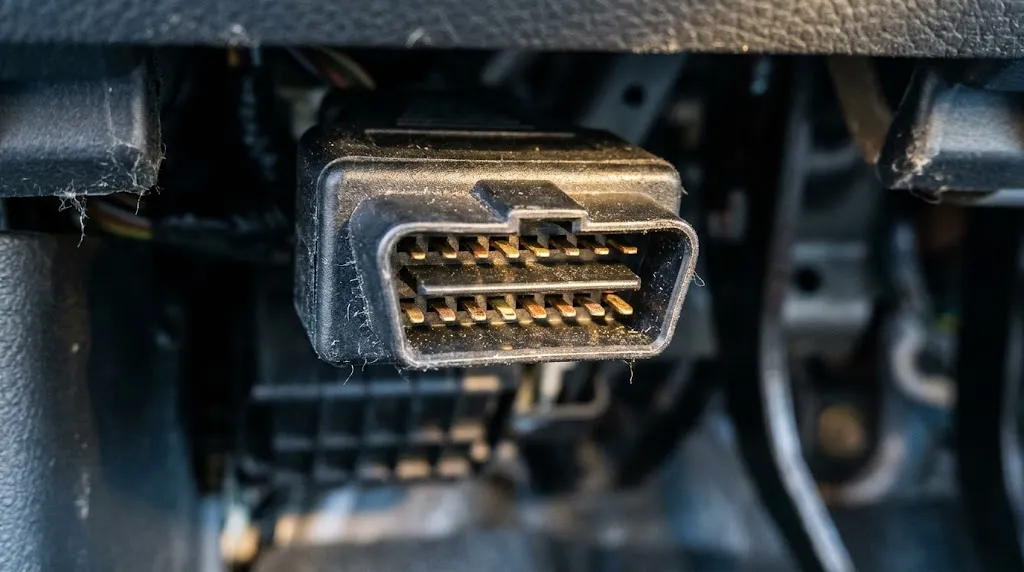
The most common mechanical reason for a zero-code or “link error” display is that the reader is receiving power from the diagnostic port but failing to handshake with the vehicle’s computer network.
OBD2 ports rely on specific communication protocols, such as Controller Area Network (CAN), ISO 9141, or SAE J1850. If the data pins within the under-dash connector are damaged, pushed back, or corroded, the scanner powers up via the constant 12-volt pin but cannot pull diagnostic data.
Tip
Check the cigarette lighter or accessory fuse in your cabin fuse box. On many vehicle makes, the OBD2 port shares a circuit with the power outlet. A blown fuse cuts power to the data lines, resulting in blank screens or unresponsive scans.
Reason 2: Recent Battery Disconnection or Code Clearing
If your vehicle’s battery was recently disconnected, replaced, or if a mechanic recently cleared the diagnostic memory using a high-end tool, the Powertrain Control Module clears all active, pending, and permanent diagnostic trouble codes (DTCs).
When memory is wiped, the computer also resets its internal readiness monitors. Even if an intermittent sensor fault exists, the vehicle must complete specific drive cycles—driving at sustained speeds, varying throttle positions, and operating at normal operating temperatures—before it can run self-tests and throw a new code.
Reason 3: Fault Types Outside Generic Powertrain Coverage
Standard budget OBD2 scanners are legally mandated to read generic SAE powertrain codes (P0xxx). They do not have access to manufacturer-specific codes, body control modules (B2xxx), chassis systems (C1xxx), or network communication errors (U0xxx).
If your dashboard warning light relates to ABS brakes, airbags, transmission shifting, or body electronics, a generic powertrain scanner will display zero codes because those faults live on separate communication sub-networks that require advanced diagnostic software.
Reason 4: Pending Codes Versus Confirmed Codes
A common point of confusion involves the distinction between pending codes and stored codes. When an intermittent sensor glitch occurs, the computer logs a pending code without immediately triggering the check engine light.
Basic code readers default to displaying stored or active codes that illuminate the malfunction indicator lamp. If you check the live data or pending code menu on your scanner rather than the primary fault menu, you may find an unconfirmed code that has not yet matured into a stored code.
How to Verify If Your OBD2 Scanner Is Working Properly
Before tearing into wiring harnesses or suspecting complex computer failures, verify that your diagnostic tool and port are functioning correctly using a structured troubleshooting sequence.
- Test on another vehicle: Plug your scanner into a known working vehicle to confirm the hardware functions properly.
- Verify ignition status: Ensure the vehicle’s ignition is turned to the ON position (engine off) or that the engine is running, depending on your scanner’s requirements.
- Check live data streams: Even if zero trouble codes appear, check whether the scanner can read live sensor data like coolant temperature or engine RPM. If live data streams flow, the communication link is healthy.
- Inspect the diagnostic port: Look inside the under-dash connector for bent pins, debris, or moisture intrusion.
Warning
Avoid forcing aftermarket OBD2 splitters, cheap Bluetooth dongles, or uncertified tracking devices into your diagnostic port. Loose tolerances can bend delicate terminal pins inside the factory connector, causing permanent electrical communication failures.
When Zero Codes Indicate a Deeper Electronic Issue
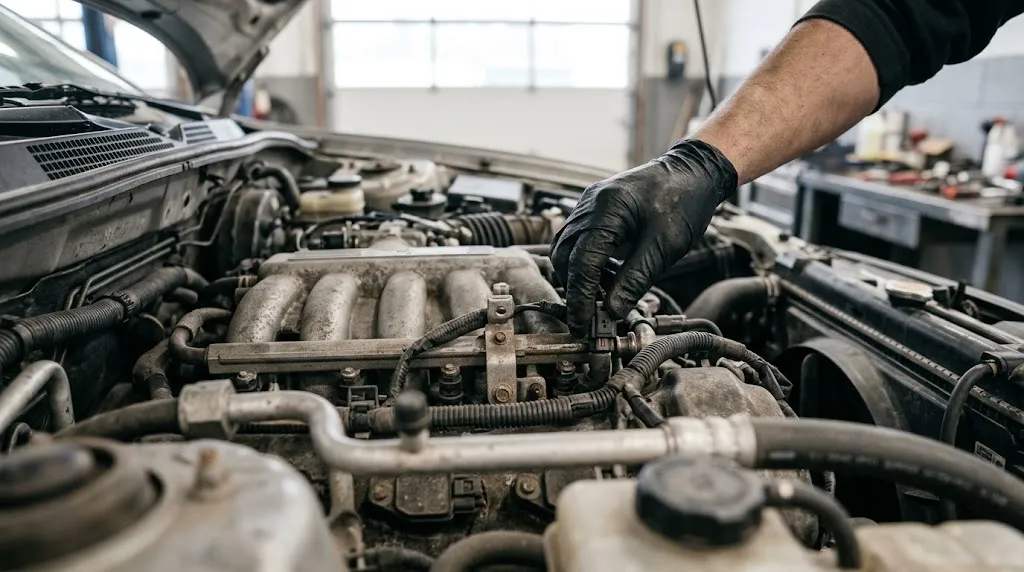
In rare instances, a vehicle may exhibit severe drivability symptoms—such as poor fuel economy, rough idling, or failure to shift properly—while showing zero codes. This condition usually points to mechanical failures that do not trigger electronic sensors, such as clogged fuel filters, restricted exhaust catalysts, low fuel pressure, or mechanical timing issues.
Furthermore, if a previous owner or unscrupulous seller installed an ECU tune that suppressed specific diagnostic trouble codes, the computer may be actively hiding fault data from external readers.
Related Product
OBD2 Diagnostic Scan Tool
Upgrade to a bi-directional diagnostic scanner that reads live data streams and manufacturer-specific system codes.
As an Amazon Associate, we earn from qualifying purchases.
Frequently Asked Questions
Can a bad car battery cause an OBD2 scanner to show no codes?
Yes. A weak or recently disconnected battery resets the vehicle computer’s volatile memory. This clears all stored trouble codes and resets internal readiness monitors, temporarily resulting in a zero-code reading even if past faults existed.
Why does my check engine light stay on if there are no codes?
If your check engine light is illuminated but a basic scanner shows zero codes, your tool is likely unable to read manufacturer-specific or ABS/body network codes. Alternatively, a pending code may be present that requires an advanced diagnostic scanner to view.
Do cheap code readers miss certain automotive problems?
Standard entry-level code readers only access generic powertrain emissions data. They cannot read proprietary manufacturer codes governing transmission performance, body electronics, airbag safety systems, or anti-lock braking components.
What should I check if my scanner says “Link Error”?
A link error indicates the tool is not communicating with the vehicle computer. Check your cabin fuse box for a blown accessory or cigarette lighter fuse, ensure the ignition key is in the correct ON position, and verify the scanner plug is fully seated.
How do I know if my OBD2 port has power?
Most basic OBD2 scanners feature an LED indicator light that illuminates as soon as the unit plugs into the port. If the scanner remains completely dark, pin 16 of your diagnostic connector is likely lacking 12-volt constant battery power due to a blown fuse.
Can clearing codes fix a car permanently?
Clearing codes only turns off warning lights and erases diagnostic memory; it does not repair underlying mechanical or electrical failures. If the root problem remains unresolved, the check engine light and associated trouble codes will return within a few drive cycles.
Conclusion
Encountering zero codes on an OBD2 scanner does not automatically guarantee your vehicle is free of mechanical or electrical problems. Communication errors, blown cabin fuses, recent battery resets, and limitations inherent to generic code readers often prevent fault codes from displaying correctly. By verifying power at the diagnostic port, checking live data streams, and understanding the scope of your scanning tool, you can accurately determine whether your vehicle’s systems are truly healthy or simply failing to communicate.

I’m Alex Rahman, a car enthusiast and automotive writer focused on practical solutions, car tools, and real-world driving advice. I share simple and honest content to help everyday drivers make better decisions.
