
Are Car Code Readers Worth It? Decide Before You Buy
Quick Answer
A car code reader is worth it for many owners, but not for every driver. It pays off when you check warning lights more than once, own an older car, or shop for a used car. It pays less when you drive a new car under warranty and always let a shop handle repairs.
- A reader shows the code behind a warning light.
- A code points to a system, not to a part.
- A reader suits repeat checks and simple faults.
- A shop visit still fits safety faults and complex faults.
Your check engine light is on, and you want to know what it means before you pay for a visit. A car code reader gives you that first clue in minutes, at home, with no shop visit. This guide shows what a reader can do, what it cannot do, and who gains value from owning one.
In this article
- What does a car code reader do?
- What can a code reader tell you?
- What can a code reader not tell you?
- Code reader vs scan tool vs shop diagnostic
- When is a car code reader worth it?
- When is a car code reader not worth it?
- What to check before you buy one
- Mistakes that waste money
- Frequently Asked Questions
What does a car code reader do?
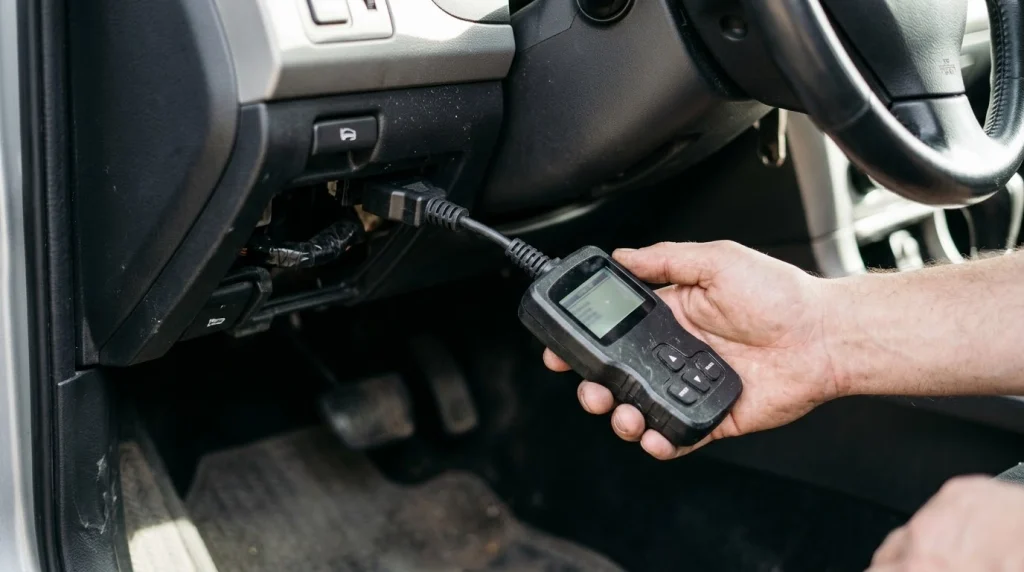
A car code reader plugs into the diagnostic port under the dash and reads fault codes from the car computer. The reader shows a code, such as P0300, and a short plain-language note for that code. You can then look up the code and learn which system set it.
The reader works with OBD2, the standard diagnostic system for many cars and light trucks. The OBD2 guide says OBD2 is fitted to cars and light trucks built after the OBD2 mandate. The guide also says the system helps find emissions faults. That shared standard is why one reader can work on many makes.
A reader also clears codes after you record them, and many readers show emissions readiness. Readiness shows whether the car has run its own self-tests for emissions systems. A reader does not fix a fault, and clearing a code does not repair the part behind it.
Most readers are simple to use, with a small screen and a few buttons. Some readers pair with a phone app, while others work on their own with no phone. Learn what a scanner can do before you pick a type, so the tool fits the job you have in mind.
What can a code reader tell you?
A code reader tells you which system set a warning light and whether the fault is stored or pending. A stored code means the car has seen the fault more than once. A pending code means the car has seen it once and has not yet confirmed it.
A reader can also show freeze frame data on many models. Freeze frame is a snapshot of engine speed, load, and temperature at the time the code was set. That snapshot helps you see the conditions that were present when the fault appeared.
A reader helps with a loose gas cap, a misfire code, and an oxygen sensor fault. A loose cap can set an emissions code, and a tight cap may let the light go out after a few trips. A misfire code points to the engine, and an oxygen sensor code points to the exhaust and fuel mix.
A reader helps you check a repair too. After a fix, you can read the codes again and see whether the same code returns. You can also check readiness before an emissions test, so you know whether the car has run its self-tests. Save the code, the mileage, and the freeze frame before you clear anything.
What can a code reader not tell you?
A code reader cannot tell you which part has failed. A single code can come from a sensor, a wire, a leak, or a worn part. The code names the area to test, and a test names the cause.
A basic reader often cannot reach systems outside the engine and emissions computers. Brakes, airbags, transmission, body, and tire pressure systems may need a fuller tool. That gap matters when the warning light sits outside the engine. Learn what a scanner cannot do before you trust one reading for every light.
A reader cannot see a worn brake pad, a weak battery, or a loose hose by itself. A reader cannot test a wire, a pump, or a valve. A reader cannot judge a noise, a smell, or a vibration. Those faults need a look, a test, or a drive.
A reader cannot prove that a used car is sound. A reader can show stored codes and readiness, but a seller may have cleared the codes just before the sale. A cleared code can hide a fault until the car runs its tests again. Pair a scan with a road test and a look under the car.
Code reader vs scan tool vs shop diagnostic
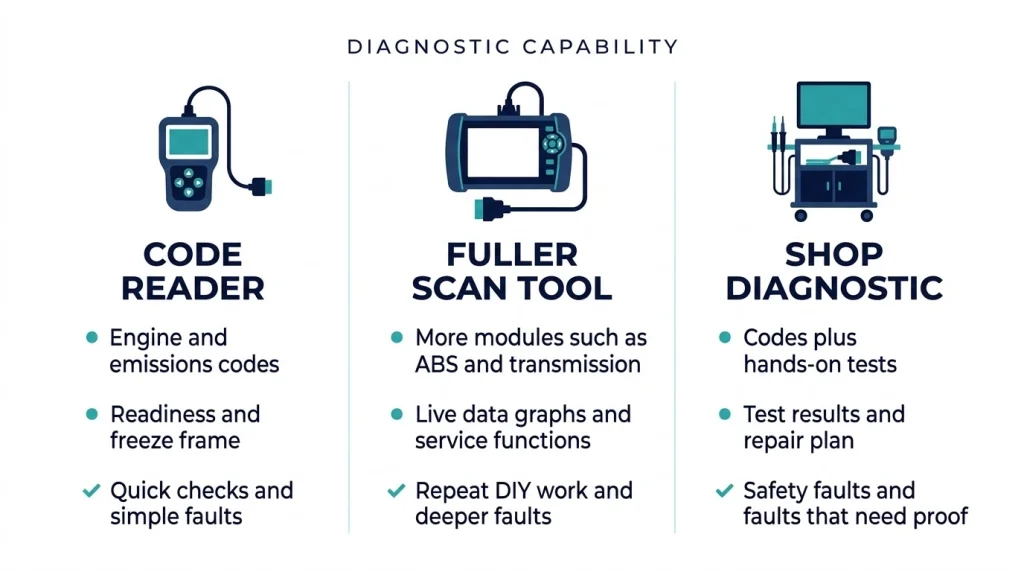
A code reader, a fuller scan tool, and a shop visit each answer a different question. A reader gives a fast first clue. A fuller tool gives more data and more systems. A shop visit gives tests and a repair plan.
The table below compares the three options on the points that matter to most owners. Use it to match the tool to the fault, not to the price tag alone.
| Option | What it reads | What it adds | When it fits |
|---|---|---|---|
| Code reader | Engine and emissions codes | Readiness and freeze frame on many models | Quick checks and simple faults |
| Fuller scan tool | More modules, such as ABS and transmission | Live data, graphs, and service functions | Repeat DIY work and deeper faults |
| Shop diagnostic | Codes plus hands-on tests | Test results, a repair plan, and safe handling | Safety faults and faults that need proof |
A code reader fits a fast check, while a shop visit fits a fault that needs proof. A fuller tool sits between the two, and it earns its place when you use live data and more systems often. Check scanner cost against how often you will use the tool, and weigh one shop visit against a tool you may use for years.
When is a car code reader worth it?
A car code reader is worth it when you will use it more than once and you want a clear first step. A reader turns a vague warning light into a code you can research. That code helps you decide whether to drive on, book a visit soon, or stop and seek help.
A reader pays off for an older car, a household with more than one car, and a used-car search. An older car can set a light more than once, and each scan gives you a record to compare. A used-car scan can show stored codes, pending codes, and readiness before you pay for the car.
Tip
Write down the code, the mileage, and the date before you clear anything, so you keep a record for the next scan.
A reader also pays off before an emissions test. You can check readiness at home and see whether the car has run its self-tests. If a monitor is not ready, you can drive the car through normal trips and check again. That check can save a failed test and a second visit.
If you
Own an older car and fix small faults yourself
Choose a simple reader, because repeat checks give you a clear record.
If you
Shop for a used car and want a first check
Choose a reader with readiness, because it can show cleared codes and unrun tests.
If you
See a light once in a long while and use a shop
Choose a free parts store scan, because one visit costs less than a tool you rarely use.
If you
Need ABS, airbag, or transmission codes
Choose a fuller scan tool, because a basic reader may not reach those modules.
When is a car code reader not worth it?
A car code reader is not worth it when you will rarely use it and a shop will handle every repair. A new car under warranty fits that case, since the dealer can read codes and fix faults under the warranty terms. A free parts store scan can also cover a rare light.
A reader is not worth it when the fault sits outside its reach. A brake warning, an airbag warning, and a steering fault need a tool that can read those modules. A basic reader may show no code at all, and a blank screen can give a false sense of calm.
A reader is not worth it when you want a repair plan from one reading. A code alone cannot name a part, and a guess can lead to a wrong part and a second repair. A shop test can prove the cause, and that proof can cost less than a wrong part.
A reader is also a poor buy for a car that does not use OBD2. Older cars may use a maker-specific system, and some trucks and motorcycles use other ports. Check the port and the car year before you buy, so the tool can talk to the car at all.
What to check before you buy one
Check the car first, then the tool. A reader is worth it only when it fits your car, your faults, and the way you will use it. A short check now can save a return later.
First, check the car and the port. OBD2 is fitted to cars and light trucks built after the OBD2 mandate, so a much older car may need a different tool. Look under the dash for the port, and check that the reader lists your make and model.
Second, list the systems you need to read. A basic reader covers engine and emissions codes, while a fuller tool covers more modules. If you need ABS or transmission codes, check the module list for your car, not just the box label.
Third, check live data and readiness. Live data shows sensor values while the engine runs, and readiness shows whether emissions tests have run. Both help you judge a fault, and both help you check a repair. Clearing codes can reset readiness monitors, so a reader that shows readiness is worth more before a test.
Fourth, check the screen, the cable, and the app. A clear screen helps in a dark garage, and a wired reader needs no phone or charge. A phone reader needs a charged phone and a stable app, so weigh ease of use against the extra data it gives.
Mistakes that waste money
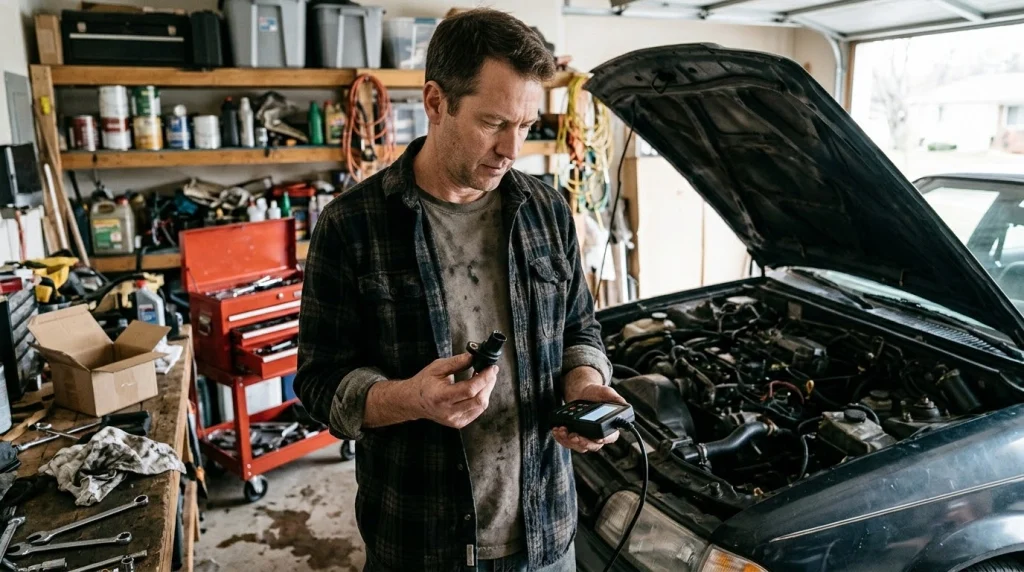
Most wasted money comes from treating a code as a repair order. A code points to a system, and a part swap without a test can miss the cause. A short pause and a test can save the cost of a wrong part.
Clearing a code before a test is a common mistake. Clearing codes can reset readiness monitors, and a car with too many unready monitors may fail an emissions test. The California Air Resources Board says permanent codes cannot be cleared with a scan device or by disconnecting the battery. A permanent code clears only after the fault is fixed and the monitor runs and passes.
Buying a tool for one light is another mistake. A reader earns its place through repeat use, not through one scan. Borrow a reader or use a free parts store scan for a single light, and buy a tool when you know you will use it again.
Do
- Record the code and freeze frame first
- Research the code before you buy a part
- Check readiness before an emissions test
Avoid
- Clearing a code to hide a fault
- Replacing a part from one code alone
- Ignoring a brake or airbag warning
Do not drive on with a flashing check engine light, a brake warning, or an airbag warning. A flashing light can mean a severe misfire, and a brake or airbag fault can affect safety. Stop, seek help, and let a trained technician test the car.
Car Code Reader
A car code reader helps you read the code behind a warning light at home before you decide on a shop visit.
Frequently Asked Questions
Can a code reader fix my car?
A code reader cannot fix a car, since it only reads codes and clears them after you record them. A fix needs a test, a part, or a repair, and the code only points to the system to test. Use the code as a first clue, then test the cause before you buy a part.
Do I need a code reader for one car?
A code reader suits one car when you check lights more than once or own an older car. A single light can be read with a free parts store scan or a borrowed reader. Buy a reader when repeat checks, used-car checks, or readiness checks make it useful.
Can a code reader read transmission codes?
A basic code reader often cannot read transmission codes, since those codes live in the transmission module. A fuller scan tool can read that module when it lists your make and model. Check the module list before you buy, and seek a shop test for a transmission fault.
Will clearing a code pass an emissions test?
Clearing a code will not pass an emissions test, since clearing can reset readiness monitors to unready. A car with too many unready monitors may fail the test, and a permanent code can stay until the fault is fixed. Fix the fault, drive through normal trips, and check readiness before the test.
Can I use a free parts store scan instead?
A free parts store scan can work for a single check engine light, since it reads stored codes and gives a short printout. A store scan may not show live data, freeze frame, or readiness in full. Own a reader when you want those checks at home, on your own time.
Does a code reader work on all cars?
A code reader does not work on all cars, since OBD2 covers cars and light trucks built after the OBD2 mandate in the United States. Older cars may use a maker-specific system, and some trucks use other ports. Check the car, the port, and the reader coverage list before you buy.
Conclusion
A car code reader is worth it when you will use it to check lights, learn the code, and decide the next step with care. If you own an older car and fix small faults yourself, keep a simple reader in the glove box.

I’m Alex Rahman, a car enthusiast and automotive writer focused on practical solutions, car tools, and real-world driving advice. I share simple and honest content to help everyday drivers make better decisions.
