10 Best Dash Cam for Video Quality: Top Picks for Clear Footage
Dash cams record the road ahead and can provide clear evidence after a crash or other incident. Video quality matters because sharp footage can make license plates, road signs, and driving details easier to see. Most models now record in at least 1080p, while higher-resolution cameras can capture more detail in good light.
For the best video quality, we focus on resolution, low-light performance, lens coverage, and image stability rather than resolution alone. A camera with a good sensor, wide dynamic range, and a reliable mount may produce clearer footage than a higher-resolution model with poor night performance. Features such as HDR, a wide-angle lens, GPS, and a useful frame rate can also affect how well recordings show important details.
We tested dash cams for image clarity in daylight, at night, and in changing light to identify the models that capture the most useful footage and make everyday recording simple.
Best Dash Cams for Video Quality
We selected the best dash cams for video quality based on image clarity, resolution, low-light performance, and useful recording features. Our list includes reliable options for capturing clear footage during both daytime and nighttime driving.
ROVE R2-4K Dual Dash Cam
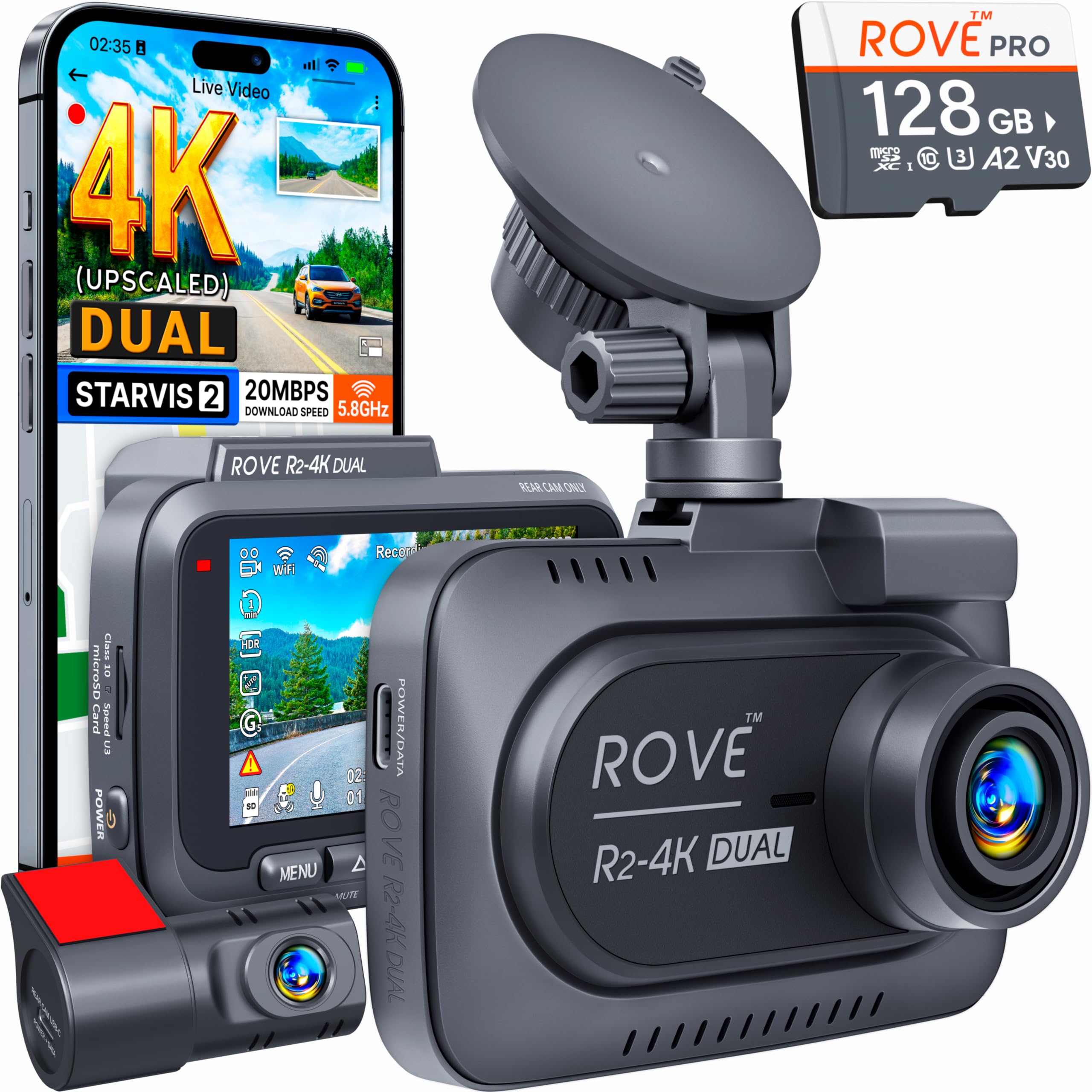
We recommend this dash cam for buyers who want sharp front footage, useful night recording, and a clear view from both ends of the car.
Key Pros
- Sharp front video with good detail in daylight
- Strong low-light performance from the STARVIS 2 sensor
- Fast phone transfers through 5.8GHz Wi-Fi
Key Cons
- Front video uses upscaling rather than native 4K
- Parking mode needs a separate hardwire kit
- Rear footage is limited to 1080p
After using the R2-4K Dual, we found the front camera captured road signs, lane markings, and nearby vehicles with clear detail in daylight. The image looked sharper than standard 1080p footage, although the advertised 4K output comes from upscaled 2.5K video.
Night footage stayed fairly clean under streetlights and in low-light areas. HDR helped balance bright headlights with darker surroundings, but license plate clarity still depended on distance, motion, and lighting.
The rear camera adds useful coverage without making setup difficult. Its 1080p video is suitable for documenting traffic behind us, though it does not match the front camera’s detail.
We also liked the quick Wi-Fi transfers. The ROVE app let us preview clips and move them to a phone without removing the memory card. Built-in GPS adds speed and location data, which can help when reviewing an incident.
The included 128GB card and mounting accessories simplify installation. For parking surveillance, we would budget for the optional hardwire kit and confirm that the vehicle’s power system supports it.
REDTIGER F7N TOUCH 4K Dash Cam
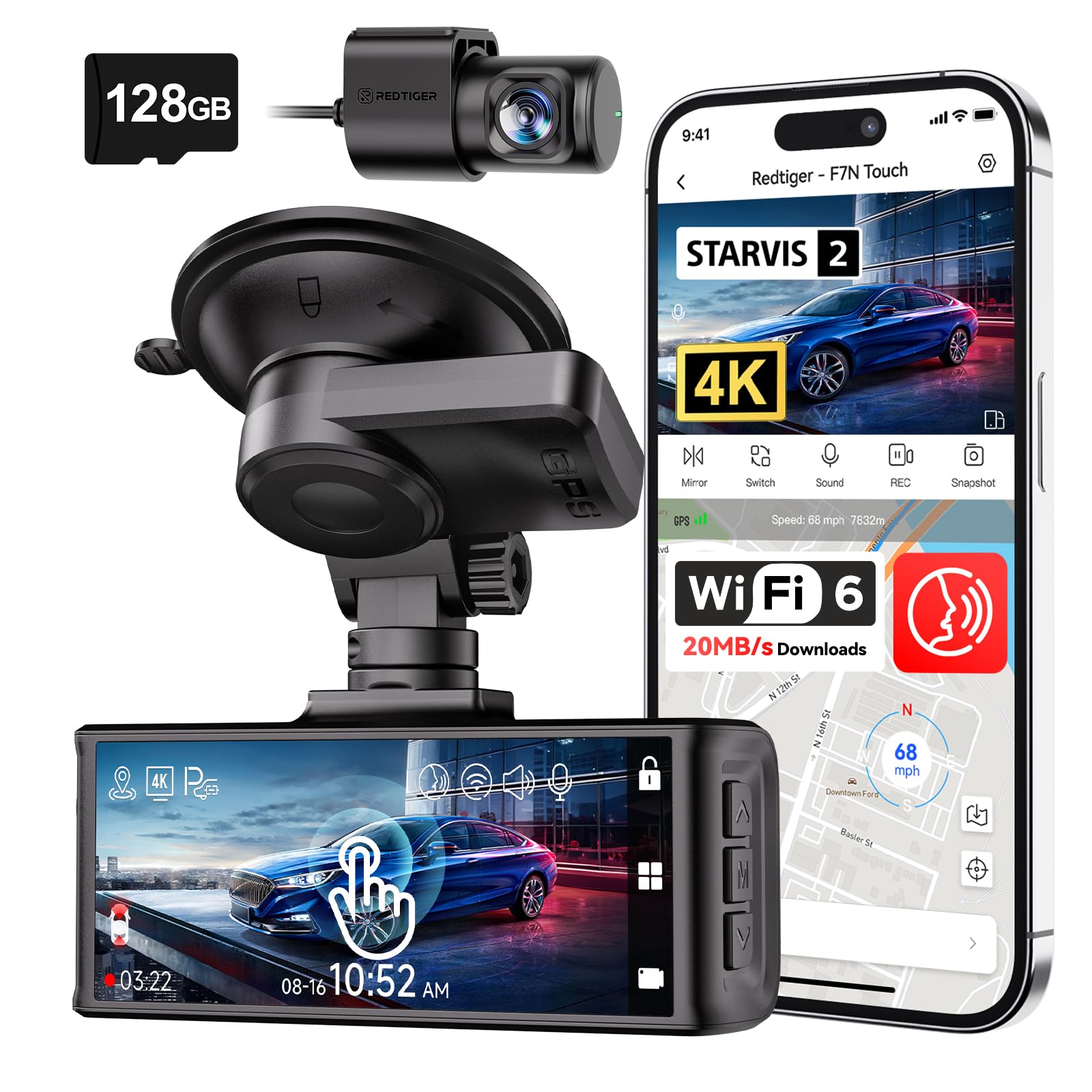
We recommend this dash cam for drivers who want sharp front video, useful rear coverage, and simple phone access at a reasonable price.
Key Pros
- Clear 4K front video with strong daytime detail
- Responsive touch screen, voice control, and fast Wi-Fi
- Includes a 128GB card and built-in GPS
Key Cons
- Rear video is less detailed than the front recording
- Parking monitoring requires a separate hardwire kit
- The small screen can feel cramped during playback
During testing, the F7N TOUCH produced clean front footage with readable road details in good daylight. Its wide view covered several lanes without making the image look overly distorted. The rear camera added useful coverage, though its 1080p video did not match the sharpness of the front camera.
Night recording remained usable, especially under streetlights and other nearby lighting. Dark areas still lost some detail, so we would not expect the same clarity in poorly lit roads.
We found the touch controls easy to use, while voice commands helped reduce screen handling while driving. The REDTIGER app made it simple to connect, review clips, and transfer files through 5GHz Wi-Fi.
Installation was manageable with the included cable and clips. The long rear-camera cable helped with routing, but a clean setup still took time. The included 128GB card adds value, and loop recording plus the G-sensor helps protect clips after a sudden impact.
GPS records route and speed information with the footage. Parking features can monitor impacts or create time-lapse clips, but drivers must purchase the optional hardwire kit for parked-car monitoring.
REDTIGER F7NP 4K Dash Cam
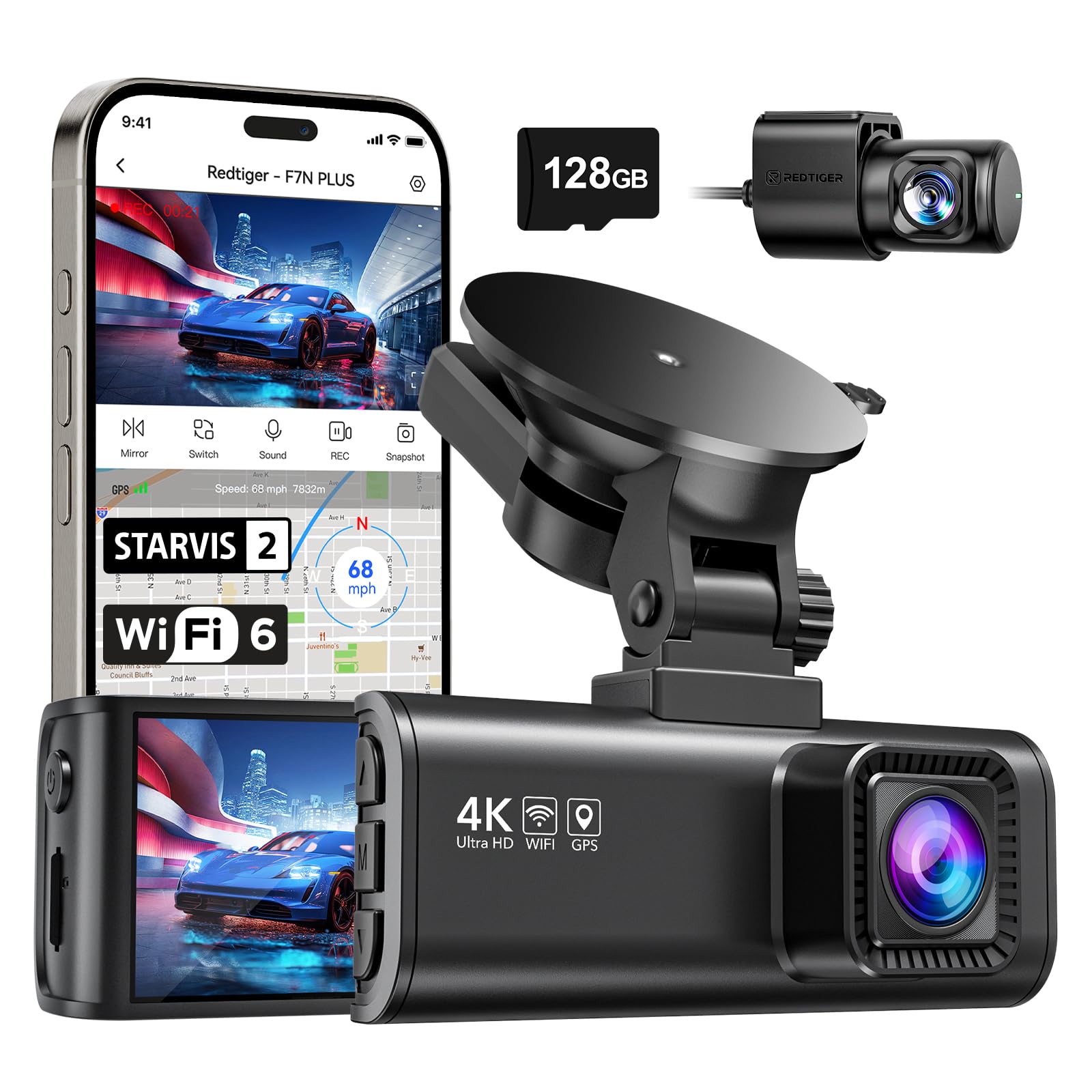
We recommend this dash cam for drivers who want sharp front footage, useful rear coverage, and simple phone access at a reasonable price.
Key Pros
- Detailed 4K front video with clear daytime images
- 1080p rear camera adds useful coverage
- Includes a 128GB memory card
Key Cons
- Parking mode requires a separate hardwire kit
- Rear-camera wiring takes time to route neatly
- App setup may require some trial and error
We found the front camera produced crisp video in daylight, with license plates and road signs easier to identify than with basic 1080p models. The wide view also captured more of the lanes around us without making the image look overly distorted.
Night footage remained usable, especially under streetlights and with passing headlights. Very dark roads showed less detail, but the STARVIS 2 sensor, HDR, and wide aperture helped balance bright and shadowed areas.
The rear camera added helpful coverage for traffic behind us. Its cable was long enough for a typical vehicle, though hiding it along the headliner and trim took patience. Both cameras stayed fairly compact once mounted.
We liked the built-in Wi-Fi for checking clips without removing the memory card. The app let us preview and download recordings, while GPS added speed and route information to the footage.
Loop recording worked as expected, and the included 128GB card made setup quick. Drivers who want parking protection should plan for the optional hardwire kit, since the standard power connection does not provide full 24/7 monitoring.
The supercapacitor should handle heat better than a battery-based design, and the 18-month warranty adds useful support. Overall, we consider the F7NP a strong choice when video quality matters most but buyers still want front and rear recording.
VIOFO A229 Plus

We recommend the VIOFO A229 Plus for drivers who want clear front and rear video, especially in changing light.
Key Pros
- Sharp 2K video from both cameras
- Strong night detail with HDR
- Fast Wi-Fi and useful voice controls
Key Cons
- Memory card sold separately
- Hardwire kit needed for parking mode
- HDR limits front video to 30 frames per second
We found the A229 Plus easy to use after installation. Its front and rear cameras record at 2K, and the footage looks detailed during daylight driving. The wide view also captures useful information around the vehicle without making the image feel overly distorted.
At night, the STARVIS 2 sensors help reduce noise and motion blur. HDR improves detail in scenes with bright headlights, dark roads, or uneven lighting. We would use HDR when capturing license plates matters more than the front camera’s higher frame rate.
The VIOFO app connects through 5GHz Wi-Fi, so we could preview and download clips without removing the memory card. Built-in GPS adds speed and location data to recordings, while voice commands let us lock clips or switch views without reaching for the camera.
The camera supports buffered parking mode, time-lapse recording, and low-bitrate recording. However, parking mode requires the separately sold HK4 hardwire cable, and the package does not include a microSD card. We would choose a high-endurance card made for dash cams to help avoid recording errors.
XYGCACO D65 4-Channel Dash Cam
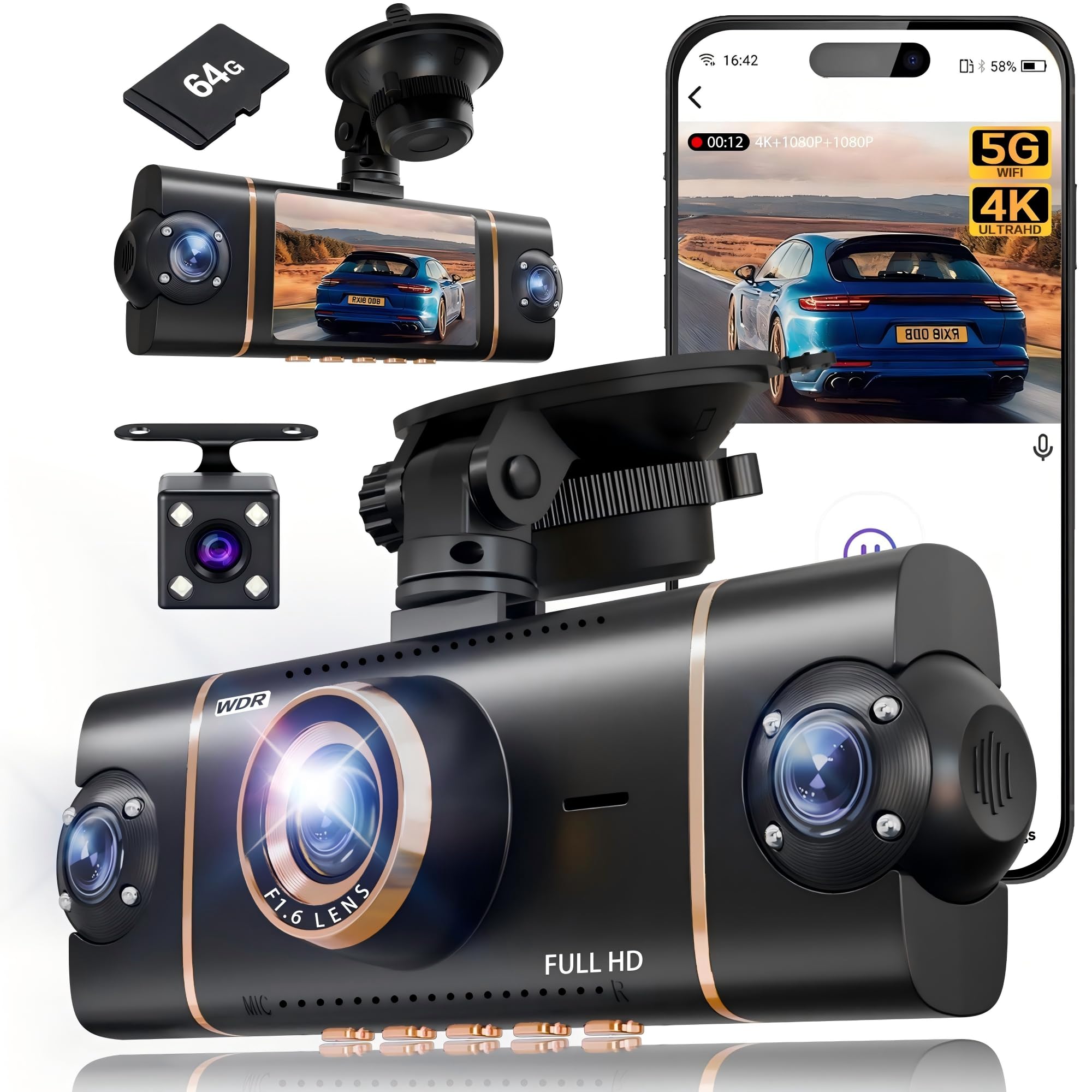
We recommend this dash cam for drivers who want broad vehicle coverage and sharp daytime video from one system.
Key Pros
- Records front, rear, left, and right views at once
- Produces clear 4K front footage in good light
- Includes a 64GB card, GPS, Wi-Fi, and app access
Key Cons
- Side cameras record at a lower resolution
- Parking mode requires a separate hardwire kit
- Four camera views require more setup and cable management
We found the four-channel layout useful in busy traffic because it records more than the road ahead. The front camera produced the clearest footage, while the rear and side cameras added helpful context during lane changes and parking.
The 3-inch screen showed all four views at once and made setup easier. We could also use the Viidure app to review clips, download files, and check GPS details without removing the memory card.
Night recording was acceptable, especially with the wide dynamic range and infrared lights. Bright headlights still affected some scenes, so we would not expect perfect detail in every low-light situation.
The suction mount held firmly during regular driving. Loop recording and the G-sensor helped protect important clips, while parking mode added monitoring after we turned the car off. That feature needs a separately purchased hardwire kit, which adds to the total cost.
Galphi Q2 4K Dash Cam
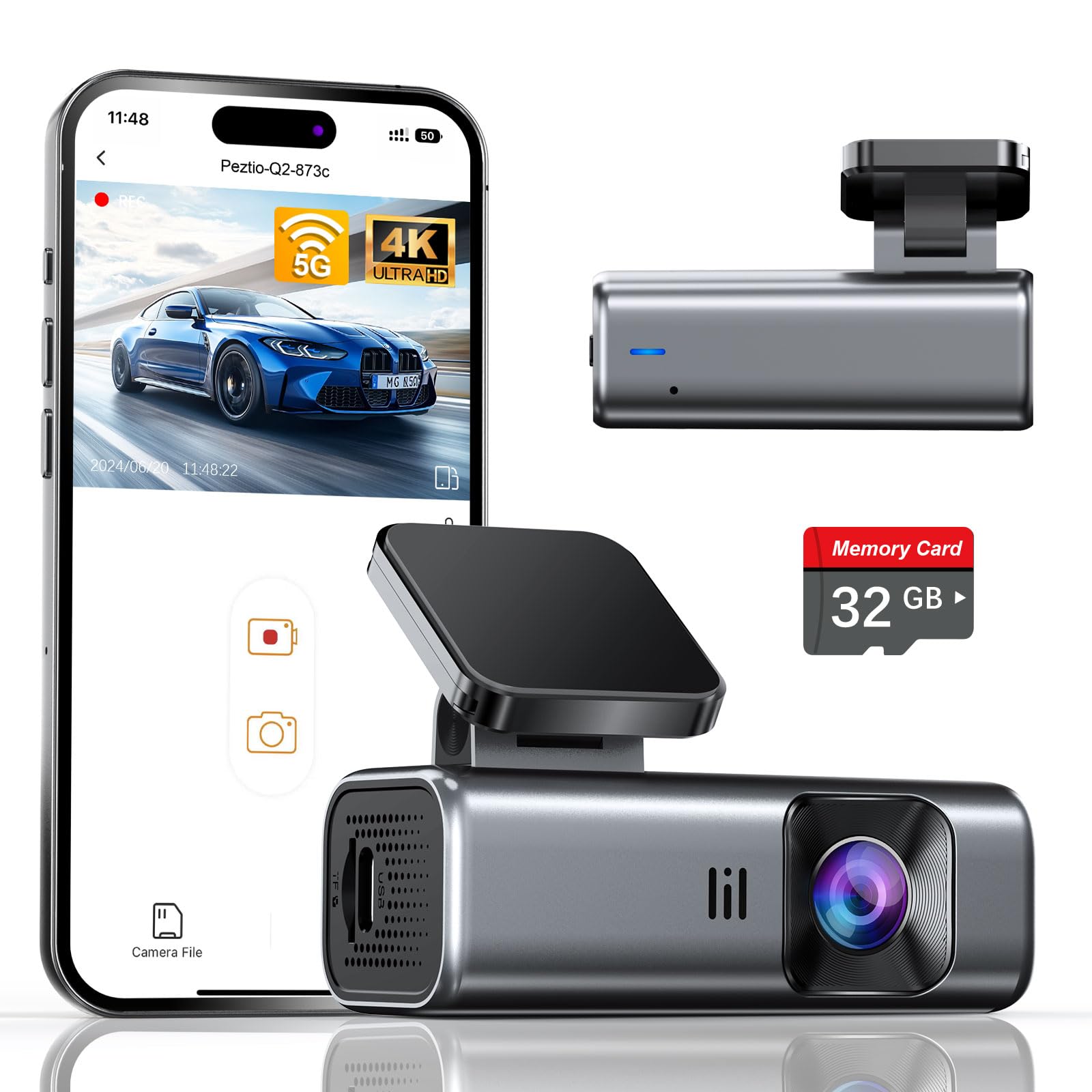
We recommend this dash cam for drivers who want sharp 4K front footage, simple installation, and quick phone transfers without a built-in screen.
Key Pros
- Sharp daytime video with a wide 160-degree view
- Fast 5GHz Wi-Fi app connections
- Includes a 32GB memory card
Key Cons
- No display for reviewing clips in the car
- Hardwire kit for parking mode costs extra
- The included card may fill quickly with 4K recording
We found the Galphi Q2 easy to place behind the rearview mirror because its small body does not block much of the windshield. The included adhesive pads, cable clips, and trim tool also make a clean installation easier, even for first-time users.
During the day, the 4K footage provides clear road details and useful coverage across nearby lanes. The wide lens helps capture more of an incident, although its edges may show some natural wide-angle distortion.
The f/1.6 lens and WDR help the camera handle nighttime driving, headlights, and changing light. We would still expect fine details to look less clear in very dark areas than they do in daylight.
Since the Q2 has no screen, we use the phone app to view and download clips. Its 5GHz Wi-Fi connection makes transfers more convenient, but the camera needs a compatible smartphone connection rather than a built-in control panel.
A 32GB card comes installed, which lets us start recording immediately. For frequent 4K use, we would choose a high-speed card with more storage, up to the supported 256GB capacity. Parking mode also requires a separate Type-C hardwire kit.
VIOFO A229 Pro 4K Dash Cam

We recommend the VIOFO A229 Pro for drivers who want sharp front and rear video in changing light.
Key Pros
- Detailed 4K front and 2K rear footage
- Strong night image quality with HDR
- Useful app, GPS, and voice controls
Key Cons
- Memory card sold separately
- Parking mode needs a hardwire kit
- Setup takes some time
We found the front camera especially clear in daylight, with enough detail to make signs and nearby license plates easier to see. The rear camera also produced clean footage, giving us better coverage than a front-only model.
At night, HDR helped balance bright headlights with darker areas around the road. The video remained detailed, though image quality still depended on weather, windshield cleanliness, and lighting.
The included polarizing filter reduced glare from the windshield. We also liked the 5GHz Wi-Fi connection, which made it quicker to preview and download clips through the VIOFO app.
Installation felt manageable, but routing the rear cable required patience. The camera includes several parking modes, yet continuous parking protection requires the separate HK4 hardwire kit. We also needed to buy a compatible microSD card before recording.
VIOFO A119 V3 Dash Cam

We recommend the VIOFO A119 V3 for drivers who want sharp front-facing video, useful night footage, and GPS without paying for extra cameras or smart features.
Key Pros
- Clear 1440p video with strong daytime detail
- HDR helps balance bright lights and dark areas
- Compact shape and dependable GPS recording
Key Cons
- Parking mode needs a separate hardwire kit
- No rear camera or Wi-Fi
- Small screen and basic controls
During testing, the A119 V3 produced crisp footage with enough detail to check road signs and license plates in many conditions. Its 60fps setting made daytime motion look smooth, while HDR helped reduce glare from headlights and bright skies at night.
The camera’s compact, wedge-shaped design sits close to the windshield and avoids blocking much of our view. Its GPS mount records speed, time, and route information, which can add useful context after an incident.
Setup remains simple, but the menu feels dated compared with newer touchscreen models. We also needed a suitable microSD card, and drivers who want parking coverage must buy the HK3 hardwire cable separately.
For buyers focused mainly on front video quality, the A119 V3 remains a practical choice. We would choose it over a feature-heavy model when clear footage and a discreet installation matter more than Wi-Fi, phone controls, or multiple cameras.
REDTIGER F17 4K 3-Channel Dash Cam

We recommend this dash cam for drivers who want sharp front footage plus useful cabin and rear coverage in one system.
Key Pros
- Clear 4K front video with strong low-light performance
- Three-camera coverage for the road, cabin, and rear
- Fast Wi-Fi transfers and built-in GPS
Key Cons
- The rear camera may look dark in some conditions
- Parking monitoring requires a separate hardwire kit
- The app needs a direct Wi-Fi connection to the camera
We found the front video especially clear during daytime driving. License plates, signs, and road details appeared well defined, while HDR helped balance bright skies with darker areas. The STARVIS 2 sensor also produced useful footage on dim streets, though nighttime results still depend on lighting and camera placement.
The three-camera setup gives us broader coverage than a standard front-facing model. The cabin camera includes infrared lights for interior recording, making it useful for rideshare drivers or family trips. The rear view adds helpful context, but some users may need to adjust its angle to improve brightness.
The built-in screen makes setup and quick playback simple. We also found the Wi-Fi connection useful for moving clips to a phone, although the app requires a direct connection to the camera. GPS records route and speed information, which can provide added context after an incident.
The included 64GB card helps get the system running, but frequent recording may require a larger compatible card. Parking modes also need the separately sold hardwire kit. The F17 uses a supercapacitor instead of a battery and includes an 18-month warranty, which adds some confidence for regular use.
VIOFO A329S 4K Dash Cam
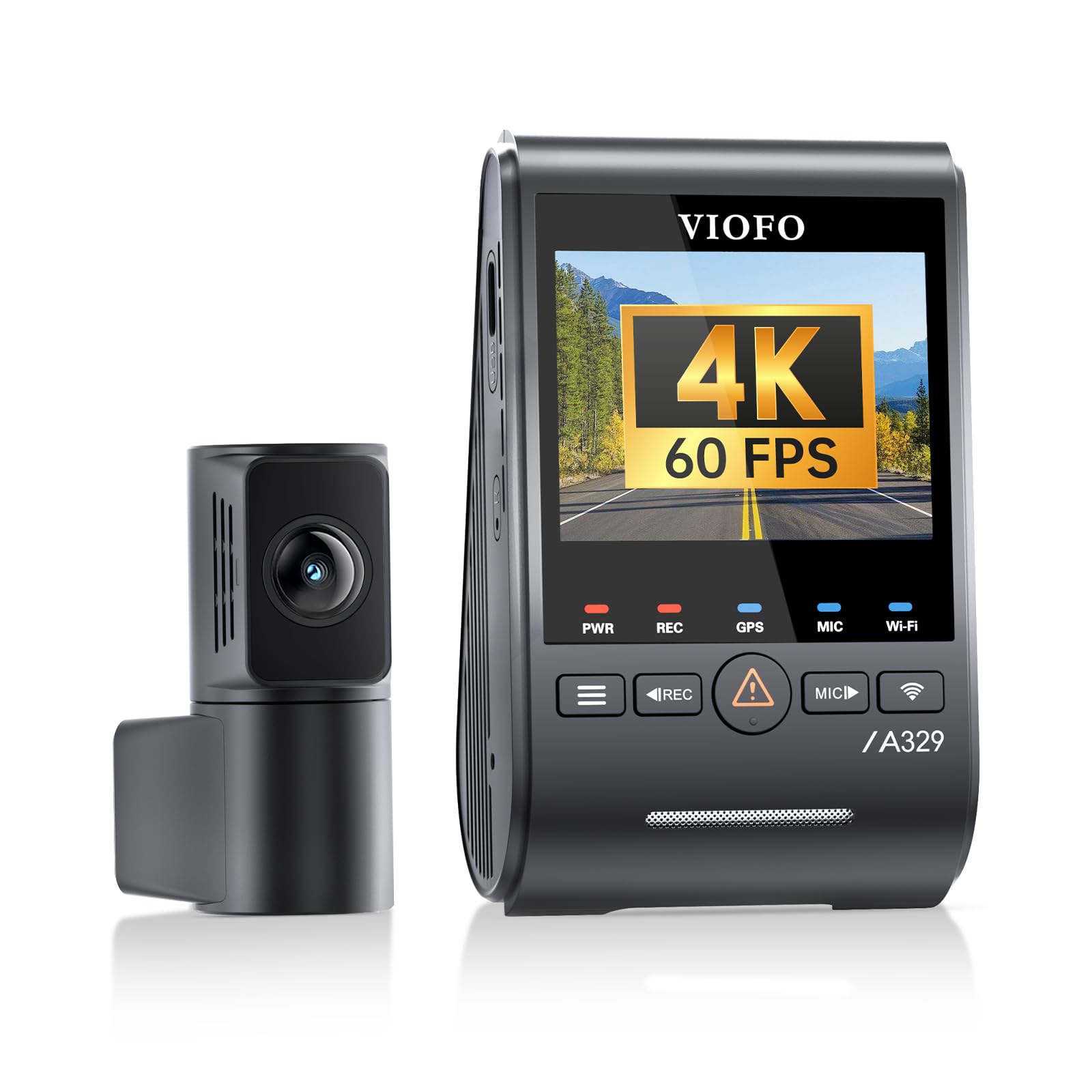
We recommend the VIOFO A329S for drivers who want sharp front and rear video, especially in low light and fast-moving traffic.
Key Pros
- Very clear 4K front video at 60 frames per second
- Strong low-light performance from both cameras
- Fast video transfers through Wi-Fi 6
Key Cons
- Rear-camera wiring takes time to install neatly
- HDR is not available with front 4K 60fps recording
- Storage card and hardwire kit cost extra
The front camera produces crisp footage with smooth motion, making road signs and nearby plates easier for us to review. The rear camera also records clear video, although it uses a lower frame rate than the front unit.
At night, the A329S handles dark roads and bright headlights well. The included CPL filter helps reduce windshield glare, which improves contrast during daytime driving. HDR can help balance bright and dark areas, but enabling it means giving up the front camera’s 60fps mode.
We found the Wi-Fi 6 connection useful when saving clips. Short 4K videos transferred quickly to our phone, so we did not need to remove the memory card for every important file.
Installation feels tidy once the cables sit behind the trim, but routing the rear cable takes patience. Parking recording also requires a separate hardwire kit, and buyers must provide their own microSD card or external SSD.
Buying Guide
We should judge a dash cam by the quality of its recorded footage, not just its advertised resolution. Look for clear details, accurate colors, and readable license plates in both daylight and low light.
| Feature | What to look for |
|---|---|
| Resolution | 1440p or 4K can capture more detail than 1080p, if the sensor and lens perform well. |
| Frame rate | Higher frame rates can make moving footage smoother and reduce blur. |
| HDR | Helps balance bright skies and dark areas in the same scene. |
| Night recording | Check for strong low-light performance and limited noise. |
| Lens and view | A wide view helps cover more road, but an extremely wide lens may distort edges. |
| Storage | Choose support for a suitable microSD card and loop recording. |
| GPS | Adds speed and location data to recorded files. |
| Parking mode | Records activity while the vehicle is parked, usually with a suitable power setup. |
We should also check how the camera handles glare, rain, shadows, and sudden changes in light. Sample footage from independent tests can reveal more than specifications alone.
A reliable mounting system, simple controls, and a clear phone or computer transfer process make daily use easier. We should confirm that the camera includes the needed power cable and supports the storage capacity we plan to use.
Before buying, we should review the warranty, software support, replacement options, and local recording laws. We should also choose a model with a privacy policy that clearly explains how it handles location data and uploaded video.
Editor’s Choice
We choose the Viofo A229 Pro for its strong video quality and balanced feature set. Its 4K front camera records clear details, while the HDR system helps control bright headlights and dark road scenes.
The camera also supports a 2K rear unit, giving us better coverage than a front-only model. Built-in GPS records speed and location, and Wi-Fi lets us transfer clips to a phone without removing the memory card.
| Feature | Details |
|---|---|
| Front video | 4K |
| Rear camera | Up to 2K |
| HDR | Front and rear |
| GPS | Built in |
| Phone access | Wi-Fi |
We recommend using a high-endurance microSD card because dash cams record and rewrite data often. A hardwire kit can also support parking mode, but installation may require extra care or professional help.
The A229 Pro suits drivers who want sharp footage without moving to a larger or more complex camera system. Its video quality, wide coverage, and practical controls make it our leading choice for daily use.
Conclusion
We should choose a dash cam that records clear video in both daylight and low light. A high-resolution sensor, wide dynamic range, and strong night performance matter more than a long list of extra features.
We also need to match the camera to our driving needs. A front camera may suit basic use, while front-and-rear coverage gives us better protection around the vehicle. GPS, parking mode, and a reliable app can add value when we need to review or share footage.
Before buying, we should check whether the camera includes a suitable memory card and supports loop recording. We should also use a high-endurance card and install the camera where it does not block our view.
Our key checks:
- Clear footage in changing light
- Readable plates at a useful distance
- Stable video with minimal blur
- Reliable storage and loop recording
- Easy access to saved clips
The best dash cam for video quality is the one that produces clear, usable footage in the conditions we face most often.
FAQS
What video resolution should we choose?
We should look for at least 1440p for clear license plates and road details. A 4K dash cam can capture more detail, but it usually needs more storage and may cost more.
Does HDR improve video quality?
Yes. HDR helps balance bright skies, dark roads, and strong headlights. We should choose a model with HDR if we often drive at night or in changing light.
Is a high frame rate important?
A frame rate of 30 frames per second works well for most drivers. Models that record at 60 frames per second can produce smoother video, but they may use more storage.
Do we need a polarizing filter?
A circular polarizing filter can reduce glare from the dashboard and windshield. It may improve image clarity, especially in bright daylight, but we must adjust it correctly.
How much storage should we use?
We should use a high-endurance microSD card that matches the camera’s requirements. A 128GB card often provides several hours of footage, depending on the resolution and recording settings.
Does the windshield affect video quality?
Yes. Dirt, dust, and reflections can reduce clarity. We should clean the windshield, place the camera behind the rearview mirror, and keep the lens unobstructed.

I’m Alex Rahman, a car enthusiast and automotive writer focused on practical solutions, car tools, and real-world driving advice. I share simple and honest content to help everyday drivers make better decisions.
