Does Clearing Codes Reset Readiness Monitors? | Leadfoot
Quick Answer
Yes. Clearing codes resets OBD2 readiness monitors to “Not Ready.” The check engine light may go off at the same time, but that does not mean the car has passed its emissions self-tests. The monitors must run again under the right driving conditions before they return to “Ready.”
If you have just pressed “Clear Codes” or “Erase DTCs,” the empty code screen can look like good news. It is only half the story: clearing also wipes the record of which emissions tests have finished, so an inspector sees a car that has not yet proved its systems are working.
What Happens When You Clear Codes?
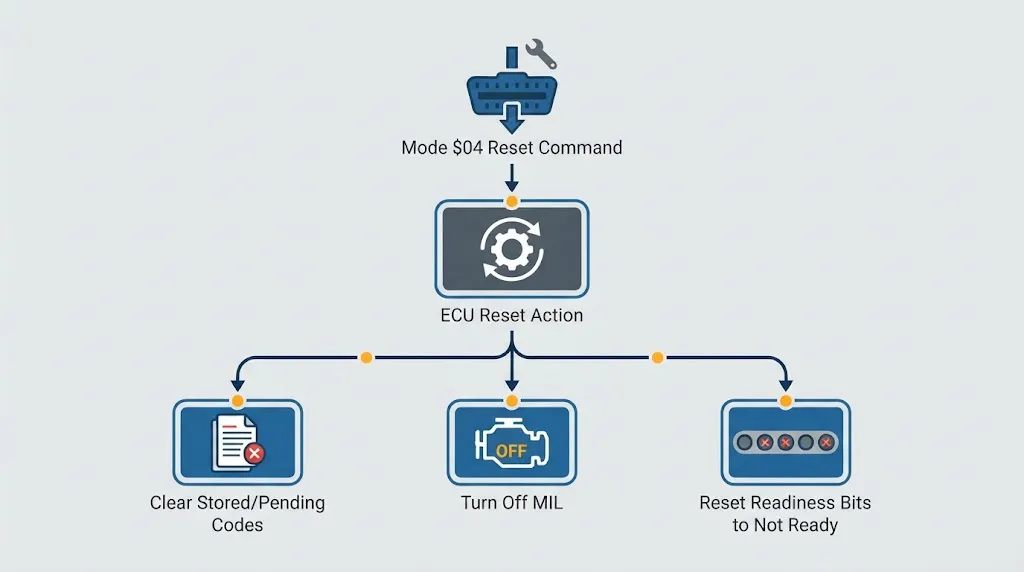
A scanner’s clear function sends a standard reset command, known as Mode $04, for emission-related diagnostic information. It is not a selective delete for one code. The command tells the powertrain computer to clear stored and pending emission-related trouble codes, turn off the malfunction indicator lamp, and clear the inspection and maintenance readiness bits.
Those readiness bits are the key to this question. Each monitor is a self-test for one emissions-related system, such as the catalyst, oxygen sensors, evaporative system, or exhaust gas recirculation system. After a clear, the computer no longer has a completed result for those tests, so it reports them as “Not Ready” or “Incomplete,” even though no fault code is present.
“Not Ready” does not mean “failed.” It means “not yet tested since the last reset.” A car can show no codes, no warning light, and several incomplete monitors at once, which is why a blank code screen is not proof of a passing emissions system.
Does It Reset One Monitor, or All of Them?
It resets the emission-related readiness status as a group, not just the monitor tied to the code you cleared. Clearing a catalyst code, for example, does not leave the evaporative and oxygen-sensor monitors untouched. They also return to “Not Ready” and must run again.
This catches many drivers out. They clear one code after a repair, drive a short distance, and expect only that system to need rechecking. In reality, the car must rebuild its whole emissions-test record, and some tests need particular temperatures, speeds, fuel levels, or driving patterns.
After any clear, assume the readiness record is fresh. Do not judge readiness from the cleared code alone; check the readiness screen, which lists each supported monitor separately.
Do Continuous and Noncontinuous Monitors Reset the Same Way?
Both kinds lose their completed status when codes are cleared, but they do not recover at the same speed. Continuous monitors run almost all the time the engine operates, so they can complete again soon after normal driving resumes. Noncontinuous monitors wait for their enabling conditions.
| Monitor type | After clearing codes | What usually restores it |
|---|---|---|
| Continuous, such as misfire and fuel system | Reset to “Not Ready” | Normal engine operation |
| Noncontinuous, such as catalyst and oxygen sensors | Reset to “Not Ready” | Warm-up, steady cruising, and varied driving |
| Evaporative system | Reset to “Not Ready” | Specific fuel level, temperature, and drive conditions; often last to complete |
| Not supported | Stays “Not Supported” | Nothing; the car does not have that system or test |
Do not count “Not Supported” as incomplete. It is normal for equipment the vehicle does not have, and clearing codes does not turn an unsupported monitor into a ready one.
What Else Does Clearing Codes Wipe?
Readiness is the most consequential loss for an inspection, but it is not the only one. A Mode $04 clear also removes stored and pending emission-related codes, the freeze frame snapshot taken when a fault was set, and related emission test results. Freeze frame can show engine speed, coolant temperature, and fuel trim at the moment of the fault, so losing it can make a returning fault harder to diagnose.
Recording information before clearing is therefore worth the extra minute. Note every stored and pending code, the freeze frame data, and the readiness status. If the same code returns, the original snapshot helps separate a fault that was never repaired from a new or intermittent problem.
Tip
Take a screenshot or photo of the code list, freeze frame, and readiness screen before clearing. After a clear, that record is gone, and a later “no codes” screen cannot recreate it.
What Clearing Codes Does Not Do
Clearing codes does not repair anything. If the sensor, leak, wiring fault, or catalyst problem is still present, the monitor will detect it again once its test runs, and the code and warning light can return. Whether a code comes back after clearing depends on whether the fault is still there, not on how thoroughly the scanner erased the old record.
Clearing also does not automatically remove a permanent trouble code. Permanent codes are designed to remain until the vehicle itself runs the relevant tests and confirms the fault is gone. That safeguard exists precisely so a quick clear cannot erase the evidence before an inspection.
Nor does clearing change inspection rules, force a monitor to pass, or prove a repair worked. A completed monitor with no new code is evidence for a successful repair; a cleared memory with incomplete monitors only shows the tests have not run yet.
Clearing Codes vs. Battery Disconnect vs. the Light Going Off
These three events look similar on the dashboard, but they are not the same reset. A scanner clear is targeted: it resets emission-related codes, freeze frame, and readiness, while leaving unrelated settings such as radio presets alone. Disconnecting the battery can produce a similar readiness reset, but it is blunt, can wipe learned and convenience settings, and still does not repair the fault.
A warning light going off on its own is different again. If the fault condition passes and the monitor completes successfully, the computer may turn the light off without a Mode $04 clear, so completed monitors are not wiped, because no reset command was sent. A light going out after a successful test is not the same event as erasing the test record.
That distinction explains why clearing is a poor inspection shortcut. Inspection equipment reads readiness status too, and a recent clear leaves that status incomplete. You trade a visible code for an incomplete-test result, then still need the repair and driving time afterward.
Warning
Do not clear codes just before an emissions test or a used-car inspection. The reset itself can make the car untestable until the monitors complete again, even if the original fault has been repaired.
Why an Inspection Can Fail With No Codes at All
An emissions inspection commonly checks whether the malfunction indicator lamp is commanded on, and whether enough readiness monitors are complete. After a clear, the first check may pass while the second fails, which is why the timing of a clear matters.
State programs vary, so check the local rule before booking a test. As a widely used guideline behind many state programs, the EPA’s vehicle inspection and maintenance information is associated with allowances of one incomplete noncontinuous monitor for 2001 and newer vehicles and two for 1996 to 2000 vehicles. Some states are stricter, and a catalyst monitor left incomplete on a retest can be treated differently. For the exact allowance, see how many OBD2 monitors can be incomplete.
A single incomplete monitor is not automatically a failure, but a fresh clear usually leaves several incomplete at once. That is the gap between “the light is off” and “the car is ready for inspection.”
How to Check the Reset Before and After Clearing
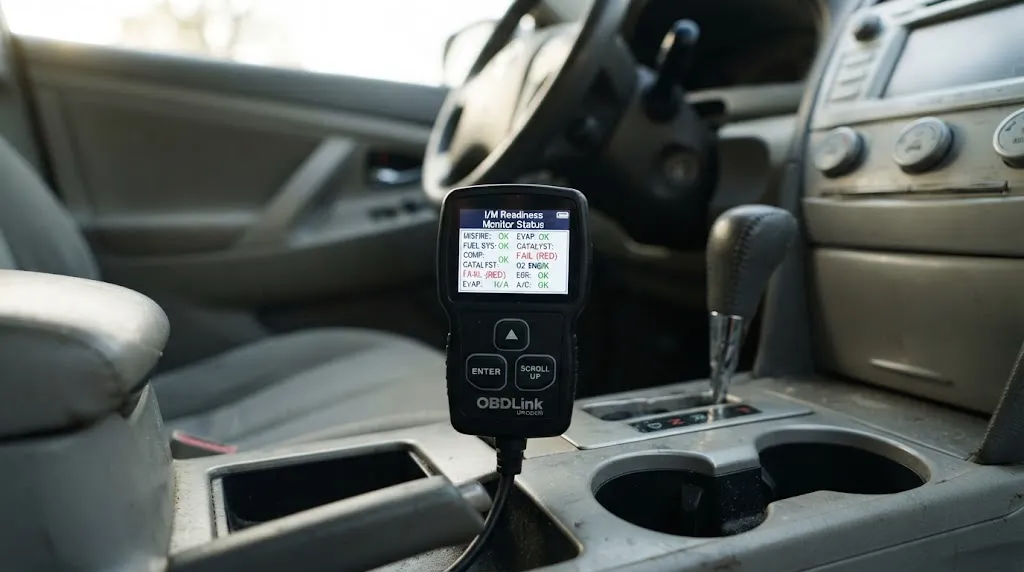
Use the scanner’s I/M readiness screen, not only the code screen. It lists each supported monitor as ready, not ready, or not supported, so you can see the reset directly instead of inferring it from the light. A scanner that can check emissions readiness makes this straightforward.
- Before clearing, record the codes, freeze frame, and readiness status.
- Clear only after a repair, or when you understand driving time will be needed before a test.
- Recheck immediately afterward. Most noncontinuous monitors should now show “Not Ready,” even with the light off.
- Drive under varied conditions, including cold starts, warm-up, steady cruising, and city driving, then recheck.
- Note which monitors change and which stay put. A monitor that stays incomplete may need its specific conditions, or a fault may be blocking its test.
When the scanner offers two views, use “Since DTCs cleared” after a reset. “This drive cycle” covers only the current trip, so it can look worse after a short drive.
If one monitor refuses to complete after several varied trips, that is a separate diagnostic question. See why OBD2 monitors stay not ready, rather than clearing again and restarting the whole process.
Common Misunderstandings After a Clear
- No codes means the car passed. No codes only means no fault is stored. Incomplete monitors mean the tests have not finished.
- Only the faulty system resets. Readiness resets as a group, so unrelated monitors also need to run again.
- More miles always fix readiness. Distance helps only if it includes the conditions each monitor needs. Steady highway miles alone may never trigger an evaporative test.
- Clearing again will help a stubborn monitor. Clearing again restarts every monitor, so it usually delays readiness.
- A battery disconnect is a cleaner reset. It is usually broader and less controlled than a scanner clear, and it does not repair the fault.
Related Product
OBD2 Scanner With I/M Readiness Display
A scanner with a clear readiness screen lets you confirm which monitors reset and which completed, without guessing from the light alone.
As an Amazon Associate, we earn from qualifying purchases.
Frequently Asked Questions
Does clearing codes reset all readiness monitors at once?
Yes, readiness resets as a group. Clearing one code does not reset only that system’s monitor. Continuous monitors may complete quickly, but noncontinuous monitors must each run under their own conditions.
Does clearing a pending code reset readiness monitors?
Yes, if you use the scanner’s clear function. It clears emission-related information, including pending codes, and resets the readiness bits, so record a pending code before clearing.
Can I clear codes and pass an emissions test the same day?
Usually not. A fresh clear normally leaves several monitors “Not Ready,” so check the readiness screen and your state’s rule before booking the test.
Does disconnecting the battery reset readiness monitors the same way?
It can, because monitor history is lost and the tests must run again. It is less targeted than a scanner clear and can also reset learned and convenience settings, so it is not a better shortcut.
Will readiness monitors reset if the check engine light turns off by itself?
Not in the same way. If the light goes off because a monitor ran and passed, no Mode $04 reset was sent, so completed monitors are not wiped by that event. A scanner clear or power loss is what actively resets the readiness record.
Does clearing codes remove permanent codes and freeze frame data?
Clearing removes freeze frame data, but a permanent code is designed to stay until the vehicle itself confirms the fault is gone through its own tests. That is why a clear cannot be relied on to erase a permanent code before an inspection.
Conclusion
Clearing codes does reset readiness monitors, as a group rather than for one system at a time. The light going off is not the finish line. Record the codes and freeze frame first, clear only after a repair or when you have driving time to spare, then confirm on the readiness screen that the monitors have completed before an inspection.

I’m Alex Rahman, a car enthusiast and automotive writer focused on practical solutions, car tools, and real-world driving advice. I share simple and honest content to help everyday drivers make better decisions.
