
Can an OBD2 Scanner Work on Hybrid Cars?
Quick Answer
Yes, an OBD2 scanner can work on many hybrid cars. A basic scanner can often read standard engine and emissions-related trouble codes, but diagnosing the hybrid battery, inverter, electric motor, or other specialized systems usually requires a scanner and software with vehicle-specific hybrid coverage.
Most hybrid cars have an onboard diagnostic system that allows a compatible scanner to communicate with the vehicle’s computers. The important distinction is that connecting successfully does not mean the scanner can access every system or retrieve every fault code.
If your hybrid has a check engine light, a basic OBD2 reader may provide a useful starting point. If the dashboard displays a hybrid system warning or a traction battery alert, you may need a more advanced diagnostic tool designed for your specific make, model, and year.
What Can an OBD2 Scanner Read on a Hybrid Car?
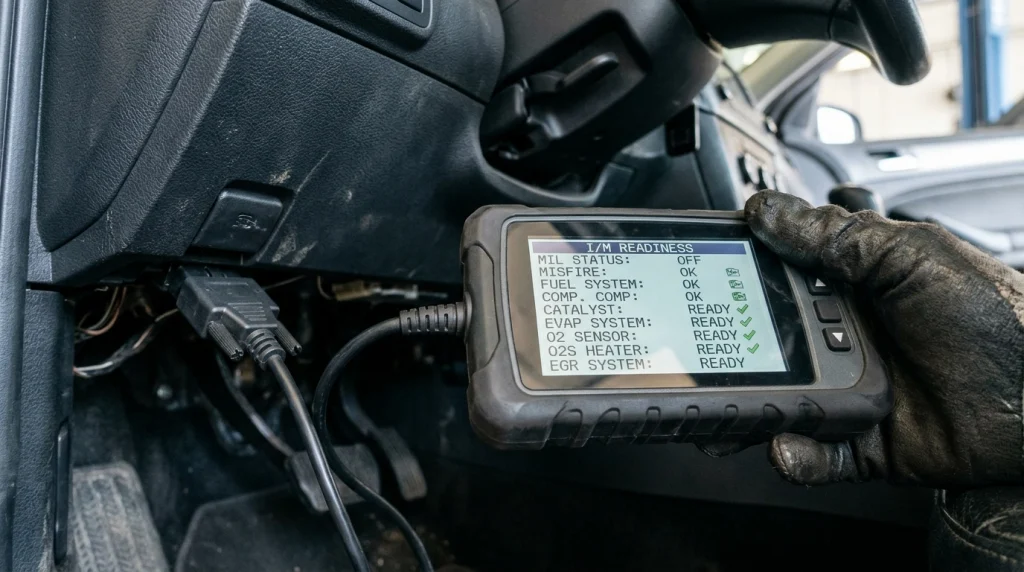
A compatible generic OBD2 scanner can retrieve supported standardized diagnostic trouble codes, emissions-related information, and certain powertrain data. The exact information depends on what the vehicle makes available through its diagnostic interface.
Hybrid vehicles combine a conventional engine with electric-drive components, so their diagnostic systems may contain information from several controllers. A basic reader typically covers a narrower range than a manufacturer-capable diagnostic scanner.
- Engine and emissions faults: Supported codes relating to misfires, oxygen sensors, fuel mixture, and emissions-control systems.
- Powertrain information: Standardized codes and selected live data made available by the vehicle.
- Readiness monitors: Supported emissions self-test status, which can help determine whether required checks have completed.
- Hybrid-specific faults: Battery, inverter, electric motor, and hybrid control information only when the scanner and its software support the relevant systems.
For example, if a hybrid’s check engine light comes on because of an emissions-related fault, a basic scanner may retrieve a useful code. If the vehicle displays a warning about its hybrid system, the same scanner may not reveal the underlying fault because that information could be stored in a separate control module.
Why Do Some OBD2 Scanners Miss Hybrid System Problems?
The main limitation is diagnostic coverage, not simply whether the scanner has a standard OBD2 connector. A tool can communicate with the engine computer while lacking the software or functions needed to access the hybrid control system.
Hybrid cars may use separate electronic controllers to monitor the engine, traction battery, inverter, motor-generator, braking system, and other components. Access to these controllers varies by vehicle and scanner.
Standard OBD2 versus enhanced hybrid diagnostics
Standard OBD2 provides a common set of emissions-related diagnostic functions. Enhanced diagnostics can extend access to manufacturer-specific trouble codes, additional modules, live parameters, and selected service functions.
The distinction matters because a scanner advertised as compatible with OBD2 vehicles is not necessarily capable of diagnosing every hybrid component. The OBDLink troubleshooting guide explains that its standard app focuses on OBD-II emissions-related data, while selected third-party apps provide additional functionality for compatible hybrid and electric vehicles.
Key Insight
A successful connection proves that communication is possible; it does not prove that the scanner can diagnose the hybrid battery or every other electronic control module.
Can an OBD2 Scanner Check a Hybrid Battery?
Yes, but only if the scanner, application, and vehicle support the relevant battery diagnostic data. A basic code reader should not be assumed to measure hybrid battery health or identify failing battery cells.
A hybrid traction battery is different from the conventional 12-volt battery that powers many vehicle accessories and electronic systems. A hybrid can have problems with either battery, and the diagnostic approach depends on which system is affected.
With appropriate vehicle-specific support, a more capable scanner or application may display information such as:
- Hybrid battery-related diagnostic trouble codes.
- Selected battery state-of-charge readings.
- Battery temperature readings reported by supported sensors.
- Battery block or module voltage information where the vehicle exposes it.
- Additional hybrid control data used during diagnosis.
Not every vehicle exposes all these values, and their availability does not guarantee that a scanner can determine the battery’s remaining service life. Battery condition may require additional measurements, manufacturer-specific tests, or professional diagnosis.
For example, a displayed state-of-charge percentage describes the reported charge level; it is not the same as a verified assessment of battery capacity or long-term health.
How to Check Whether Your Scanner Supports Your Hybrid
Before purchasing a scanner or assuming your current tool is sufficient, verify compatibility for the exact vehicle and the diagnostic task you need to perform.
- Identify the vehicle. Record the make, model, model year, and whether it is a conventional hybrid or plug-in hybrid. Market-specific versions may have different diagnostic support.
- Check the scanner’s compatibility list. Look for your exact vehicle rather than relying on a general claim such as “works with all OBD2 cars.”
- Identify the required system. Decide whether you need standard engine codes, hybrid battery information, inverter diagnostics, ABS codes, or access to other modules.
- Verify app and software support. For Bluetooth adapters, check both the adapter and the diagnostic app. A compatible adapter paired with an unsuitable app may provide little useful information.
- Confirm specific functions. Ask whether the tool can read the required module and data, not merely connect to the vehicle.
The OBDLink vehicle compatibility guidance recommends checking vehicle compliance and confirming hybrid or electric vehicle support rather than assuming every adapter and app will work for every system.
Tip
Before buying a scanner for a hybrid battery warning, confirm that its coverage includes the hybrid or battery control module for your exact vehicle. A general OBD2 compatibility claim is not enough.
What Should You Do If the Scanner Connects but Shows No Codes?
If the scanner connects but displays no codes, do not immediately conclude that the hybrid is fault-free. The tool may have accessed only one controller, or the relevant information may require enhanced diagnostic coverage.
Use this sequence to narrow down the issue:
- Identify the warning. Determine whether the dashboard shows a check engine light, a hybrid system warning, an ABS warning, or another alert.
- Check the selected diagnostic mode. Make sure the scanner has completed a vehicle scan or selected the appropriate system instead of checking only generic engine codes.
- Review the scanner’s limitations. Confirm whether it supports manufacturer-specific codes and the module associated with the warning.
- Record available results. Save any codes, descriptions, and relevant live data before clearing anything.
- Escalate if necessary. If a hybrid warning remains or the vehicle behaves abnormally, use an appropriate enhanced scanner or seek qualified hybrid-system diagnosis.
For a more detailed explanation of basic scanning, see our guide on whether every check engine light produces an OBD2 code. It explains why a warning and a scanner’s results do not always appear to match.
Also, a diagnostic trouble code identifies a detected condition, not necessarily a failed component. A code related to a battery, sensor, or control circuit needs to be interpreted alongside the vehicle’s diagnostic procedures and supporting evidence.
Is It Safe to Scan a Hybrid Car Yourself?
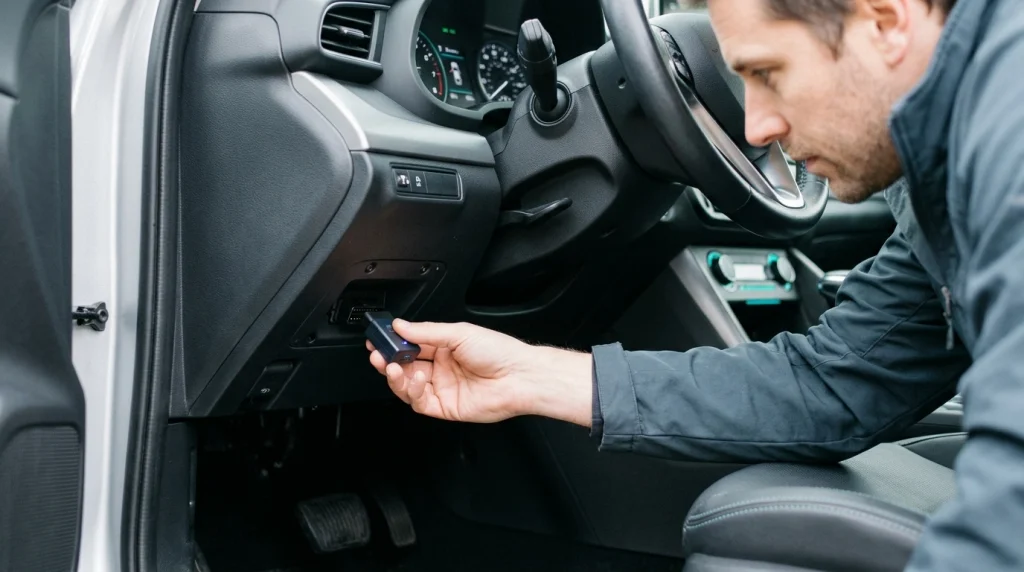
Reading diagnostic information with a compatible, properly used scanner is a common first step in troubleshooting. However, hybrid vehicles contain high-voltage components that require specific safety procedures.
Follow the vehicle manufacturer’s instructions for connecting diagnostic equipment, and use only equipment appropriate for the vehicle. Do not open the high-voltage battery pack, disconnect orange high-voltage cables, or attempt electrical testing on hybrid power components without the required training and equipment.
If the vehicle reports a high-voltage system fault, loses power, or displays a warning that the manufacturer identifies as requiring immediate attention, follow the owner’s manual and arrange suitable assistance. A scan tool alone cannot establish that a high-voltage system is safe to handle.
The U.S. Environmental Protection Agency explains that onboard diagnostics monitor emissions-related components and store fault information when certain malfunctions are detected. This is useful context for understanding why generic OBD2 coverage does not equal a complete inspection of every vehicle system.
Choosing the Right Scanner for a Hybrid
The right scanner depends on what you want to diagnose. A basic code reader may be sufficient for an emissions-related warning, while hybrid battery or inverter troubleshooting can require a more specialized tool.
- For a check engine light: Look for standard OBD2 code reading and supported live data.
- For hybrid battery checks: Confirm battery control module access and the specific battery parameters supported.
- For multiple warning lights: Look for verified all-system coverage, including the relevant ABS, transmission, or hybrid modules.
- For deeper troubleshooting: Check whether the scanner offers manufacturer-specific data, guided tests, or service functions for your vehicle.
Our guide to what to look for in an OBD2 scanner covers diagnostic coverage, live data, and other features worth checking before you choose a tool.
Related Product
OBD2 Scanner with Hybrid-Specific App Support
A compatible scanner and application can help retrieve diagnostic codes and selected hybrid data, provided both support your vehicle and the systems you need to check.
As an Amazon Associate, we earn from qualifying purchases.
Frequently Asked Questions
Will a cheap OBD2 scanner work on a hybrid car?
It may work for standard engine and emissions-related codes if it supports the vehicle. Low-cost scanners generally should not be assumed to offer hybrid battery diagnostics or access to every control module.
Can an OBD2 scanner reset a hybrid system warning?
Some scanners can clear supported diagnostic codes, but clearing a code does not repair the underlying fault. Certain warnings or codes may require manufacturer-specific procedures, and some conditions will trigger the warning again.
Can I use a Bluetooth OBD2 adapter with my hybrid?
Yes, if the adapter, phone, application, and vehicle are compatible. The application matters because an adapter that connects successfully may still provide only limited data through a generic OBD2 app.
Can a scanner tell me whether my hybrid battery needs replacement?
Not by itself in every case. Supported battery data and fault codes can help with diagnosis, but confirming battery condition may require additional tests and manufacturer-specific procedures.
Why does my hybrid show a warning when my scanner finds no codes?
The warning may relate to a module that the scanner cannot access, a manufacturer-specific code, or a system that the selected diagnostic mode did not check. Verify the scanner’s module coverage and use an appropriate enhanced scan when needed.
Do plug-in hybrids need a different OBD2 scanner?
Not necessarily. A compatible generic scanner may read standard OBD2 information, but plug-in hybrid battery and charging diagnostics can require additional vehicle-specific support. Confirm the required functions for your exact model and year.
Conclusion
An OBD2 scanner can work on many hybrid cars, but the diagnostic information it provides depends on the vehicle, scanner, and software. A basic reader may be enough to investigate a standard check engine light, while hybrid battery, inverter, and electric-drive problems often need enhanced vehicle-specific coverage.
Before buying or using a scanner, confirm that it supports your exact hybrid model and the control modules you need to check. If a warning remains despite a scan showing no codes, do not assume the vehicle is fault-free. Record the available information and arrange a suitable diagnosis when the problem involves the high-voltage hybrid system.

I’m Alex Rahman, a car enthusiast and automotive writer focused on practical solutions, car tools, and real-world driving advice. I share simple and honest content to help everyday drivers make better decisions.
