What Does an OBD2 Scanner Do? Functions & How It Works
Quick Answer
An OBD2 scanner is a diagnostic tool that plugs into a vehicle’s standard port to communicate with its computer, retrieve stored fault codes, display real-time sensor data, and check emissions readiness monitors. It translates dashboard warning lights into specific codes that point toward a system problem, giving you a starting point for troubleshooting rather than automatically naming a broken part.
What Is an OBD2 System?
Modern vehicles rely on complex electronic networks made up of sensors, actuators, and control modules. To keep these systems monitored, cars built after 1996 use a standardized protocol known as On-Board Diagnostics version 2 (OBD2).
The OBD2 system continuously monitors engine performance, emissions components, fuel systems, and transmission feedback. When a sensor detects a reading outside expected parameters, the vehicle’s computer registers an error and typically illuminates the Check Engine Light on the dashboard. An OBD2 scanner acts as the communication gateway to access that stored information.
Core Functions of an OBD2 Scanner
While basic models focus entirely on powertrain emissions and warning lights, more capable scanners offer multiple diagnostic layers. Understanding these core functions helps clarify what the tool can and cannot do.
Reading Diagnostic Trouble Codes (DTCs)
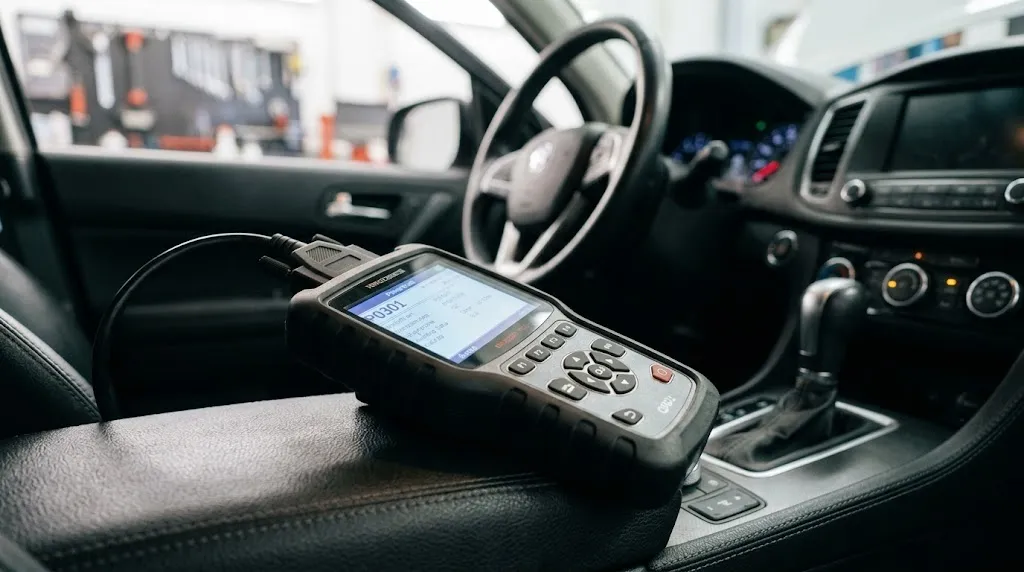
When a fault occurs, the vehicle computer stores a Diagnostic Trouble Code (DTC). These codes consist of a letter followed by four digits. For example, a “P” prefix stands for powertrain, while “B” indicates body systems, “C” represents chassis, and “U” stands for network communication. An OBD2 scanner retrieves these codes so you can identify which system is reporting an issue.
Clearing Codes and Resetting Lights
Once a repair is completed, an OBD2 scanner can clear the stored trouble codes and turn off the Check Engine Light. However, clearing a code only resets the dashboard indicator; it does not fix the underlying mechanical or electrical problem. If the root issue remains unresolved, the fault code and warning light will return after a brief drive cycle.
Displaying Live Sensor Data
Advanced scanners can stream real-time parameter IDs (PIDs), showing what sensors are reporting while the engine runs. This data includes engine RPM, coolant temperature, fuel trim values, mass airflow, and oxygen sensor voltage. Observing live data allows you to see how vehicle systems behave under actual operating conditions rather than relying solely on a static code.
Capturing Freeze Frame Data
When a fault is severe enough to trigger a trouble code, the computer takes a digital snapshot of engine conditions at that exact moment. This freeze frame data records vehicle speed, engine load, and temperature when the error occurred, providing essential context for intermittent problems.
Checking I/M Readiness Monitors
Vehicles run self-tests called emissions readiness monitors to check components like the catalytic converter, EVAP system, and oxygen sensors. If you clear codes or disconnect the battery, these monitors reset to “incomplete”. An OBD2 scanner verifies whether all monitors have finished running, helping you avoid a failed emissions inspection.
Tip
If your vehicle recently had a dead battery or a cleared code, you may need to drive through a specific set of highway and city conditions so the I/M readiness monitors can reset before an official emissions test.
How an OBD2 Scanner Connects to Your Car
Using an OBD2 scanner is a straightforward physical process, though finding the port requires knowing where manufacturers place it. Every compliant vehicle features a standard 16-pin data link connector (DLC).
- Locate the port: Federal regulations require the OBD2 port to be inside the passenger compartment, typically under the driver’s side dashboard near the steering column. Some vehicles hide it behind a small removable plastic cover or near the center console.
- Plug in the tool: Connect the scanner cable or wireless Bluetooth dongle directly into the 16-pin port. Pin 16 supplies continuous battery power to the device.
- Turn on the ignition: Switch the vehicle ignition to the “On” position without starting the engine, or start the car depending on the diagnostic requirements.
- Establish communication: The tool initiates a handshake with the vehicle computer, automatically querying stored data, pending faults, and live sensor metrics.
What an OBD2 Scanner Cannot Do
A common misconception is that an OBD2 scanner acts as an automatic mechanic, pinpointing the exact part that needs replacement. Recognizing its boundaries prevents misdiagnosis and wasted repair money.
A trouble code tells you which circuit or system registered an abnormal reading, but it does not explain why the failure occurred. For instance, a code pointing to a lean fuel mixture (such as P0171) could stem from a vacuum leak, a failing fuel pump, a dirty mass airflow sensor, or a clogged fuel filter. The scanner identifies the symptom area, but physical inspection, testing, and logical deduction are still required to find the root cause.
Warning
Never replace a vehicle component based solely on a trouble code number without testing the surrounding wiring, connectors, and mechanical conditions first.
Choosing the Right Type of Scanner
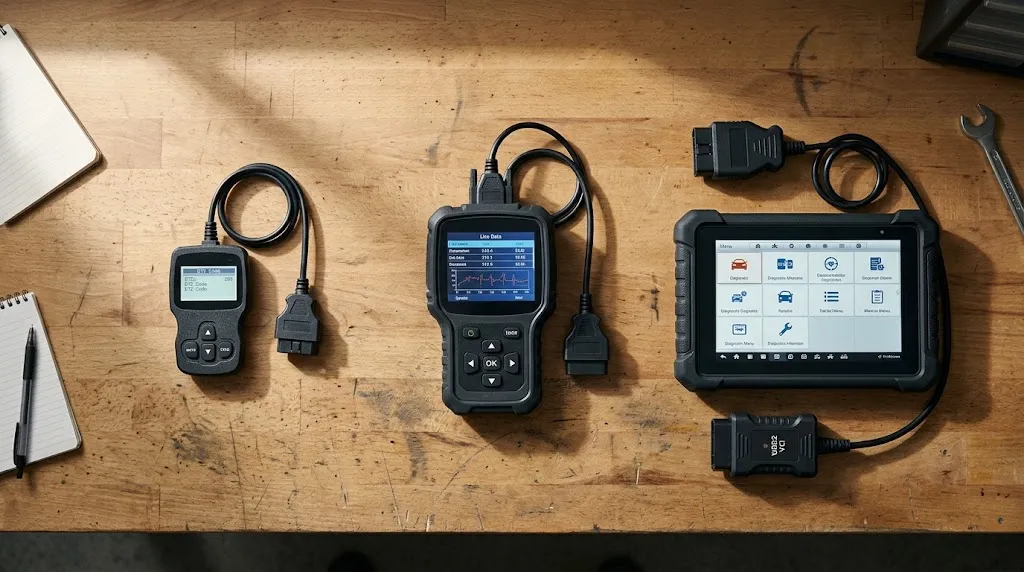
Diagnostic tools vary significantly in capability, price, and format. Matching the tool to your troubleshooting goals helps ensure you get useful data without paying for advanced shop features you do not need.
| Scanner Type | Primary Capabilities | Best Suited For |
|---|---|---|
| Basic Code Reader | Reads and clears generic powertrain DTCs; basic status checks. | Quickly checking and resetting check engine lights. |
| Live Data / Mid-Tier Tool | Reads codes, displays real-time PIDs, freeze frame data, and I/M readiness. | DIY troubleshooting, home maintenance, and basic sensor evaluation. |
| Bluetooth App Dongle | Pairs wirelessly with smartphone apps to show custom dashboards, codes, and logs. | Drivers wanting portable, phone-based tracking and live data monitoring. |
| Advanced / OE-Level Tool | Accesses ABS, SRS, transmission modules, bi-directional controls, and system resets. | Advanced multi-system diagnostics and professional repair work. |
When selecting a diagnostic unit, consider whether you only need to clear engine codes or if you require deeper access to anti-lock brakes, airbag systems, or live charting functions.
Related Product
OBD2 Diagnostic Code Reader & Live Data Scanner
A reliable mid-tier scanner helps you quickly pull trouble codes, check live sensor streams, and verify emissions readiness from your driver seat.
As an Amazon Associate, we earn from qualifying purchases.
Frequently Asked Questions
Do all cars have an OBD2 port?
Most passenger cars, light trucks, and SUVs built from 1996 onward in the United States feature a standardized OBD2 port. International markets adopted similar standards shortly thereafter, though heavy-duty commercial trucks often use distinct diagnostic connectors.
Can an OBD2 scanner drain my car battery?
Most handheld code readers draw power only when plugged in and active, shutting down when the ignition turns off. However, leaving a Bluetooth OBD2 dongle plugged into the port continuously can cause a slow parasitic draw on the battery over several days of non-use.
Will clearing a code fix my check engine light permanently?
Clearing a code turns off the warning light immediately, but it does not fix the underlying mechanical or electrical malfunction. If the root issue persists, the computer will detect the fault again during normal operation and illuminate the light once more.
What is the difference between a generic code and a manufacturer-specific code?
Generic codes (starting with P0) follow standardized definitions across all vehicle makes. Manufacturer-specific codes (often starting with P1) vary by brand, meaning the same code number can indicate different faults depending on whether you drive a Ford, Toyota, or BMW.
Can an OBD2 scanner check transmission and airbag problems?
Basic entry-level code readers focus primarily on engine and emissions computers. To read transmission codes (TCM), anti-lock brake faults (ABS), or airbag deployment systems (SRS), you need an advanced multi-system scanner.
Do I need a mechanic if I own an OBD2 scanner?
An OBD2 scanner provides valuable diagnostic direction and empowers you to evaluate minor issues, check emissions readiness, and avoid unnecessary part replacements. However, complex mechanical repairs, deep electrical troubleshooting, and advanced component calibrations still benefit from professional expertise.
Conclusion
An OBD2 scanner serves as the essential communication bridge between you and your vehicle’s onboard computer systems. By retrieving trouble codes, reviewing live sensor data, and monitoring emissions readiness, it transforms cryptic dashboard warning lights into actionable troubleshooting direction. While it does not replace hands-on mechanical diagnosis or automatically name a broken part, having the right scanning tool saves time, reduces guesswork, and gives you clear insight into your vehicle’s overall operational health.

I’m Alex Rahman, a car enthusiast and automotive writer focused on practical solutions, car tools, and real-world driving advice. I share simple and honest content to help everyday drivers make better decisions.
