Can an OBD2 Scan Find Problems Before the Check Engine Light?
Quick Answer
No, a standard OBD2 scan generally cannot find a problem before the check engine light comes on, because the vehicle’s computer only illuminates the light or stores a confirmed diagnostic trouble code (DTC) after a fault has actively triggered a monitored threshold failure.
How Vehicle Computers Monitor Systems
Modern vehicles rely on an Engine Control Unit (ECU) or Powertrain Control Module (PCM) that continuously monitors sensors across the engine, transmission, and emissions systems. During normal operation, the computer evaluates live data streams against factory-programmed parameters to ensure optimal performance and emissions control.
However, the computer does not flag every minor data fluctuation as a problem. It waits for specific conditions, known as operating cycles or drive cycles, to confirm whether a sensor reading or mechanical behavior falls outside acceptable parameters.
The Difference Between Real-Time Data and Fault Codes
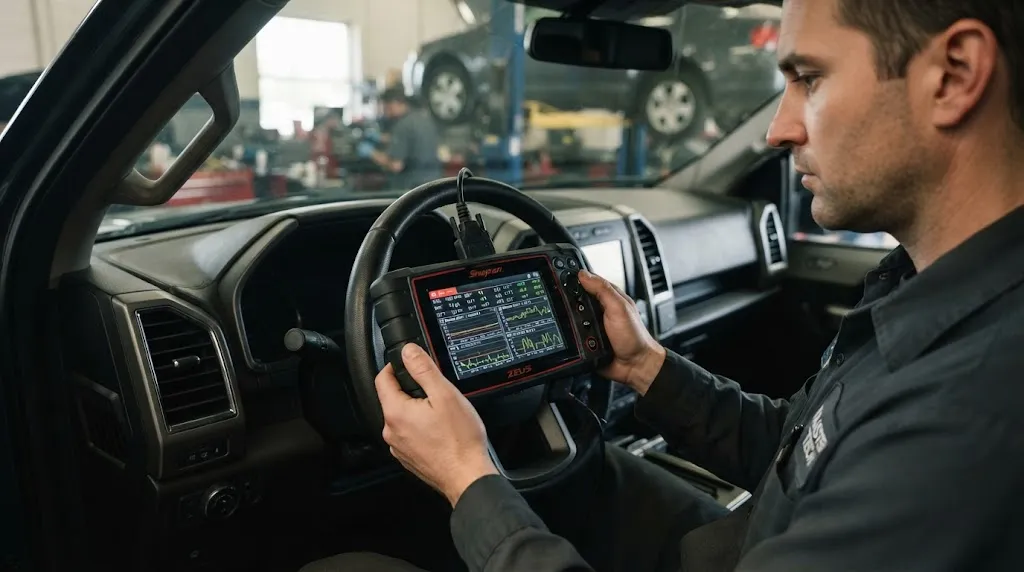
While an advanced OBD2 scan tool can display live sensor data—such as fuel trim percentages, coolant temperatures, and oxygen sensor voltages—interpreting those numbers requires deep technical knowledge. A mechanic or experienced DIYer might spot an anomaly in live data before a fault code triggers, but a standard automated scan will only reveal what the computer has already logged.
If no fault code is present, a basic scan tool will typically report that no codes are stored, even if a component is beginning to wear out.
Understanding Pending Codes
There is one important nuance: pending codes (often referred to as Mode $07 data). A pending code is stored when the computer detects an irregular reading during a single drive cycle, but the fault has not yet happened frequently enough to turn on the check engine light.
Key Insight
Pending codes act as a warning system for the computer. If the same irregular reading occurs during the next drive cycle, the computer transitions the pending code into a confirmed trouble code and illuminates the check engine light.
Checking for pending codes with an OBD2 scanner can sometimes alert you to an emerging issue just before the dashboard light comes on. Not all consumer-grade scan tools display pending codes, so specialized or higher-end diagnostic tools are often required to view them.
Monitor Readiness and Self-Tests
The OBD2 system performs continuous and non-continuous self-tests, known as readiness monitors. These check systems like the catalytic converter, evaporative emission (EVAP) system, oxygen sensors, and EGR system.
If a component is starting to degrade but hasn’t failed completely, the monitor may remain in an incomplete state or take longer to run, but it will not throw a code until a specific diagnostic test fails outright. If you clear codes or disconnect the battery, these monitors reset, hiding potential underlying issues until the vehicle completes another full drive cycle.
Common Mechanical Issues an OBD2 Scan Misses

An OBD2 scan tool evaluates electrical and electronic signals sent to the vehicle computer. Many mechanical problems develop without immediately altering sensor readings enough to trigger a code or even a pending fault.
- Worn suspension components, such as ball joints or tie rods, which produce noise or handling changes.
- Brake pad wear or warped rotors, which cause physical vibration or squealing.
- Fluid leaks that haven’t dropped levels low enough to trigger low-pressure or temperature warnings.
- Internal engine mechanical wear, such as worn valve guides or low oil pressure from mechanical sludge, until pressure drops critically.
Because these issues do not always disrupt electronic sensor logic, an OBD2 scan will show normal results while physical wear continues.
How to Use Live Data for Early Diagnosis
While standard scans only read stored codes, advanced users can monitor live data parameters to catch performance drifts early. For example, watching long-term fuel trim (LTFT) data can reveal whether an engine is running lean or rich due to a developing vacuum leak or a failing fuel injector before a code trips.
Tip
If your fuel trims consistently hover outside normal parameters (above or below plus or minus 10%), investigate potential vacuum leaks or fuel delivery issues even if no check engine light is illuminated.
Recognizing these early trends requires understanding normal baseline specifications for your specific vehicle make and model, as acceptable data ranges vary across manufacturers.
Related Product
OBD2 Scanner with Live Data and Pending Code Support
A diagnostic tool capable of reading live sensor streams and pending trouble codes helps identify emerging mechanical issues before dashboard lights activate.
As an Amazon Associate, we earn from qualifying purchases.
Frequently Asked Questions
Can a scanner find problems if the check engine bulb is burned out?
Yes. If a fault code is stored in the computer’s memory, an OBD2 scanner will retrieve it regardless of whether the dashboard warning lamp functions properly. Mechanics often check for stored codes during routine inspections to ensure no hidden faults exist behind a broken dashboard bulb.
What is the difference between stored codes and pending codes?
Stored codes are confirmed faults that have triggered the check engine light after failing multiple consecutive drive cycles. Pending codes indicate an irregular reading detected during a single drive cycle that has not yet met the threshold to illuminate the warning light.
Why would my car run poorly with no check engine light or codes?
Many mechanical systems—such as clogged fuel filters, worn spark plugs, slipping transmissions, or minor vacuum leaks—can affect vehicle drivability without exceeding the specific electronic thresholds required to set a diagnostic trouble code.
Can an OBD2 scan predict a part failure before it happens?
Generally no. OBD2 scanners report current and historical electronic states rather than predicting future component wear. An alternator, battery, or sensor typically operates within acceptable electronic limits until the moment it fails entirely.
Do all OBD2 scanners read live data and pending codes?
No. Basic entry-level code readers only display confirmed diagnostic trouble codes and clear them. To view live data streams, graphing parameters, and pending codes, you need a mid-tier to advanced diagnostic scan tool or a smartphone-linked OBD2 adapter paired with specialized software.
How often should I scan my car for hidden codes?
Routine scanning is not necessary unless you notice a change in performance, fuel economy, or drivability. Vehicles perform self-diagnostic checks continuously while driving and will store pending or confirmed codes automatically when abnormalities occur.
Conclusion
An OBD2 scan is a powerful diagnostic tool, but it is fundamentally reactive rather than predictive. Because vehicle computers require repeated confirmation of a fault before triggering a warning light or storing a confirmed trouble code, standard scans rarely uncover problems before symptoms appear. However, checking for pending codes or analyzing live data parameters can sometimes provide early clues for attentive drivers and technicians. Understanding these diagnostic boundaries helps ensure you interpret scan results accurately and address mechanical concerns before they escalate.

I’m Alex Rahman, a car enthusiast and automotive writer focused on practical solutions, car tools, and real-world driving advice. I share simple and honest content to help everyday drivers make better decisions.
