OBD2 vs CAN Bus: What’s the Difference? (Clear Guide)
Quick Answer
OBD2 is a standardized vehicle diagnostic system and port used to read error codes and monitor emissions, while CAN (Controller Area Network) is the high-speed internal communication network that allows different computer modules inside a car to talk to each other. In short, OBD2 is the doorway to your car’s health, and CAN is the language and wiring system connecting all the internal computers.
Understanding the Core Definitions
When working on modern cars or researching diagnostic tools, drivers often encounter the terms OBD2 and CAN. While they are frequently mentioned together, they represent two entirely different aspects of automotive electronic architecture. Confusing them is easy because a modern diagnostic scanner plugs into an OBD2 port to read messages traveling across the CAN bus.
To understand the difference, it helps to look at their primary roles. One defines a regulatory compliance standard and physical connection point, while the other defines a high-speed networking protocol. Without both working in tandem, modern vehicle diagnostics and complex electronic control units could not function effectively.
What Is OBD2?
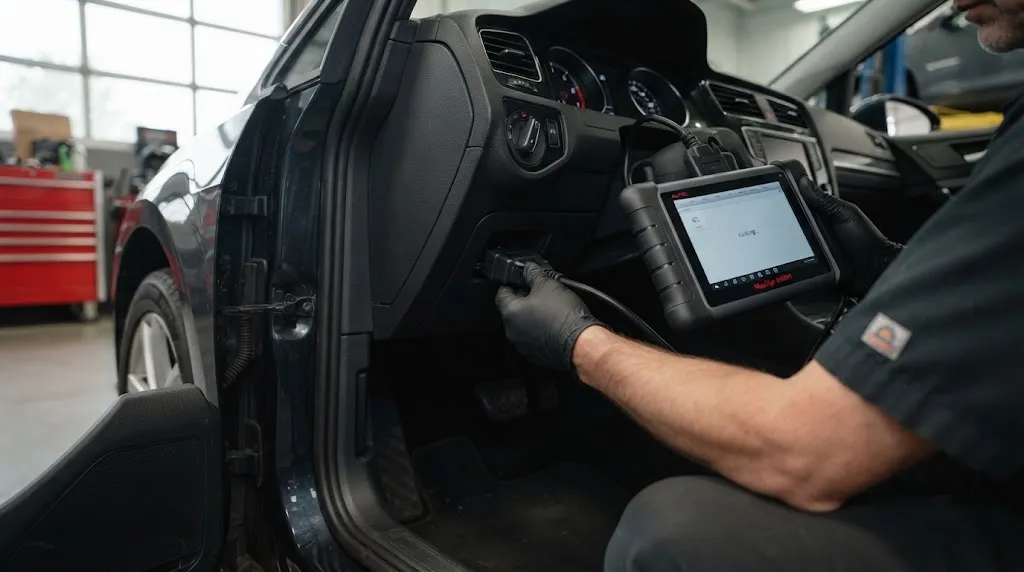
OBD2 stands for On-Board Diagnostics, Second Generation. Established as a mandatory standard in the United States for all 1996 and newer passenger vehicles, OBD2 created a universal framework for monitoring vehicle emissions and powertrain performance.
The system relies on a standardized 16-pin connector located inside the cabin—usually underneath the dashboard near the driver’s seat. When a sensor detects a fault that affects emissions or engine efficiency, the engine control unit illuminates the check engine light and stores a Diagnostic Trouble Code (DTC). Mechanics and vehicle owners plug a handheld scan tool into this exact port to read the code, check live data, and clear warning lights.
What Is CAN?
CAN stands for Controller Area Network. It is a robust vehicle bus standard designed to allow microcontrollers and electronic control units (ECUs) to communicate with each other within a vehicle without a central host computer.
Before CAN networks became standard in the automotive industry, every individual sensor or electronic device required its own dedicated wire running directly to the dashboard or engine computer. As cars gained more electronic features—such as anti-lock brakes, power windows, traction control, and transmission management—the wiring harnesses became massive, heavy, and prone to failure. The CAN bus solved this by introducing a shared two-wire communication system where all modules broadcast messages across the same network.
Key Differences Between OBD2 and CAN
While people often ask whether they should look for an “OBD2 scanner” or a “CAN scanner,” the two terms are not mutually exclusive alternatives. Instead, CAN protocol serves as the underlying technology that modern OBD2 systems use to transmit data.
Early OBD2 vehicles built in the late 1990s used older communication protocols like ISO 9141, Keyword Protocol 2000 (KWP2000), or SAE J1850. As vehicles grew more complex, these older protocols lacked the data speed needed to handle dozens of communicating computers. Over time, the automotive industry adopted the CAN bus as the mandatory high-speed communication standard for all OBD2 ports.
| Feature | OBD2 | CAN Bus |
|---|---|---|
| Primary Function | Vehicle diagnostics, emission monitoring, and fault reporting. | Internal data transmission between vehicle computers and sensors. |
| Physical Form | A standardized 16-pin physical diagnostic port inside the cabin. | A two-wire bus network running throughout the entire vehicle. |
| Scope | Government-mandated standard for regulatory compliance and repair. | Engineering standard for intra-vehicle electronic communication. |
| Relationship | Modern OBD2 diagnostic tools read information traveling across the vehicle’s CAN bus network. | |
This side-by-side comparison highlights why looking for a “CAN-compatible OBD2 scanner” is essential for modern vehicle maintenance. Any car manufactured after 2008 in the United States is required by federal law to use the CAN protocol for OBD2 communications.
How Data Flows Through Both Systems
When an oxygen sensor or wheel speed sensor detects an anomaly, it sends an electronic signal to its respective control module. That module packages the information into a digital message frame and broadcasts it across the CAN bus.
Other modules—such as the transmission controller or dashboard cluster—listen to this network and pick up the data they need. When you plug an electronic diagnostic scanner into the physical OBD2 port under the dash, the tool taps directly into that same CAN bus network. It requests specific parameter IDs (PIDs) from the car’s computers, allowing you to read live sensor data, review freeze frame records, and diagnose trouble codes instantly.
Tip
If you drive a vehicle built in 2008 or later, always ensure any replacement scanner you purchase explicitly supports CAN protocol compatibility. Older scanners built only for pre-2008 legacy protocols will not communicate with modern vehicle computers.
Why the Transition to CAN Mattered for Diagnostics
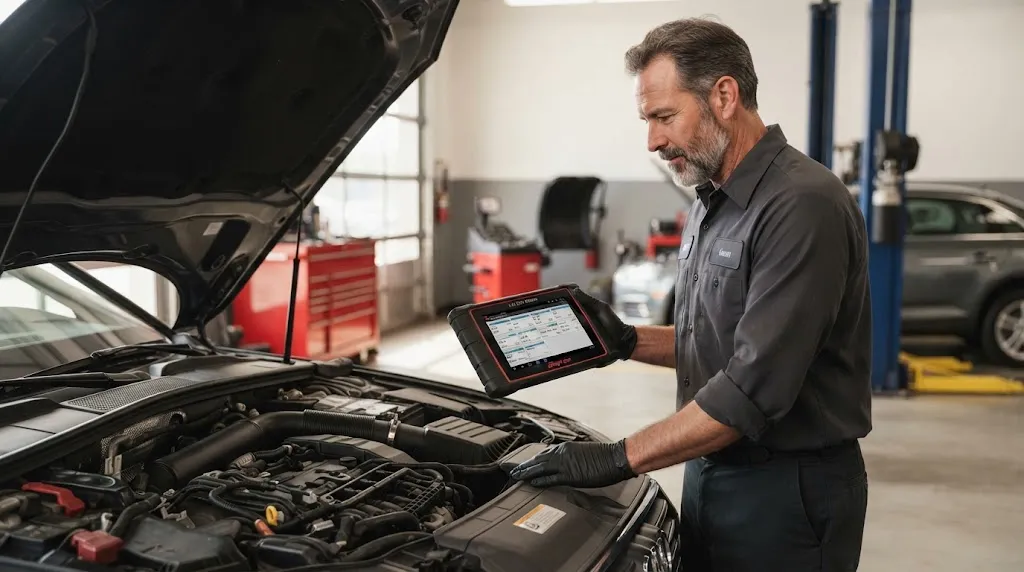
Before the widespread adoption of CAN-based OBD2 systems, diagnosing intermittent electronic faults was exceptionally difficult. Mechanics had to test individual circuits with multimeters or use slow diagnostic interfaces that could only query one computer module at a time.
The introduction of high-speed CAN networks transformed automotive troubleshooting in several practical ways:
- Faster Data Refresh Rates: CAN networks operate at speeds up to 500 kbps, allowing scan tools to display live engine data streams in real time without lag.
- Reduced Wiring Complexity: Shared communication buses eliminated miles of copper wiring, reducing vehicle weight and potential connection failure points.
- Universal Access: A single diagnostic tool can access multiple vehicle computers—including the engine, transmission, ABS, and body control modules—through the exact same physical OBD2 port.
- Standardized Error Reporting: Standardized messaging ensures that generic code readers can interpret basic powertrain faults across completely different vehicle makes and models.
Warning
Never attempt to probe or jump pins inside an OBD2 port with unverified paperclips or uninsulated wires. Because the port connects directly to sensitive CAN bus lines and active vehicle control modules, accidental short circuits can permanently damage expensive computer modules.
Common Misconceptions About OBD2 and CAN
A frequent point of confusion among vehicle owners is assuming that a car without a check engine light means the CAN network is problem-free. While an illuminated dash light specifically points to emission or powertrain faults tracked by OBD2 parameters, the CAN bus manages dozens of non-emissions systems as well.
If a power window fails, a parking sensor stops responding, or an infotainment screen goes blank, those issues often stem from a fault on a body-control CAN network rather than the powertrain OBD2 system. A standard powertrain code reader may show no stored fault codes even when cabin electronic networks experience communication interruptions.
Another common misconception is that OBD2 and CAN are competing technologies. In reality, they form an interdependent partnership. OBD2 provides the standardized regulatory guidelines and physical access point mandated by law, while CAN provides the advanced high-speed digital pipeline that makes modern vehicle monitoring possible.
Related Product
OBD2 CAN Diagnostic Code Reader
A reliable CAN-compatible OBD2 scanner lets you read live engine data, clear check engine codes, and verify emission readiness monitors at home.
As an Amazon Associate, we earn from qualifying purchases.
Frequently Asked Questions
Do all cars have both OBD2 and CAN?
All passenger vehicles sold in the United States since 1996 feature an OBD2 port. However, the mandate requiring all vehicles to use the CAN bus protocol for OBD2 communications took effect starting in the 2008 model year. Many vehicles built between 2003 and 2007 adopted CAN earlier, but pre-2003 models typically relied on older communication protocols.
Can an old OBD2 scanner work on a modern CAN-equipped car?
Older OBD2 scanners built before 2008 often lack the hardware capability to process CAN data streams. While they might plug into the physical port, they will typically display a “Linking Error” or fail to communicate with newer vehicle computers. Modern scanners support multi-protocol communication, including CAN.
Where is the OBD2 port located in most vehicles?
By federal regulation, the physical 16-pin OBD2 port must be located within the passenger compartment within three feet of the driver. In most vehicles, it is tucked underneath the dashboard directly below the steering column, often exposed or hidden behind a small plastic trim cover or fuse box door.
Does the CAN bus only handle engine diagnostics?
No. While OBD2 focuses primarily on emissions and powertrain diagnostics, the CAN network handles communication across nearly every electronic system in the vehicle. This includes anti-lock braking systems (ABS), airbag deployment modules, transmission control units, climate control, and electronic stability control.
What happens if the CAN bus network fails completely?
If the main CAN bus wiring harness suffers a severe short circuit or break, multiple vehicle systems will fail simultaneously. The dashboard will often light up with warning indicators, various control modules will lose communication, and the engine may refuse to start because the powertrain computer cannot exchange data with the immobilizer or fuel injection system.
Can I use an OBD2 adapter to monitor real-time performance data?
Yes. Many drivers plug Bluetooth or Wi-Fi OBD2 adapters into the diagnostic port to stream real-time data—such as coolant temperature, boost pressure, fuel trim, and vehicle speed—directly to smartphone apps or dedicated digital dashboard displays while driving.
Conclusion
Understanding the distinction between OBD2 and CAN helps clarify how modern vehicle electronics operate and why diagnostic tools work the way they do. OBD2 provides the standardized physical gateway and regulatory framework required for emissions and fault reporting, while the CAN bus functions as the high-speed internal communication network linking every computer module under the hood. Recognizing that CAN is the underlying protocol that modern OBD2 systems rely on ensures you select the right tools and correctly interpret your vehicle’s diagnostic data.

I’m Alex Rahman, a car enthusiast and automotive writer focused on practical solutions, car tools, and real-world driving advice. I share simple and honest content to help everyday drivers make better decisions.
