Does Clearing OBD2 Codes Fix the Problem? (What Actually Happens)
Quick Answer
No, clearing OBD2 codes does not fix the underlying mechanical or electrical problem. Erasing a Diagnostic Trouble Code (DTC) only turns off the Check Engine Light and deletes stored diagnostic data from the vehicle’s computer. If the physical fault is still present, the computer will detect the issue again during upcoming drive cycles and turn the warning light back on. Clearing codes is only effective after a repair is completed or when resetting a confirmed temporary glitch, such as a loose gas cap that has since been tightened.
Turning off a glowing dashboard warning light with a scan tool feels like an instant victory, especially when the engine still seems to run smoothly. However, an OBD2 scanner is a communication device, not a mechanical repair tool.
Understanding the difference between silencing an alarm and resolving the fault that triggered it can save you from failed emissions inspections, wasted diagnostic fees, and severe engine or catalytic converter damage.
Why Clearing an OBD2 Code Never Repairs a Physical Fault
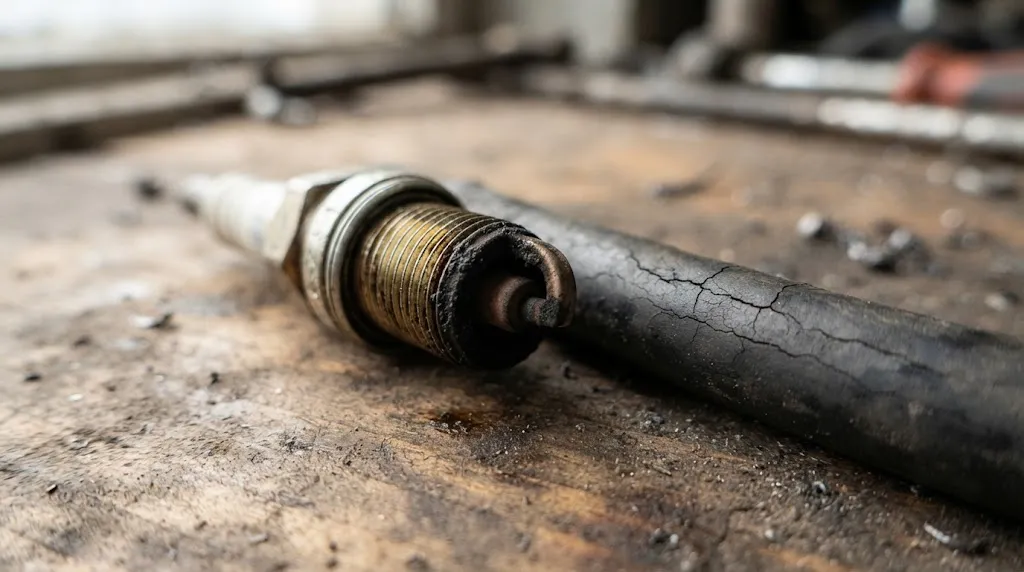
Clearing an OBD2 code simply instructs the Engine Control Module (ECM) or Powertrain Control Module (PCM) to wipe its active fault memory. It does not replace worn spark plugs, seal vacuum leaks, restore failing oxygen sensors, or unstick a faulty exhaust gas recirculation valve.
Your vehicle’s onboard computer acts as a continuous monitoring system. It reads voltage, resistance, temperature, and pressure signals from dozens of sensors across the engine, transmission, and emissions systems.
When a sensor reading falls outside the manufacturer’s programmed factory threshold, the computer logs a Diagnostic Trouble Code (DTC) and illuminates the Malfunction Indicator Lamp (MIL), commonly known as the Check Engine Light. Erasing that code is the automotive equivalent of removing the battery from a ringing smoke detector while the kitchen is still full of smoke.
What Actually Happens Inside Your Car’s Computer When You Clear Codes
Pressing the “Erase” or “Clear Codes” button on an OBD2 scanner sends a standardized command—known in automotive engineering as Service $04 (Clear/Reset Emission-Related Diagnostic Information)—to the vehicle’s control modules. This single command triggers a complete reset of several vital diagnostic records inside the computer.
- Confirmed and Pending Fault Codes Are Deleted: Both active codes that triggered the dashboard light and pending codes from single-occurrence faults are wiped from memory.
- Freeze Frame Data Is Erased: The computer deletes the exact snapshot of engine conditions (RPM, vehicle speed, coolant temperature, fuel trim, and engine load) recorded at the precise moment the fault occurred.
- Readiness Monitors Reset to “Incomplete”: All emissions self-tests—covering the catalytic converter, evaporative emissions (EVAP) system, oxygen sensors, and EGR system—revert to a “Not Ready” status.
- Learned Fuel Trim and Idle Adaptations May Reset: On many vehicle makes, clearing codes also wipes short-term and long-term fuel trim tables or throttle body idle adaptations, forcing the computer to relearn how to compensate for engine wear.
Warning
Never clear your OBD2 codes right before bringing your car to a mechanic. Wiping the memory destroys the Freeze Frame data that technicians rely on to see whether the fault happened at cold idle, highway cruising, or heavy acceleration. Without that snapshot, diagnosing intermittent problems takes longer and costs more in shop labor.
Why the Check Engine Light Stays Off at First (And Why It Comes Back)
Many drivers assume clearing the code worked because the Check Engine Light stays off for several days after a reset. In reality, the light stays off only because the computer has not yet met the specific driving conditions required to test that component again.
OBD2 systems do not test every component simultaneously the moment you turn the key. Instead, the computer runs individual diagnostic monitors during specific drive cycles, and faults are divided into two main categories depending on how quickly they trigger the light.
One-Trip Faults (Immediate Return)
Hard electrical failures and severe engine-damaging faults are classified as one-trip faults. If an electrical circuit is completely broken—such as an unplugged mass airflow sensor, a shorted injector circuit, or a severe cylinder misfire—the computer detects the open circuit or erratic crankshaft speed within seconds of starting the engine and illuminates the light immediately.
Two-Trip Faults (Delayed Return)
Most emissions and performance codes—such as a P0420 catalytic converter efficiency code, an EVAP small leak code, or a lazy oxygen sensor—are two-trip faults. To prevent false alarms from brief anomalies, the computer must see the exact same test fail on two consecutive drive cycles before turning on the Check Engine Light.
During the first drive cycle where the required speed, temperature, and fuel level conditions are met, the computer registers the failure internally as a Pending Code. The dashboard remains dark. Only when the vehicle completes a second qualifying drive cycle and fails the test a second time does the computer promote the fault to a Confirmed Code and turn the Check Engine Light back on.
For systems like the EVAP monitor, which often requires the fuel tank to be between 15% and 85% full and the vehicle to sit overnight for a cold soak before testing, it can take anywhere from three days to two weeks of normal commuting for the light to reappear.
When Clearing OBD2 Codes Actually Makes Sense vs. When to Avoid It
While erasing codes never fixes broken hardware, resetting the computer is a standard, necessary step in specific diagnostic and maintenance situations. The table below outlines when clearing codes helps and when it creates bigger problems.
| Situation | Should You Clear the Code? | Why & Practical Outcome |
|---|---|---|
| After completing a physical repair | Yes | Resets the warning light and allows you to run a test drive cycle to verify the repair succeeded. |
| Loose gas cap tightened after an EVAP code | Yes (after recording the code) | Saves waiting days or weeks for the computer to self-clear the light through natural drive cycles. |
| Battery died or dropped to low voltage | Yes (after charging/replacing battery) | Low cranking voltage frequently triggers false communication (U-codes) or low-voltage sensor codes across modules. |
| Right before a state emissions inspection | No | Resets readiness monitors to “Not Ready,” causing an automatic inspection rejection even with no warning light on. |
| Flashing Check Engine Light | Never | Indicates active, severe cylinder misfires dumping raw fuel into the exhaust, which can melt the catalytic converter in minutes. |
| Before taking the car to a repair shop | No | Destroys Freeze Frame data and pending fault history that the mechanic needs for accurate diagnosis. |
Use this comparison as a decision filter: only clear a code once the root cause has been addressed or confirmed to be a one-time voltage or seal anomaly.
Can Clearing a Code Fix Limp Mode or Rough Running?
In some modern vehicles, clearing a fault code temporarily restores normal engine power if the car was locked into limp-home mode (reduced power mode). However, this is a protective reset, not a mechanical cure.
When the ECM detects a potentially destructive condition—such as a throttle body actuator correlation error, transmission pressure fault, or turbocharger overboost—it intentionally restricts engine RPM, disables turbo boost, or locks the transmission in a single gear to prevent catastrophic failure. Clearing the code lifts the software restriction until the sensor reading crosses the fault threshold again.
Similarly, if clearing a code briefly makes an engine idle differently, that happens because resetting the computer often wipes learned fuel trim adaptations. Once the computer starts reading the faulty oxygen sensor or vacuum leak again over the next few miles, the rough running and warning light will return.
The Hidden Risks of Repeatedly Erasing Fault Codes
Treating an OBD2 scanner as a snooze button for your Check Engine Light carries three major mechanical and legal consequences.
1. Automatic Failure on State Emissions Inspections
Many drivers try to pass a state smog check by clearing their Check Engine Light in the inspection station parking lot. Inspection computers connect directly to your OBD2 port to check I/M Readiness Monitors—internal flags showing whether the car has finished testing its own emissions systems since the last memory clear.
When you clear codes, all monitors flip to “Incomplete” or “Not Ready.” State inspection programs typically allow at most one incomplete non-continuous monitor on 2001 and newer vehicles. If your monitors are reset, the inspection machine will automatically reject the vehicle until you fix the fault and complete a full drive cycle.
2. Permanent Codes (Mode $0A) Cannot Be Erased With a Scanner
On 2010 and newer vehicles, OBD2 regulations introduced Permanent Diagnostic Trouble Codes (PDTCs), stored in Mode $0A. Unlike standard codes, a Permanent DTC cannot be cleared with any scan tool or by disconnecting the 12-volt battery.
The only way a Permanent DTC disappears is when the vehicle’s onboard computer runs the specific diagnostic monitor for that fault across enough drive cycles to verify for itself that the problem is fixed. In states like California that enforce BAR On-Board Diagnostic Inspection System (OIS) rules, the presence of a Permanent DTC can cause an automatic smog check failure if the vehicle has not accumulated enough warm-up cycles and driving distance since the codes were last cleared.
3. Escalating Minor Repairs Into Expensive Component Failures
Driving while repeatedly clearing fuel mixture or misfire codes allows minor wear items to destroy expensive downstream components:
- Misfire Codes (P0300–P0308): A worn $15 spark plug or $60 ignition coil allows unburned fuel to enter the exhaust manifold, overheating the honeycomb substrate inside the catalytic converter and leading to a $1,000 to $2,500 replacement.
- Lean/Rich Codes (P0171, P0172, P0174, P0175): Ignoring a cracked vacuum hose or dirty mass airflow sensor forces the engine to run outside safe air-fuel ratios, leading to fouled spark plugs, carbon buildup, burnt exhaust valves, or washed cylinder walls.
- Cooling System Codes (P0128): Repeatedly clearing a thermostat rationality code prevents the engine from reaching proper operating temperature, increasing fuel consumption, accelerating oil sludge formation, and preventing emissions monitors from running.
Key Insight
An OBD2 code almost never says “Replace this exact sensor.” A code like P0171 (System Too Lean) means the oxygen sensor is doing its job by reporting excess oxygen in the exhaust—often caused by a cracked intake boot, a weak fuel pump, or a dirty MAF sensor. Always diagnose the system before buying parts or clearing the code.
What You Should Do Instead of Immediately Clearing an OBD2 Code
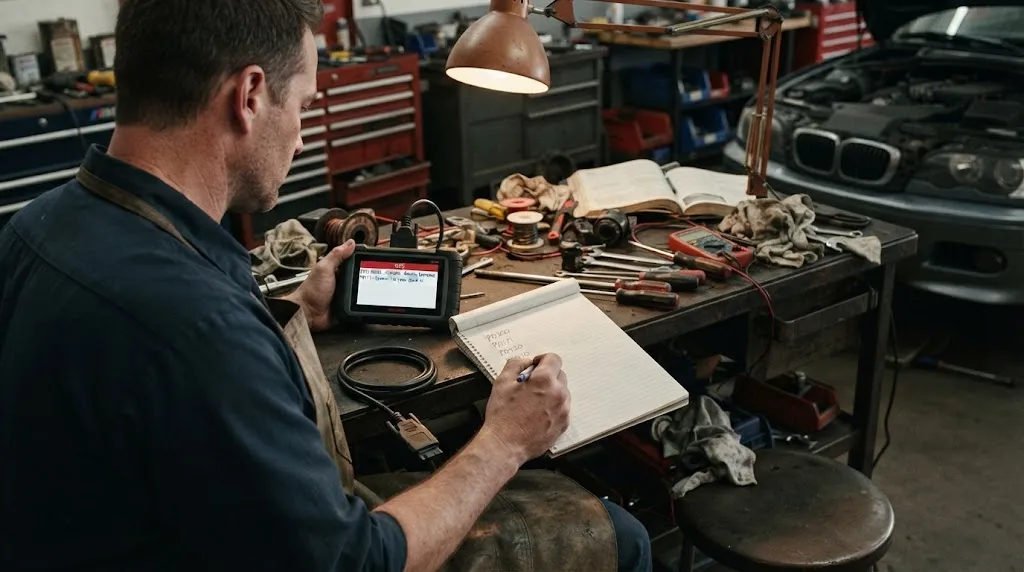
Follow this five-step diagnostic workflow whenever a Check Engine Light appears to protect your diagnostic data and verify repairs accurately:
- Check Whether the Light Is Steady or Flashing: If the Check Engine Light is blinking, reduce engine load immediately and safely stop driving. A flashing light indicates an active catalyst-damaging misfire that requires immediate repair before driving further.
- Record All Stored, Pending, and Permanent Codes: Plug in your scanner and write down every code in Mode $03 (Confirmed), Mode $07 (Pending), and Mode $0A (Permanent). Seeing multiple codes together often points to a shared power supply, ground wire, or vacuum leak.
- Save or Screenshot the Freeze Frame Data: Open the Freeze Frame menu on your scan tool before touching the erase button. Note the engine RPM, coolant temperature, vehicle speed, and short-term/long-term fuel trims at the moment the fault set.
- Inspect the Obvious Physical Causes and Repair the Fault: Perform basic visual checks matching the code—such as inspecting the gas cap seal for EVAP codes, checking intake boots for cracks on lean codes, or inspecting wiring harnesses for damage—and complete the necessary repair.
- Clear the Code (or Let It Self-Clear) and Verify Readiness Monitors: Once the repair is finished, clear the codes and drive the vehicle under varied conditions until the scanner shows that the relevant Readiness Monitor has switched from “Incomplete” to “Complete/Ready” with zero pending codes.
Tip
If you have a 2010 or newer vehicle with a Permanent DTC (PDTC), repair the problem and try letting the computer turn off the light naturally, or if you clear the codes, make sure you check your scanner’s I/M Readiness screen to confirm the specific monitor has completed its self-test before visiting an emissions station.
Related Product
OBD2 Scanner with Live Data & I/M Readiness Check
A scan tool that displays Freeze Frame data, Pending codes, and one-click I/M Readiness monitor status lets you diagnose faults accurately without blindly wiping your car’s computer memory.
As an Amazon Associate, we earn from qualifying purchases.
Frequently Asked Questions
Will an OBD2 code clear itself after I fix the problem?
Yes, standard OBD2 codes will clear themselves once the problem is fixed, though not immediately. After the vehicle completes typically three consecutive drive cycles where the diagnostic monitor runs and passes without detecting the fault, the computer will turn off the Check Engine Light. The code will remain stored as a historical code for roughly 40 warm-up cycles before erasing completely.
Does disconnecting the car battery clear OBD2 codes the same way a scanner does?
Disconnecting the 12-volt battery clears standard stored codes and resets readiness monitors on most vehicles, but it is much more disruptive than using an OBD2 scanner. Pulling the battery cable also wipes radio presets, clock settings, power window auto-up calibrations, steering angle sensor memory, and electronic throttle body idle relearns, and it will not erase Permanent DTCs stored in non-volatile memory.
Can a mechanic still see OBD2 codes after I clear them?
Usually not, unless the vehicle is a 2010 or newer model that logged a Permanent DTC (Mode $0A). Clearing codes via Service $04 wipes active codes, pending codes, and Freeze Frame data. However, any technician connecting a scan tool will immediately see that all I/M Readiness Monitors are set to “Incomplete” and that the parameter for “Distance Traveled Since Codes Cleared” reads near zero miles.
How many miles do I have to drive after clearing codes for readiness monitors to reset?
There is no fixed mileage number because readiness monitors depend on specific driving conditions rather than distance alone. Most vehicles complete the majority of their monitors within 30 to 100 miles of mixed city and steady highway driving (55–60 mph for several minutes), though the EVAP monitor often requires an overnight cold soak with the fuel tank between 15% and 85% full.
Is it illegal to clear your own Check Engine Light?
No, it is completely legal for a vehicle owner to read and clear their own diagnostic trouble codes using an OBD2 scanner. However, intentionally concealing an active mechanical defect or emissions failure when selling a vehicle without disclosure can violate state consumer protection or emissions tampering laws depending on your jurisdiction.
Why did my Check Engine Light never come back after I cleared it without fixing anything?
If a code never returns after being cleared, the original trigger was an intermittent or one-time anomaly. Common examples include a gas cap that wasn’t clicked tight after refueling, a momentary dip in battery voltage during a cold start, a brief wheel slip or sensor glitch, or a batch of poor-quality fuel that caused a temporary knock or misfire event.
Conclusion
Clearing OBD2 codes turns off the Check Engine Light by wiping your vehicle’s fault memory, but it never repairs a physical sensor, wiring, or mechanical failure. If the underlying problem remains, your car’s computer will detect the fault again as soon as it completes the required drive cycle tests.
Instead of erasing codes immediately, always record the Confirmed and Pending codes along with the Freeze Frame data first. Reserve the “Clear Codes” button for after you have fixed the root cause or tightened a loose gas cap, and always verify that your I/M Readiness Monitors have returned to “Ready” before heading to an emissions inspection.

I’m Alex Rahman, a car enthusiast and automotive writer focused on practical solutions, car tools, and real-world driving advice. I share simple and honest content to help everyday drivers make better decisions.
