What Is OBD2? How It Works and What It Can Tell You
Quick Answer
OBD2, or OBD-II, stands for On-Board Diagnostics II. It is a standardized vehicle diagnostic system that lets compatible scan tools retrieve information from a car’s onboard computers, especially engine and emissions-related faults. An OBD2 code helps identify a monitored problem, but it does not automatically prove which individual part has failed.
OBD2, or OBD-II, stands for On-Board Diagnostics II. It is a standardized vehicle diagnostic system that lets compatible scan tools communicate with a car’s onboard computers and retrieve diagnostic information, especially information related to engine and emissions operation.
In practical terms, OBD2 is the system behind the familiar diagnostic port used to read trouble codes and other vehicle data. It is useful for turning a warning such as a check-engine light into information that can guide the next diagnostic step.
What Does OBD2 Actually Do?
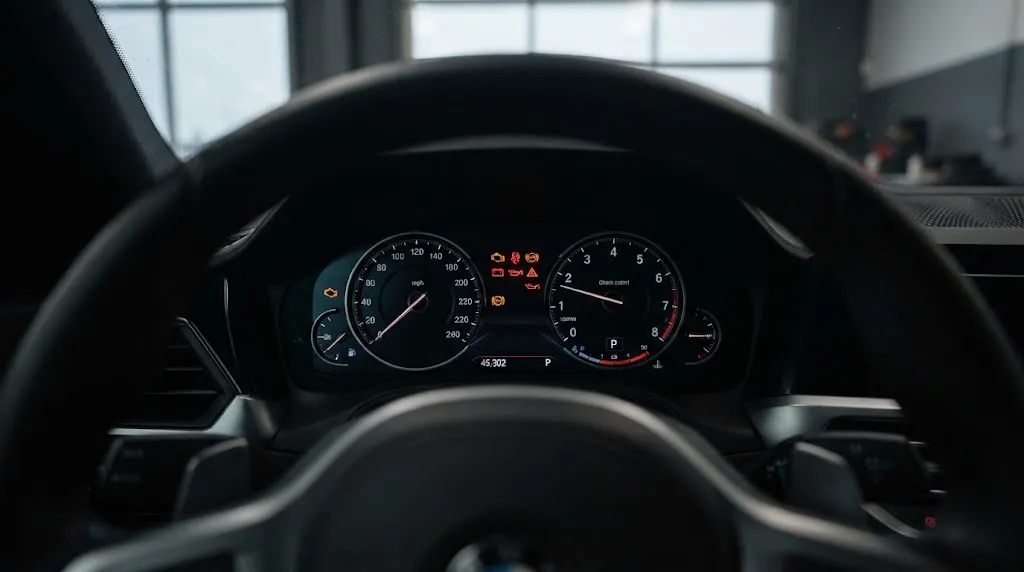
OBD2 monitors certain vehicle systems and checks whether their operation stays within programmed limits. When the vehicle detects a qualifying problem, it can store a diagnostic trouble code (DTC) and, for emissions-related faults, illuminate the malfunction indicator lamp, commonly called the check-engine light.
A compatible scan tool can then retrieve stored information. Depending on the vehicle and scanner, that can include trouble codes, selected live data, freeze-frame information, and readiness-monitor status.
The important distinction is that OBD2 is not simply the plug under the dashboard. The connector is the physical connection; OBD2 refers to the standardized diagnostic system and communications used through that connection. The SAE J1962 standard defines the diagnostic connector used for OBD applications.
Why Was OBD2 Introduced?
Earlier onboard diagnostic systems existed before OBD2, but manufacturers used more varied connectors, communications, and diagnostic approaches. OBD2 brought greater standardization, particularly for emissions-related diagnostics.
In the United States, federal OBD requirements were phased in during the 1990s. The EPA identifies 1996 as the model year when full compliance became required for covered light-duty gasoline vehicles after earlier model years had waiver provisions. That is why “1996 and newer” is commonly used as a U.S. OBD2 reference point.
That date should not be treated as a worldwide rule. Implementation dates and terminology differ by market, and related systems such as EOBD are used in other regions. For a specific vehicle, the model year, market, engine, and manufacturer documentation matter more than a generic date.
For more background, the U.S. EPA’s OBD inspection information provides examples of how OBD requirements are applied to covered vehicles.
Where Is the OBD2 Port?
On a typical passenger vehicle, the OBD2 diagnostic connector is inside the passenger compartment, commonly beneath the dashboard on the driver’s side. The exact position varies by vehicle.
The standardized connector is commonly a 16-pin J1962 connector. This standardization allows compatible diagnostic equipment to be designed for many different vehicle makes instead of requiring a completely different physical connector for every brand. The SAE J1962 diagnostic connector standard defines requirements for the vehicle and test-equipment connectors.
If you cannot find the port, check the vehicle owner’s manual rather than forcing a connector into an unfamiliar socket. Its trim location can vary considerably between models.
How Does OBD2 Work?
The basic process is straightforward:
- Sensors and control systems monitor vehicle operation.
- A control module evaluates the incoming information against programmed conditions.
- If a monitored condition meets the criteria for a fault, diagnostic information can be stored.
- A compatible scan tool communicates through the diagnostic connector.
- The tool requests available information and displays codes or other data.
- The person diagnosing the vehicle combines that information with symptoms, inspection findings, service information, and additional tests.
The final step is the most important. A diagnostic trouble code is usually a clue about a monitored condition, not a guaranteed failed part.
For example, a code associated with a sensor circuit does not automatically prove that the sensor itself has failed. Wiring, connectors, power supply, air or vacuum leaks, mechanical problems, or another condition can sometimes produce a related code. The code narrows the diagnostic path; it does not replace diagnosis.
What Can an OBD2 Scanner Read?
A basic generic OBD2 reader is primarily intended for standardized powertrain and emissions-related diagnostics. Depending on the vehicle and tool, it may retrieve stored or pending trouble codes, freeze-frame information, readiness-monitor status, and selected live data.
More advanced scanners can access much more. They may communicate with additional control modules or manufacturer-specific functions, including systems such as ABS, SRS/airbags, transmission controls, body electronics, or electronic parking brakes. Those capabilities are not guaranteed simply because a tool has an OBD2 connector.
This explains why two scanners can plug into the same 16-pin port and have very different capabilities. A basic reader may report no codes while an advanced diagnostic tool can find a fault in a module the basic reader cannot access.
Key Insight
The same OBD2 port can support very different diagnostic capabilities. Always check whether a scanner supports the specific module you need to diagnose.
What Do OBD2 Codes Mean?
Diagnostic trouble codes are commonly displayed in a letter-and-number format. The first letter identifies the broad system category:
- P — powertrain
- B — body
- C — chassis
- U — network or communication
Generic OBD2 coverage is strongest around standardized emissions and powertrain diagnostics. Manufacturers can also use enhanced or proprietary diagnostics that go beyond the generic information available to every compatible reader.
The code should therefore be treated as a starting point. Before replacing a part, confirm the code definition for the exact vehicle and consider the symptoms, related codes, wiring, connectors, measurements, and manufacturer diagnostic procedures.
Is OBD2 the Same as CAN Bus?
No. OBD2 and CAN are related, but they are not the same thing.
OBD2 describes a standardized diagnostic system and the information or services available through it. CAN, or Controller Area Network, is a vehicle communication technology used to exchange messages among electronic control units. Modern vehicles can use CAN for OBD2 communication, but a vehicle’s CAN network can carry many messages that are not part of standardized OBD2 diagnostics.
This distinction matters when reading scanner specifications. “CAN compatible” does not automatically mean a scanner can diagnose every module or perform every service function.
Can OBD2 Turn Off the Check-Engine Light?
A compatible scanner can often clear supported emissions-related diagnostic information and may turn off the malfunction indicator lamp if the vehicle permits it. But clearing a code is not the same as repairing the underlying problem.
If the fault remains, the vehicle can detect it again and the warning may return. Clearing codes can also reset emissions readiness monitors, which may matter during an inspection or when determining whether the vehicle has completed its required self-tests.
A better sequence is to record the codes and supporting information first, diagnose the underlying condition, repair it, and then clear the code when appropriate.
What OBD2 Cannot Tell You by Itself
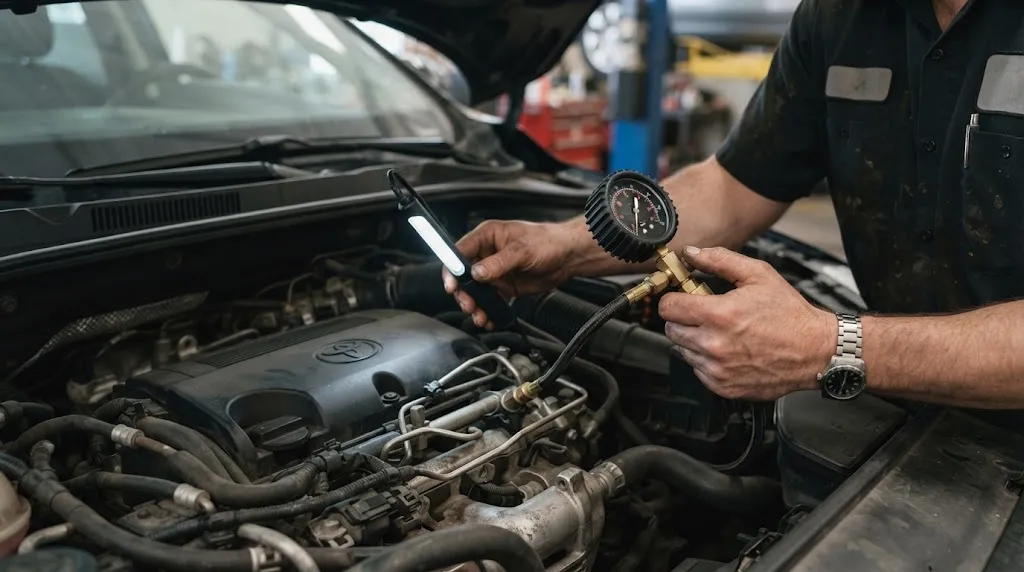
OBD2 is useful, but it is not a complete vehicle health report.
It generally cannot prove by itself that a particular mechanical component is physically worn out. A scan tool may show a sensor value or fault condition, but proper diagnosis can require visual inspection, electrical testing, pressure or vacuum testing, mechanical measurements, or manufacturer-specific procedures.
It also does not mean that every dashboard warning can be read by every OBD2 reader. ABS, airbag, body, and other module diagnostics may require enhanced or full-system scanner coverage.
Finally, a car can have a real problem without immediately producing a code. Diagnostic monitoring has specific conditions and thresholds, and not every mechanical or intermittent issue is detected in the same way.
When Is an OBD2 Scanner Useful?
An OBD2 scanner is especially useful when the check-engine light is on, when you want to retrieve a stored diagnostic code before seeking repair, or when you need to view supported live data during troubleshooting.
It can also help verify whether a code has returned after a repair, provided the relevant monitor has had enough opportunity to run. For used-car evaluation, scan data can be one useful source of information, but it should not replace a complete mechanical inspection.
If you are choosing a scanner, first decide what you need it to access. For simple check-engine diagnostics, generic OBD2 support may be enough. If you need ABS, SRS, transmission, service resets, active tests, or manufacturer-specific functions, verify that the scanner explicitly supports those systems for your exact vehicle.
Related Product
OBD2 Car Diagnostic Scanner
A compatible OBD2 scanner can retrieve diagnostic codes and supported live data, making it useful when investigating a check-engine warning.
As an Amazon Associate, we earn from qualifying purchases.
Frequently Asked Questions
What does OBD2 stand for?
OBD2 stands for On-Board Diagnostics II. It is the second generation of standardized onboard vehicle diagnostics, used especially for monitoring emissions-related systems and reporting diagnostic information through compatible equipment.
Is OBD2 only for the check-engine light?
No. Generic OBD2 is closely associated with the check-engine or malfunction indicator system and standardized powertrain/emissions diagnostics, but more advanced tools can access additional vehicle modules and functions when the vehicle and scanner support them.
Do all cars have OBD2?
No single model-year rule covers every country and vehicle. In the United States, full federal OBD compliance for covered light-duty gasoline vehicles is commonly associated with the 1996 model year. Other markets use related implementation schedules and standards, so check the exact vehicle.
Can an OBD2 scanner read ABS and airbag codes?
Sometimes, but not every scanner can. Basic generic readers are often limited to standardized powertrain and emissions information. ABS and SRS access normally requires a tool with explicit support for those modules and the specific vehicle.
Does OBD2 tell you what part to replace?
Not reliably. A diagnostic code identifies a monitored condition or circuit, but the underlying cause can involve a component, wiring, connectors, power supply, mechanical conditions, or another system fault. Diagnosis is still required.
Can I clear an OBD2 code myself?
If you have a compatible scanner, you can often clear supported diagnostic information, but clearing the code does not repair the cause. It can also reset readiness monitors, so it is better to record and investigate the fault before erasing it.
Conclusion
OBD2 is the standardized diagnostic system that gives compatible scan tools access to important vehicle diagnostic information, especially engine and emissions-related data. Its biggest benefit is that it turns a warning such as a check-engine light into useful information that can guide the next step.
The key limitation is equally important: an OBD2 code is evidence, not a guaranteed diagnosis. Use the code with the vehicle’s symptoms, inspection findings, and appropriate service information. If you need ABS, airbag, transmission, or other module-level diagnostics, make sure the scanner actually supports those systems for your vehicle.

I’m Alex Rahman, a car enthusiast and automotive writer focused on practical solutions, car tools, and real-world driving advice. I share simple and honest content to help everyday drivers make better decisions.
