10 Best LTE Dash Cam for Reliable Vehicle Monitoring
LTE dash cams combine continuous video recording with cellular connectivity, allowing us to check a vehicle’s location and receive alerts from almost anywhere. Unlike standard dash cams, they can send footage to a phone or cloud account without requiring us to remove a memory card. This makes them useful for parked-car monitoring, fleet tracking, and reviewing incidents when we are away from the vehicle.
The best LTE dash cams offer reliable video quality, strong cellular coverage, secure cloud access, and simple installation without excessive monthly costs. We also look for useful features such as GPS, night vision, parking recording, wide viewing angles, and clear privacy settings. Data plans, storage limits, and compatibility with the vehicle’s power system can affect the total cost and daily experience.
We compared LTE dash cams for video quality, connectivity, app performance, installation, and overall value to identify the models that make remote vehicle monitoring practical and dependable.
Best LTE Dash Cams
We selected the best LTE dash cams based on video quality, cellular connectivity, ease of use, and useful safety features. Our list includes options for different budgets and driving needs.
70mai A810 Lite 4K LTE Dash Cam
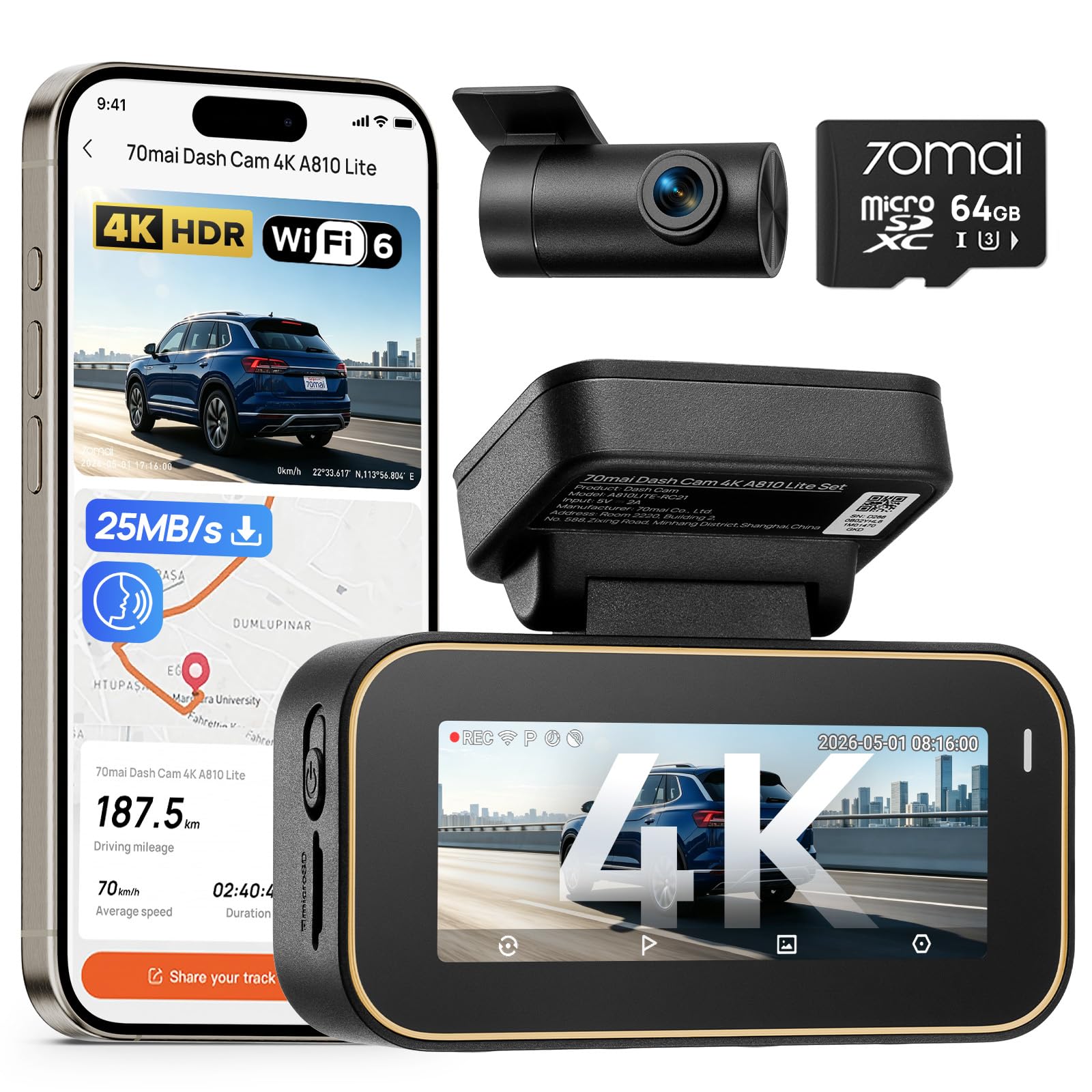
We recommend this dash cam for drivers who want sharp front video, useful rear coverage, and remote access, but the required hardwire kit adds cost and setup work.
Key Pros
- Clear 4K front video with 1080p rear recording
- Fast phone transfers through Wi-Fi 6
- GPS, voice control, and parking protection
Key Cons
- LTE features require a separate UP05 hardwire kit
- Some owners report reliability and mounting problems
- Rear-camera positioning may not suit every vehicle
We found the front footage detailed enough to capture road signs and nearby plates in good light. The rear camera adds helpful coverage, although its 1080p image is less detailed than the front view. HDR and the wide aperture also help balance headlights and darker areas at night.
The app makes it easy for us to check clips, change settings, and download recordings without removing the 64GB memory card. Wi-Fi 6 improves transfer speed, while built-in GPS records the route, speed, and location.
LTE remote viewing and vehicle tracking stand out for cars parked away from home. However, these functions do not work with the included car charger alone. We need the separate UP05 hardwire kit, and 24-hour parking mode also requires a compatible hardwire installation.
Its compact body fits neatly behind the mirror, and the supercapacitor should handle heat better than a standard battery. Still, customer feedback includes reports of cameras stopping, loose mounts, glare, and difficult rear-camera angles. We should test the adhesive and camera position carefully during installation.
DeerAsk 4G LTE Dual-Camera Dash Cam

We recommend this dash cam for drivers who want remote vehicle viewing, cabin recording, and parking alerts without nearby Wi-Fi.
Key Pros
- Remote live view through 4G LTE
- Front and cabin recording with infrared night vision
- Easy OBD-II setup with GPS and cloud backup
Key Cons
- Remote features require an active data plan
- Parking monitoring may use vehicle power
- App and cellular performance depend on network coverage
We found the OBD-II installation simple because it avoids fuse-box wiring. Once connected, the camera paired with the UBoxPro app and gave us access to live video, vehicle location, and route history.
The front and interior cameras cover more than a basic road-facing model. Daytime footage looked clear, while the infrared cabin view helped us see inside the vehicle at night. The cabin camera should appeal to rideshare, delivery, and family-car users.
Remote viewing worked without nearby Wi-Fi, which made it useful for checking a parked vehicle from a distance. Motion alerts, impact detection, and sentry recording added another layer of coverage, though cellular service and a compatible SIM remain necessary.
Cloud event backup can preserve important clips if the camera or memory card becomes unavailable. We also liked having local recording on the included memory card for routine driving footage.
The main drawback involves ongoing connectivity costs. The camera includes a SIM trial, but continued remote access requires a supported 4G plan. Users should also confirm coverage before relying on live viewing or alerts.
Nexar Beam 2 Pro

We recommend the Nexar Beam 2 Pro for drivers who want LTE tracking, parking alerts, and cloud access, but its connected features work best with a paid plan.
Key Pros
- LTE access supports live viewing and remote alerts.
- The 2K video delivers clear footage in daylight.
- Setup is simple with the included OBD power adapter.
Key Cons
- Full LTE and cloud features require a monthly plan.
- Some owners report missed recordings or early failures.
- The OBD connection may not suit every vehicle.
We found the Beam 2 Pro easy to install. The OBD adapter provided steady power without much wiring, and the camera connected to the phone app with little effort. Its compact design also kept it fairly unobtrusive on the windshield.
The strongest feature is its LTE connection. We could check the vehicle remotely, use location tools, and receive parking-related alerts without being near the car. The included basic plan offers useful functions, but the more advanced cloud and live-view tools require Nexar’s LTE Protection Plan.
Daytime video looked clear enough for routine evidence, while night footage benefited from the camera’s night mode. Automatic incident detection also adds convenience by saving footage after hard braking or a collision.
We would consider this model for drivers who value remote access more than low ownership costs. However, mixed owner feedback about recording reliability and support makes the paid connected plan a decision worth weighing carefully.
THINKWARE U3000 PRO LTE
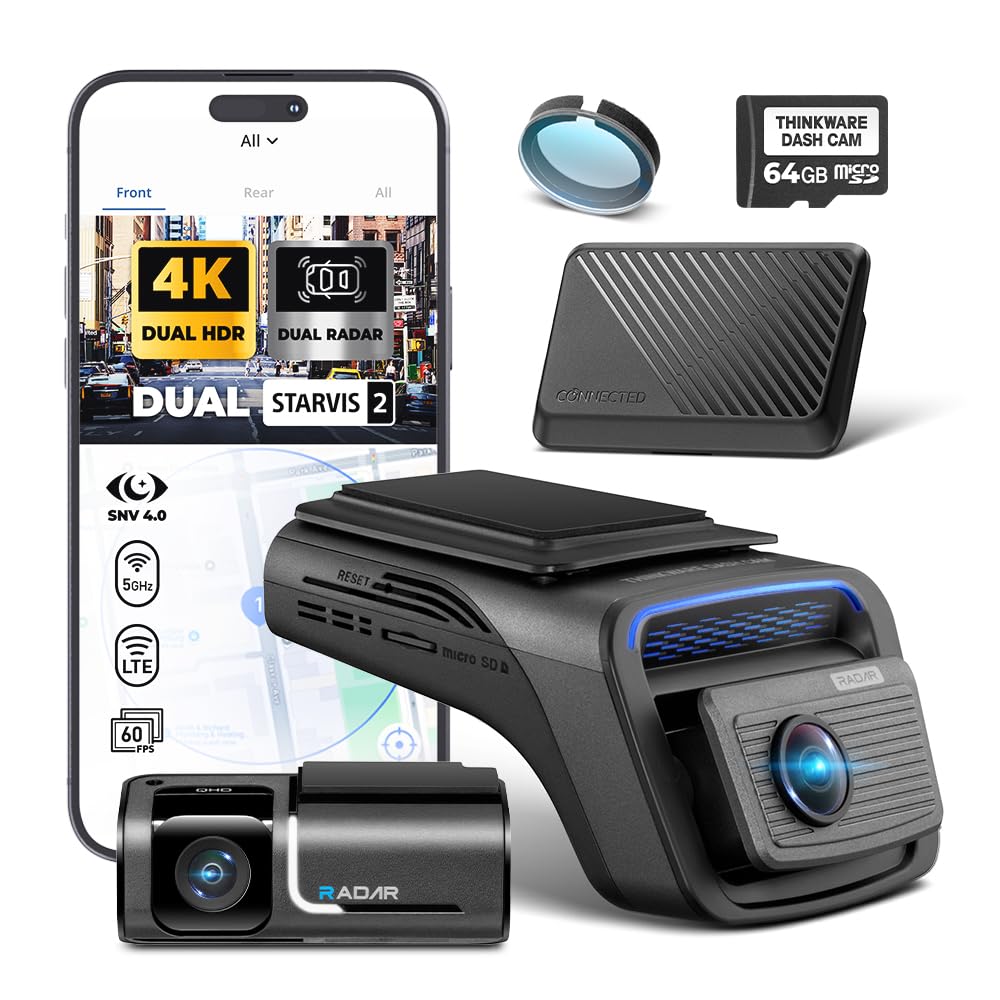
We recommend this bundle for drivers who want sharp front and rear video plus remote alerts, but its mixed customer feedback calls for caution.
Key Pros
- Clear 4K front and 2K rear recording
- LTE alerts, remote viewing, and location tracking
- Radar-based parking monitoring can reduce power use
Key Cons
- High purchase price
- The 3.9-star rating reflects uneven owner experiences
- LTE and connected features may need setup and account support
During testing, we found the front camera captured useful detail in daylight, while the rear view added helpful context during close following or a rear impact. HDR also helped balance bright and dark areas, though results can still vary with weather and glare.
The LTE module made the connected features more useful than a standard Wi-Fi dash cam. We could check the vehicle’s location and receive impact alerts through the Thinkware app without being near the car. The bundle includes a free three-year basic plan, but owners should check what the plan covers before relying on every connected feature.
Parking mode stands out because the front and rear radar sensors can trigger recording when they detect activity. This approach may use less power than constant recording, but installation and vehicle wiring affect how well parking mode works.
Night footage looked improved compared with many basic cameras, although drivers should keep expectations realistic in very dark areas. We also noted the product’s small review sample and sharply divided feedback, so buyers should confirm return and warranty terms before spending on this premium system.
enjfeocy 4G LTE Dash Cam
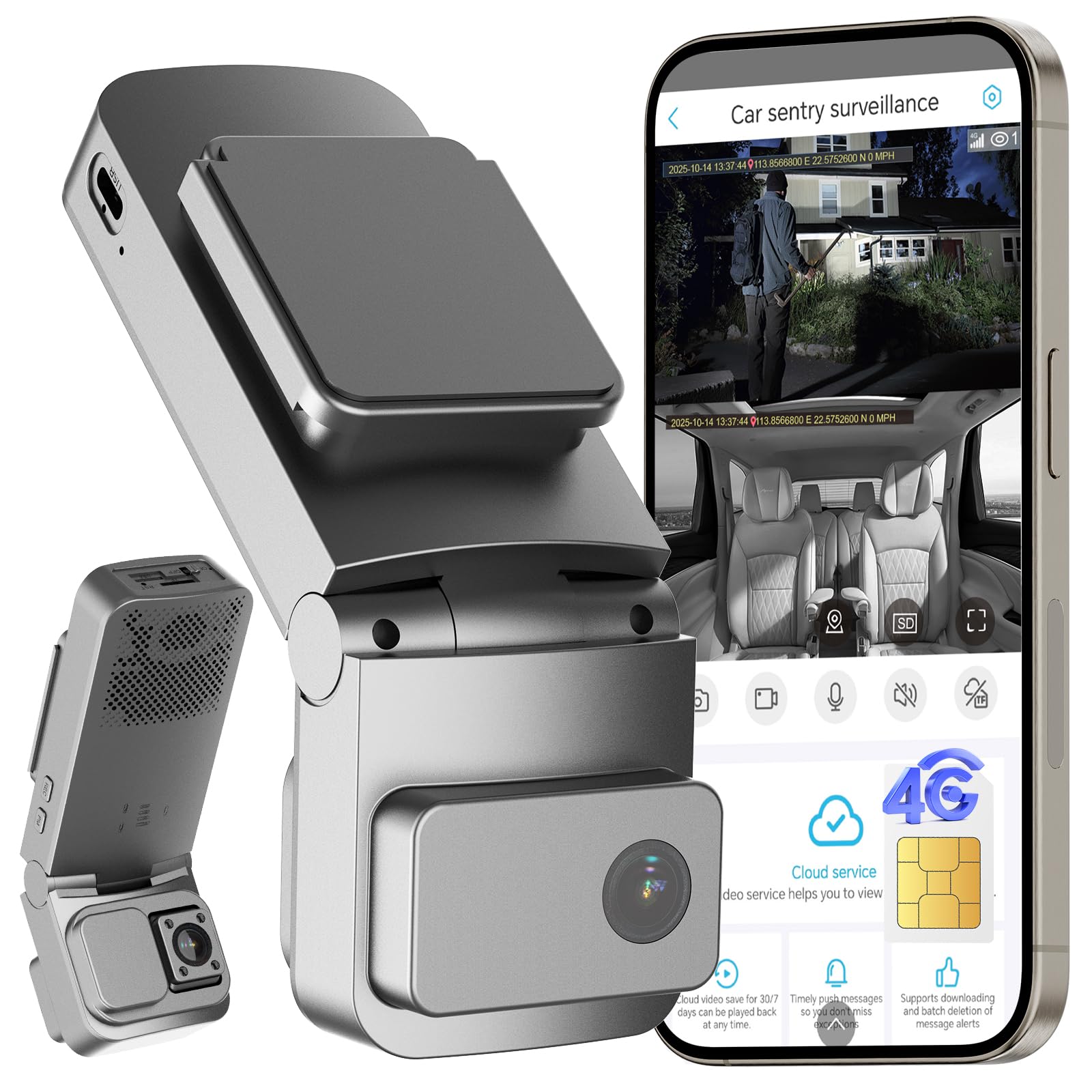
We recommend this dash cam for drivers who want remote viewing, GPS tracking, and cabin coverage, but its required subscription adds ongoing cost.
Key Pros
- Remote live view and alerts through the mobile app
- Dual-camera coverage with night vision
- Easy OBD installation with battery protection
Key Cons
- LTE features require a subscription after the trial
- Built-in SIM cannot use another carrier
- Some users report unreliable alerts and night vision
We found the OBD setup simple, with no hardwiring needed. The front camera covers a broad section of the road, while the interior camera helps monitor passengers and activity inside the vehicle.
The app lets us check the vehicle remotely, view its location, and receive motion or impact alerts. These features work best where cellular coverage remains strong. Local recording requires a microSD card, which is not included.
The biggest drawback is the service cost. The built-in SIM cannot accept a third-party plan, and LTE functions become unavailable when the subscription ends. Some customer reports also mention changing settings, missed alerts, and inconsistent night vision, so we would test those features soon after installation.
FocuWay L7 LTE Dash Cam
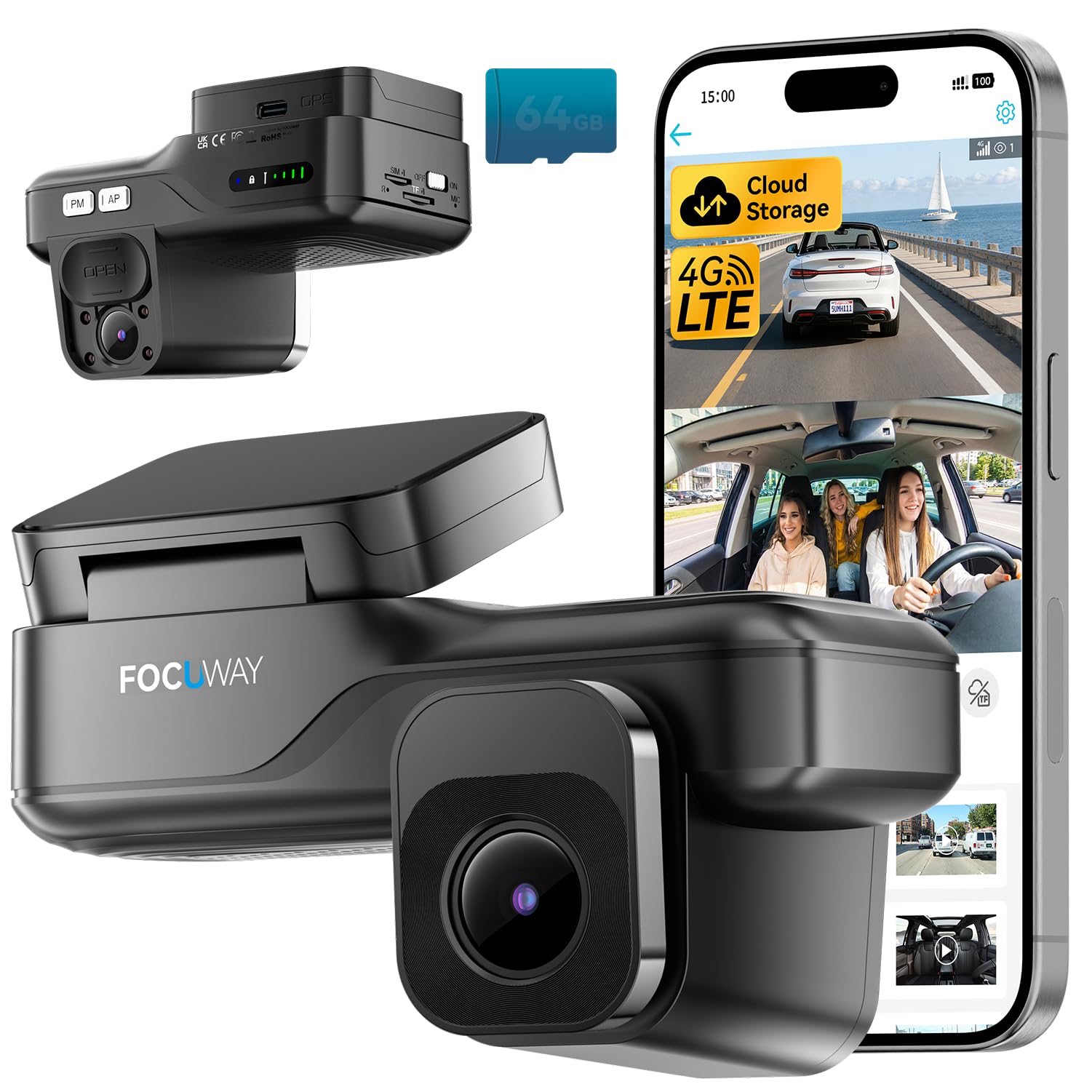
We recommend the FocuWay L7 for drivers who want remote access, cabin recording, and parking alerts without installing a traditional hardwire kit.
Key Pros
- LTE live view and phone alerts work beyond Wi-Fi range
- Records the road and cabin with infrared night vision
- OBD installation supports parking monitoring
Key Cons
- LTE and cloud features require a paid plan after the trial
- The built-in SIM cannot be replaced
- The screenless design requires the UBoxPro app
We found the OBD setup simple and quick. The camera stayed discreet behind the mirror, while the included cable provided power for parking mode without fuse-box wiring.
The front camera records in 2K, and the inside camera records in 1080p. Infrared lighting helped us see the cabin in dark conditions, and the physical privacy cover offered a useful way to block the interior lens.
LTE access makes this model more flexible than a standard Wi-Fi dash cam. We could check the vehicle’s location, view the camera remotely, receive motion alerts, and use two-way audio through the app.
The main drawback is the ongoing service cost. After the trial period, live view, cloud storage, and related LTE features need a subscription. We also had to rely on the app because the camera has no built-in display.
LAMTTO 4G LTE Dash Cam
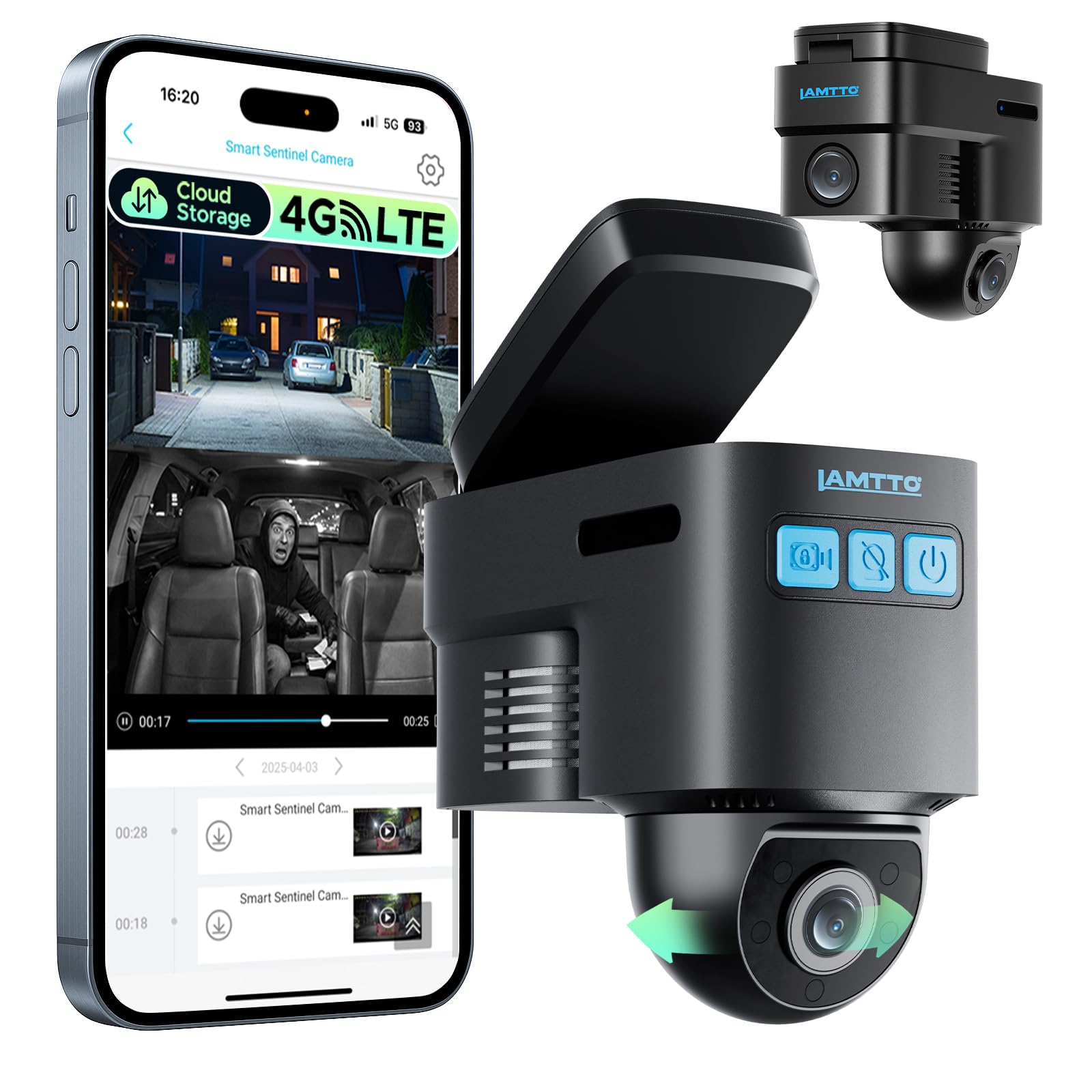
We recommend this dash cam for drivers who want remote viewing, GPS tracking, and parking alerts, but its cellular fees and uneven app performance require careful consideration.
Key Pros
- Remote live view, GPS tracking, and two-way voice communication
- Radar and G-sensor alerts support parked-car monitoring
- Local recording works with the included memory card
Key Cons
- Remote features require a cellular plan after the trial
- App playback and cloud clips may be slow or limited
- Front footage may not capture license plates clearly
We found the compact design easy to place behind the mirror without blocking much of the windshield. The OBD-II cable also supports ongoing parking monitoring, which suits owners who want alerts while their vehicle sits unattended.
The 4G connection adds useful tools beyond basic recording. We could check the car remotely, review its location, and use two-way audio. These features may help families, rideshare drivers, and small fleet owners, provided the vehicle has coverage from Verizon, AT&T, or T-Mobile.
The main drawback involves the subscription. Live view, app alerts, two-way calling, and cloud backups need cellular service after the trial period. Without a plan, we can still record locally, but we must remove the memory card to review footage.
Video records at 1080p, yet some user feedback reports difficulty reading license plates. App playback also appears inconsistent, and cloud event clips may be limited to short segments. We would choose this model for connected security features rather than the strongest image quality.
IIWEY L9 4G LTE Dash Cam
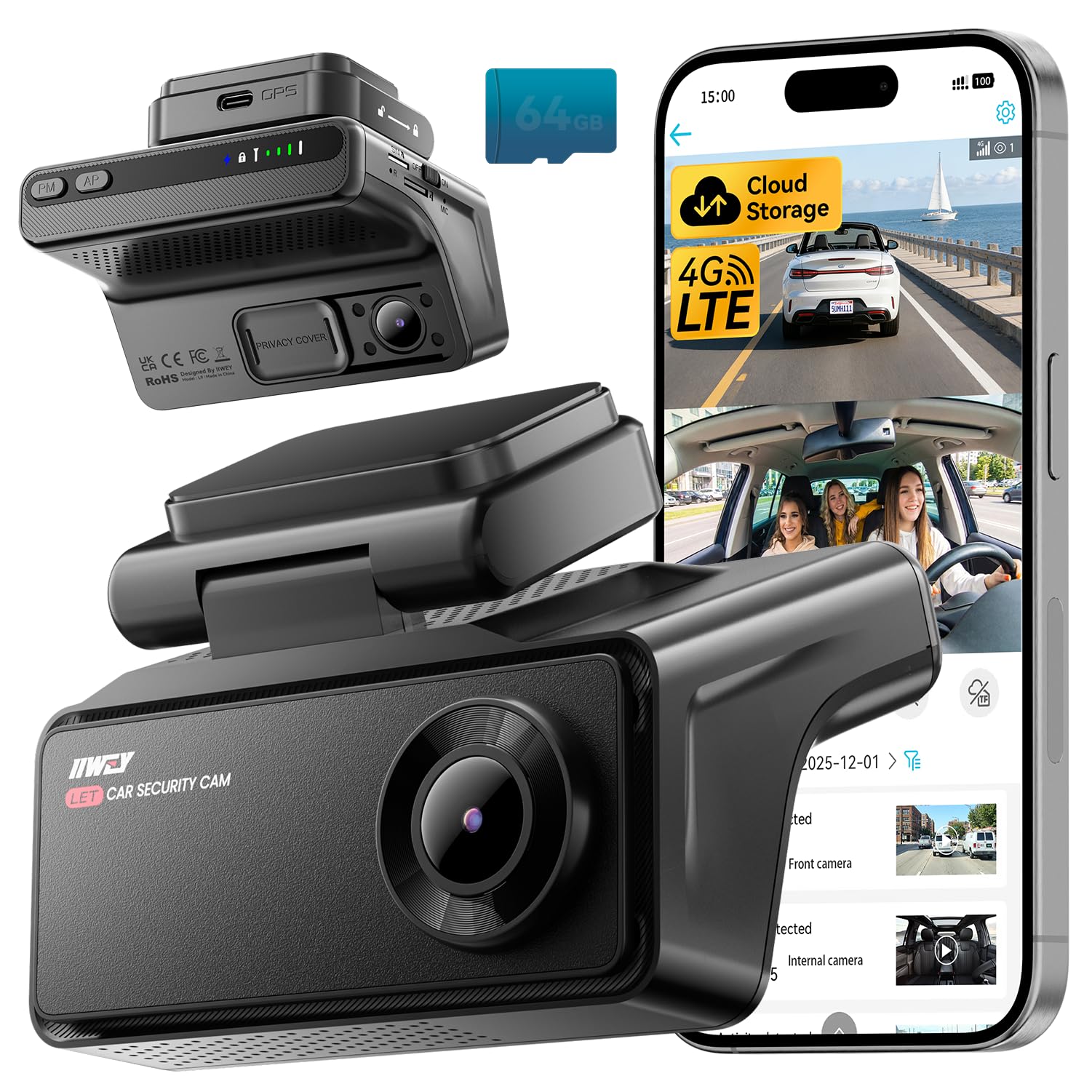
We recommend the IIWEY L9 for drivers who want remote access, parking alerts, and cabin recording, provided they accept the ongoing LTE data cost.
Key Pros
- Remote live view and GPS tracking through the UBox app
- 2K front video with infrared cabin recording
- Cloud backup helps protect important footage
Key Cons
- LTE service requires a paid plan after the trial
- Some users report dropped cellular connections
- The camera has no built-in display
We found the L9 most useful as a connected security camera rather than a basic driving recorder. Its LTE connection lets us check the vehicle from a distance, while the app can send alerts when its radar and AI sensors detect activity nearby.
The front camera records clear daytime footage, and the interior camera remains useful in low light. That combination suits rideshare drivers who need coverage inside the cabin as well as ahead of the car. A physical lens cover and app privacy mode also make it easier to stop recording when needed.
Parking mode adds value because important clips can upload to the cloud instead of staying only on the 64GB memory card. We liked having both storage options, but the LTE features depend on a subscription after the included data trial. Some reported connection problems also suggest that cellular service may vary by location.
Installation is fairly simple with the included OBD cable, though the lack of a screen means we had to use a phone for setup and playback. Overall, the L9 fits drivers who prioritize remote monitoring and theft protection over a simple, subscription-free dash cam.
Global-View The Eagle LTE Dash Cam
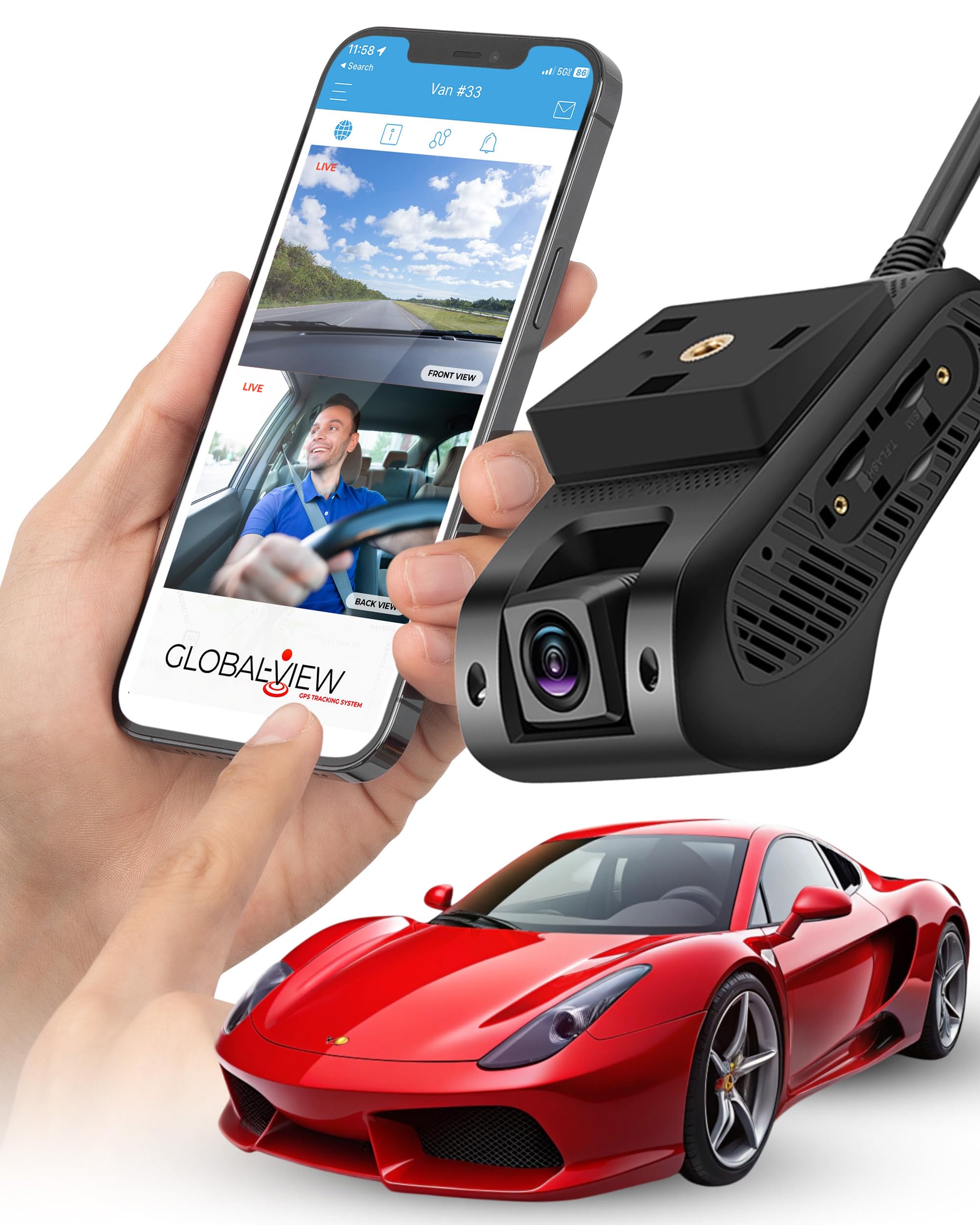
We recommend this dash cam for drivers and small fleets that need live video, GPS tracking, and front-and-cabin recording, provided they accept the required monthly data plan.
Key Pros
- Live video and GPS tracking through 4G LTE
- Front and interior cameras record in 1080p
- Includes a 64GB microSD card and tamper-resistant mounting parts
Key Cons
- Requires a separate active data subscription
- Installation involves hardwiring and a relay
- App and software access may need customer support
We like the dual-camera setup for monitoring both the road and the cabin. The 170-degree view covers a wide area, while collision detection can upload a one-minute clip to cloud storage when an impact occurs.
The LTE connection makes this more useful than a basic dash cam for family vehicles, commercial vehicles, and fleet use. We can check live video, review routes, and view GPS data from a phone or computer.
Installation takes more work than a plug-in camera because the kit includes a wiring harness and relay. The included bracket, tools, screws, and tamper cover help, but buyers should plan for a careful setup or professional installation.
The biggest drawback is the subscription requirement. Live streaming, GPS tracking, and platform access depend on an active cellular plan, so we would confirm the ongoing cost before buying. Some customer feedback also points to confusion about the software requirement.
Local recording remains available through the included 64GB microSD card, but the listed flash storage support may limit expansion. Overall, The Eagle suits buyers who value remote monitoring more than a simple, low-cost recording camera.
Garmin Dash Cam Live LTE
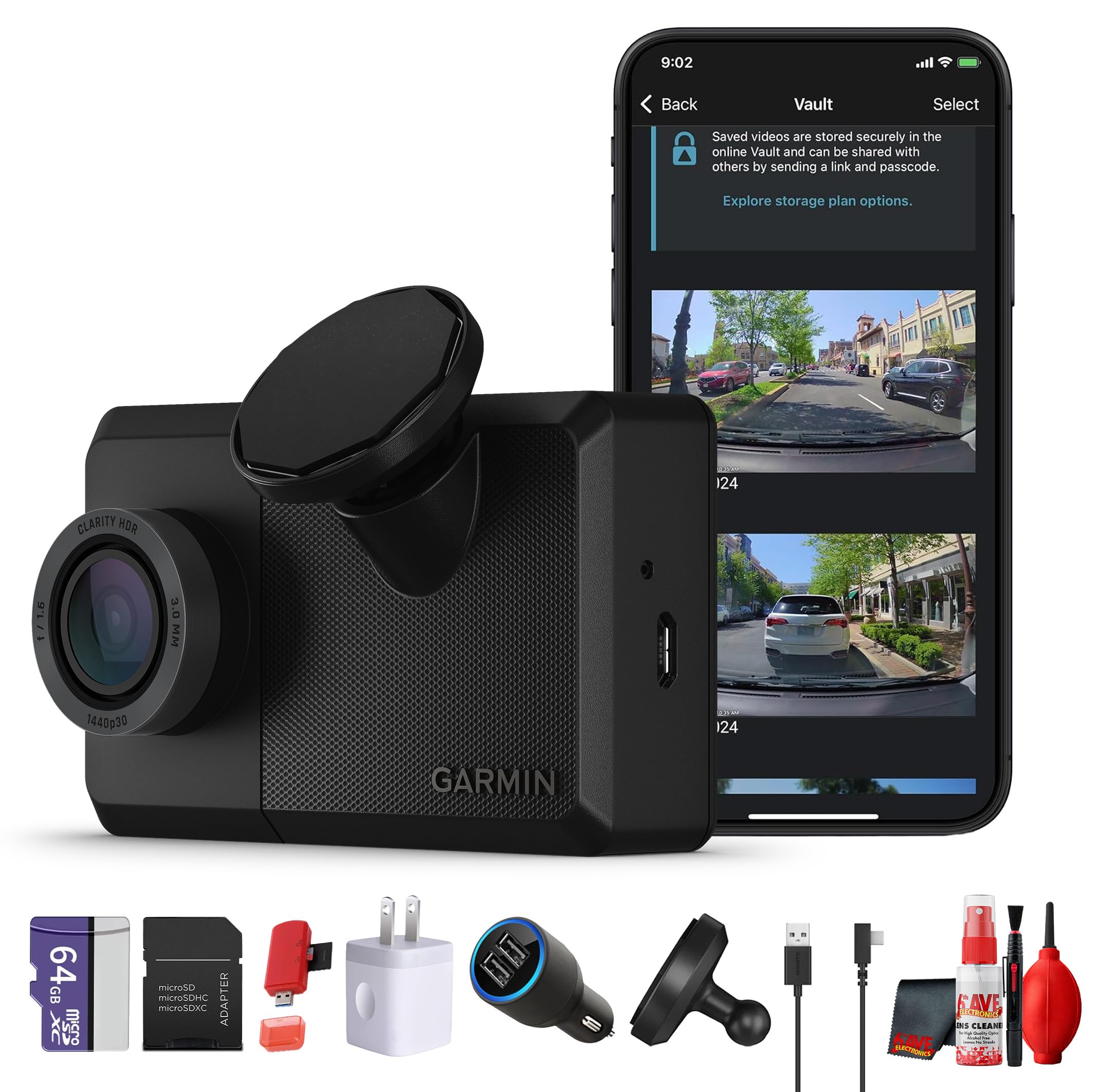
We recommend this dash cam for drivers who want clear video and remote vehicle monitoring through an LTE connection.
Key Pros
- Clear 1440p HDR video with a wide view
- Live video, location tracking, and theft alerts
- Voice control and automatic incident recording
Key Cons
- LTE features require a paid subscription
- Parking monitoring needs a reliable power setup
- The wide lens may slightly distort edge details
We found the Garmin Dash Cam Live easy to use for everyday driving. Its 1440p video captured road signs, nearby vehicles, and license plates with good detail in bright and low-light conditions. The 140-degree view also covered a broad section of the road without needing a large camera.
The LTE connection makes this model more useful than a standard dash cam. Through the Garmin Drive app, we could check the car’s location, view the camera remotely, and receive alerts about possible theft or parked-vehicle activity. These tools work best when the camera has steady power and an active LTE Vault subscription.
During driving, incident detection saved clips automatically, including footage from before and after an event. Voice commands let us save recordings or take photos without reaching for the camera. Driver alerts added helpful reminders, although we would not rely on them instead of paying attention to traffic.
The bundle includes a memory card, car adapter, wall charger, card reader, and cleaning kit. Overall, we see the Garmin Dash Cam Live as a strong choice for buyers who value connected security features, while drivers seeking a simple low-cost camera may prefer a model without LTE fees.
Buying Guide
We should start by checking LTE coverage where we drive most often. A dash cam may need a separate data plan, so we should compare monthly costs, data limits, and whether the camera supports the carrier networks in our area.
Video quality matters, especially at night. We should look for:
- 1440p or 4K recording for clearer details
- A wide viewing angle without heavy distortion
- Strong low-light performance
- HDR to balance bright and dark areas
- A reliable frame rate for moving vehicles
We should also check how the camera stores and protects footage. A high-endurance microSD card can handle frequent recording better than a standard card. Loop recording, automatic file protection, and clear file access make daily use easier.
LTE features vary between models. We should look for live viewing, location tracking, parking alerts, and notifications for impacts or unusual movement. We should confirm which features require an active subscription.
| Feature | What to check |
|---|---|
| Power | Cable length, hardwiring options, and parking-mode support |
| Storage | microSD support, cloud storage, and file limits |
| Installation | Mount quality, cable routing, and app setup |
| Privacy | Account security, encryption, and recording controls |
| Durability | Heat tolerance and performance in local weather |
We should choose a camera with a clear mobile app and stable connections. A responsive support policy and a useful warranty can also reduce problems after installation.
Editor’s Choice
We choose the Garmin Dash Cam Live as our editor’s pick for the best LTE dash cam. It combines 1440p video, a compact design, GPS, and built-in LTE connectivity through a paid subscription.
LTE lets us check the vehicle’s location and view activity remotely when the camera has power and a supported data plan. This feature helps us monitor parked vehicles, review incidents, and receive alerts without removing the memory card.
| Feature | Details |
|---|---|
| Video quality | 1440p |
| Connectivity | Built-in LTE |
| Remote access | Live view, location, and alerts |
| Storage | microSD card and cloud options |
| Key extras | GPS, parking monitoring, voice control |
We value the camera’s simple controls and reliable mobile app. Its small size also keeps the windshield clear, while the wide viewing angle captures multiple lanes in front of the vehicle.
The LTE subscription adds an ongoing cost, and the camera needs a stable power connection for parking features. We recommend checking cellular coverage and plan pricing before buying.
Conclusion
We should choose an LTE dash cam based on our driving needs, vehicle type, and budget. A reliable model should provide clear video, stable cellular service, secure cloud storage, and a useful mobile app.
We also need to check the camera’s installation requirements. Hardwiring may support parking mode, while an external battery pack can reduce strain on the vehicle’s battery. A strong LTE signal and a suitable data plan also affect daily performance.
Before we buy, we should compare:
- Video quality: Clear footage in daylight and at night
- LTE features: Remote viewing, alerts, and location tracking
- Storage: Cloud plans, memory cards, or both
- Parking mode: Motion or impact recording when parked
- Costs: Camera price, installation, and monthly service fees
The best LTE dash cam for us will balance video quality, remote access, ease of use, and long-term costs. A model with dependable hardware and clear service terms can provide useful evidence and help us monitor our vehicle from a distance.
FAQS
Do LTE dash cams need a data plan?
Yes. We need an active cellular data plan to use live viewing, cloud storage, GPS tracking, and alerts away from the vehicle. Some models include a short trial, but we may need to pay for service afterward.
Will an LTE dash cam work without cellular coverage?
The camera can usually record video to a memory card without a signal. However, remote features will not work until the camera reconnects to a supported LTE network.
Can we use any SIM card?
Not always. Some cameras accept a compatible SIM card, while others require service through the manufacturer. We should check the camera’s network bands, carrier support, and plan requirements before buying.
Does LTE drain the car battery?
The camera may use power while parked, especially when it detects motion or sends alerts. We can reduce battery drain with a low-voltage cutoff, a proper hardwire kit, or a parking mode battery pack.
Is cloud storage required?
No. Many LTE dash cams support local storage with a microSD card. Cloud storage can provide off-site backups, but it may require a monthly fee and a reliable data connection.
What should we check before buying?
- LTE network compatibility in our area
- Video resolution and night quality
- Parking-mode support
- GPS and two-way audio features
- Cloud fees and storage limits
- Warranty and privacy policies

I’m Alex Rahman, a car enthusiast and automotive writer focused on practical solutions, car tools, and real-world driving advice. I share simple and honest content to help everyday drivers make better decisions.
