10 Best Dash Cam With Sony STARVIS Sensor for Clearer Nighttime Recording
Dash cams record the road ahead and can provide useful evidence after a crash or other incident. Models with Sony STARVIS sensors are designed to capture clearer video in low light, making them a strong choice for drivers who often travel at night, in tunnels, or under changing weather conditions.
When choosing a dash cam with a Sony STARVIS sensor, we should focus on more than the sensor itself: video resolution, night performance, viewing angle, storage support, parking mode, GPS, and ease of use all affect the camera’s value. A reliable mount and clear license-plate detail also matter because recorded footage is only useful if we can review it easily.
We compared leading models to find the dash cams with Sony STARVIS sensors that offer the best balance of image quality, features, and everyday usability.
Best Dash Cams With Sony STARVIS Sensors
We selected the best dash cams with Sony STARVIS sensors based on video quality, low-light performance, features, and ease of use. Our list includes options for different budgets and driving needs.
ROVE R2-4K Dual Dash Cam
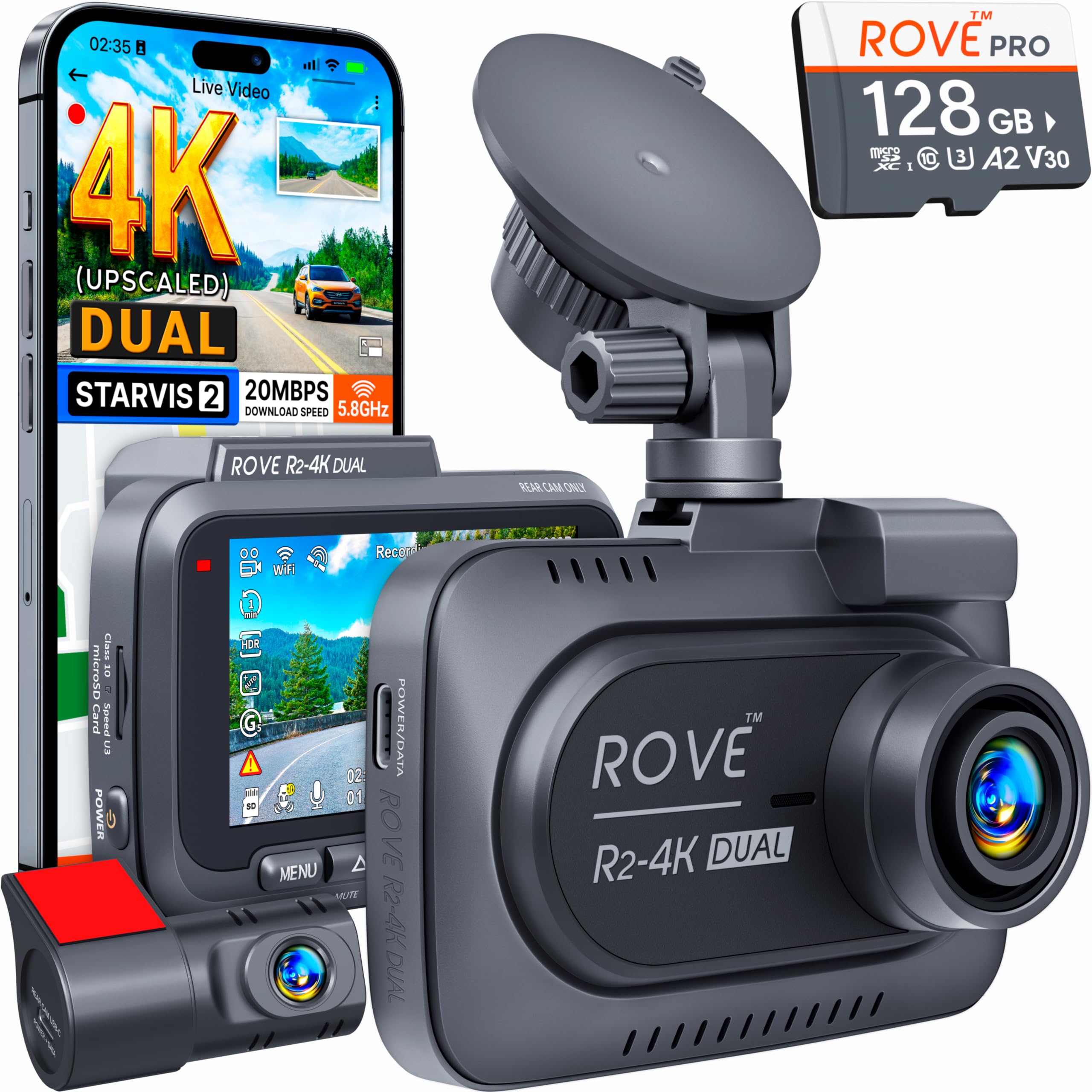
We recommend this dash cam for drivers who want clear front-and-rear coverage, strong low-light video, and easy phone access.
Key Pros
- Sony STARVIS 2 sensor improves low-light detail
- Includes a 128GB microSD card
- Fast 5.8GHz Wi-Fi and built-in GPS
Key Cons
- Front video uses upscaling rather than native 4K
- Parking mode needs a separate hardwire kit
- The rear camera requires cable routing through the vehicle
After testing the ROVE R2-4K Dual, we found the front footage sharp in daylight and useful at night. The Sony STARVIS 2 sensor, wide aperture, and HDR helped preserve detail in darker streets and changing light. The rear camera added practical coverage without making the system difficult to manage.
The included 128GB card lets us start recording without buying extra storage. Setup also felt straightforward because ROVE includes mounts, cable clips, a trim tool, and a dual USB charger. Routing the rear cable still takes time, especially in larger vehicles.
Using the ROVE app, we could check clips and transfer them to a phone quickly over 5.8GHz Wi-Fi. Built-in GPS adds speed and location data to recordings, which can help when reviewing an incident.
The front camera records native 1440p and upscales it to 4K, so buyers should not expect the detail of a native 4K camera. Parking features also require a separate hardwire kit, but the camera offers useful motion, collision, and time-lapse options once installed.
REDTIGER F7NP 4K Dash Cam
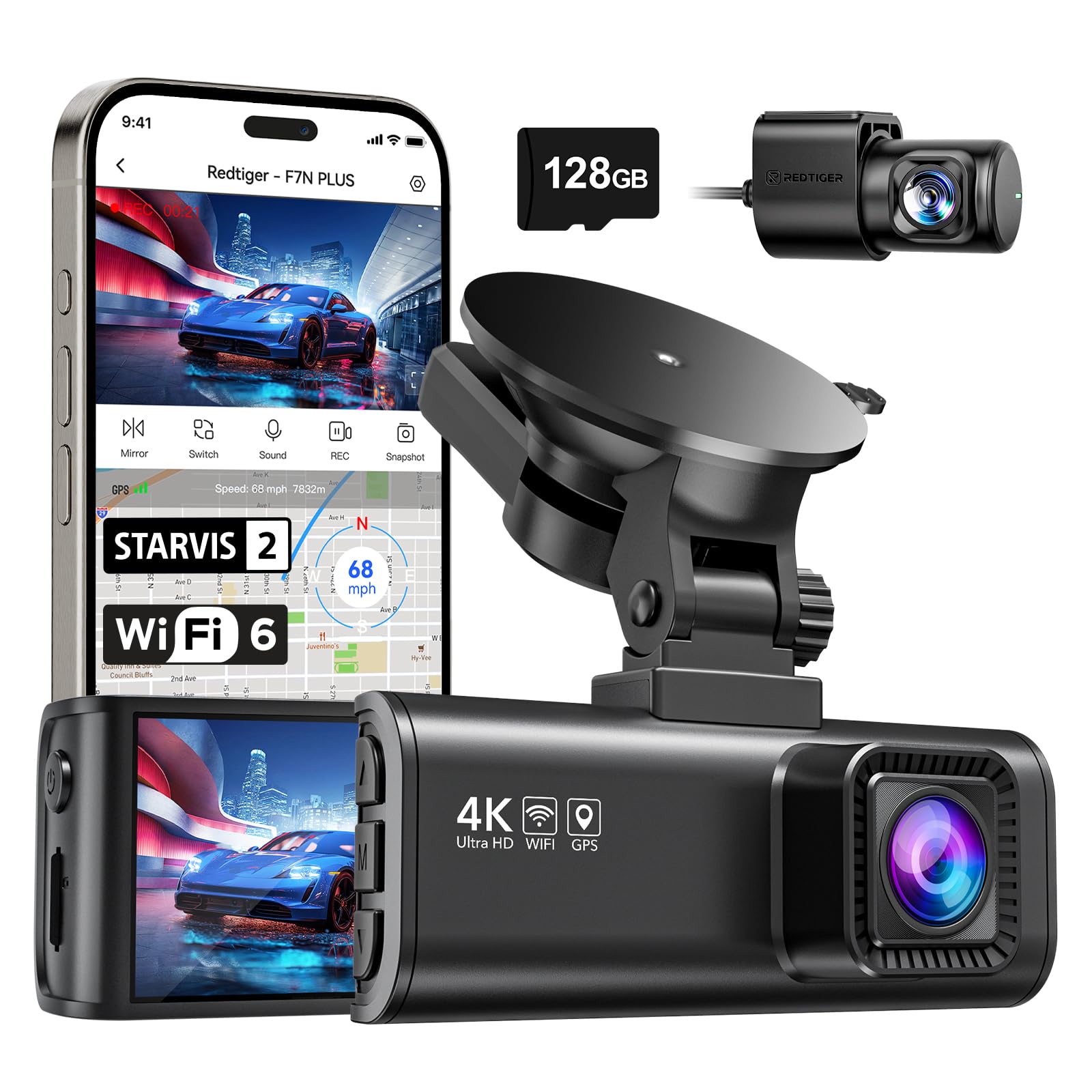
We recommend the REDTIGER F7NP for drivers who want sharp front and rear video, useful phone access, and a memory card included.
Key Pros
- Clear 4K front video with a Sony STARVIS 2 sensor
- Fast Wi-Fi video transfers and built-in GPS
- Includes a 128GB memory card
Key Cons
- Parking mode requires a separate hardwire kit
- Phone Wi-Fi can interfere with Android Auto
- Setup may take time if we hide the rear-camera cable
The F7NP gives us a compact two-camera setup that stays fairly unobtrusive on the windshield and rear glass. Front footage looks detailed in daylight, while the STARVIS 2 sensor, wide aperture, and HDR help preserve useful detail in darker scenes.
We can preview clips, change settings, and download footage through the Redtiger Cam app. Transfers feel quick over the 5.8GHz connection, although we may need to disconnect from Android Auto because both systems compete for the car’s Wi-Fi connection.
Installation is simple when we use the included power cable, clips, and rear-camera lead. Routing that long cable neatly takes more effort, but the included tools help. The built-in GPS also records route and speed information, which can add context to an incident.
Loop recording keeps the camera running as the memory card fills, and the G-sensor locks clips after a detected impact. For monitoring a parked car, we need to buy and install the optional hardwire kit. The supercapacitor should also handle heat better than a battery-based design, and REDTIGER backs the camera with an 18-month warranty.
Roadwitness SQ13 Pro 4K+4K Mirror Dash Cam
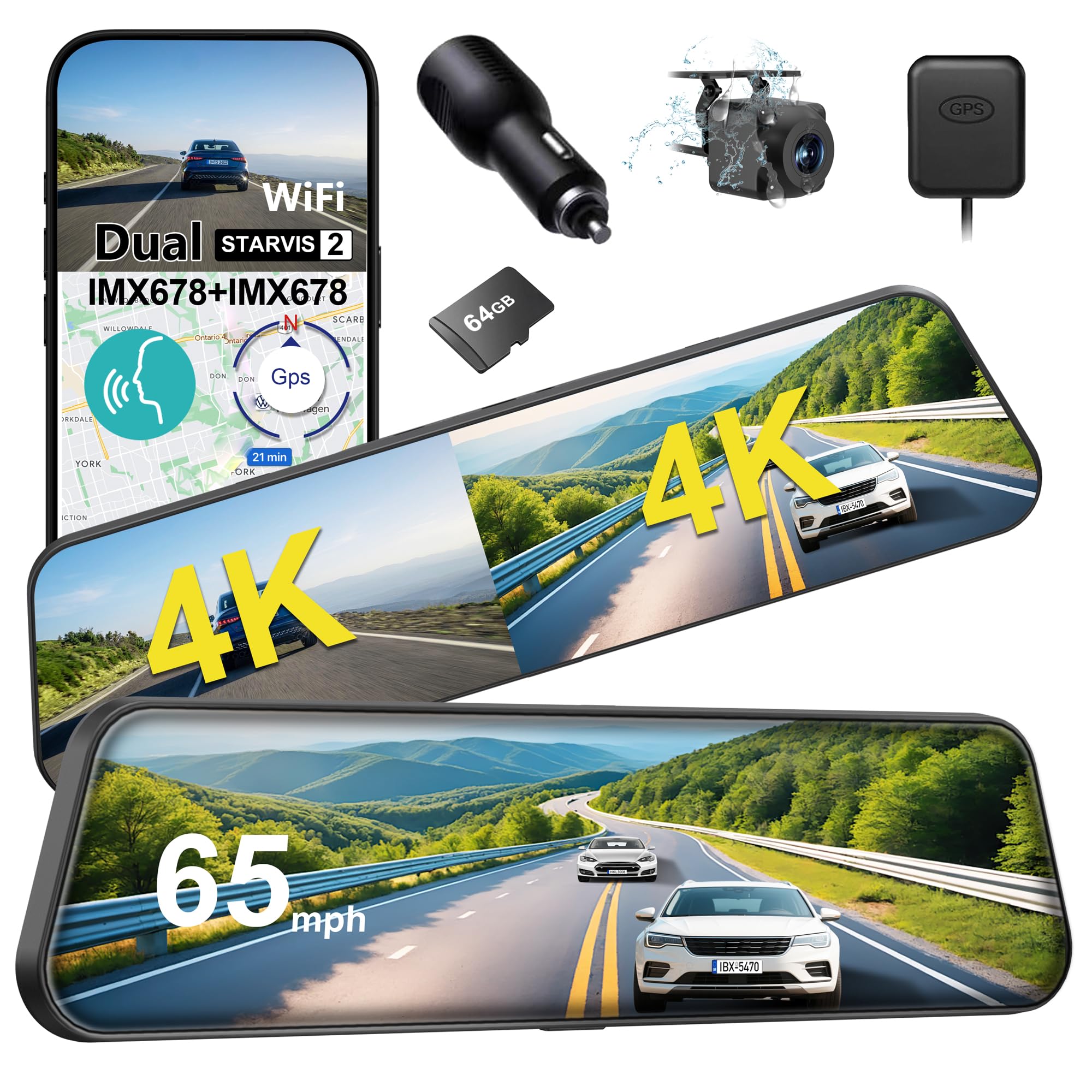
We recommend this dash cam for drivers who want sharp front and rear video, a large mirror-style display, and useful driving alerts in one unit.
Key Pros
- Clear 4K front and rear recording with Sony STARVIS 2 sensors
- Large 12-inch touch display with GPS and Wi-Fi
- Includes a 64GB memory card and supports parking monitoring
Key Cons
- Rear footage can look washed out when headlights shine into the camera
- Installation may take extra time in larger vehicles or trailers
- Some owners reported rear-camera failures after limited use
We found the Roadwitness SQ13 Pro easy to mount and pleasing to use as a replacement mirror. The wide view helped cover several lanes, while the front camera captured clear road details in daylight. Its rear camera also provided a useful view for backing up and monitoring traffic.
At night, the STARVIS 2 sensors and HDR processing improved visibility in dark areas. However, bright headlights behind us sometimes caused glare and washed-out rear footage. That issue can reduce the mirror display’s usefulness on busy highways.
The 12-inch screen made the rear view easy to check, and the touch controls felt straightforward. GPS logging, loop recording, emergency file locking, and the included memory card made the camera ready for normal daily use.
We also appreciated the ADAS and blind-spot alerts, though drivers should treat them as reminders rather than replacements for careful observation. Buyers should check the installation space and cable length, especially when using the camera with a truck, RV, or trailer.
IIWEY N6 PRO 4K STARVIS 2 Dash Cam
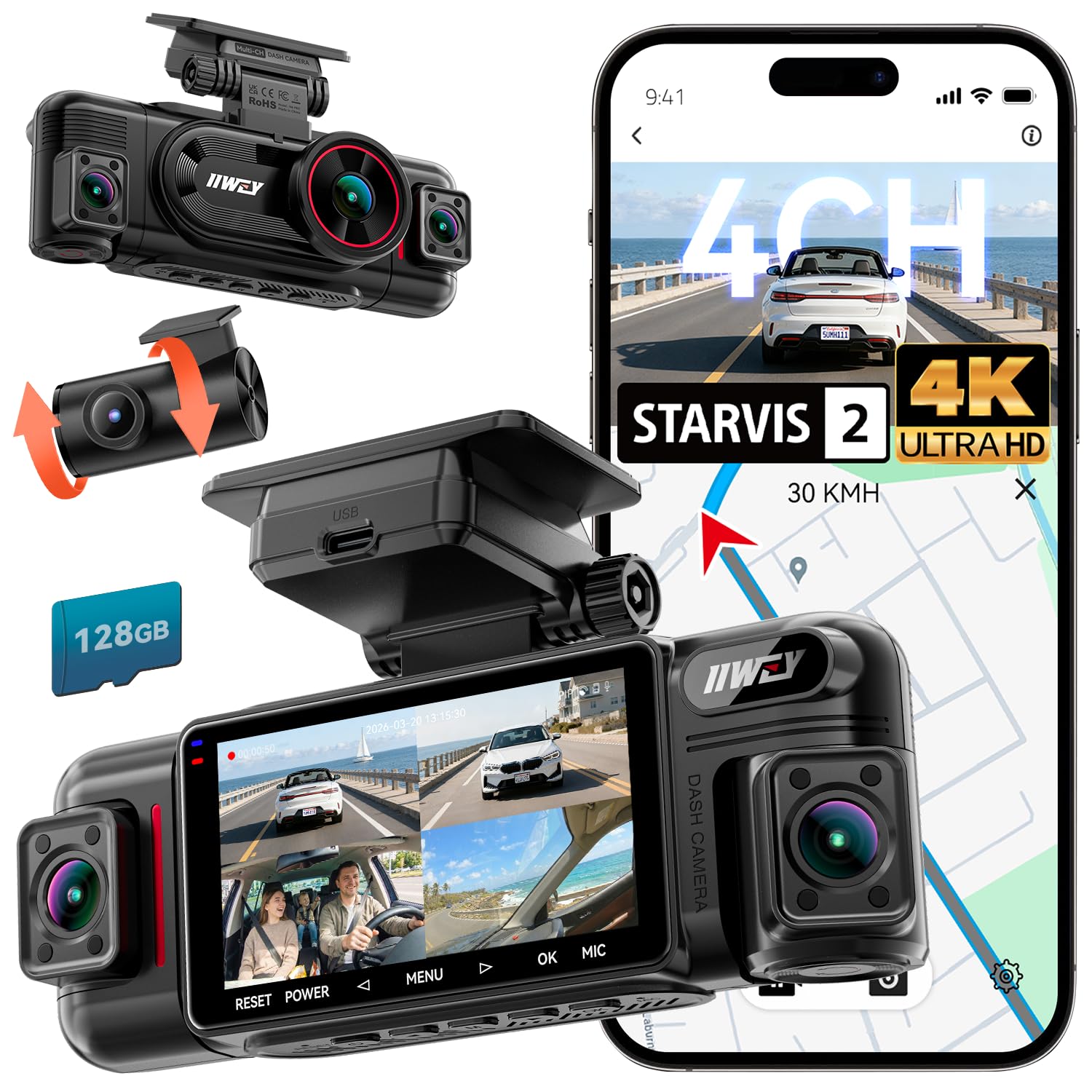
We recommend the IIWEY N6 PRO for drivers who want four-camera coverage and strong night recording, but parking mode requires extra installation care.
Key Pros
- Four-channel coverage records the front, sides, cabin, and rear.
- STARVIS 2 sensors provide clear footage in low light.
- Includes a 128GB card, Wi-Fi app, and 18-month warranty.
Key Cons
- The unit and cable setup take more space than a basic dash cam.
- Parking mode needs a separate hardwire kit.
- Some users report difficult setup and battery-drain problems.
During testing, the four-camera layout gave us much broader coverage than a standard front-and-rear system. The side cameras helped cover areas that usually remain outside the frame, which can help with side-swipes and parking-lot damage.
The front camera produced detailed 4K footage in daylight. At night, the STARVIS 2 sensor helped preserve road detail, while the infrared lights made the cabin and side views easier to see. Headlight glare still affected some scenes, so we would not expect perfect license-plate capture in every situation.
The IIWEY app let us preview and transfer clips without removing the memory card. Its 5GHz Wi-Fi connection worked well nearby, though four-channel files still take time to download. The included 128GB card also reduces the need for an immediate upgrade.
Installation requires patience because four cameras create more cables to route. We also need to stress the power instructions: use the included car charger or a compatible USB 2.0-to-USB-C cable. USB-C-to-USB-C cables are not supported.
Parking mode requires the separate IIWEY hardwire kit. Some reported battery-drain issues, so we would test the voltage cutoff carefully or connect the camera to a fuse that turns off with the vehicle.
REDTIGER F7N TOUCH 4K STARVIS 2 Dash Cam
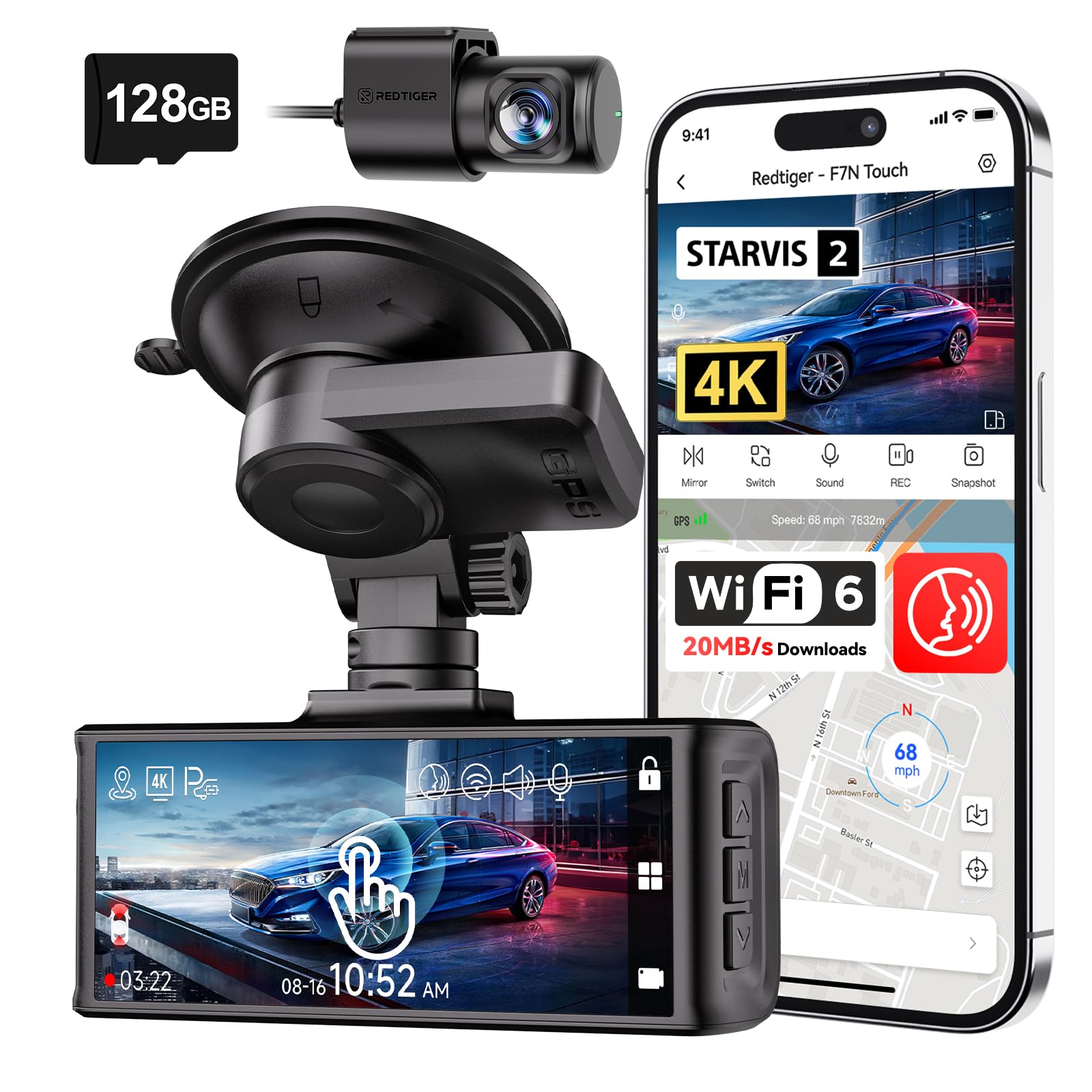
We recommend this dash cam for drivers who want sharp front video, useful rear coverage, and simple phone access in one package.
Key Pros
- Clear 4K front video with STARVIS 2 low-light performance
- Touchscreen, voice control, GPS, and fast 5GHz Wi-Fi
- Includes a 128GB memory card and rear camera
Key Cons
- Parking monitoring needs a separate hardwire kit
- The rear camera records at a lower 1080p resolution
- The app and wiring may take some setup time
During testing, we found the front camera produced detailed daytime footage, while the STARVIS 2 sensor helped preserve useful detail after dark. The wide view covered several lanes without making the image feel overly distorted. The rear camera added helpful coverage, though its 1080p video looked less sharp than the front recording.
The 3.18-inch touchscreen made common tasks quick, such as locking a clip, enabling Wi-Fi, or taking a still image. Voice commands reduced the need to reach toward the camera while driving. We also used the REDTIGER app to view and download clips, and its 5GHz connection moved files faster than many basic dash cam apps.
Installation felt manageable with the suction mount, long rear-camera cable, clips, and trim tool. GPS added speed and route information to recordings, which can help when reviewing an incident. Loop recording and the impact sensor handled routine file protection without much input from us.
The main limitation involves parking mode. We needed the optional hardwire kit for continuous parked-vehicle monitoring. We also found the rear footage adequate rather than outstanding, especially beside the sharper 4K front video. Still, the included card, practical controls, and 18-month warranty make this a strong value for full front-and-rear coverage.
COOLCRAZY N8 4K STARVIS Dash Cam
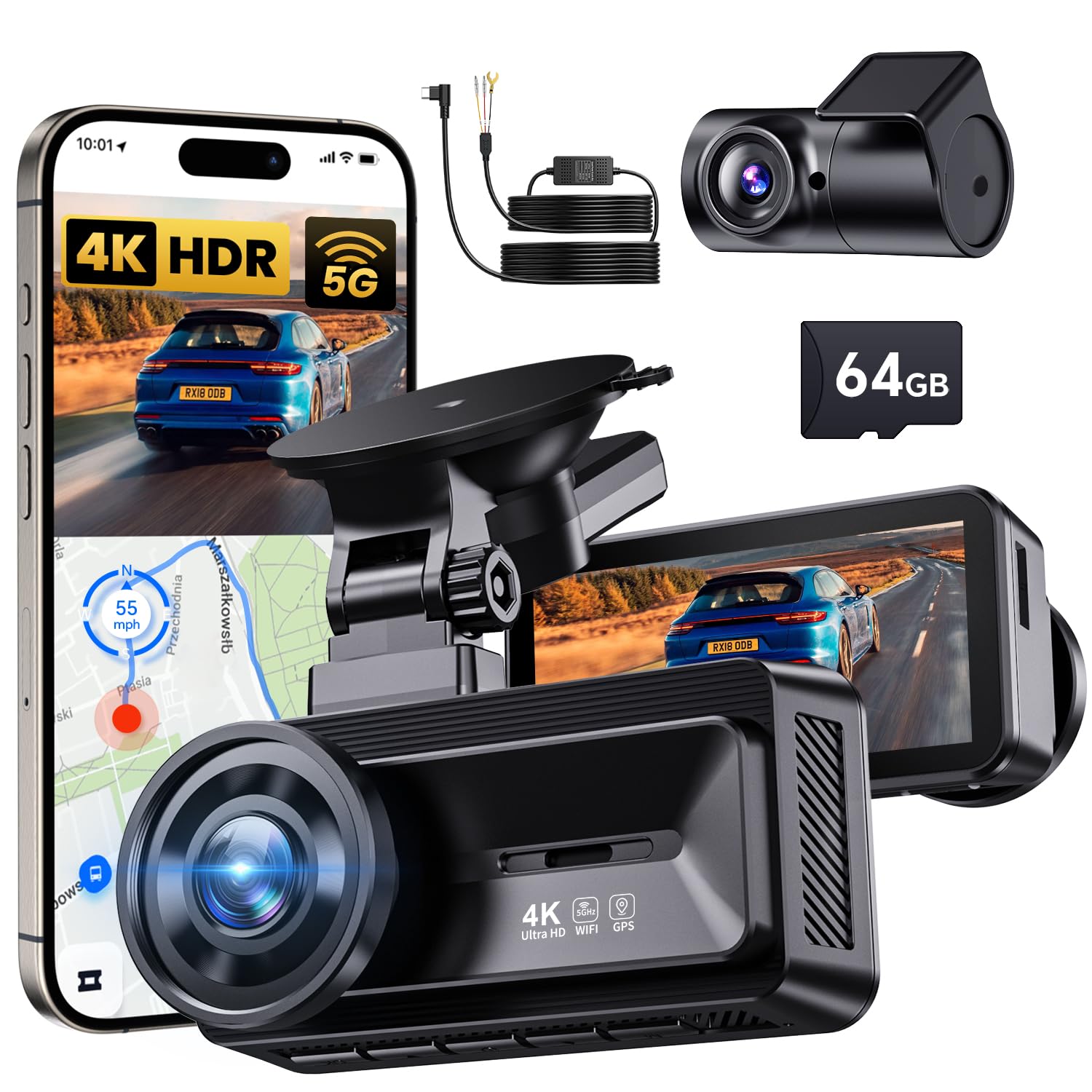
We recommend the COOLCRAZY N8 for drivers who want front-and-rear recording, useful night footage, and easy phone access at a reasonable price.
Key Pros
- Clear front footage with strong low-light performance
- Includes a 64GB memory card and GPS
- Fast Wi-Fi transfers and simple windshield mounting
Key Cons
- Rear video is less detailed than the front footage
- Parking mode needs an extra hardwire kit
- Some owners report app and recording problems
During our testing, the Sony STARVIS sensor helped preserve road details after dark, especially under streetlights and in parking areas. The wide front view also captured more of the lane, while the rear camera added useful coverage behind the vehicle.
The built-in GPS recorded speed and route data, and the 3-inch screen made basic setup easy. We liked having the included 64GB card ready to use, although regular formatting may still be needed for reliable loop recording.
The phone app let us review and download clips without removing the card. Transfers were convenient, but app reliability may vary, and some customer reviews mention failed recordings or limited support responses.
Installation felt straightforward with the suction mount and included cable tools. Parking monitoring requires an optional ACC hardwire kit, so buyers should include that added cost if they want recording while parked.
NexiGo D81 Mirror Dash Cam

We recommend the NexiGo D81 for drivers who want a large mirror display, clear front and rear video, and useful low-light performance from Sony STARVIS sensors.
Key Pros
- Sharp front and rear footage in day and night conditions
- Large touch display helps reduce rear blind spots
- Includes GPS, a memory card, and a waterproof rear camera
Key Cons
- Parking mode requires a separate hardwire kit
- The mirror display may take time to feel natural
- Battery drain can occur without proper parking-mode wiring
We found the 2.5K front video clear enough to capture road signs and nearby details, while the 1080p rear camera gave us a useful view behind the vehicle. The Sony STARVIS sensors also helped maintain a balanced image when headlights or dark roads created uneven lighting.
The 10-inch anti-glare screen made the camera easy to control. We could switch views, adjust brightness, and save clips with simple touch controls. As a mirror replacement, it also gave us a wider rear view than a standard mirror, though the screen may feel unusual until we get used to it.
Installation was manageable because the unit mounts over the existing mirror. We still needed to route the rear-camera cable carefully to keep it out of the way. The included GPS module records location and speed, while the waterproof rear camera should handle wet weather and changing temperatures.
Parking monitoring needs the optional hardwire kit, so we would not treat it as a complete parking-security system straight out of the box. We also recommend professional installation if we want hidden cables or plan to use parking mode regularly, since incorrect wiring may drain the car battery.
Overall, the D81 offers a strong mix of display size, night video, and included accessories for drivers who prefer a mirror-style dash cam.
VIOFO A229 Plus

We recommend the VIOFO A229 Plus for drivers who want clear front and rear video, strong night performance, and useful phone controls from Sony STARVIS 2 sensors.
Key Pros
- Clear 2K front and rear recording
- Strong low-light detail with HDR
- Fast Wi-Fi, GPS, and voice controls
Key Cons
- microSD card sold separately
- Hardwire kit needed for parking mode
- HDR limits front video to 30 frames per second
After using the A229 Plus, we found the footage sharp enough to capture road signs and nearby license plates in normal conditions. The front and rear cameras both use Sony STARVIS 2 sensors, and HDR helps balance bright headlights with darker areas at night.
The front camera can record at 60 frames per second when HDR is off, which makes moving footage look smoother. With HDR enabled, the front camera records at a lower frame rate, but the improved exposure can matter more during nighttime driving.
The camera also feels practical in daily use. Its compact design stays out of the driver’s view, while the screen makes setup and menu changes simple. We used the 5GHz Wi-Fi connection to preview and download clips through the VIOFO app without removing the memory card.
GPS adds speed and location data to recordings, and voice commands let us lock clips or switch views without reaching for the camera. Parking mode offers three recording options, but we need the separately sold HK4 hardwire cable for 24-hour use.
We should also note that the package does not include a memory card. A high-endurance microSD card is a sensible addition, especially for regular front and rear recording.
VIOFO A329S 4K STARVIS 2 Dash Cam
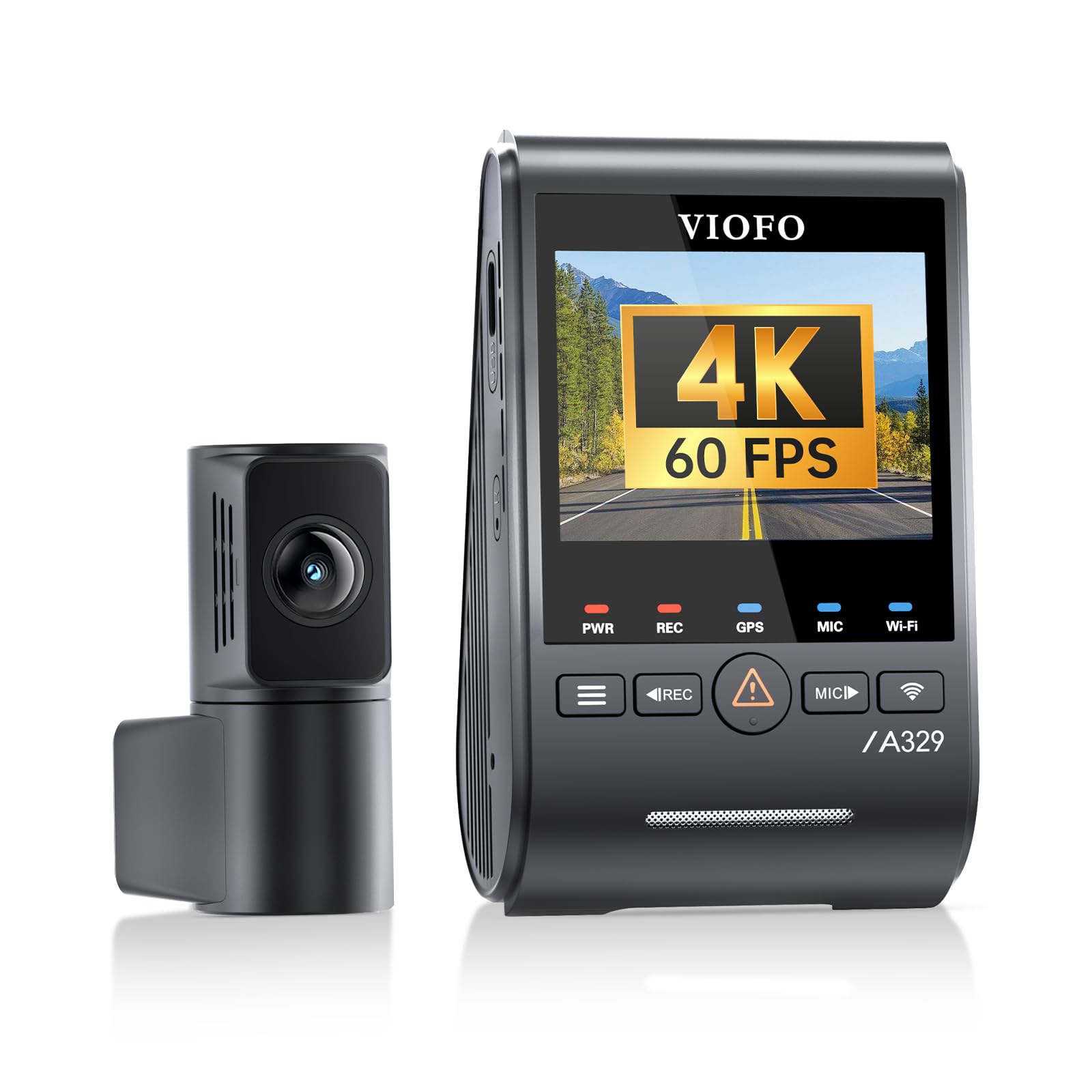
We recommend the VIOFO A329S for drivers who want sharp front and rear video, strong low-light performance, and advanced storage options.
Key Pros
- Clear 4K 60fps front video and 2K rear video
- Dual Sony STARVIS 2 sensors perform well in low light
- Fast Wi-Fi 6 transfers and useful voice controls
Key Cons
- Hardwire kit and storage card cost extra
- Rear-camera wiring takes time to install neatly
- 4K 60fps front recording does not work with HDR
After using the A329S, we found its front footage especially sharp. License plates and road signs stayed easier to read than with typical 1080p cameras, while the rear camera added useful coverage behind the vehicle.
The dual STARVIS 2 sensors handled nighttime driving well, with less visible noise and blur than basic dash cams. HDR helped balance bright headlights and darker road areas, though we had to choose between HDR and 4K 60fps on the front camera.
Wi-Fi 6 made it quick to preview and download clips through the app. Built-in GPS, voice commands, and the included CPL filter also made daily use more convenient by adding location data, hands-free controls, and reduced windshield glare.
Installation required patience, especially when routing the rear cable and setting up parking mode. We also needed to purchase a compatible hardwire kit and storage separately. The camera supports large microSD cards and external SSDs, which suits drivers who record long trips or want fewer storage limits.
VIOFO A229 Pro 4K Dual STARVIS 2 Dash Cam

We recommend the A229 Pro for drivers who want sharp front-and-rear video, strong night recording, and useful parking protection.
Key Pros
- Clear 4K front and 2K rear video
- Strong night detail with HDR
- Voice control, GPS, and fast Wi-Fi
Key Cons
- Requires a separate microSD card
- Hardwire kit for parking mode costs extra
- App setup may take some time
After using the A229 Pro, we found its video quality to be the main strength. The Sony STARVIS 2 sensors captured clear road signs, nearby cars, and license plates in daylight. The rear camera also provided useful coverage without making the cabin feel crowded.
Night recording looked better than many standard dash cams we have tested. HDR helped balance bright headlights with darker areas, while the included polarizing filter reduced windshield glare. Results still depended on clean glass and proper camera placement.
The VIOFO app made it easy for us to preview and download clips over 5GHz Wi-Fi. Voice commands helped us lock footage without reaching for the camera, and the GPS data added location and speed details during playback.
Parking protection offers three recording options, but we needed the optional hardwire kit for continuous use. The camera also lacks a memory card, so buyers must add a compatible high-endurance microSD card. Its supercapacitor design avoids battery concerns, though installation takes more effort than a basic front-only model.
Buying Guide
We should compare more than the Sony STARVIS sensor. The sensor can improve low-light detail, but image quality also depends on the lens, image processing, resolution, and camera placement.
We should check these key features:
- Resolution: Higher resolution can capture clearer plates and signs, especially when viewed at a distance.
- Low-light performance: Look for strong night footage with limited noise, glare, and motion blur.
- Field of view: A wider view records more of the road, but an extremely wide lens may distort details.
- Frame rate: A higher frame rate can make moving objects appear smoother.
- HDR or WDR: These features help balance bright sunlight, headlights, and dark areas.
- Storage: Check supported card capacity and whether the camera protects important clips from being overwritten.
- Parking mode: Choose a model with motion detection, impact recording, or time-lapse options if we need coverage while parked.
- Power options: Confirm whether we need a standard power cable, hardwire kit, or battery protection feature.
- GPS: GPS can record speed and location, which may help document an incident.
- Temperature range: We should choose a camera rated for the conditions inside our vehicle.
We should also review the mounting system, app quality, controls, and warranty. A reliable camera should start recording automatically, save clips securely, and operate without frequent adjustments.
Before buying, we should confirm that the camera includes essential accessories, such as a power adapter and mounting hardware. We should also budget for a high-endurance memory card, since regular cards may wear out faster with continuous recording.
Editor’s Choice
We choose the VIOFO A229 Pro 2CH as our editor’s pick for a dash cam with a Sony STARVIS sensor. Its front camera uses the Sony STARVIS 2 IMX678 sensor, which captures clear 4K video and handles low-light scenes well.
The rear camera records in 2K, giving us useful coverage behind the vehicle. The system also includes GPS, HDR, buffered parking mode, Wi-Fi, and support for a high-capacity microSD card.
| Feature | Details |
|---|---|
| Front video | 4K |
| Rear video | 2K |
| Front sensor | Sony STARVIS 2 IMX678 |
| Key features | GPS, HDR, Wi-Fi, parking mode |
We value the A229 Pro 2CH because it balances image quality, coverage, and practical controls. Its polarizing filter can help reduce reflections, while the included supercapacitor supports reliable operation across changing temperatures.
We recommend using a high-endurance microSD card and checking the camera’s parking-mode wiring requirements before installation. The 2CH package suits drivers who want front and rear recording without adding separate cameras.
Conclusion
We should choose a dash cam with a Sony STARVIS sensor when clear footage matters in both daylight and low-light conditions. STARVIS technology helps capture useful details, but image quality also depends on the lens, video resolution, software, and camera placement.
For most drivers, the best choice combines 1080p or 4K video, a wide viewing angle, reliable heat management, and loop recording. Features such as GPS, parking mode, Wi-Fi, and a rear camera can add value, but we should pay for the functions we will use.
We should also use a high-quality, high-endurance microSD card and format it as the manufacturer recommends. Regularly checking the camera, power cable, and recordings helps us keep the system ready when we need it.
Before buying, we can compare these key points:
- Sony STARVIS sensor generation
- Front and rear video quality
- Night image clarity
- Parking mode requirements
- Warranty and customer support
- Compatibility with high-endurance memory cards
A STARVIS dash cam can provide dependable road footage when we match its features to our driving needs and install it correctly.
FAQS
What is a Sony STARVIS sensor?
Sony STARVIS sensors use back-illuminated technology to capture more light. We often see clearer night footage, better shadow detail, and less image noise than with basic camera sensors.
Is STARVIS 2 better than the original STARVIS?
In many dash cams, STARVIS 2 improves low-light performance and dynamic range. We should still compare the camera’s lens, video resolution, bitrate, and image processing because the sensor alone does not determine video quality.
What resolution should we choose?
We recommend 1440p for a balance of detail, storage use, and price. 4K can capture more readable license plates in good conditions, but it usually costs more and uses more storage.
Does a STARVIS dash cam record clear video at night?
It can produce strong night footage when paired with a fast lens and good processing. We should also choose a model with HDR, because headlights and dark roads can challenge any sensor.
Do we need a memory card made for dash cams?
Yes. We should use a high-endurance microSD card that matches the manufacturer’s speed and capacity limits. Regular cards may wear out faster under continuous recording.
Should we buy a front-only or dual-channel model?
A front-only camera costs less and uses less storage. We should choose a front-and-rear system if coverage behind our vehicle matters, especially for rear-end collisions or parking incidents.

I’m Alex Rahman, a car enthusiast and automotive writer focused on practical solutions, car tools, and real-world driving advice. I share simple and honest content to help everyday drivers make better decisions.
