
Should You Buy an OBD2 Scanner Before Buying a Used Car?
Quick Answer
Yes, buy a basic OBD2 scanner before you buy a used car if the car has an OBD2 port. A scan can reveal stored codes, pending faults, and readiness clues that a short drive may hide. A scan cannot prove a car is sound, so pair it with a test drive and a mechanic inspection.
- A scanner reads stored and pending codes, even when the check engine light is off.
- Readiness monitors can show if codes were cleared and self tests are incomplete.
- A clean scan is a pass for the first screen, not proof that the car has no faults.
- Borrow a scanner or book a mechanic inspection if you check only one car.
You are about to spend a large sum on a car that another owner has used. A small scanner can give you facts before you agree a price. This guide explains what a scan can show, what it cannot show, and how to use the result to decide the next step.
Should you buy an OBD2 scanner before buying a used car?
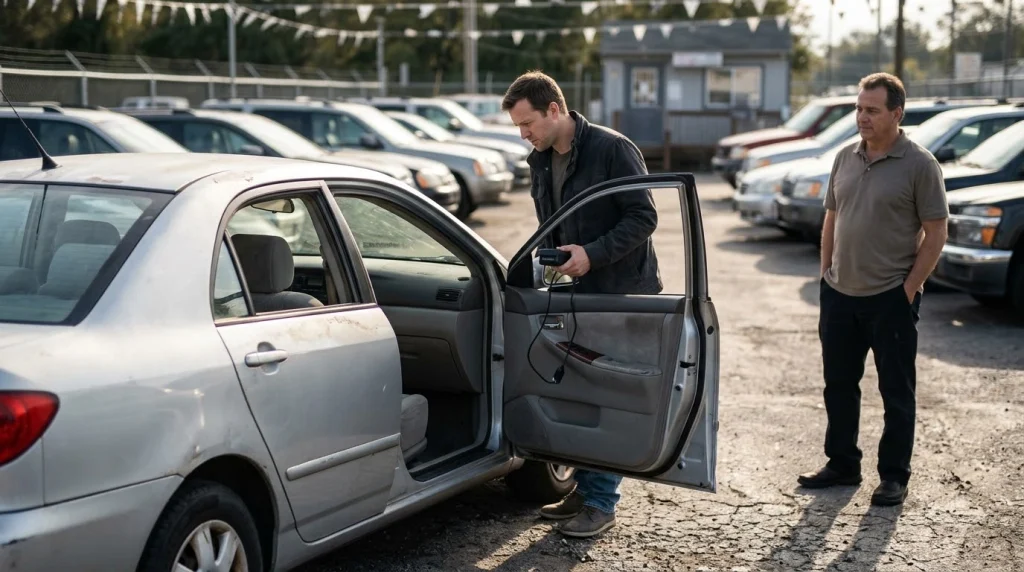
Buying a basic OBD2 scanner before you buy a used car makes sense for most buyers who will check more than one car. A scanner gives you facts from the car computer, and those facts can stop a bad purchase before you pay a deposit. A basic tool also stays useful after the sale for checks on the car you own.
An OBD2 scanner is a small tool that plugs into the diagnostic port under the dashboard. It reads diagnostic trouble codes, which are codes the car computer stores when a system reports a fault. Learning what an OBD2 scanner does helps you read those codes with care and avoid a guess based on one code alone.
Innova notes that a scan can reveal hidden problems that a visual check may miss, and that the facts can help you negotiate a fair price. How-To Geek notes that basic scanners cost less than $50, so the cost is small next to the price of a used car and the cost of a missed fault.
What can a scanner show you at a used car viewing?
A scanner can show stored codes, pending codes, permanent codes, readiness status, live data, and freeze frame data. Stored codes point to faults the computer has confirmed. Pending codes point to faults the computer has seen once and has not yet confirmed. Permanent codes point to faults that stay in memory until the car passes the related self test.
Readiness monitors show whether the car has finished its own self tests for emissions systems. A monitor marked Not Ready means the test has not finished, so a lack of codes for that system proves nothing. Live data shows readings such as coolant temperature, engine speed, battery voltage, and fuel trim while the engine runs.
Freeze frame data shows the conditions when a fault was stored, such as engine speed and coolant temperature at that moment. That context helps you judge whether a code came from a cold start, a hot engine, or a load on the engine. A scan can also help with intermittent faults in a used car when a fault appears only under certain driving conditions.
- Stored codes: confirmed faults the computer has recorded.
- Pending codes: early faults that may turn into a repair bill.
- Permanent codes: faults that stay until the system passes a test.
- Readiness monitors: proof that self tests have finished.
- Live data: current readings from sensors and systems.
- Freeze frame: conditions at the time a fault was stored.
What can a scanner not show you?
A scanner cannot show the full condition of a used car. It reads electronic signals, not metal, rubber, paint, or paper records. A car can pass a scan and still have worn brakes, a slipping clutch, rust in the frame, or tired suspension parts.
A basic scanner also has a narrow view of the car systems. It may read engine and emissions codes and miss codes for airbag, anti lock brake, transmission, and body systems. A seller can also clear codes just before you arrive, which can hide a fault and reset the readiness monitors.
Warning
A cleared code can hide a fault and reset readiness monitors, so never clear codes at a viewing and treat incomplete monitors as a reason to ask more questions.
A scanner cannot show title history, accident history, odometer fraud, open recalls, or unpaid finance. Those facts need a vehicle history report, a recall check by VIN, and a check of the title and service records. Learn how a car can pass a scan after clearing codes so a clean screen does not mislead you.
How to use a scanner before you pay
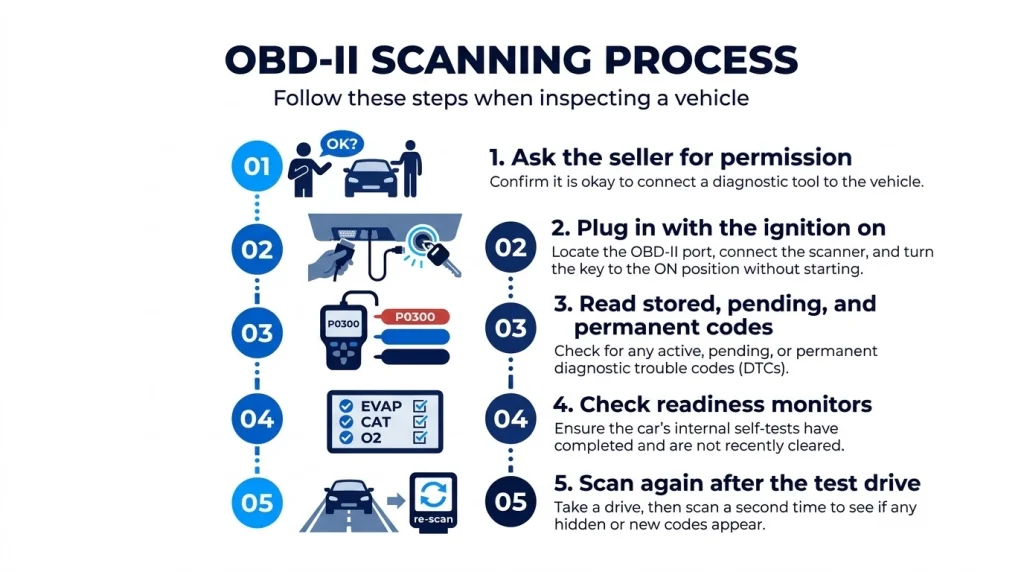
A short scan at a used car viewing takes a few minutes and follows the same order each time. Ask the seller for permission first, then scan before the test drive and again after the test drive. A fault can appear only after the engine warms up or after a set of driving conditions.
Step 1
Ask the seller for permission
Tell the seller you want to plug in a scanner. A refusal without a clear reason is a warning sign.
Step 2
Plug in with the ignition on
Find the port under the dashboard on the driver side. Connect the scanner and turn the ignition on.
Step 3
Read stored, pending, and permanent codes
Write down every code and its description. Do not clear any code at the viewing.
Step 4
Check readiness monitors
Note each monitor marked Ready or Not Ready. Ask the seller to explain any monitor that is not ready.
Step 5
Scan again after the test drive
Drive the car through city and highway speeds. Scan again and compare the code list with the first scan.
How-To Geek advises scanning before and after a test drive because some faults appear only after the engine reaches full temperature. The same guide warns you not to clear codes, since clearing deletes clues and resets the readiness monitors.
Which scanner type fits a one time check?
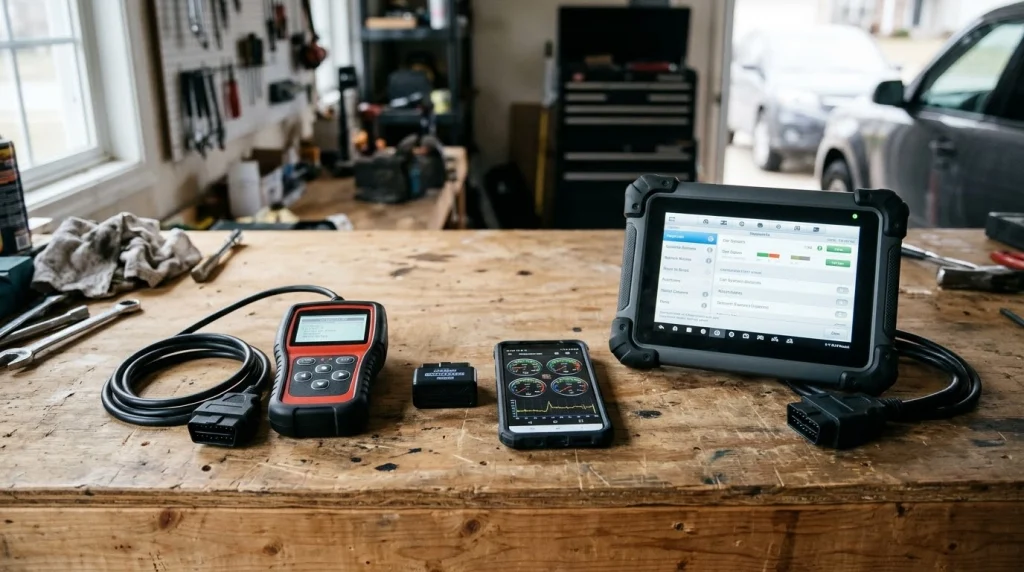
The right scanner type depends on how many cars you will check and what systems you need to read. A basic tool suits a simple screen for engine codes. A phone adapter suits a buyer who checks several cars and wants live data on a phone screen. An advanced tool suits a buyer who needs airbag, brake, and transmission codes.
| Scanner type | What it shows | Fit for a used car check |
|---|---|---|
| Basic handheld reader | Stored and pending engine codes and readiness status | Good for one simple screen with no phone |
| Bluetooth adapter with phone app | Codes, readiness, live data, and freeze frame on a phone | Good for several cars and for live data checks |
| Advanced multi system tool | Engine, transmission, brake, and airbag systems on many cars | Good when you need more than engine codes |
A basic tool is enough for the first screen in most cases. An advanced tool adds value when the car has a warning light for brakes or airbags, or when you want a deeper check before you pay for a mechanic inspection. You can also learn how to check emissions readiness with the tool you choose, since readiness is one of the strongest clues at a viewing.
When should you borrow a scanner or book a mechanic?
Borrowing a scanner makes sense when you will check only one car and you will not use the tool again. A friend with a scanner, a free code read at a parts store, or a mobile mechanic can give you the same first screen without a purchase. A mechanic inspection still adds value after a clean scan.
A mechanic can lift the car, check the frame, brakes, suspension, leaks, and tires, and read systems that a basic scanner cannot reach. A scan helps you decide which cars deserve that inspection. If the scan shows codes, pending faults, or incomplete monitors, ask the seller for repair records or a price cut, or walk away from the car.
Use the scan result as a filter, not as a final verdict. A car with a clear fault needs proof of a fix or a lower price. A car with a clean scan still needs a test drive, a history check, and a mechanic inspection before you sign and pay.
OBD2 Scanner
An OBD2 scanner helps you read codes and readiness status at a used car viewing before you agree a price.
Frequently Asked Questions
Can a clean OBD2 scan prove a used car is good?
A clean OBD2 scan cannot prove a used car is good because it reports only the faults the car computer can see at that time. A scan cannot judge worn parts, rust, or poor repair work. Use the clean scan as a first pass, then test drive the car and book a mechanic inspection.
Can a seller hide a fault by clearing codes?
A seller can hide a fault for a short time by clearing codes, but clearing also resets the readiness monitors to Not Ready. A scanner shows that reset, so incomplete monitors are a clue that codes were cleared. Ask the seller why the monitors are not ready before you agree a price.
Do I need permission to plug in a scanner?
You need permission to plug a scanner into a car you do not own, since the port belongs to the car and the seller controls access. Ask before the viewing so the seller can agree or refuse in advance. A refusal without a clear reason is a warning sign.
Will a scanner work on every used car?
A scanner will not work on every used car, since the car must have an OBD2 port and a working diagnostic link. Most cars sold in the United States use the OBD2 port, but older cars and some heavy trucks use a different system. Check the port and the car model before you buy a scanner.
Should I scan before or after the test drive?
You should scan before and after the test drive because each scan can show a different set of faults. The first scan shows stored and pending codes at rest. The second scan can show new pending codes that appear after the engine warms up and the car drives at speed.
Is a mechanic inspection still needed after a clean scan?
A mechanic inspection is still needed after a clean scan because a mechanic can check parts and systems that a scanner cannot see. A lift check can reveal frame rust, leaks, worn brakes, and suspension faults. A scan helps you choose which cars deserve that inspection.
Conclusion
The answer to should I buy an OBD2 scanner before buying a used car is yes for most buyers who check cars with an OBD2 port. If the scan shows codes or incomplete monitors, ask for proof or walk away. If the scan is clean, book a mechanic inspection before you pay.

I’m Alex Rahman, a car enthusiast and automotive writer focused on practical solutions, car tools, and real-world driving advice. I share simple and honest content to help everyday drivers make better decisions.
