What Vehicles Use OBD2? Cars, Trucks, SUVs & More
Quick Answer
Most cars and light-duty trucks sold in the United States from the 1996 model year onward use OBD2. This includes vehicles from American, Japanese, European, and other manufacturers. Diesel vehicles, imported models, hybrids, heavy-duty trucks, motorcycles, and vehicles sold in other countries may follow different requirements, so check the specific vehicle before choosing a scanner.
OBD2, or On-Board Diagnostics II, is a standardized vehicle diagnostic system that monitors emissions-related components and reports detected problems through diagnostic trouble codes. It allows a compatible scanner to communicate with the vehicle’s computer and retrieve supported diagnostic information.
The model year and original sales market are the two most useful starting points for identifying compatible vehicles. A Toyota, Ford, Honda, Chevrolet, BMW, or another brand can use OBD2, but the exact requirements depend on the vehicle’s year, engine, and market.
Which Vehicles Use OBD2 in the United States?
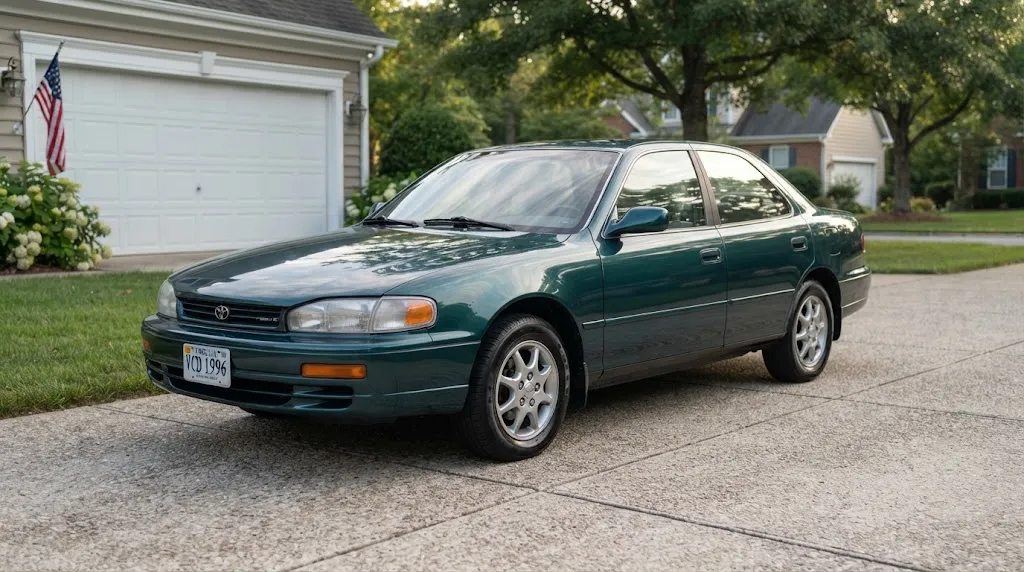
In the United States, OBD2 is required for light-duty passenger cars and trucks beginning with the 1996 model year under the federal requirements. The system was introduced during the preceding years, but 1996 is the main cutoff for standardized compatibility.
According to the California Air Resources Board’s OBD II fact sheet, 1996 and newer gasoline and alternative-fuel passenger cars and trucks must have OBD II systems, while the corresponding requirement for diesel passenger cars and trucks begins with model year 1997.
Common vehicle categories include:
- Passenger cars: Sedans, coupes, hatchbacks, and station wagons.
- SUVs: Compact, midsize, and full-size sport utility vehicles within the applicable vehicle classes.
- Pickup trucks: Light-duty pickups used for commuting, towing, and general transportation.
- Minivans and passenger vans: Vehicles within the applicable light-duty categories.
- Hybrid vehicles: Many hybrids have OBD2-compatible diagnostic systems, although specialized hybrid functions may require enhanced scanner support.
- Alternative-fuel vehicles: Applicable gasoline-alternative-fuel models, including certain propane or natural-gas vehicles.
The rule is not limited to a particular manufacturer. A 2005 Honda Civic and a 2015 Ford F-150 sold in the United States can both use OBD2, although the diagnostic functions available to a basic scanner may differ.
What Model Year Did OBD2 Become Standard?
For practical compatibility checks in the United States, start with the following model-year distinctions. These are general identification guidelines, not a substitute for confirming an unusual or modified vehicle.
| Vehicle category | General model-year guidance |
|---|---|
| Gasoline passenger cars and light trucks in the US | 1996 and newer |
| Diesel passenger cars and light trucks in the US | 1997 and newer under the applicable light-duty requirements |
| 1994–1995 gasoline vehicles in the US | Some have OBD2, but compatibility must be verified |
| Older vehicles | May use OBD-I or another manufacturer-specific diagnostic system |
The distinction between model years matters because an older vehicle may have electronic engine diagnostics without supporting the standardized OBD2 connector, communication protocols, and code-reading functions expected by a modern generic scanner.
Some 1994 and 1995 vehicles were equipped with early OBD2 systems. However, a diagnostic port or an electronic engine computer alone does not establish compatibility. Confirm the system using the emissions label, owner’s manual, or manufacturer documentation.
Do All Car Brands Use OBD2?
No single brand owns the OBD2 standard. In the US market, vehicles from major manufacturers generally follow the applicable requirements for their model years and vehicle categories.
Examples of brands with OBD2-equipped US-market vehicles include:
- American brands: Ford, Chevrolet, GMC, Buick, Cadillac, Chrysler, Dodge, Jeep, and Ram.
- Japanese brands: Toyota, Honda, Nissan, Mazda, Subaru, Mitsubishi, Acura, Lexus, and Infiniti.
- South Korean brands: Hyundai, Kia, and Genesis.
- European brands: Volkswagen, Audi, BMW, Mercedes-Benz, Volvo, Porsche, and MINI.
This list gives examples rather than an exhaustive compatibility database. It does not mean that every vehicle made by these brands in every country and every year supports identical diagnostic functions.
For example, a US-market vehicle may support standard engine-code reading, while an imported version of a similar model may use different diagnostic requirements or communication protocols. Manufacturer-specific functions can also vary between trims, engines, and model years.
Do Diesel Vehicles, Hybrids, and Electric Cars Use OBD2?
These vehicle types need separate consideration because their diagnostic systems and compatibility requirements are not identical.
Diesel vehicles
Applicable US-market light-duty diesel passenger cars and trucks generally fall under OBD2 requirements beginning with model year 1997. However, diesel compatibility outside the United States follows different schedules, and heavy-duty diesel vehicles have separate regulatory considerations.
A scanner may retrieve standard emissions-related information from a compatible diesel vehicle without supporting every diesel-specific system. For functions involving diesel particulate filters, exhaust aftertreatment, or manufacturer-specific engine data, check the scanner’s exact coverage.
Hybrid vehicles
Many hybrid cars and SUVs support standard OBD2 diagnostics for applicable engine and emissions information. A compatible generic scanner may read certain powertrain codes, but it might not access the high-voltage battery, inverter, electric motor, or every hybrid control module.
If you need to diagnose a hybrid battery warning or an electric-drive fault, confirm that the scanner explicitly supports the vehicle’s hybrid systems. A standard OBD2 connection does not guarantee access to all electronic modules.
Battery-electric vehicles
Fully electric vehicles do not follow exactly the same OBD2 requirements as conventional gasoline cars. Some have diagnostic connectors and support particular scanner functions, but that does not guarantee compatibility with a generic emissions-focused OBD2 reader.
For an electric vehicle, verify the make, model, year, and supported diagnostic systems before buying a scanner. Battery management and electric-drive diagnostics may require specialized software or equipment.
Heavy-duty trucks and motorcycles
Do not automatically apply the 1996 light-duty vehicle rule to every commercial truck, bus, or motorcycle. Heavy-duty vehicles may follow different OBD requirements according to their model year, weight class, engine, and applicable regulations.
Motorcycles also use diagnostic arrangements that can differ from standard passenger-car OBD2. Some newer models support standardized diagnostics, while others require manufacturer-specific adapters or tools.
What About Vehicles Sold Outside the United States?
OBD2 compatibility depends on the country where the vehicle was originally sold, not simply where it was manufactured. A Japanese-built car sold new in the US may follow US OBD2 requirements, while a similar model originally sold in another market may follow a different timetable.
European vehicles commonly use the related European On-Board Diagnostics system, known as EOBD. The implementation dates for applicable passenger vehicles differ by fuel type.
| Original sales market | General compatibility guidance |
|---|---|
| United States | 1996 and newer gasoline light-duty vehicles; applicable diesel vehicles generally from 1997 |
| European Union, gasoline passenger vehicles | EOBD requirements generally applied from 2001 for existing types and 2000 for new types under the historical implementation schedule |
| European Union, diesel passenger vehicles | EOBD requirements generally applied from 2004 for existing types and 2003 for new types under the historical implementation schedule |
| Other international markets | Requirements vary by country, fuel type, vehicle class, and model year |
These European dates describe historical implementation requirements for the relevant vehicle categories; they are not a universal guarantee that every vehicle from those years will work with every scanner.
For an imported vehicle, use the manufacturer’s compatibility information or an established vehicle compatibility chart. If a vehicle was originally sold in a different country, do not rely on the model year alone.
How Can You Check Whether Your Vehicle Uses OBD2?
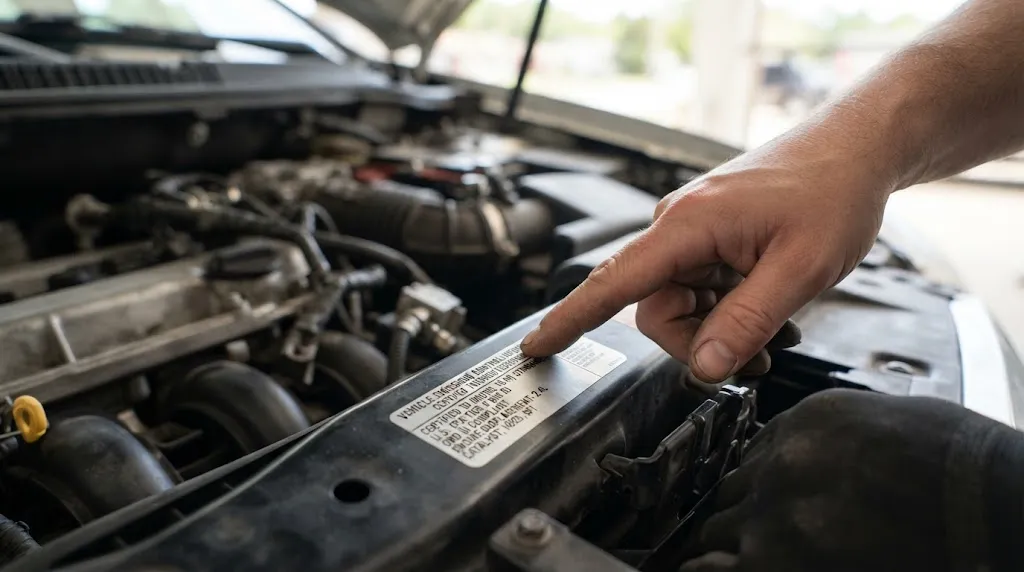
If you are unsure whether your car or truck is compatible, use these checks in order rather than purchasing a scanner based only on the vehicle’s age.
- Confirm the model year and sales market. For a US-market gasoline passenger car or light truck, model year 1996 or newer is the main starting point. Check separate guidance for diesel, imported, heavy-duty, and other vehicles.
- Inspect the diagnostic port. Standard OBD2 vehicles generally have a 16-pin trapezoidal Data Link Connector, often underneath the driver’s dashboard. Finding a similar-looking connector is helpful but not conclusive.
- Check the emissions information label. Look under the hood for the vehicle emissions label. Some vehicles identify OBD II compliance there.
- Read the owner’s manual. Search for terms such as OBD II, EOBD, diagnostic connector, or emissions diagnostics.
- Verify the exact vehicle with the scanner manufacturer. Confirm compatibility using the make, model, model year, engine, and original sales market. Check enhanced features separately if you need ABS, SRS, transmission, or hybrid diagnostics.
Practical Tip
If you have already confirmed that your vehicle uses OBD2, follow a reliable guide to connecting and using an OBD2 scanner before reading or clearing diagnostic codes.
If you need help locating the connector, see this guide to where the OBD2 port is located. If the vehicle’s year or market makes compatibility uncertain, the more detailed OBD2 compatibility checklist can help you confirm what to check next.
Does Every OBD2 Vehicle Work With Every Scanner?
No. A vehicle can support the OBD2 standard while a particular scanner still lacks the communication protocol, software, or diagnostic functions needed for a specific task.
Standard OBD2 readers typically focus on supported emissions-related powertrain information, including generic diagnostic trouble codes and certain live data. More advanced scanners may access additional manufacturer-specific codes, control modules, and service functions.
For example, a basic scanner might read an engine fault code from a compatible SUV but fail to access its airbag module. That does not necessarily mean the SUV lacks OBD2; the scanner may simply lack enhanced system coverage.
Before selecting a diagnostic tool, distinguish between three questions:
- Does the vehicle use OBD2? This establishes the underlying diagnostic standard.
- Can the scanner communicate with the vehicle? This depends on the scanner’s hardware, protocol support, and software.
- Can it perform the diagnostic task you need? This depends on the supported codes, modules, data, and functions.
Keeping these questions separate prevents a common compatibility mistake: assuming that a universal connector guarantees universal access to every vehicle system.
Frequently Asked Questions
Are all cars made after 1996 OBD2 compatible?
Not all cars worldwide. Most applicable US-market gasoline passenger cars from model year 1996 onward use OBD2, but vehicles sold in other countries, certain diesel models, motorcycles, and other vehicle classes follow different requirements.
Can I use an OBD2 scanner on a 1995 car?
Possibly. Some 1995 vehicles have OBD2, but many use an older or manufacturer-specific system. Check the emissions label and vehicle documentation before connecting a standard scanner.
Do SUVs and pickup trucks use OBD2?
Yes, applicable US-market light-duty SUVs and pickups generally use OBD2 from model year 1996 onward when gasoline-powered, with separate requirements for diesel vehicles and other vehicle classes.
Do imported cars have OBD2?
Many do, but the original sales market matters. A vehicle imported from Europe or Asia may follow a different implementation schedule or use a related diagnostic standard. Verify the exact vehicle before buying a scanner.
Can OBD2 read ABS and airbag codes?
Not necessarily. Standard OBD2 diagnostics primarily cover emissions-related powertrain information. Reading ABS, airbag, and other modules generally requires a scanner with compatible enhanced diagnostic coverage.
How do I know if my car has the correct OBD2 port?
Look for the standard 16-pin trapezoidal diagnostic connector, usually underneath the driver’s dashboard. Then verify the vehicle’s emissions label or owner’s manual, because a connector’s appearance alone does not prove that a generic OBD2 scanner will work.
Conclusion
Most applicable US-market gasoline cars and light-duty trucks from model year 1996 onward use OBD2, making the system common across American, Japanese, Korean, and European vehicle brands. Diesel vehicles, hybrids, electric cars, imported models, heavy-duty trucks, and motorcycles require more specific compatibility checks.
Before connecting a scanner, confirm the model year, original sales market, diagnostic connector, and supported functions. This simple check helps you choose a tool that communicates with your vehicle and performs the diagnostic tasks you actually need.

I’m Alex Rahman, a car enthusiast and automotive writer focused on practical solutions, car tools, and real-world driving advice. I share simple and honest content to help everyday drivers make better decisions.
